
Carbon Capture and Storage Market Set to Double by 2034 — Here’s What’s Driving It
From government policies to breakthrough technologies, the forces behind the rapid rise of CCS are transforming global climate strategies.

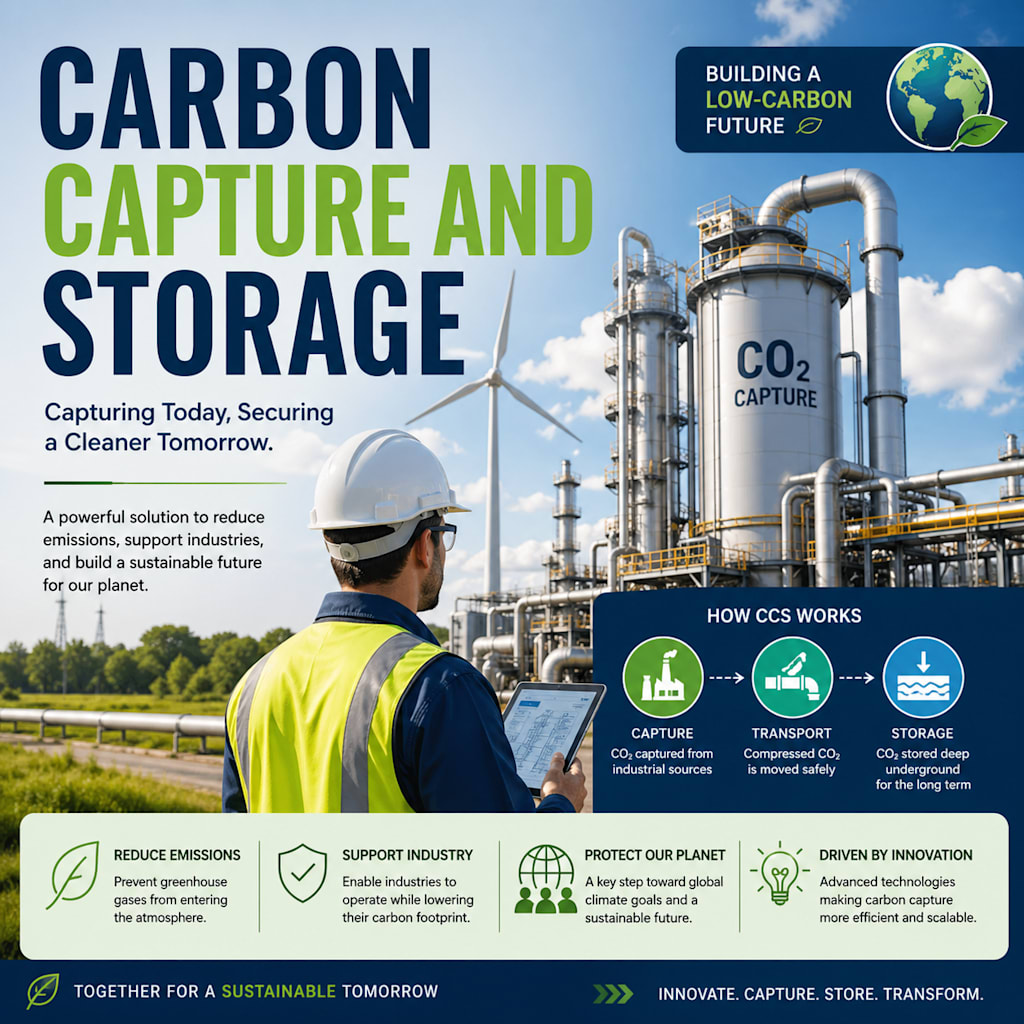
As climate change becomes more apparent‚ shown through rising temperatures and extreme weather events‚ industries are under more pressure to reduce carbon emissions from their processes․
However in energy‚ cement and manufacturing‚ zero emissions may be difficult or even impossible to achieve․
This is where a technology known as carbon capture and storage (CCS) is proving its worth․
Carbon capture and storage (CCS) technologies capture carbon dioxide at source‚ instead of releasing it to the air‚ and store it underground․ CCS was long considered unlikely to be technically feasible or economic‚ but is gaining serious traction in many parts of the world․
A Market Gaining Real Momentum
The global carbon capture and storage market was valued at USD 3․2 billion in 2025‚ with a projected increase to USD 6․4 billion by 2034․
This amounts to a growth rate of 7․7% per year over the next decade․
Unlike most emerging clean energy technologies‚ CCS is not driven by hype but is increasingly seen as fundamental to how governments and industries will achieve net-zero emissions targets over the longer term․
Why are governments driving CCS deployment?
Government policy has been one of the biggest forces behind the growth of CCS․
Globally‚ governments and industries are tightening environmental regulations and carbon reduction targets and creating the regulatory environment for reducing emissions and financial incentive programs‚ such as tax credits or funding for CCS projects․
There are currently several large-scale projects in the US and Europe that capture and sequester important amounts of carbon emissions each year․
Such policies are also aimed at achieving industry shifts towards more sustainable and less hazardous practices․
The United States was critical to the growth of CCS․
The United States has become a leader in the development of carbon capture technologies․
Federal policy initiatives and tax incentives favor large scale investments in CCS projects by companies‚ while research initiatives in CCS technologies focus on improving efficiency and lowering costs․
Major energy companies are increasingly developing projects to capture carbon from industrial plants and store it underground․
These efforts are helping to position the U․S․ as a leader in carbon capture innovation․
Why Carbon Capture Is More Important than Ever
Climate change is no longer a hypothetical concept‚ but a present-day reality․
While reductions of energy system emissions are needed at an increasingly large scale‚ emissions of greenhouse gases cannot currently be completely eliminated for all economic activities․
Carbon capture offers a practical solution․
Because a full transition to renewable energy sources can take time‚ CCS allows industries to reduce emissions without shutting down․
This makes it a key bridge technology in the transition of global energy systems․
Technology Is Making CCS More Practical
One of the most meaningful barriers to carbon capture in the past was cost and complexity․
Today‚ that is changing․
As technology continues to advance‚ CCS systems are becoming more efficient‚ larger in scale and more economical‚ with new capture methods including post-combustion capture‚ pre-combustion capture and direct air capture being developed․
New materials and engineering innovations are also lowering the energy inputs needed for capture․
Improvements in CCS technology are expanding its applicability across a greater number of industries․
CCS's Relation to Geothermal and Energy Industries
The energy sector in general and oil and gas producers in particular contribute the bulk of global GHG emissions and are also among the largest users of CCS․
Captured carbon dioxide is sometimes reused‚ for example in improved oil recovery (EOR)‚ in which carbon dioxide is injected into oilfields to improve oil extraction․
This creates a potential double benefit of reducing emissions while increasing efficiency‚ making CCS more commercially viable․
It is an example of environmental goals and business incentives aligning for a common purpose․
A Global Shift Toward Net-Zero Emissions․
Countries around the world are committing to ambitious climate goals․
Governments across Europe and the Asia-Pacific region are considering or already implementing policies to reduce emissions and accelerate decarbonisation‚ with carbon capture included in strategies for hard to abate sectors․
Large-scale projects to transport and store captured CO2 in geological formations are already being built․
With increasing international climate targets‚ demand for CCS solutions is expected to rapidly increase․
Regional Growth Patterns
CCS projects exist worldwide‚ but regional leaders and laggards exist․
North America continues to dominate the market due to regulations‚ infrastructure and investment in energy-related projects․
The Asia-Pacific region is also rapidly developing but faces both industrialization and pressures to reduce emissions․
Europe is also working towards carbon neutrality and sustainable development with large scale industrial projects․
Other regions such as the Middle East and Latin America are also considering CCS in their long-term environmental strategies․
Challenges That Still Need to Be Solved
Carbon capture and storage has potential but poses various challenges․
High up-front costs‚ the need for advanced technology‚ regulatory differences between countries‚ and uncertainty regarding the long-term safety of underground carbon storage are additional challenges for the common deployment of carbon capture technologies․
In addition‚ constructing pipelines and storage facilities requires wide-ranging planning and coordination․
Despite this‚ various companies and governments have developed more efficient and scalable solutions to reduce the problem․
Opportunities for the Future
The future of CCS is full of promise․
As carbon markets develop and industries seek cost-effective ways to reduce emissions while remaining in operation‚ CCS has great potential․
New opportunities include the following areas:
- Carbon credit trading systems
- Industrial decarbonization strategies
- Large-scale infrastructure development
- Public-private partnerships
As understanding and technologies improve‚ CCS may be widely used in industrial activities around the world․
A Competitive and Evolving Industry
Carbon capture is becoming cost competitive‚ with several big companies and startups looking to enter this market․
Market leaders invest a great deal in research‚ infrastructure and partnerships‚ while smaller firms have supplied innovation and expertise in niche skills and technology․
Government‚ private sector‚ and research institution collaboration is needed to help speed up development․
The competitive landscape is working to drive the development of CCS․
Looking Ahead
Carbon capture and storage is no longer experimental‚ and is being planned and constructed as part of addressing climate change․
With pressures on industry to reduce its emissions and governments tightening regulations‚ CCS will be vital in helping to close the divide between the current energy system and a sustainable future․
Thus‚ the market is expected to double to a size by 2034 reflecting growing and deepening adoption․
Carbon capture may not be the only answer to climate change‚ but it is one of the most practical options currently available․
About the Creator
Robert
Senior Market Researcher at IMARC Group, specializing in global market analysis, industry trends, and data-driven insights across diverse sectors.
Enjoyed the story? Support the Creator.
Subscribe for free to receive all their stories in your feed.
Comments
There are no comments for this story
Be the first to respond and start the conversation.