
Canada Foodservice Market Expands as Urban Lifestyles, Digital Ordering, and Consumer Dining Trends Drive Growth
Rising urbanization, increasing demand for convenience, and rapid adoption of food delivery platforms are fueling strong growth across Canada's foodservice industry.

Canada's foodservice industry is experiencing a period of significant transformation. As consumer lifestyles evolve, urban populations expand, and digital technologies reshape dining experiences, foodservice businesses are adapting rapidly to meet changing expectations.
From quick-service restaurants and premium dining establishments to food delivery platforms and institutional catering providers, the Canadian foodservice ecosystem has become an essential part of daily life. Consumers increasingly seek convenience, variety, quality, and personalized experiences, creating new opportunities for operators across multiple market segments.
The industry's growth is also being fueled by technological innovation, rising disposable incomes, tourism recovery, and growing consumer willingness to spend on dining experiences. As foodservice businesses continue embracing digital solutions and expanding menu offerings, the market is expected to remain one of Canada's most dynamic consumer sectors.
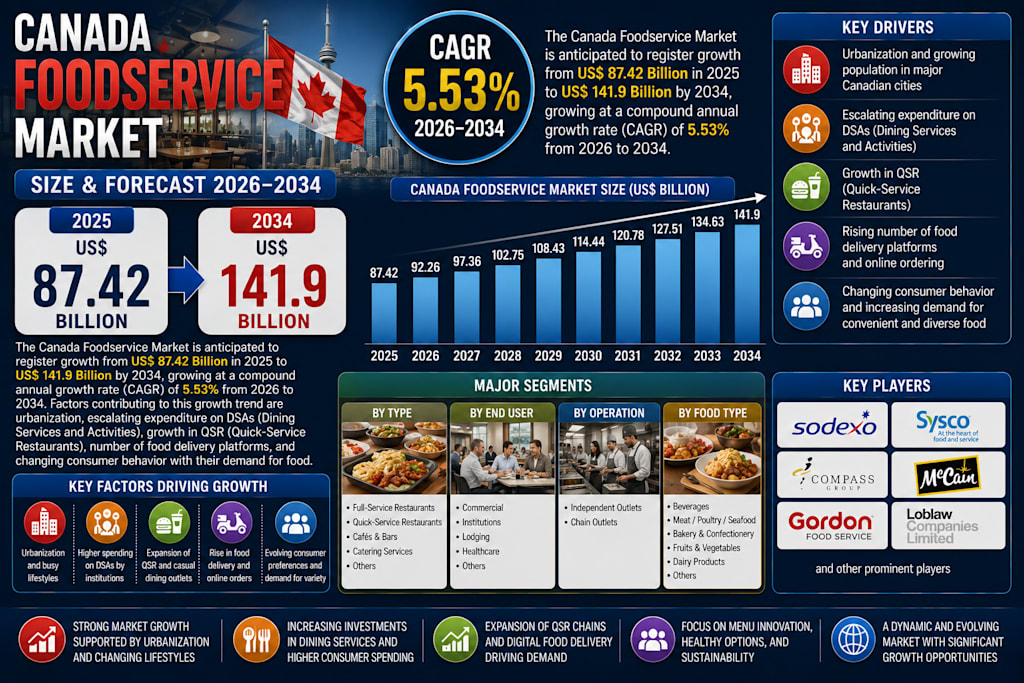
According to Renub Research, the Canada Foodservice Market is projected to grow from US$87.42 billion in 2025 to US$141.9 billion by 2034, registering a compound annual growth rate (CAGR) of 5.53% between 2026 and 2034. Urbanization, expansion of food delivery platforms, growth in quick-service restaurants, and changing consumer preferences are expected to drive sustained market expansion.
Foodservice Plays a Central Role in Canadian Daily Life
Foodservice encompasses the preparation and sale of food and beverages for immediate consumption outside the home.
This broad category includes restaurants, cafés, quick-service restaurants (QSRs), food trucks, catering companies, institutional foodservice providers, accommodation-based dining services, and food delivery businesses.
In Canada, foodservice has become deeply integrated into daily routines and social culture.
Consumers rely on foodservice establishments for business meetings, family gatherings, celebrations, casual dining, convenience meals, and workplace lunches. Educational institutions, hospitals, hotels, and senior care facilities also depend heavily on professional foodservice operations.
As lifestyles become increasingly busy, foodservice providers continue serving as important partners in meeting everyday nutritional and social needs.
Urbanization Is Driving Market Expansion
One of the strongest growth drivers in the Canadian foodservice market is ongoing urbanization.
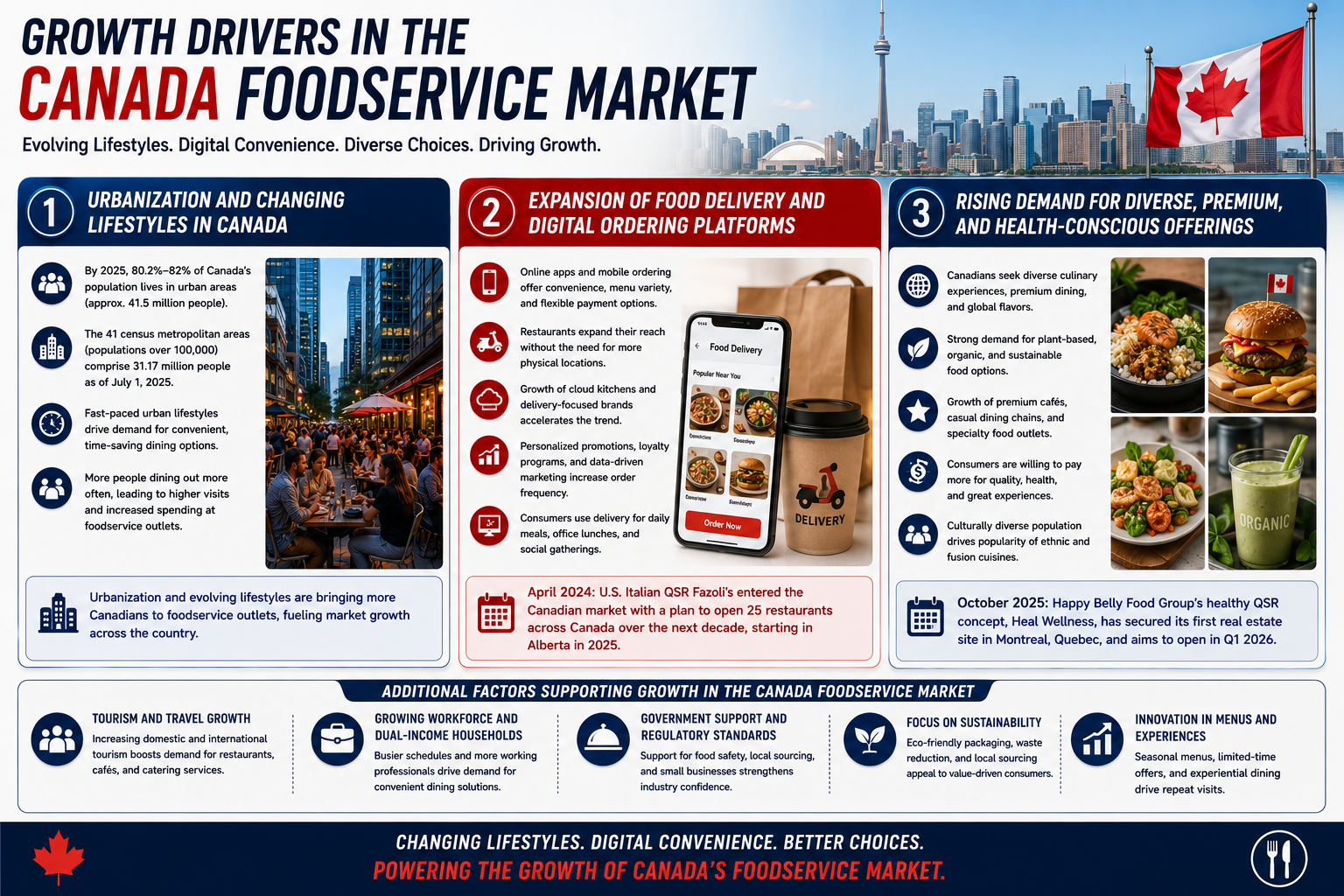
By 2025, approximately 80% to 82% of Canada's population is expected to reside in urban areas. The country's metropolitan regions continue attracting residents seeking employment opportunities, education, and access to modern amenities.
Urban living often creates greater demand for foodservice because consumers spend more time outside the home and face increasingly busy schedules.
Long commutes, demanding work environments, and active social lifestyles encourage frequent use of restaurants, cafés, takeout services, and delivery platforms.
As urban populations continue growing, foodservice operators benefit from larger customer bases and increased consumption frequency.
Busy Lifestyles Increase Demand for Convenience
Modern Canadian consumers increasingly value convenience.
Many individuals balance professional responsibilities, family commitments, education, and social activities, leaving less time for meal preparation at home.
Foodservice businesses help address these needs by offering ready-to-eat meals, delivery services, quick-service options, and mobile ordering capabilities.
Consumers can access a wide range of cuisines and dining experiences without the time investment required for home cooking.
This growing preference for convenience continues supporting strong demand across multiple foodservice categories.
Digital Ordering and Delivery Platforms Transform the Industry
The rapid growth of digital ordering and food delivery platforms has fundamentally changed how Canadians interact with foodservice providers.
Mobile applications and online ordering systems allow consumers to browse menus, customize meals, place orders, track deliveries, and make secure payments with ease.
These technologies provide significant benefits for both consumers and restaurant operators.
Consumers enjoy convenience and flexibility, while restaurants gain access to broader customer bases without necessarily expanding physical locations.
The growth of cloud kitchens and delivery-focused concepts has further accelerated this transformation.
Digital platforms also enable loyalty programs, personalized promotions, and data-driven marketing strategies that help increase customer retention and spending.
As technology adoption continues expanding, digital ordering is expected to remain a major growth driver within the Canadian foodservice industry.
Consumers Seek More Diverse Dining Experiences
Canadian consumers are becoming increasingly adventurous in their food choices.
The country's multicultural population has created strong demand for international cuisines, regional specialties, fusion concepts, and authentic ethnic dining experiences.
Restaurants offering diverse menu options often benefit from consumers seeking variety and culinary exploration.
This trend has encouraged foodservice operators to expand offerings beyond traditional menu categories.
Consumers now have access to a wide range of dining options reflecting global culinary influences.
As cultural diversity continues enriching Canada's food landscape, demand for unique dining experiences is expected to remain strong.
Health-Conscious Dining Continues to Grow
Health and wellness trends are increasingly influencing foodservice purchasing decisions.
Consumers are paying closer attention to ingredient quality, nutritional value, sustainability, and dietary preferences when choosing where and what to eat.
Demand for plant-based meals, organic ingredients, low-calorie options, and sustainable food sourcing practices continues growing.
Restaurants that successfully align with these preferences often enjoy stronger customer engagement and brand loyalty.
Health-conscious menu innovation is becoming an important competitive differentiator across the industry.
As wellness-focused lifestyles continue expanding, foodservice operators are expected to invest further in healthier offerings.
Premium Dining Experiences Support Revenue Growth
Many consumers are increasingly willing to spend more on high-quality dining experiences.
Premium cafés, upscale casual restaurants, specialty food concepts, and experiential dining venues continue benefiting from this trend.
Consumers often view dining out as both a social activity and a form of entertainment.
Atmosphere, service quality, menu creativity, and unique experiences have become important factors influencing purchasing decisions.
This shift toward premiumization supports higher average transaction values and strengthens profitability for many foodservice operators.
Quick-Service Restaurants Lead Industry Growth
Quick-service restaurants represent one of the fastest-growing segments within the Canadian foodservice market.
QSRs appeal to consumers because they offer speed, affordability, convenience, and consistent product quality.
Students, professionals, families, and commuters frequently rely on quick-service establishments for daily meals and snacks.
The segment has also embraced digital innovation aggressively through mobile ordering, loyalty applications, drive-through enhancements, and delivery partnerships.
These capabilities help increase accessibility while improving customer experiences.
Strong brand recognition and competitive pricing continue making QSRs a dominant force within Canada's foodservice industry.
Food Delivery Continues Reshaping Consumer Behavior
Food delivery has evolved from a supplementary service into a major component of the foodservice market.
Consumers increasingly use delivery platforms for everyday meals, workplace lunches, family gatherings, and special occasions.
The convenience of having restaurant-quality meals delivered directly to homes or offices has become highly appealing.
Many operators now design menus specifically for delivery consumption and invest in packaging solutions that preserve food quality during transportation.
Delivery-focused business models and ghost kitchens continue expanding as operators seek new growth opportunities.
Catering Services Benefit from Event Recovery
The catering segment remains an important contributor to Canada's foodservice market.
Corporate events, weddings, conferences, social gatherings, educational functions, and institutional contracts all generate demand for catering services.
Modern caterers increasingly offer customized menus, dietary accommodations, sustainable sourcing options, and premium presentation experiences.
The continued recovery of in-person events has strengthened demand across the catering industry.
Large-scale food preparation capabilities and long-term contracts often provide stable revenue streams for operators.
As event activity continues growing, catering services are expected to remain a valuable market segment.
Accommodation Foodservice Supports Tourism Growth
Hotels, resorts, lodges, and other accommodation providers play an important role within Canada's foodservice ecosystem.
These establishments offer a variety of dining services, including restaurants, room service, banquet operations, cafés, and event catering.
Demand is closely linked to tourism, business travel, conferences, and leisure activities.
As domestic and international travel continues recovering, accommodation foodservice providers are benefiting from increased guest activity.
The hospitality sector remains a significant contributor to overall foodservice revenue growth.
Institutional Foodservice Maintains Strong Demand
Institutional foodservice remains an essential segment serving schools, universities, hospitals, nursing homes, military facilities, and workplaces.
These operations focus on delivering nutritious, affordable meals on a large scale while meeting strict food safety and dietary requirements.
Population growth, healthcare expansion, and educational development continue supporting demand for institutional foodservice services.
Increasing emphasis on wellness, sustainability, and locally sourced ingredients is also influencing menu development throughout the sector.
Institutional foodservice provides stable demand and remains a cornerstone of Canada's broader foodservice market.
Retail Foodservice Gains Momentum
Retail foodservice has become increasingly important as supermarkets, convenience stores, and retail chains expand prepared food offerings.
Consumers frequently purchase ready-to-eat meals, bakery products, hot foods, beverages, and grab-and-go snacks while shopping.
Retailers benefit from convenience and accessibility, allowing them to compete directly with traditional foodservice providers.
The continued expansion of fresh food programs and prepared meal options is helping retailers capture greater market share.
This segment is expected to remain an important growth contributor moving forward.
Ontario Leads the National Market
Ontario represents Canada's largest foodservice market.
The province benefits from high population density, strong consumer spending, diverse cultural influences, and extensive restaurant infrastructure.
Major metropolitan areas generate significant demand across all foodservice categories, including quick-service restaurants, fine dining establishments, delivery platforms, and institutional providers.
Ontario's multicultural population also supports strong demand for international cuisines and customized dining experiences.
As population growth and economic activity continue, Ontario is expected to maintain its leadership position.
British Columbia Drives Innovation and Wellness Trends
British Columbia is widely recognized as one of Canada's most dynamic foodservice markets.
Consumers demonstrate strong interest in organic foods, plant-based meals, sustainable sourcing practices, and health-conscious dining options.
The province's diverse population and thriving tourism sector contribute to demand for premium and international cuisine offerings.
Food delivery adoption and digital ordering technologies are also particularly advanced within the region.
These factors position British Columbia as an important trendsetter within the national foodservice landscape.
Alberta Benefits from Economic Activity
Alberta's foodservice market is supported by urban growth, strong disposable incomes, and active business sectors.
Cities such as Calgary and Edmonton generate substantial demand for restaurants, cafés, catering services, and delivery platforms.
Busy professional lifestyles contribute to frequent dining out and takeout consumption.
As urban development continues, Alberta remains an important contributor to Canada's overall foodservice growth.
Rising Costs Remain a Major Challenge
Despite positive growth prospects, the Canadian foodservice market faces several challenges.
Rising food costs, labor expenses, rent, transportation costs, and utility expenses continue placing pressure on profit margins.
Many operators struggle to balance affordability for consumers with increasing operational costs.
Smaller and independent establishments often face greater financial vulnerability than larger chains.
Managing expenses while maintaining quality remains a key challenge throughout the industry.
Labor Shortages Continue to Affect Operations
Workforce shortages represent another significant challenge.
Many foodservice operators report difficulties recruiting and retaining qualified employees.
Labor shortages can lead to service disruptions, increased training costs, reduced operating hours, and higher wage expenses.
The challenge is particularly acute in specialized roles requiring culinary expertise and customer service skills.
Addressing workforce constraints will remain a critical priority for operators seeking sustainable growth.
Competition Is More Intense Than Ever
The Canadian foodservice market is highly competitive.
Local restaurants compete alongside national chains, international brands, delivery platforms, ghost kitchens, and retail foodservice providers.
Consumers have more dining options than ever before and often demonstrate limited brand loyalty.
Operators must continuously innovate, invest in technology, improve service quality, and differentiate menu offerings to remain competitive.
This environment rewards businesses capable of adapting quickly to changing consumer expectations.
Final Thoughts
Canada's foodservice market is entering a period of sustained expansion driven by urbanization, digital transformation, changing consumer lifestyles, and growing demand for convenience.
From quick-service restaurants and delivery platforms to premium dining experiences and institutional foodservice operations, the industry continues evolving to meet the needs of modern consumers.
With the market projected to grow from US$87.42 billion in 2025 to US$141.9 billion by 2034, significant opportunities exist for restaurant operators, investors, technology providers, and hospitality companies.
While challenges related to labor shortages, rising costs, and intense competition remain significant, strong consumer demand and ongoing innovation provide a solid foundation for future growth.
As Canadians continue embracing convenience, variety, and digital-first dining experiences, the foodservice industry is poised to remain one of the country's most important and dynamic economic sectors.
About the Creator
Enjoyed the story? Support the Creator.
Subscribe for free to receive all their stories in your feed.
Comments
There are no comments for this story
Be the first to respond and start the conversation.