
Can Meat Substitutes Redefine the Future of Protein Consumption in North America?
Health Awareness, Sustainability Goals, and Plant-Based Innovation Are Fueling a Rapidly Expanding Market

The way consumers think about protein is changing dramatically across North America. Traditional meat products continue to dominate dinner tables, but an increasing number of consumers are actively seeking alternatives that align with their health goals, environmental values, and evolving dietary preferences. As a result, meat substitutes have emerged as one of the fastest-growing segments within the food industry.
Plant-based burgers, sausages, nuggets, tofu products, textured vegetable proteins, and innovative meat alternatives are becoming increasingly mainstream. What was once considered a niche category aimed primarily at vegetarians and vegans has now expanded to include flexitarians, health-conscious consumers, and environmentally aware shoppers looking to reduce their meat consumption without sacrificing taste or convenience.
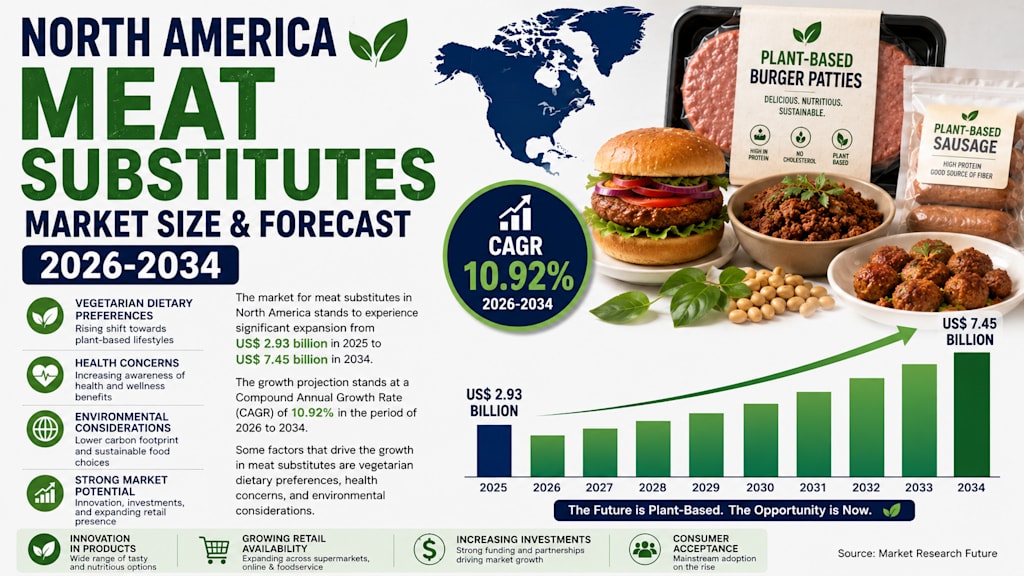
According to Renub Research, the North America Meat Substitutes Market is expected to grow from US$ 2.93 billion in 2025 to US$ 7.45 billion by 2034, expanding at a remarkable CAGR of 10.92% between 2026 and 2034. This rapid growth highlights the increasing acceptance of alternative proteins and the transformation occurring within the broader food industry.

A Shift Toward Healthier Eating Habits
One of the strongest drivers behind the growing popularity of meat substitutes is increasing health consciousness among consumers.
Many consumers are becoming more aware of the potential health risks associated with excessive consumption of red and processed meats. Concerns regarding heart disease, obesity, diabetes, and other lifestyle-related conditions are encouraging individuals to explore healthier dietary alternatives.
Plant-based meat substitutes often appeal to consumers because they can provide protein while containing lower levels of saturated fats compared to conventional meat products. Many products are also fortified with essential vitamins and nutrients, making them attractive to health-conscious buyers.
According to data cited in industry research, obesity prevalence among American adults exceeded 40% during recent years, highlighting the growing importance of healthier dietary choices. As consumers continue prioritizing wellness and preventive healthcare, demand for meat substitutes is expected to increase significantly.
Flexitarian Diets Are Reshaping Consumer Behavior
The growth of flexitarian lifestyles is transforming the protein market across North America.
Unlike strict vegetarian or vegan diets, flexitarian consumers simply aim to reduce their meat intake while continuing to enjoy occasional animal-based products. This approach has gained widespread popularity because it offers flexibility while supporting health and sustainability goals.
Many consumers are replacing meat with plant-based alternatives several times per week rather than eliminating meat entirely. This behavioral shift has significantly expanded the customer base for meat substitute manufacturers.
Restaurants, food service providers, and retailers have responded by increasing the availability of plant-based menu options and alternative protein products.
As flexitarian eating continues to gain traction, meat substitutes are expected to become a routine part of mainstream diets.
Sustainability Is Becoming a Powerful Purchasing Factor
Environmental concerns are playing a major role in shaping consumer food choices.
Animal agriculture is frequently associated with substantial greenhouse gas emissions, water consumption, and land use requirements. As awareness of climate change and environmental sustainability grows, consumers increasingly seek food products that align with their ecological values.
Meat substitutes offer an alternative protein source that generally requires fewer natural resources than traditional livestock production. This environmental advantage has become an important selling point for many consumers.
Growing public discussions surrounding sustainability, carbon footprints, and responsible consumption continue to strengthen demand for plant-based products.
Consumers are increasingly seeking foods that not only support personal health but also contribute to broader environmental goals.
Product Innovation Is Accelerating Market Growth
Continuous innovation has transformed the meat substitutes industry from a niche category into a sophisticated and highly competitive market.
Manufacturers are investing heavily in research and development to improve taste, texture, appearance, and nutritional value. Today's meat substitutes are far more advanced than earlier generations of plant-based products.
Companies are utilizing ingredients such as soy protein, pea protein, wheat gluten, legumes, fermentation-derived ingredients, and emerging food technologies to create products that closely mimic conventional meat.
Innovation has expanded the product portfolio to include burgers, patties, nuggets, strips, ground meat alternatives, sausages, deli slices, and ready-to-cook meal solutions.
In May 2025, T. Hasegawa USA introduced a new flavoring technology designed specifically for plant-based proteins. Utilizing advances in flavor science and fermentation technology, the innovation helps recreate authentic chicken, beef, and pork flavor profiles for meat substitute products.
Growing Retail Availability Is Driving Adoption
The expansion of retail distribution channels has significantly improved consumer access to meat substitutes.
Major supermarkets, hypermarkets, specialty stores, health food retailers, and online platforms now dedicate substantial shelf space to plant-based products. Consumers can easily find alternative proteins alongside conventional meat products, increasing visibility and trial purchases.
Many grocery chains have introduced dedicated plant-based sections that feature a wide range of meat substitute options.
Online retail channels have further expanded accessibility by allowing consumers to compare products, explore new brands, and purchase directly from manufacturers.
Greater availability is helping accelerate mainstream adoption across diverse consumer groups.
The Rise of Clean-Label Preferences
Today's consumers increasingly prioritize transparency when purchasing food products.
Many shoppers carefully examine ingredient labels and seek products that contain recognizable, natural ingredients. Clean-label products are becoming especially important within the meat substitutes category.
According to industry insights, a significant percentage of consumers actively prefer foods labeled as natural. This trend is encouraging manufacturers to simplify formulations while maintaining product performance and nutritional quality.
Companies that successfully balance clean-label expectations with taste and functionality are likely to gain a competitive advantage in the marketplace.
High Costs Remain a Significant Challenge
Despite strong market momentum, pricing continues to be one of the industry's most significant barriers.
Many meat substitute products remain more expensive than traditional meat products due to complex production processes, specialized ingredients, and smaller economies of scale.
Price-sensitive consumers may hesitate to adopt plant-based alternatives regularly if they perceive them as significantly more expensive than conventional proteins.
Economic uncertainty and inflationary pressures can further influence purchasing decisions, particularly among middle-income households.
Although manufacturing efficiencies may reduce costs over time, affordability remains a key challenge for broader market penetration.
Consumer Perceptions Continue to Evolve
Taste and texture remain critical factors influencing consumer acceptance.
While product quality has improved substantially, some consumers still believe meat substitutes fail to fully replicate the sensory experience of traditional meat. Others express concerns regarding ingredient processing and product authenticity.
Overcoming these perceptions requires continued innovation, transparent communication, and consumer education.
Manufacturers are focusing on developing products that deliver more realistic textures, improved cooking performance, and enhanced flavor profiles.
As technology advances, the gap between traditional meat and alternative proteins is expected to narrow further.
Tofu Continues to Maintain Strong Market Presence
Tofu remains one of the most established categories within the meat substitutes market.
Known for its high protein content and versatility, tofu is widely used in various cuisines and meal applications. Consumers appreciate its ability to absorb flavors while providing a nutritious alternative to meat.
The growing popularity of natural and minimally processed foods has further strengthened tofu's position within the market.
Retail availability, restaurant adoption, and ongoing product innovation continue to support growth in this segment.
Soy-Based Products Remain Industry Leaders
Soy-based meat substitutes continue to represent a significant share of the North American market.
Products such as soy burgers, nuggets, textured vegetable protein, and meat alternatives remain popular due to their affordability, protein content, and long-standing consumer familiarity.
Soy is considered a complete protein source, making it particularly attractive for consumers seeking nutritionally balanced alternatives.
Although concerns regarding genetically modified ingredients and allergens exist, soy-based products continue to play an important role within the industry.
Plant-Based Sausages Are Experiencing Rapid Growth
Among various product categories, plant-based sausages are emerging as one of the fastest-growing segments.
Consumers appreciate their versatility and ability to replicate traditional sausage experiences in breakfast dishes, sandwiches, grilling applications, and prepared meals.
Manufacturers continue improving flavor profiles, casing technologies, seasoning blends, and texture characteristics to create more authentic products.
The popularity of flexitarian diets has contributed significantly to increased demand for plant-based sausage products across retail and foodservice channels.
The United States Leads Regional Growth
The United States remains the largest and most influential market for meat substitutes in North America.
Strong consumer demand, advanced retail infrastructure, widespread product availability, and ongoing innovation have positioned the country as the regional leader.
Plant-based products are widely available through supermarkets, restaurants, fast-food chains, and online retailers.
In September 2025, Calbee acquired a majority stake in Hodo, a United States-based producer specializing in tofu and plant-based foods. The acquisition reflects growing investment activity within the alternative protein sector.
Canada and Mexico Present Strong Opportunities
Canada continues to experience rising demand for meat substitutes due to increasing health awareness, sustainability concerns, and consumer interest in clean-label products.
Government support for sustainable food systems and ongoing innovation within plant protein manufacturing are further contributing to market expansion.
Mexico's market is also developing steadily as consumers become more familiar with plant-based diets. While meat remains deeply embedded in local food culture, growing health awareness and urbanization are encouraging consumers to explore alternative protein options.
Expanding distribution channels and international brand presence are expected to support future growth throughout the region.
Final Thoughts
The North America meat substitutes market is entering a period of extraordinary expansion driven by changing consumer preferences, health-conscious lifestyles, environmental awareness, and continuous product innovation.
As more consumers embrace flexitarian eating patterns and seek sustainable protein alternatives, demand for plant-based products is expected to accelerate rapidly. Manufacturers that prioritize taste, affordability, clean-label formulations, and nutritional value will be best positioned to capitalize on emerging opportunities.
With the market forecast to grow from US$ 2.93 billion in 2025 to US$ 7.45 billion by 2034, meat substitutes are no longer a niche trend. They are becoming an increasingly important component of North America's evolving food landscape and may ultimately reshape the future of protein consumption across the region.
About the Creator
Enjoyed the story? Support the Creator.
Subscribe for free to receive all their stories in your feed.
Comments
There are no comments for this story
Be the first to respond and start the conversation.