
Can Europe’s Confectionery Market Reach US$ 102.91 Billion by 2034 as Premium Chocolates, Seasonal Demand, and Innovation Drive Growth?
Europe's confectionery industry is expanding rapidly as premium products, festive traditions, healthier alternatives, and online retail reshape consumer purchasing habits.

Europe's love affair with confectionery is deeply rooted in history, culture, and tradition. From Belgian pralines and Swiss chocolates to British candies and French gourmet sweets, confectionery products have long been an essential part of everyday life across the continent. Whether consumed as an indulgent snack, gifted during celebrations, or enjoyed during seasonal festivities, confectionery remains one of the most beloved food categories in Europe.
Today, the industry is evolving beyond traditional offerings. Consumers are increasingly seeking premium products, healthier alternatives, sustainable ingredients, and innovative flavors while still maintaining their passion for classic confectionery experiences. Manufacturers are responding with creative product launches, ethical sourcing initiatives, and advanced packaging solutions that appeal to modern consumers.
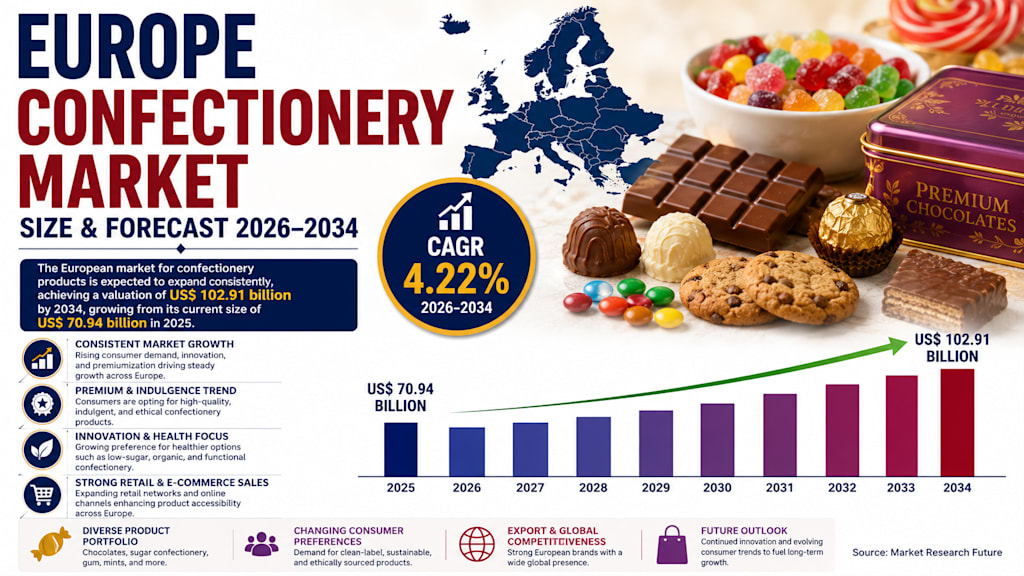
According to Renub Research, the Europe Confectionery Market is projected to grow from US$ 70.94 billion in 2025 to US$ 102.91 billion by 2034, expanding at a CAGR of 4.22% between 2026 and 2034. This growth reflects the enduring popularity of confectionery products and the industry's ability to adapt to changing consumer preferences.
Why Confectionery Remains a Core Part of European Culture
Confectionery products are much more than sweet treats in Europe. They are woven into cultural traditions, celebrations, family gatherings, and social interactions throughout the year.
Consumers regularly purchase chocolates, candies, gums, lollipops, gummies, and specialty sweets during occasions such as Christmas, Easter, Valentine's Day, Halloween, birthdays, weddings, and anniversaries. These products often symbolize affection, appreciation, celebration, and hospitality.
The emotional connection consumers have with confectionery contributes significantly to market stability. Even during periods of economic uncertainty, many consumers continue purchasing confectionery products because they represent affordable indulgence and comfort.
This strong cultural foundation provides a significant advantage for manufacturers and retailers operating within the European market.
Premium Confectionery Is Capturing Consumer Attention
One of the most influential trends shaping the market is the growing demand for premium and artisanal confectionery products.
Modern consumers are becoming increasingly selective about the quality of the products they consume. Rather than purchasing large quantities of conventional sweets, many shoppers are choosing premium chocolates and specialty confectionery products made with superior ingredients and unique flavor profiles.
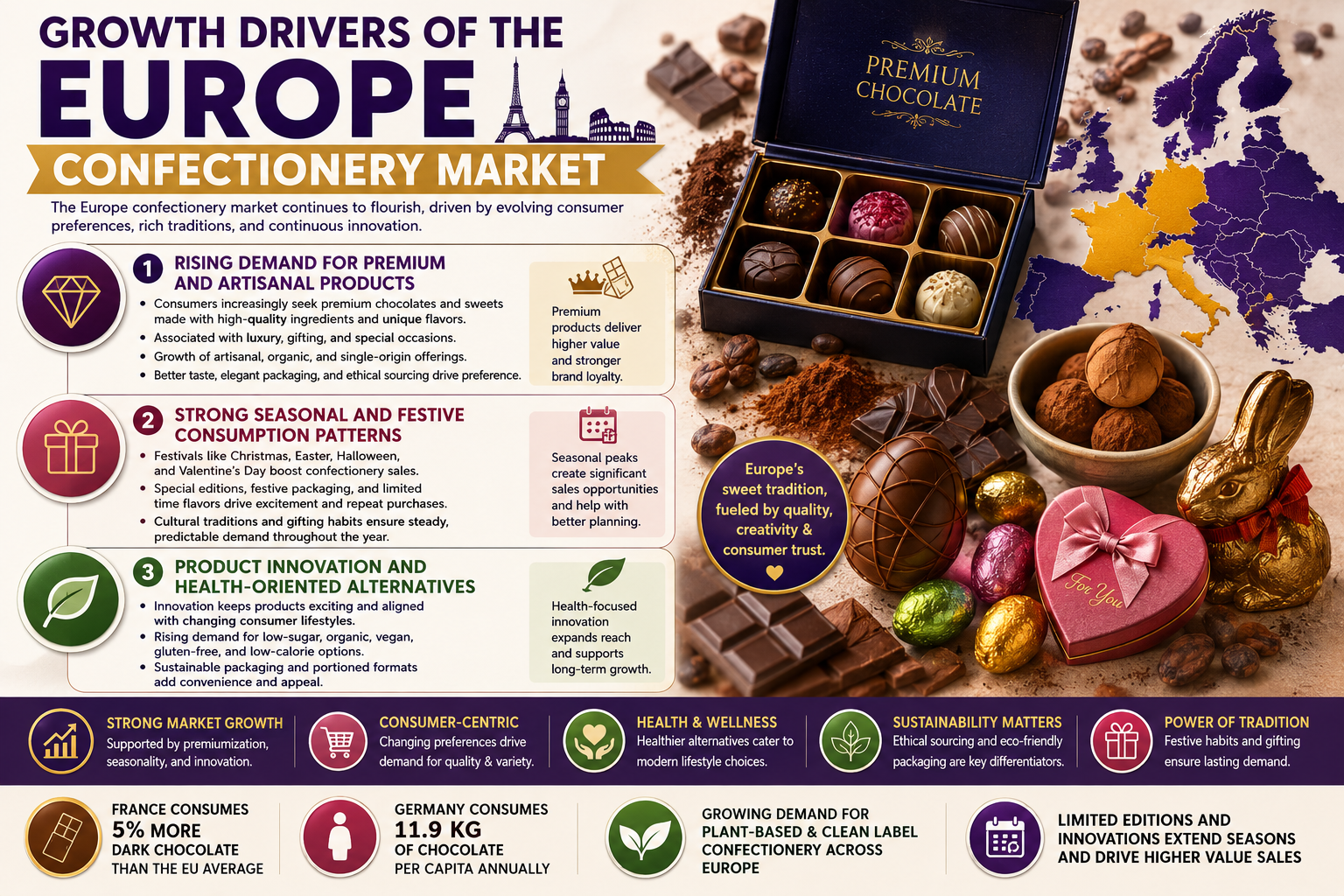
Premium confectionery products often feature single-origin cocoa, handcrafted production methods, organic ingredients, sustainable sourcing practices, and sophisticated packaging designs. Consumers view these products as symbols of luxury and quality, making them popular choices for gifting and special occasions.
Countries such as Switzerland, Belgium, France, Germany, and the United Kingdom continue to play a leading role in premium confectionery innovation. Their long-standing traditions of craftsmanship and product excellence help attract consumers seeking exceptional confectionery experiences.
As disposable incomes rise and consumer preferences evolve, premiumization is expected to remain one of the strongest drivers of market growth throughout the forecast period.
Seasonal Celebrations Continue to Drive Sales
Seasonal demand represents one of the most important characteristics of the European confectionery market.
Major holidays such as Christmas, Easter, Valentine's Day, and Halloween generate substantial increases in confectionery purchases each year. Manufacturers strategically launch limited-edition products, festive packaging, and seasonal flavors to maximize consumer interest during these periods.
Chocolate eggs remain a staple of Easter celebrations, while luxury chocolate gift boxes dominate Christmas and Valentine's Day sales. Retailers often dedicate significant shelf space to seasonal products, creating strong visibility and encouraging impulse purchases.
Germany provides a particularly strong example of seasonal confectionery demand. Consumers in the country consume approximately 11.9 kilograms of chocolate annually, highlighting the important role confectionery plays in everyday life as well as festive traditions.
Seasonal purchasing behavior enables manufacturers to plan production cycles efficiently while creating opportunities for premium product offerings and limited-edition releases.
Innovation Is Reshaping the Industry
Innovation remains at the heart of Europe's confectionery sector.
Manufacturers continuously invest in research and development to create products that appeal to changing consumer tastes and preferences. New flavor combinations, healthier ingredients, innovative textures, and sustainable packaging solutions are becoming increasingly common.
The industry is seeing growing demand for products featuring organic ingredients, reduced sugar formulations, plant-based alternatives, gluten-free options, and functional nutritional benefits. These innovations help brands remain relevant among health-conscious consumers while maintaining the indulgent experience associated with confectionery products.
Packaging innovation is also playing a major role in market expansion. Environmentally friendly materials, portion-controlled packs, and premium presentation designs help enhance product appeal and support sustainability objectives.
As competition intensifies, continuous innovation will remain essential for maintaining market share and attracting new consumers.
Health-Conscious Consumers Are Driving Change
One of the biggest transformations occurring within the confectionery market is the growing influence of health-conscious consumers.
Rising awareness of obesity, diabetes, and excessive sugar consumption has encouraged many individuals to reassess their dietary choices. As a result, manufacturers are increasingly developing products that offer indulgence while addressing health concerns.
Reduced-sugar chocolates, sugar-free chewing gums, organic candies, vegan confectionery, and lower-calorie snack bars are becoming increasingly popular throughout Europe. These products allow consumers to enjoy treats while maintaining healthier lifestyles.
The challenge for manufacturers lies in balancing taste and nutrition. Consumers still expect exceptional flavor and texture, making product development a complex process.
Companies that successfully combine health benefits with premium taste experiences are likely to gain a significant competitive advantage in the coming years.
Sustainability Is Becoming a Purchasing Priority
Environmental and ethical considerations are becoming increasingly important to European consumers.
Many shoppers actively seek products that feature responsibly sourced ingredients, fair-trade certifications, recyclable packaging, and sustainable production methods. This trend is particularly visible within the chocolate segment, where cocoa sourcing practices are under growing scrutiny.
Consumers want reassurance that the products they purchase support environmental protection and ethical labor standards. As a result, manufacturers are investing heavily in sustainable supply chains and transparent sourcing initiatives.
Sustainability is no longer viewed as a niche concern. It has become a mainstream purchasing factor that influences consumer loyalty and brand reputation across the confectionery industry.
Online Retail Is Expanding Consumer Access
Digital commerce has transformed the way consumers purchase confectionery products.
Online retail platforms provide access to a broader range of products than traditional brick-and-mortar stores. Consumers can explore premium brands, specialty products, seasonal collections, and international offerings from the comfort of their homes.
Gift boxes, personalized confectionery products, subscription services, and luxury assortments have become especially popular through online channels.
Advancements in logistics and packaging have improved delivery reliability, ensuring products arrive in excellent condition despite temperature sensitivity.
The growth of e-commerce has also enabled smaller confectionery brands to reach broader audiences without requiring extensive physical retail networks.
As online shopping continues to gain popularity, digital channels are expected to contribute significantly to future market growth.
Sugar Regulations Present Ongoing Challenges
While opportunities remain abundant, the confectionery industry faces increasing regulatory pressure related to sugar consumption.
Governments and public health organizations across Europe are implementing measures aimed at reducing obesity and promoting healthier diets. These initiatives include sugar taxes, stricter labeling requirements, and marketing restrictions targeting children.
Manufacturers must adapt to these evolving regulations while maintaining product appeal and profitability.
Product reformulation often requires significant investment in research, ingredient sourcing, and production adjustments. Additionally, reducing sugar content without compromising taste presents technical challenges.
Although these regulations create obstacles, they also encourage innovation and support the development of healthier confectionery alternatives.
Raw Material Price Volatility Affects Profitability
Fluctuating prices for key ingredients continue to impact the confectionery industry.
Cocoa, sugar, dairy products, and packaging materials are all subject to market volatility influenced by climate conditions, geopolitical events, transportation costs, and supply chain disruptions.
Rising production costs can pressure profit margins and force manufacturers to make difficult pricing decisions.
While some companies pass increased costs on to consumers, excessive price increases may negatively affect demand, particularly among price-sensitive shoppers.
Managing supply chains effectively and maintaining sourcing flexibility are becoming increasingly important strategies for mitigating risk.
Chocolate Remains the Market's Largest Segment
Chocolate confectionery continues to dominate the European market.
Consumers across Europe maintain strong demand for milk chocolate, dark chocolate, white chocolate, premium assortments, and specialty products. Chocolate's versatility, emotional appeal, and gifting potential contribute significantly to its enduring popularity.
The segment continues to benefit from innovation in flavor development, healthier formulations, organic ingredients, and sustainable sourcing practices.
Demand for premium dark chocolate has grown particularly strongly as consumers increasingly associate it with health benefits and sophisticated taste experiences.
Chocolate is expected to remain the most influential category within the European confectionery market throughout the forecast period.
Germany Leads the European Confectionery Industry
Germany remains the largest confectionery market in Europe thanks to its strong manufacturing capabilities, high consumption levels, and established confectionery heritage.
German consumers demonstrate strong demand for chocolates, candies, seasonal products, and innovative confectionery offerings. The country also serves as a major exporter of confectionery products to international markets.
Innovation continues to play an important role in Germany's market development. In March 2026, Nestlé announced plans to launch a confectionery product using a new cocoa substitute developed by Planet A Foods, highlighting the industry's focus on sustainability and ingredient innovation.
Germany's combination of strong domestic demand and manufacturing expertise ensures its continued leadership within the European market.
The United Kingdom and France Continue to Drive Innovation
The United Kingdom remains one of Europe's most dynamic confectionery markets, supported by a strong snacking culture and widespread consumer demand for chocolates, gums, and sweets.
Health-conscious consumers in the UK are increasingly embracing reduced-sugar, vegan, and organic confectionery options. Retail innovation and strong supermarket distribution networks continue supporting market growth.
France maintains its reputation for premium confectionery craftsmanship and luxury chocolate production. French consumers place significant emphasis on quality, artisanal techniques, and sophisticated flavor profiles.
The country's strong gifting culture and preference for gourmet products continue to support premium segment growth.
Together, the United Kingdom and France play critical roles in shaping industry trends and driving innovation across Europe.
Final Thoughts
The Europe confectionery market continues to demonstrate remarkable strength despite evolving consumer preferences and regulatory challenges.
Premiumization, seasonal demand, product innovation, sustainability initiatives, and expanding online retail channels are creating substantial growth opportunities for manufacturers across the region.
As consumers increasingly seek products that combine indulgence, quality, ethical sourcing, and healthier ingredients, the industry's ability to innovate will become even more important.
With the market projected to grow from US$ 70.94 billion in 2025 to US$ 102.91 billion by 2034, Europe's confectionery sector remains well-positioned for long-term success. Companies that successfully balance tradition with innovation will be best equipped to capture future opportunities in one of the world's most beloved food categories.
About the Creator
Enjoyed the story? Support the Creator.
Subscribe for free to receive all their stories in your feed.
Comments
There are no comments for this story
Be the first to respond and start the conversation.