
Bromine Market: Oil and Gas Drilling Demand, Chemical Innovations & Market Forecast
Expanding oil and gas drilling activities, offshore exploration projects, and completion fluid demand continue to strengthen bromine market growth prospects internationally

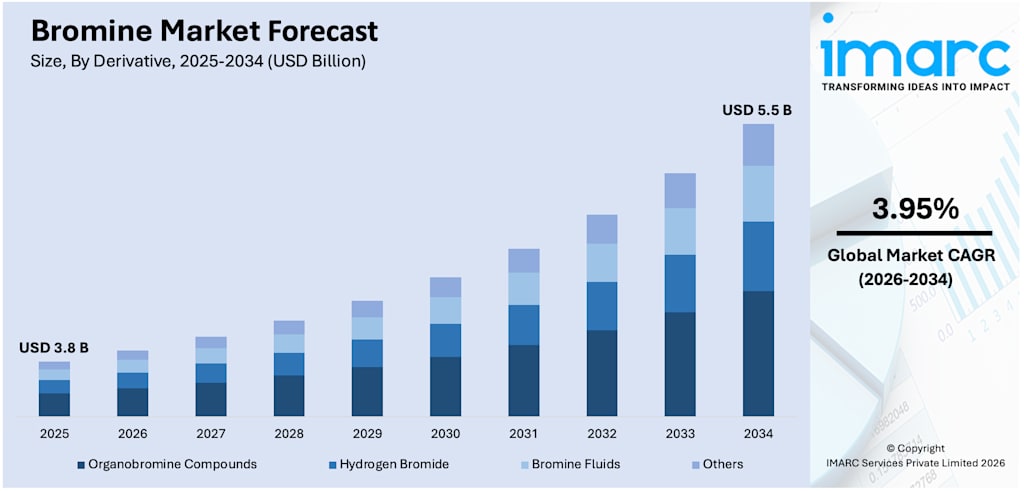
Increasing industrial safety mandates, expanding electronic manufacturing, and the crucial role of clear brine fluids in deepwater oil and gas extraction are driving bromine demand, supported by innovations in energy storage, regulatory fire compliance, and rising water treatment applications globally. According to IMARC Group’s latest data, the global bromine market size was valued at USD 3.8 Billion in 2025. Looking forward, IMARC Group estimates the market to reach USD 5.5 Billion by 2034, exhibiting a CAGR of 3.95% from 2026-2034.
Bromine now represents a multi-billion-dollar global industry showing steady year-on-year expansion. Demand is driven by strict building safety codes, rapid digitalization that favors high-performance flame retardants in consumer tech, and increasing exploration in offshore drilling. Product innovations in zinc-bromine flow batteries and sustainable polymer additives are further accelerating uptake. Major segments include hydrogen bromide, organobromine compounds, and clear brine fluids, with end-users prioritizing material performance, supply security, and regulatory compliance.
Bromine Market Growth Drivers:
- Expanding Electronics and E-Mobility Manufacturing
The accelerating rollout of advanced consumer electronics, server infrastructure, and electric vehicles requires comprehensive thermal protection. Brominated flame retardants are heavily utilized in printed circuit boards and plastic casings to stop thermal runaway events. Globally, the electronic enclosures market relies on these compounds to pass international fire safety test metrics. With thousands of circuit elements crammed into thinner smartphone profiles, manufacturers turn to chemical stabilizers to withstand severe operational temperatures. This rising industrial output directly accelerates the raw volume intake of bromine components across major manufacturing hubs.
- Surge in Offshore Oil and Gas Extraction
Deepwater exploration projects necessitate heavy, clear brine fluids to manage extreme well pressures without blocking drilling paths. Calcium bromide and sodium bromide form highly saturated completion solutions that prevent structural collapses in deep sea wells. Major drilling operators rely on these chemical formulations to lubricate equipment and stabilize shale zones under thousands of feet of water. As global energy demand prompts investments in more complex subterranean locations, the industrial consumption of premium-grade brine fluids remains crucial for ensuring both operational safety and cost efficiency.
- Strict Regulatory Fire Safety Standards
International construction and transport guidelines mandate that commercial building materials, automotive seating, and public infrastructure meet rigid flame-extinguishing benchmarks. Organobromine compounds are mixed directly into polymers and insulation foams to delay the ignition window, providing vital evacuation time during building emergencies. Municipal codes require structural plastic and textiles to self-extinguish when exposed to electrical sparks. These persistent regulatory protocols ensure that massive volume supplies of industrial fire retardants are continuously funneled into the global construction and automotive manufacturing supply chains.
Bromine Market Trends:
- Integration into Next-Generation Energy Storage Technology
Utility-scale power networks are increasingly integrating zinc-bromine flow battery configurations to stabilize clean energy distribution grids. These advanced batteries use large volumes of high-purity bromine ions to capture excess wind and solar energy, returning it to active grids during peak usage hours. Because they run cooler and experience virtually zero chemical degradation over thousands of operating cycles, flow batteries offer an alternative to traditional lithium setups. This emerging application positions the halogen element as a vital player in modern green infrastructure and large-scale industrial microgrids.
- Rising Deployment in Industrial Water Disinfection Systems
Large manufacturing plants and power generation facilities are replacing traditional chlorine treatments with specialized bromine biocides in cooling tower setups. Bromine compounds remain highly active at higher pH levels and elevated water temperatures, successfully destroying algae and dangerous bacterial films where other elements lose potency. This operational efficiency helps factories maintain consistent heat transfer rates and protects heavy machinery from corrosive organic scaling. Municipal wastewater facilities also utilize these stable biocides to treat highly concentrated industrial effluent safely before recycling.
- Strategic Expansion of Local Mining and Processing Capacities
With global supply largely concentrated around rich brine sources like the Dead Sea and specific underground deposits, top chemical firms are executing major capacity expansions to prevent shipping bottlenecks. Companies are implementing optimized solar evaporation technologies to scale up raw production efficiency and protect their chemical output. Industrial enterprises are forming long-term distribution partnerships to secure a steady supply of upstream precursors. This active expansion is designed to buffer manufacturing plants against sudden supply variations and rising international shipping expenses.
Recent News and Developments in Bromine Market
- August 2025: Sirmax announced the successful commercial introduction of its newest line of bromine-based, high-performance flame-retardant polypropylene compounds, specifically engineered to meet strict structural and fire-safety needs inside advanced electronic enclosures and home appliances.
- September 2025: ICL Group finalized a major multi-million-dollar capital investment to scale up the production capability of its specialized VeriQuel R100 brand, focusing on high-efficiency, flame-retardant polymer formulations aimed at satisfying growing industrial needs across North American and European manufacturing lines.
- March 2026: Asia-Potash completed the final engineering phase of its new 10,000-metric-ton industrial bromine processing facility, a strategic asset intended to significantly improve supply chain independence and fulfill rising demand within regional specialty chemical markets.
Note: If you require specific details, data, or insights that are not currently included in the scope of this report, we are happy to accommodate your request. As part of our customization service, we will gather and provide the additional information you need, tailored to your specific requirements. Please let us know your exact needs, and we will ensure the report is updated accordingly to meet your expectations.
About the Creator
Andrew Sullivan
Hello, I’m Andrew Sullivan. I have over 9+ years of experience as a market research specialist.
Enjoyed the story? Support the Creator.
Subscribe for free to receive all their stories in your feed.
Comments
There are no comments for this story
Be the first to respond and start the conversation.