
Bone Densitometer Market Growth: Why Early Bone Disease Detection Matters More Than Ever
Driven by aging populations, rising chronic conditions, and advances in DXA technology, bone density testing is becoming an essential part of preventive healthcare systems globally.

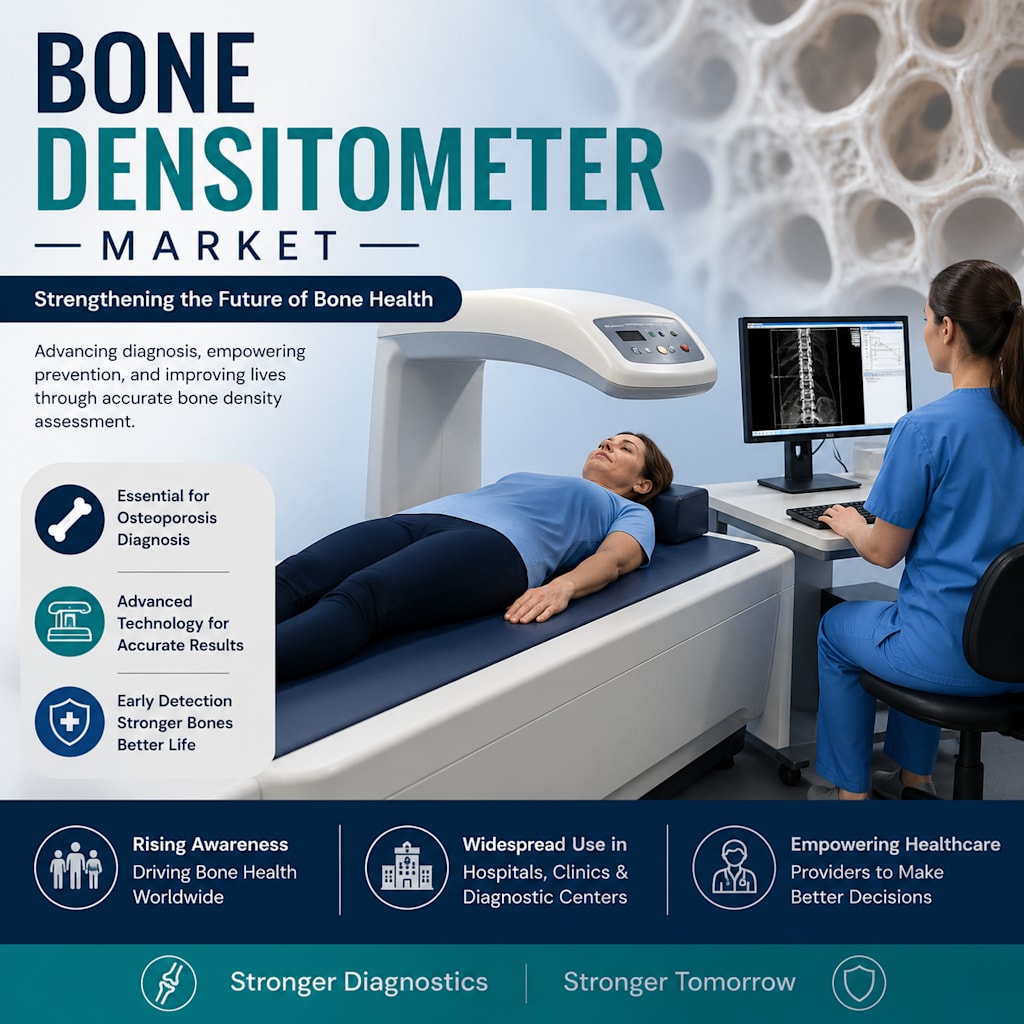
With people living longer and health problems related to our lifestyle on the increase, the silent condition which is posing ever more danger to health is that of weakening bones.
The insidious nature of conditions like osteoporosis means they may go completely unnoticed until a fracture occurs and millions around the world are affected. A health concern growing with every passing day is thus making it imperative for healthcare systems to place a greater emphasis on early diagnosis and prevention.
Central to this development are powerful diagnostic instruments known as bone densitometers.
Understanding the role of Bone Density Testing.
A bone densitometer is the technical name for what is often known as a DXA (dual-energy X-ray absorptiometry) machine and these instruments are specifically designed for the measurement of the strength of the bone along with its mineral density.
DXA machines do this by using an X-ray machine with very low dosage levels to measure the quantity of calcium and other minerals within bones, helping doctor's work out if bone density is within the normal range or if low bone mass or osteoporosis has already developed. What makes these devices of immense value is that they are non-invasive and require virtually no preparation on the part of the patient making them one of the most commonly used tools for the diagnosis of conditions related to bones.
A market with growing demand to meet the challenges of global health.
By 2025 the global bone densitometer market reached around $334m and is anticipated to hit close to $475m by 2034 growing at an annual rate of roughly 4%.
Although this might seem moderate, the market reflects a growing need for a solution to the challenge of diagnosing bone related conditions early on and as awareness about prevention in medicine grows, hospitals, clinics and diagnostic centres are investing more and more in providing this diagnosis to patients.
An ageing population is boosting demand.
The burgeoning elderly population is one of the leading drivers of demand. Bones naturally weaken with age and there is an increased risk of fractures and impaired mobility. Ageing people are thus prone to bone related illnesses such as osteopenia and osteoporosis. With growing life expectancy worldwide, healthcare systems face increasing numbers of patients that require regular bone mass measurements. Bone densitometers provide a way of identifying risks early and preventing serious damage in later life.
Why early diagnosis of bone weakness has become essential.
Bone weakening diseases are often referred to as 'silent' conditions as they build up over time with no noticeable symptoms but a fracture typically occurs before patients realize the extent of the problem – especially at an advanced age when life could potentially change for the worse. A bone densitometer allows medical professionals to catch these conditions earlier by providing:
- Preventative treatment programmes
- Lifestyle adjustments
- Medication protocols
- Reduction in the chance of fractures
This is why increasing numbers of practitioners are turning to the DXA scan.
Technological advancements allow faster and more accurate diagnoses.
Advancements in medical imaging technology has allowed DXA scans to be speeded up, the accuracy of diagnoses to be increased and the scans are now also used to examine other body parts in addition to the spine, hip, finger, heel and wrist as well as having the capability for integrated patient data monitoring.
Types of Bone Densitometer.
Bone densitometers can be split into two categories;
Central DXA Machines: The larger machines found in hospitals and clinics which are used to test the bone strength of areas such as the spine and hips.
Peripheral Devices: Smaller, portable machines which examine areas such as the heel, wrist or finger. Both types play a role.
The use of Bone Densitometers extend beyond osteoporosis detection.
While osteoporosis detection and prevention is still the main use for DXA machines there are a number of other uses being developed such as for evaluating:
Body composition and fitness levels
Changes in bones in sufferers of rheumatoid arthritis
Fracture risk evaluation in certain patient groups
Growth Areas Regionally.
In relation to geographical distribution, the market for DXA scans is lead by North America thanks to advanced health systems coupled with high levels of healthcare expenditure and health awareness.
The Asian-Pacific region is rapidly becoming a market of significant interest due to increases in healthcare access and a greater number of the population now at older ages. Europe too sees substantial use although not quite on the scale seen in America.
The bone densitometer market is a competitive one but dominated by innovation.
A mix of specialized global medical device companies and smaller organisations contribute to the market which is largely dominated by such large players as Hologic Inc. And GE Healthcare. Research and development focus on improving DXA scan accuracy, enhancing usability, and developing less expensive versions of the technology.
Market Challenges.
As with any type of medical device, DXA machines are not immune to certain problems that slow market adoption. Primarily these issues center around the high cost associated with the advanced scanning technology which limits adoption in less wealthy areas. Other constraints include low awareness amongst patients which means bone densitometry tests are not routinely requested in the required situations.
The Future of Bone Health Monitoring.
In future years, it is expected that the importance and widespread usage of the bone densitometer will continue to rise with advancements in mobile and portable devices, development of AI driven diagnostics and easier access to monitoring technology enabling earlier diagnosis.
In Conclusion.
Bone weakness may seem insignificant compared to the other more prevalent illnesses, but with technological advancements in areas such as bone densitometers helping to promote health care systems that focus on the preventative aspect of the condition rather than treating the consequences after a fracture, the impact on the long-term health of millions should not be understated. Although not the fastest moving market in healthcare, it is undoubtedly one of the most important.
What are your thoughts on the growing role of diagnostic technologies in healthcare? Do you think early detection tools like bone densitometers should become a routine part of health checkups?
About the Creator
Robert
Senior Market Researcher at IMARC Group, specializing in global market analysis, industry trends, and data-driven insights across diverse sectors.
Enjoyed the story? Support the Creator.
Subscribe for free to receive all their stories in your feed.
Comments
There are no comments for this story
Be the first to respond and start the conversation.