
Biotechnology Market Trends: Bioinformatics, AI Integration & Forecast to 2034
How advancements in genomics, personalized therapies, and data-driven healthcare solutions are reshaping drug development and patient care in the biotechnology market

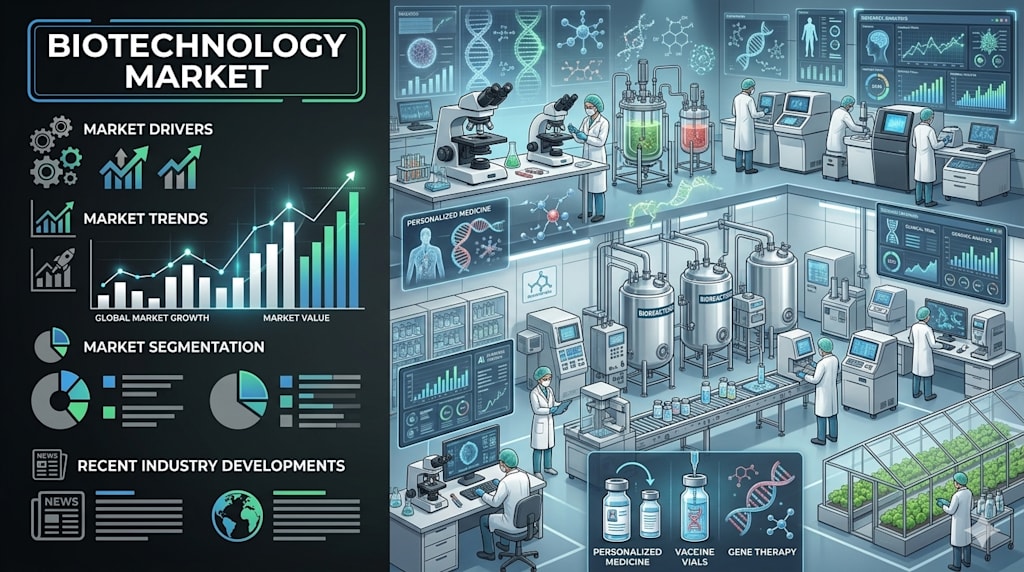
According to IMARC Group's latest research publication, the global biotechnology market size reached USD 809.3 Billion in 2025. Looking forward, IMARC Group expects the market to reach USD 1,391.0 Billion by 2034. The increasing research and development in personalized medicine, numerous advancements in genetic engineering, and escalating demand for sustainable agriculture are some of the major factors propelling the market.
How AI is Reshaping the Future of the Biotechnology Market
- AI-Powered Drug Discovery and Target Identification: AI and machine learning platforms are revolutionizing early-stage drug discovery by analyzing vast genomic and proteomic datasets to identify viable biological targets in a fraction of the time traditional methods require. Companies integrating AI-based screening tools have reported reductions in candidate identification timelines of up to 50%, significantly accelerating the journey from laboratory hypothesis to clinical trial readiness. This capability is particularly transformative in oncology and rare disease research, where biological complexity has historically made target identification both costly and time-intensive, limiting the speed at which life-saving therapies can reach patients.
- Precision Diagnostics and Genomic Sequencing Optimization: Machine learning algorithms trained on large-scale genomic datasets are enabling clinicians to detect disease-linked genetic variants with exceptional accuracy, supporting earlier diagnosis and more effective treatment selection. AI-enhanced next-generation sequencing platforms can now analyze a patient's complete genome faster and at lower cost, making personalized diagnostics accessible beyond elite research institutions. These systems flag anomalies and risk markers in real-time, dramatically improving outcomes in conditions such as hereditary cancers, cardiovascular disease, and neurological disorders where early intervention is critical to patient survival and quality of life.
- Bioprocess Optimization and Fermentation Control: AI systems integrated into biopharmaceutical manufacturing monitor real-time sensor data from bioreactors, fermentation tanks, and cell culture systems to dynamically adjust process parameters including temperature, pH, dissolved oxygen, and nutrient feeds. Companies deploying AI-driven bioprocess control have reported yield improvements of up to 30% and significant reductions in batch failure rates, which directly lowers production costs for high-value biologics including monoclonal antibodies, vaccines, and enzyme therapies. These intelligent automation systems also reduce reliance on manual intervention, enabling continuous manufacturing models that are becoming central to modern pharmaceutical supply chain strategy.
- Supply Chain Risk Management and Demand Forecasting: AI-powered analytics platforms are enabling biotechnology companies and their distribution partners to model demand scenarios with greater precision, balancing reagent inventories, cold-chain logistics, and raw material procurement against fluctuating clinical and commercial demand signals. Organizations applying predictive supply chain tools in biopharma have improved short-term forecast accuracy by approximately 20 to 35%, minimizing costly overstock situations while ensuring uninterrupted availability of critical biologics and diagnostic consumables for hospitals, fertility clinics, and research laboratories globally.
- Clinical Trial Design and Patient Stratification: AI is fundamentally transforming clinical trial efficiency by mining electronic health records, biobank data, and real-world evidence to identify optimal patient cohorts, predict trial dropout risks, and simulate protocol outcomes before a single patient is enrolled. These capabilities have helped reduce average clinical trial timelines and improve the probability of regulatory approval by ensuring that study populations are genetically and clinically well-matched to the therapy under investigation. Regulatory agencies including the US FDA and the European Medicines Agency have issued guidance actively encouraging the use of AI-based tools in trial design, further accelerating industry adoption across all therapeutic categories.
Biotechnology Industry Overview
The global biotechnology industry is undergoing a period of unprecedented transformation, driven by the convergence of genomics, artificial intelligence, and advanced biomanufacturing. The industry spans a diverse range of applications including biopharmaceuticals, agricultural biotechnology, industrial enzymes, environmental bioremediation, and bioinformatics, each experiencing strong momentum in line with global demand for sustainable, precision-oriented solutions. Government investment is playing a pivotal role in scaling the sector. The United States National Institutes of Health allocates over USD 40 Billion annually toward biomedical research, maintaining American leadership across drug discovery and genomic science. India's Biotechnology Industry Research Assistance Council has funded over 5,000 biotech startups and research projects, positioning the country as a fast-growing hub for biosimilar manufacturing and agricultural biotechnology. The European Union's Horizon Europe program has committed EUR 95.5 Billion across science and innovation priorities, with biotechnology designated as a strategic pillar for health resilience and green transition goals. The Asia-Pacific region is emerging as the most dynamic growth arena, with China's national bioeconomy plan targeting biotechnology as a core pillar of industrial modernization, and South Korea expanding its biopharma manufacturing infrastructure to serve both domestic and global export markets. These coordinated public investments are creating the regulatory clarity, infrastructure, and talent pipelines required to sustain long-term commercial expansion across all biotechnology segments.
Biotechnology Market Trends and Drivers
The rising global burden of chronic and rare diseases is the foundational demand driver for the biopharmaceutical segment of the biotechnology market. Non-communicable diseases including cancer, diabetes, cardiovascular disorders, and autoimmune conditions now account for approximately 74% of all global deaths annually according to the World Health Organization, creating sustained pressure on healthcare systems to deliver more effective, targeted therapies. Biopharmaceuticals including monoclonal antibodies, gene therapies, and cell-based treatments are increasingly preferred over conventional small-molecule drugs owing to their superior specificity and reduced systemic side effects. The oncology pipeline alone contains over 1,200 biologic candidates in active clinical development globally, reflecting the depth of commercial and scientific investment directed at biotechnology-based treatment solutions. Personalized medicine approaches enabled by genomic sequencing are further concentrating prescribing patterns toward biologics, as clinicians seek therapies matched to individual genetic profiles rather than population-average treatment standards.
Agricultural biotechnology is emerging as a critical growth pillar as global food systems face mounting pressure from climate change, population growth, and arable land constraints. Genetically modified crops engineered for higher yield, drought resistance, and enhanced nutritional profiles are gaining regulatory acceptance across key agricultural economies including the United States, Brazil, India, and several Southeast Asian markets. The global biopesticide sector, which offers environmentally safer alternatives to synthetic chemical pesticides, is experiencing accelerated adoption as both regulatory frameworks and consumer preferences shift toward cleaner agricultural inputs. The Indian government has introduced preferential subsidies for biopesticide adoption under its national agricultural modernization programs, while the European Union's Farm to Fork strategy mandates a 50% reduction in synthetic pesticide use, directly creating market space for biotechnology-derived crop protection solutions. Precision fermentation, a biotechnology process used to produce proteins, fats, and other agricultural inputs without conventional livestock or crop systems, is attracting significant venture capital attention as a solution to both protein security and environmental sustainability challenges.
Industrial biotechnology and environmental applications are creating additional growth corridors as manufacturers seek to replace petroleum-derived chemicals and materials with bio-based alternatives. White biotechnology, which applies biological systems and microorganisms to industrial manufacturing, is enabling the production of biodegradable plastics, bio-based solvents, specialty chemicals, and renewable fuels at commercial scale. The biofuel segment is receiving direct policy support through blending mandates and production subsidies in the United States, European Union, India, and Brazil, accelerating the transition away from fossil fuel dependency in transportation and energy. Bioremediation technologies capable of breaking down industrial pollutants, heavy metals, and plastic waste using engineered microorganisms are attracting both regulatory attention and private investment as environmental compliance standards tighten across major industrial economies. The intersection of synthetic biology with materials science is also opening entirely new commercial categories including bio-based textiles, self-healing materials, and biosensor-integrated packaging that extend biotechnology's commercial reach well beyond its traditional healthcare and agriculture boundaries.
Leading Companies Operating in the Global Biotechnology Industry
- Thermo Fisher Scientific Inc.
- Merck KGaA
- Illumina Inc.
- Lonza Group AG
- Novartis AG
- Amgen Inc.
- F. Hoffmann-La Roche AG
- Sartorius AG
- Bio-Rad Laboratories Inc.
- Agilent Technologies Inc.
- Becton Dickinson and Company
- Danaher Corporation
Biotechnology Market Report Segmentation
By Product Type:
- Instruments
- Reagents
- Software and Services
Reagents represent the largest product type segment, owing to their essential and recurring role across drug discovery, clinical diagnostics, genomic research, and food safety testing operations globally.
By Technology:
- Nanobiotechnology
- Tissue Engineering and Regeneration
- DNA Sequencing
- Cell-Based Assays
- Fermentation
- PCR Technology
- Chromatography
- Others
DNA Sequencing holds the dominant technology segment share, driven by its foundational role in personalized medicine, genomic research, infectious disease diagnostics, and agricultural crop improvement programs worldwide.
By Application:
- Healthcare
- Food and Agriculture
- Natural Resources and Environment
- Industrial Processing
- Bioinformatics
- Others
Healthcare represents the largest application segment, underpinned by the expanding biopharmaceutical pipeline, growing adoption of gene and cell therapies, and increasing demand for genomic diagnostics across both developed and emerging markets.
Regional Insights:
- North America (United States, Canada)
- Asia Pacific (China, Japan, India, South Korea, Australia, Indonesia, Others)
- Europe (Germany, France, United Kingdom, Italy, Spain, Russia, Others)
- Latin America (Brazil, Mexico, Others)
- Middle East and Africa
North America exhibits clear dominance in the biotechnology market, supported by the presence of world-leading research institutions, a highly developed regulatory framework, significant NIH funding, and the concentration of major biopharmaceutical headquarters and biotech innovation clusters across the United States.
Recent News and Developments in the Biotechnology Market
- January 2025: Lonza Group announced a major capacity expansion of its mammalian cell culture biomanufacturing facilities in the United States and Switzerland, responding to surging demand from biotech clients scaling production of GLP-1 receptor agonist therapies and advanced cell and gene therapy programs.
- November 2024: Thermo Fisher Scientific completed a strategic acquisition of a leading single-use bioreactor manufacturer, strengthening its upstream bioprocessing portfolio and expanding its service offering to both innovator drug developers and biosimilar manufacturers globally.
- February 2026: Amgen announced a strategic research collaboration with a leading artificial intelligence drug discovery firm focused on accelerating target identification for cardiometabolic and oncology indications, with the partnership valued at over USD 1 Billion including milestone payments, highlighting the deepening integration of AI within mainstream biopharmaceutical R&D strategy.
Note: If you require specific details, data, or insights that are not currently included in the scope of this report, we are happy to accommodate your request. As part of our customization service, we will gather and provide the additional information you need, tailored to your specific requirements. Please let us know your exact needs, and we will ensure the report is updated accordingly to meet your expectations.
About the Creator
Abhay Rajput
I am working in market research company that provides market and business research intelligence across the globe.
Enjoyed the story? Support the Creator.
Subscribe for free to receive all their stories in your feed.
Comments
There are no comments for this story
Be the first to respond and start the conversation.