
Beard Trimmer Market Is Growing to $17.1B — Here's the Real Story
From Mumbai hotel kits to Xiaomi's price play, global beard trimmer demand is reshaping men's grooming permanently.
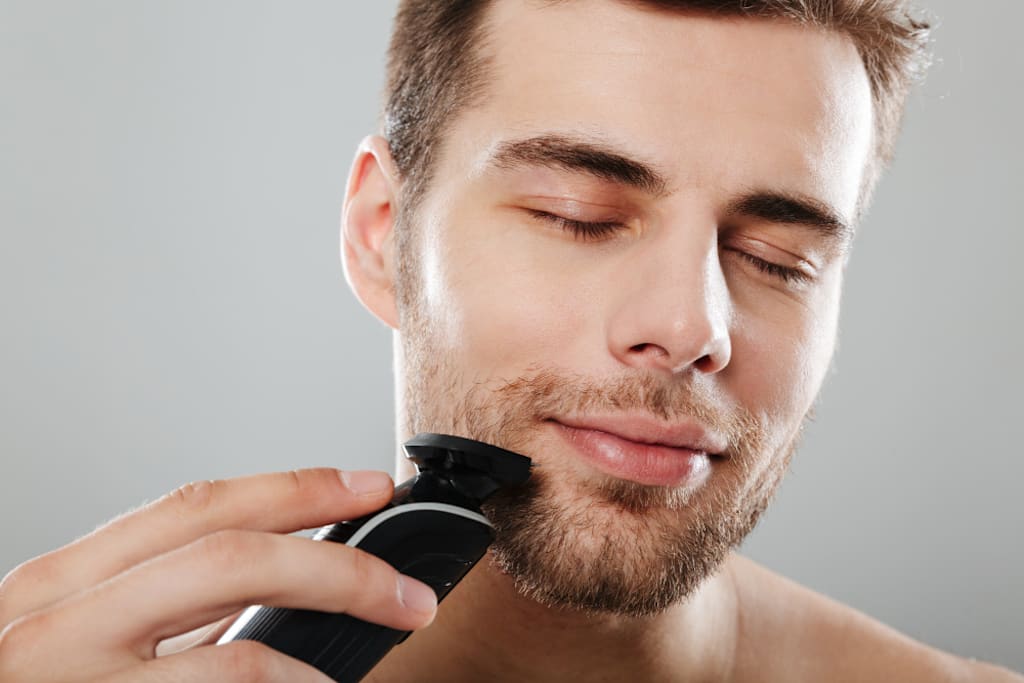
Walk into any mid-range hotel in Mumbai or Jakarta today and the bathroom amenity kit has quietly changed. Alongside the miniature shampoo and the complimentary razor, there's now a travel-sized trimmer. Nobody made a policy announcement about it. It just happened — because demand pulled it there.
That small observation points to something significant. Men's grooming has stopped being a category that needs cultural permission. It's become infrastructure. The global beard trimmer market was valued at USD 7.5 billion in 2025, and researchers at Market.us project it will reach USD 17.1 billion by 2035, compounding at 8.5% annually — a pace that puts it ahead of most mature consumer electronics segments. For context on how those numbers break down by product type, region, and end user, the full analysis is documented in this men's grooming and beard trimmer sector report.
What Changed, and When
Ask anyone who worked in consumer packaged goods before 2012 and they'll tell you that the men's grooming aisle was an afterthought. A few razors, some shaving cream, maybe a generic trimmer in a blister pack near the pharmacy checkout. The beard itself was a liability — associated with carelessness, not style. That cultural calculus reversed somewhere in the early 2010s, and it has not reversed back.
Social media accelerated what would have been a slow generational shift into something closer to a consumer behavior reset. When beard styling became content — when a well-kept stubble or a shaped full beard became a visual signal rather than just personal preference — the hardware to maintain it followed. Platform virality compresses adoption cycles. A beard trend that might have taken a decade to normalize through film and television took two years on Instagram.
The result is visible in the data. Fully 78.2% of current market demand is driven by personal, at-home use. Not barbershops. Not salons. Men buying their own devices, charging them on their bathroom shelf, and using them three or four times a week. That behavioral baseline didn't exist fifteen years ago, and it's now structural — not cyclical.
India and the Acquisition Signal
North America still commands 43.8% of global market share, valued at USD 3.2 billion, and that dominance reflects decades of established retail infrastructure and high per-capita grooming spend. But the growth story is being written somewhere else.
India is the clearest signal. In June 2023, VLCC — historically a wellness and beauty services company — acquired Ustraa, a men's grooming brand whose product line runs from beard trimmers to beard growth oil to face wash. That's not a routine acquisition. VLCC was making a considered bet that the Indian male consumer had crossed a threshold: from occasional grooming to regular, product-driven maintenance. The category had earned a permanent place in the household budget.
Then in December 2025, Honasa Consumer, the parent company behind Mamaearth, entered men's grooming through its acquisition of Reginald Men. Shares rose 2% on the announcement. Investors read it the same way the companies did — as confirmation that demand in South Asia is durable, not experimental. China, Japan, and Southeast Asian markets are showing comparable trajectories, with local and international brands competing through aggressive digital marketing and price segmentation.
The Cordless Shift Nobody Fully Anticipated
The cordless segment now holds 68.9% of market share, and that figure understates the momentum. Five years ago, the trade-off between cordless convenience and corded reliability was a real conversation. Battery performance wasn't consistent enough, charge times were slow, and professional environments — where consistent power output genuinely matters — stayed loyal to corded models.
That trade-off has largely collapsed. Fast-charging lithium-ion cells, USB-C compatibility, and multi-segment LED battery indicators have made the charging question almost irrelevant for home users. According to Wirecutter's testing of current models, advanced trimmers now handle beard lengths from stubble to six inches or more, with precision head options down to a 1/4-inch cutting area. Lightweight models like the Aqua Blade weigh just 5.4 ounces — 28% lighter than comparable devices — reflecting how seriously manufacturers are competing on ergonomics, not just features.
The corded segment retains relevance in commercial environments. Salons with eight-hour workdays can't afford to manage battery cycles mid-shift. But its market share is declining, and the engineering investment is concentrated in cordless. Reviewing current beard trimmer market size and share figures confirms that every meaningful battery technology improvement over the past five years corresponded with a measurable cordless adoption jump.
Where the Next Decade Gets Complicated
The category's least-discussed tension is the brand loyalty problem. Philips, Panasonic, Braun, and Wahl have spent decades building reputation on precision engineering and durable build quality. But in price-sensitive markets — and most of the high-growth markets qualify — a functional USD 15 trimmer competes adequately with an USD 80 premium device for a consumer whose primary need is basic maintenance.
Xiaomi recognized this before most Western brands did. Its trimmer lineup enters markets at aggressive price points, backed by distribution infrastructure built for electronics at scale. The response from legacy brands has been product bundling — multifunctional devices that combine beard trimming with nose hair removal, body grooming, and hypoallergenic blade technology. If a single device does four things, the value comparison to a USD 15 single-use trimmer becomes more favorable.
Markets like Indonesia, Nigeria, and Brazil are still in early adoption phases. The brands building distribution there now — through e-commerce partnerships, through tier-2 and tier-3 city retail, through localized pricing — are the ones positioned to capture the next USD 9 billion as this market builds toward its 2035 ceiling. The race isn't over. It's barely started in most of the world.
About the Creator
Mark K. Belton
I’m Mark K. Belton, 26 years old, currently working as a Digital Marketing Intern. I have a strong interest in digital marketing and have been developing my skills in SEO, social media marketing, content creation, and online campaign
Enjoyed the story? Support the Creator.
Subscribe for free to receive all their stories in your feed.
Comments
There are no comments for this story
Be the first to respond and start the conversation.