
Barrier Materials Market: Flexible Film Applications, Sustainability Goals & Market Expansion
Increasing adoption of flexible packaging, multilayer films, and eco-friendly coatings is transforming product protection strategies across multiple industries globally

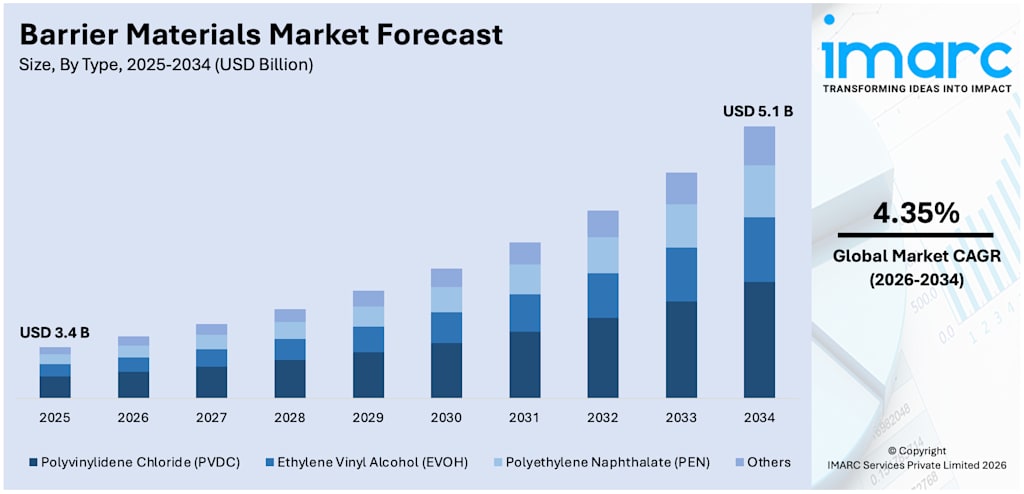
Rising demand for extended product shelf life, strict food safety regulations, and the rapid expansion of the pharmaceutical sector are driving the global barrier materials market. This growth is highly supported by innovations in sustainable and recyclable polymer coatings, an escalating preference for modified atmosphere packaging, and substantial infrastructure investments in fresh-food logistics. According to IMARC Group’s latest data, the global barrier materials market size was valued at USD 3.4 Billion in 2025. Looking forward, IMARC Group estimates the market to reach USD 5.1 Billion by 2034, exhibiting a CAGR of 4.35% from 2026-2034.
Barrier materials now represent a critical multi-billion-dollar global industry that Underpins modern logistics and supply chain integrity. Essential for shielding perishable goods from oxygen, moisture, and UV light, these high-performance materials are seeing heightened integration within flexible film layouts and rigid containers alike. Growth across the sector is fueled by changing consumer preferences toward online grocery shopping, expanding commercial healthcare distribution, and stringent global mandates targeting food waste reduction. Major product segments include Polyvinylidene Chloride (PVDC), Ethylene Vinyl Alcohol (EVOH), and Polyamide (PA), with processors actively scaling co-extrusion capabilities to balance high-shielding performance with regulatory compliance and end-of-life recyclability.
Barrier Materials Market Growth Drivers:
- Escalating Demand for Extended Product Shelf Life
Global food supply chains rely heavily on advanced preservation to minimize spoilage during long-distance transit. Barrier materials like EVOH and PVDC block oxygen ingress and moisture loss, preserving the natural flavor, aroma, and structural integrity of perishable foods. With global food waste accounting for nearly 1.3 billion tonnes annually according to international food organizations, food processors are rapidly upgrading to multi-layer barrier films. This helps retail brands confidently expand their distribution radiuses, decrease logistics-related losses, and satisfy the grocery sector's operational requirements for longer inventory display timelines.
- Strict Regulatory Standards for Pharmaceutical Packaging
The healthcare sector mandates ultra-secure packaging to preserve the efficacy and chemical stability of sensitive drugs, biotics, and vaccines. Moisture or oxygen infiltration can degrade molecular compounds, rendering critical medications ineffective or unsafe. Regulatory bodies, such as the US FDA and the European Medicines Agency, impose severe penalties for contamination risks, pushing pharmaceutical manufacturers to adopt high-performance barrier blister packs and laminated foils. Industry data indicates that global pharmaceutical packaging output has surged significantly, driving massive localized procurement of polymer-based barrier shields to prevent microbial contamination and chemical migration
- Rapid Expansion of the E-Commerce Grocery and Delivery Networks
The massive shift toward digital retail models and doorstep grocery delivery has altered protective packaging requirements. E-commerce logistics subject food items to irregular transit temperatures, multi-tiered handling processes, and prolonged delivery windows. To combat these environmental pressures, online retailers utilize specialized barrier pouches, vacuum-sealed wraps, and modified atmosphere packaging (MAP). These applications keep meats, dairy products, and ready-to-eat meals fresh without requiring excessive chemical preservatives, proving essential for urban logistics providers who prioritize food safety, leak-proofing, and clean product presentations upon final delivery.
Barrier Materials Market Trends:
- Transition to Recyclable Polyolefin and Mono-Material Barrier Solutions
Packaging manufacturers face significant commercial pressure to eliminate non-recyclable multi-layer plastics and aluminum laminates that clog waste streams. In response, the industry is transitioning toward monomaterial structures and recyclable polyolefin barrier coatings that offer high performance without disrupting circular economy goals. Major brands are introducing innovative water-based barrier coatings and paperboard combinations to replace conventional plastic linings in high-sensitivity segments like coffee and dehydrated foods. This shift is highly accelerated by regional plastic pacts and eco-conscious consumers, with sustainability factors now directly influencing over a third of consumer packaging selections.
- Regulatory Phase-Out of Per- and Polyfluoroalkyl Substances (PFAS)
Governments across North America and Europe are implementing strict bans on PFAS chemicals, commonly used for grease and water resistance in food service packaging. This regulatory crack-down has triggered a wave of material science innovation, forcing chemical manufacturers to develop certified PFAS-free functional barrier varnishes. Leading processing firms are actively investing in proprietary hybrid materials and plant-derived barrier coatings, such as nanocellulose configurations. These clean-label coating alternatives allow fast-food chains, quick-service restaurants, and industrial bakeries to comply with new environmental laws while matching the grease-repellent properties of traditional chemicals.
- Strategic Scale-Up of Co-Extrusion and Production Lines in Emerging Economies
To meet the soaring domestic consumption of packaged foods and medical supplies, flexible packaging majors across Asia-Pacific are massively expanding their advanced production installations. Companies are building high-volume co-extrusion lines capable of processing sophisticated five-to-nine-layer barrier films simultaneously. This localized manufacturing push allows regional suppliers to bypass costly material imports and fulfill the quick-turnaround timelines required by multinational consumer goods corporations. Consequently, these infrastructure investments are establishing emerging economies as core manufacturing centers, supplying cost-effective, high-barrier packaging to both local markets and international export destinations.
Recent News and Developments in Barrier Materials Market
- September 2025: Mondi Group expanded its sustainable portfolio by launching an advanced functional barrier paper for industrial applications, providing heavy-duty moisture protection while substantially lowering plastic content to support recycling.
- October 2025: Kuraray Co., Ltd. announced a significant production capacity expansion for its specialty EVOH barrier resins, aiming to meet the rising global demand for modified atmosphere packaging solutions in fresh food logistics.
- January 2026: Huhtamäki Oyj finalized a strategic commercial partnership with a sustainable material start-up to scale the distribution of bio-based, barrier-coated paper packaging across major European quick-service restaurant networks.
Note: If you require specific details, data, or insights that are not currently included in the scope of this report, we are happy to accommodate your request. As part of our customization service, we will gather and provide the additional information you need, tailored to your specific requirements. Please let us know your exact needs, and we will ensure the report is updated accordingly to meet your expectations.
About the Creator
Andrew Sullivan
Hello, I’m Andrew Sullivan. I have over 9+ years of experience as a market research specialist.
Enjoyed the story? Support the Creator.
Subscribe for free to receive all their stories in your feed.
Comments
There are no comments for this story
Be the first to respond and start the conversation.