
Automotive Navigation System Market Hits $41B by 2035
How embedded maps, 3D routing, and EV range planning are remaking the car navigation industry.
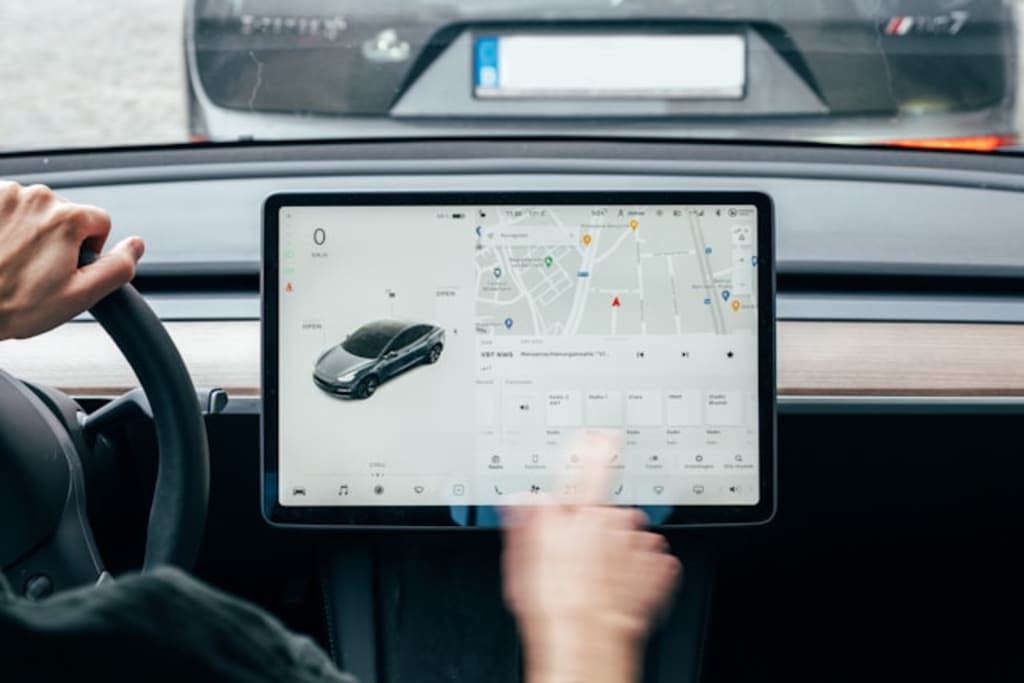
When Your Car Knows Before You Do
In dense city traffic, more than half of American drivers are now following digital instructions rather than reading road signs. That shift didn't happen gradually — it accelerated hard in the last five years, as navigation moved out of the glove compartment and into the car itself. The global automotive navigation system market size stood at roughly USD 21.7 billion in 2025 and is projected to reach USD 41.1 billion by 2035, growing at a compound annual rate of 6.6%. That's not incremental expansion. That's a market being rebuilt from scratch, on new assumptions about what driving means. A closer look at the numbers and segment data is available in this automotive navigation industry overview.
The Dashboard Takes Over
The portable GPS device — that suction-cupped rectangle that used to slide off windshields on hot days — is becoming a relic. In 2025, in-dash navigation systems commanded nearly 60% of the device market. Automakers have spent the past decade absorbing navigation into their infotainment stacks, tying routing directly into the vehicle's display, climate system, and driver assistance features. The stand-alone device can't compete with that depth of integration.
This isn't just a convenience story. It's an architecture decision. When navigation is embedded in the car rather than bolted on, it becomes part of the vehicle's sensor network. It knows the car's speed, heading, and even its lane position. It can talk to the brakes.
Why 3D Mapping Won the Visualization War
Not all digital maps are equal. Three-dimensional mapping claimed the largest technology segment in 2025 with a 41.2% share, and the reasons are more practical than aesthetic. At a complex highway interchange — the kind where three lanes diverge in under 400 meters — a flat top-down map can leave a driver genuinely uncertain which ramp to take. A 3D map, rendered with realistic overpasses and landmark buildings, removes that ambiguity almost entirely.
Toyota's connected navigation platform in its Lexus and Crown models illustrates how far this has come. The system blends real-time traffic data with layered 3D environments, providing lane-level guidance that accounts for actual road geometry rather than an abstracted line on a screen. The driver isn't just told to "turn right in 300 meters." The system shows where the lane physically exists.
Augmented reality navigation is the next iteration. Still early, but the direction is clear: overlay the instruction directly onto the road ahead, through the windshield. Several manufacturers are already in trial phases with head-up display systems that project turn arrows onto the actual pavement in the driver's field of view.
Asia Pacific Is Running the Numbers
The regional distribution of the automotive navigation system market share tells a story that often gets buried in global averages. Asia Pacific held 43.2% of the global market in 2025, valued at approximately USD 9.3 billion. That dominance reflects not just raw vehicle production volumes — China alone manufactures more passenger cars annually than the United States and Germany combined — but also aggressive adoption of connected vehicle standards.
Chinese automakers including BYD and NIO have built navigation directly into their digital cockpit architectures, treating it as inseparable from the EV operating system rather than as an optional feature layer. That approach is now filtering into global strategy, pressuring European and American manufacturers to match the level of integration their customers have come to expect.
OEM distribution — factory-installed navigation — accounted for 71.8% of the market in 2025. Aftermarket units still serve older vehicles and niche applications, but the center of gravity has shifted definitively to the production line.
What Electric Vehicles Are Changing About Navigation
The rise of battery-electric vehicles is quietly rewriting the requirements list for navigation systems. Range anxiety — the persistent concern about running out of charge before reaching a destination — turns navigation into something closer to a logistics tool. Effective EV navigation needs to know not just the route but the real-time charge level, the availability of compatible charging stations along the way, and the terrain gradient that affects consumption rates.
This is a fundamentally different calculation than telling a combustion engine driver where to refuel. Navigation software for EVs has to reason about energy, not just distance. Companies like HERE Technologies and TomTom have been building energy-aware routing into their platforms, and the EV boom has pushed that capability from niche to mainstream.
As vehicle software grows more sophisticated and connected infrastructure expands, navigation will likely become less of a feature drivers consciously choose to use and more of a system that operates continuously in the background — aware, adaptive, and increasingly invisible, shaping the journey without requiring the driver to ask.
About the Creator
Mark K. Belton
I’m Mark K. Belton, 26 years old, currently working as a Digital Marketing Intern. I have a strong interest in digital marketing and have been developing my skills in SEO, social media marketing, content creation, and online campaign
Enjoyed the story? Support the Creator.
Subscribe for free to receive all their stories in your feed.
Comments
There are no comments for this story
Be the first to respond and start the conversation.