
Automotive Drive Shaft Market Growth: The $25B Shift Nobody's Watching
Steel, carbon fiber, EVs, and a pair of billion-dollar acquisitions are quietly reshaping a market most drivers never think about.
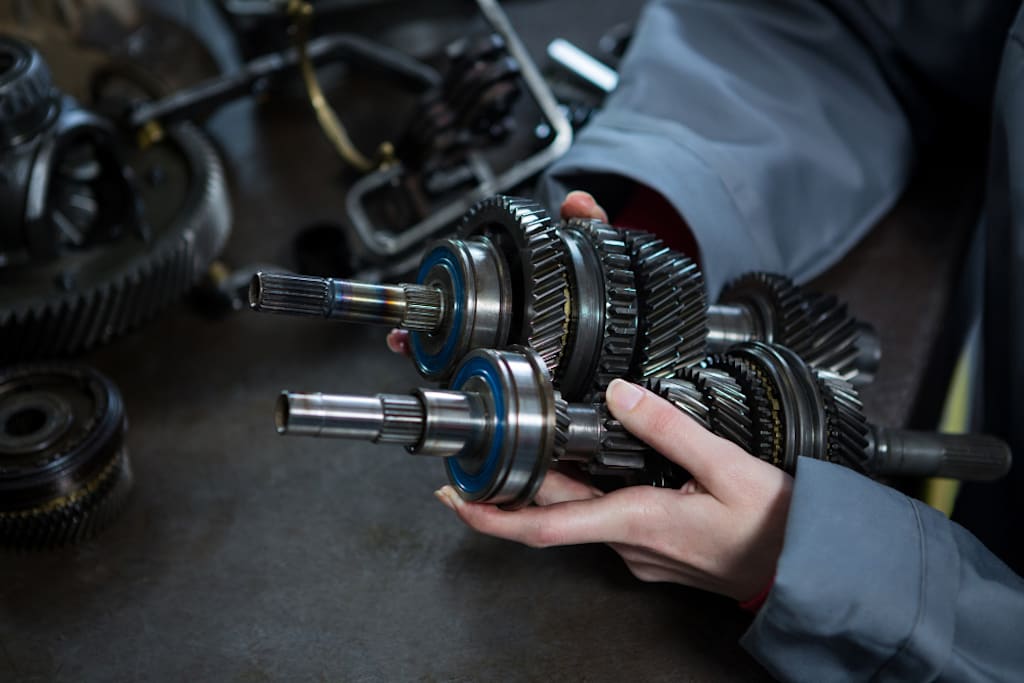
The Quiet Revolution Under Your Car: Why Drive Shafts Are Suddenly Interesting Again
Most people couldn't identify a drive shaft if one landed in front of them. That's partly what makes the component so economically interesting. It spins. It transfers torque. It keeps the wheels turning. And according to current projections, the global industry built around this unassuming part is expected to grow from $15.3 billion in 2025 to $25.6 billion by 2035 — a 5.3% compound annual growth rate that few headline-grabbing EV technologies can reliably match. The automotive drive shaft market growth story isn't flashy. But it's real, and it's being shaped by forces that most automotive commentators have largely ignored. A full breakdown of the segment dynamics — by vehicle type, material, powertrain, and region — is available in this global automotive drive shaft industry overview.
Steel Is Still Winning, and That's Not the Whole Story
Here's the part that surprises people: conventional steel still holds 49.2% of the market by material. In an era where carbon fiber and advanced composites get the headlines, old-fashioned steel is what's actually inside most vehicles rolling off assembly lines today. The reason is prosaic — cost, availability, and an established supply chain that no premium material can easily displace at volume. High-strength alloy steel is gaining ground, especially in SUVs and trucks where torsional demands are higher, but the base case for steel remains sturdy.
That said, carbon fiber reinforced polymer (CFRP) shafts are the fastest-growing sub-segment, and for good reason. Research published in the International Journal of Simulation Modelling found that optimized composite drive shafts can achieve up to 79.6% weight reduction compared to conventional steel tubes — a staggering difference in a component class where every gram counts against fuel efficiency targets. Shape optimization alone can reduce maximum torsional stress by 11.5% and increase fatigue life by 3.7 times. Those numbers explain why premium OEMs are quietly accelerating their CFRP adoption even as the cost premium remains real.
Asia Pacific Holds Nearly Half the Market
The geography of this market isn't subtle. Asia Pacific commands 47.2% of global share — valued at $7.2 billion in 2025 — driven by China, Japan, South Korea, and India collectively operating the world's largest automotive manufacturing base. India's role is worth watching particularly closely. As middle-class vehicle ownership expands and domestic production scales, localized demand for drivetrain components is creating a parallel market that supports both OEM supply chains and a fast-growing aftermarket replacement segment.
Europe, by contrast, is playing a different game. Stringent EU emissions regulations are accelerating the shift toward lightweight composite shaft materials, and the continent's heavy concentration of premium OEMs — think BMW, Mercedes, Volkswagen Group — means demand for advanced, high-performance drivetrain solutions runs structurally higher than the vehicle volume numbers would suggest.
The EV Question Is More Complicated Than It Looks
Electric vehicles are supposed to threaten drive shaft demand. The logic is clean: hub motors and direct-drive architectures reduce the need for traditional shafts. And for some single-motor EV platforms, that's accurate. But multi-motor all-wheel drive EVs still require drive shafts — and they require better ones. High-speed, lightweight, and compact designs are the ask, and the rapid expansion of AWD-configured EVs is creating demand that partially offsets what single-motor platforms eliminate.
This nuance is reflected in the powertrain data. ICE vehicles still represent 71.1% of the market, which reflects the reality of a global installed fleet that doesn't turn over overnight. Hybrid platforms are growing and placing uniquely complex demands on shaft design — handling both combustion and electric torque inputs simultaneously. The combination of all three powertrain categories across a decade-long forecast window is what drives the automotive drive shaft market share numbers upward rather than downward, despite the EV transition narrative.
Consolidation, Acquisition, and the New Competitive Map
January 2025 brought one of the more consequential deals in this space: American Axle & Manufacturing agreed to acquire Dowlais Group plc — parent company of GKN Automotive — in a transaction valued at approximately $1.4 billion. GKN has long been one of the most recognized names in global driveline technology. The deal essentially combines two major forces in shaft and joint manufacturing, creating a combined entity with substantially expanded global capabilities at exactly the moment when electrified driveline specifications are becoming more demanding and differentiated.
A month earlier, Munich-based AEQUITA completed the sale of IFA Rotorion — a drive shaft and joint manufacturer — to Neapco, a U.S.-based driveline solutions supplier. Two major consolidations in back-to-back months is not coincidence. It signals that tier-one suppliers see scale as essential to competing in both legacy ICE supply chains and emerging EV platform contracts simultaneously.
The decade ahead will see a market that looks orderly on the surface — steady CAGR, known players, familiar applications — but is undergoing deeper structural change than most industry observers are pricing in. The material mix will shift toward composites as manufacturing costs decline. The powertrain mix will tilt toward electrified platforms. Regional supply chains will develop their own logic as India and Southeast Asia mature. And the component that most drivers have never heard of will keep doing exactly what it has always done: turning engine output into forward motion, quietly and reliably, whether the source of that torque is gasoline, diesel, or a battery pack in the floor.
About the Creator
Mark K. Belton
I’m Mark K. Belton, 26 years old, currently working as a Digital Marketing Intern. I have a strong interest in digital marketing and have been developing my skills in SEO, social media marketing, content creation, and online campaign
Enjoyed the story? Support the Creator.
Subscribe for free to receive all their stories in your feed.
Comments
There are no comments for this story
Be the first to respond and start the conversation.