
Automated Cage Handling Systems Market Is Nearing $2.2 Billion
Robotics and tightening research regulations are reshaping how pharmaceutical labs manage animal housing at scale.
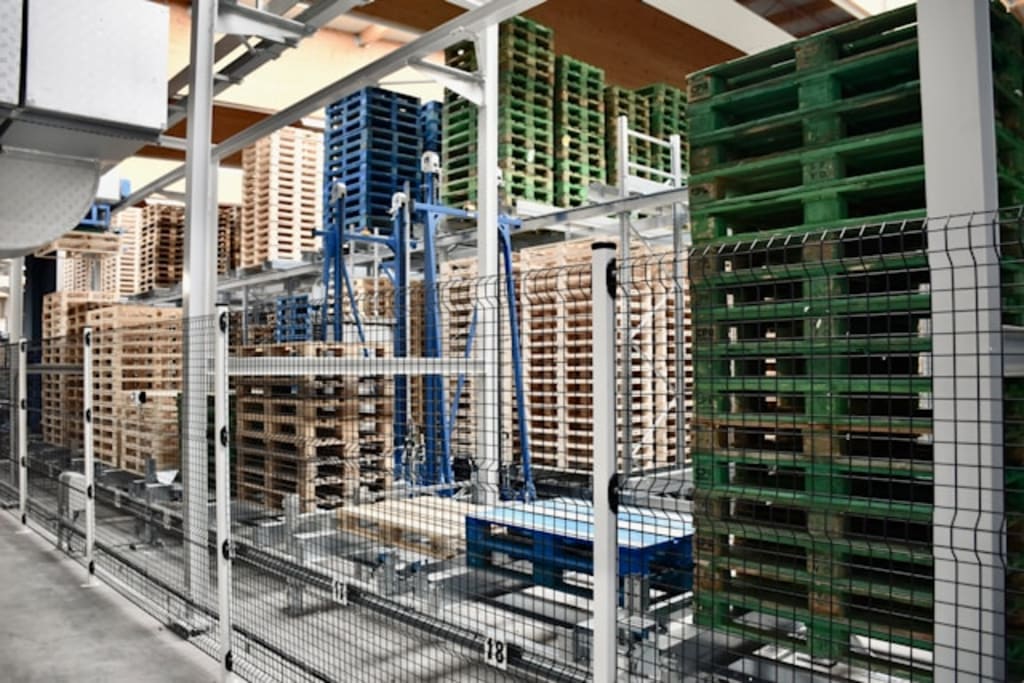
The robots now outnumber the technicians in some of the world's largest pharmaceutical research labs — and that shift is only accelerating. Facilities that once relied on teams of workers to scrub, cart, and stack animal housing units are systematically replacing those workflows with robotic systems that never tire, never contaminate, and never misplace a cage. The automated cage handling systems market, valued at roughly $917 million in 2025, is projected to nearly double to $2.19 billion by 2035, growing at an annual rate of 9.1%. That kind of sustained expansion doesn't happen without serious structural demand pushing it — and in this case, the drivers run deep. A sector-by-sector breakdown is available in this automated cage handling systems industry overview.
When Hygiene Becomes an Engineering Problem
The core problem this industry solves isn't glamorous but it is consequential. In preclinical research, the smallest contamination event can invalidate months of work and millions of dollars in drug development spending. A cage cleaned inconsistently, a bedding substrate applied unevenly, a temperature that drifts half a degree in the wrong direction — any of these can compromise the integrity of animal studies that pharmaceutical companies depend on to bring new drugs to regulators.
Manual cage handling, however skilled the staff, introduces variability by its very nature. Automated systems don't. Modern robotic cage washers maintain cleaning protocols to the same specification every cycle. Integrated bedding dispensing units distribute substrate at consistent depths across thousands of cages. Sensor networks hold temperature within ±0.5°C and humidity between 40% and 60% through continuous feedback loops. These aren't marginal improvements. They're the difference between data regulators trust and data that requires re-running the experiment.
North America Leads, but Asia Is the One to Watch
North America currently holds 41.2% of the global market — around $377.6 million in 2025 — and the reasons are structural. The United States alone houses a dense concentration of pharmaceutical companies, contract research organizations, and academic research institutes operating under the Food and Drug Administration's stringent animal research protocols. Those regulations don't just encourage automation; they effectively mandate the kind of environmental documentation that only automated systems can reliably produce.
Europe follows a similar regulatory logic. The EU's Directive 2010/63/EU on the protection of animals used for scientific purposes created a framework that pushed research institutions toward practices minimizing animal stress — automated handling systems fit that mandate precisely. What's different about Asia Pacific is the velocity of change. China, Japan, and India are rapidly expanding both pharmaceutical manufacturing capacity and biomedical research infrastructure, often building new facilities from the ground up rather than retrofitting older ones. That creates a construction window where automation gets designed in from the start, not bolted on after the fact.
What the Numbers Inside the Market Actually Reveal
Not all segments within the automated cage handling systems market size and share data tell the same story. Robotic cage washing systems claim the largest product slice at 36.2% — logical given that washing is the most labor-intensive and contamination-sensitive step in the handling cycle. But the software and facility control platforms segment is arguably the one to monitor most closely. These are the dashboards and analytics layers that tie washing, transport, storage, and environmental monitoring into a single operational picture. As AI-powered predictive maintenance becomes standard, the value of these platforms compounds: systems that flag maintenance needs before failures occur, rather than after.
Allentown's February 2025 launch of the Discovery IVC illustrates the direction of travel. The system pairs individually ventilated cages with an infrared camera module enabling round-the-clock remote home-cage monitoring, integrated with AI behavioral analytics software. Tecniplast's January 2026 merger with Bioair similarly signals that the top players are consolidating capabilities rather than competing on hardware specifications alone.
At the application level, rodent research facilities account for 44.8% of demand — a reflection of how central mouse and rat models remain to preclinical drug development pipelines globally. Pharmaceutical companies make up 32.7% of end users, followed by contract research organizations whose entire business model depends on replicable, auditable research conditions.
The Decade Ahead
Labor cost reduction is often the headline number cited to justify automation investments — facilities report 60 to 70% reductions in handling labor after deployment — but the more durable argument is regulatory. As biosecurity requirements intensify and animal welfare legislation tightens across more jurisdictions, the cost of not automating will start to look steeper than the cost of the systems themselves. Facilities that automate now are building compliance infrastructure that will serve them across multiple regulatory cycles. The ones that delay are betting that standards won't raise the bar further. That bet is getting harder to justify every year.
About the Creator
Mark K. Belton
I’m Mark K. Belton, 26 years old, currently working as a Digital Marketing Intern. I have a strong interest in digital marketing and have been developing my skills in SEO, social media marketing, content creation, and online campaign
Enjoyed the story? Support the Creator.
Subscribe for free to receive all their stories in your feed.
Comments
There are no comments for this story
Be the first to respond and start the conversation.