
Asia Pacific Dairy Market Set for Strong Growth as Health Trends and Rising Incomes Boost Demand
From fresh milk and yogurt to processed cheese and frozen desserts, the Asia Pacific dairy industry is rapidly evolving to meet changing consumer lifestyles.

The Asia Pacific dairy industry is entering a powerful new growth phase driven by rising disposable incomes, urbanization, changing eating habits, and increasing awareness about health and nutrition.
For decades, dairy consumption across many Asian countries remained relatively limited compared to Western markets. Today, however, consumer behavior is changing rapidly. Milk, yogurt, cheese, butter, cream, and functional dairy products are becoming essential parts of daily diets across the region.
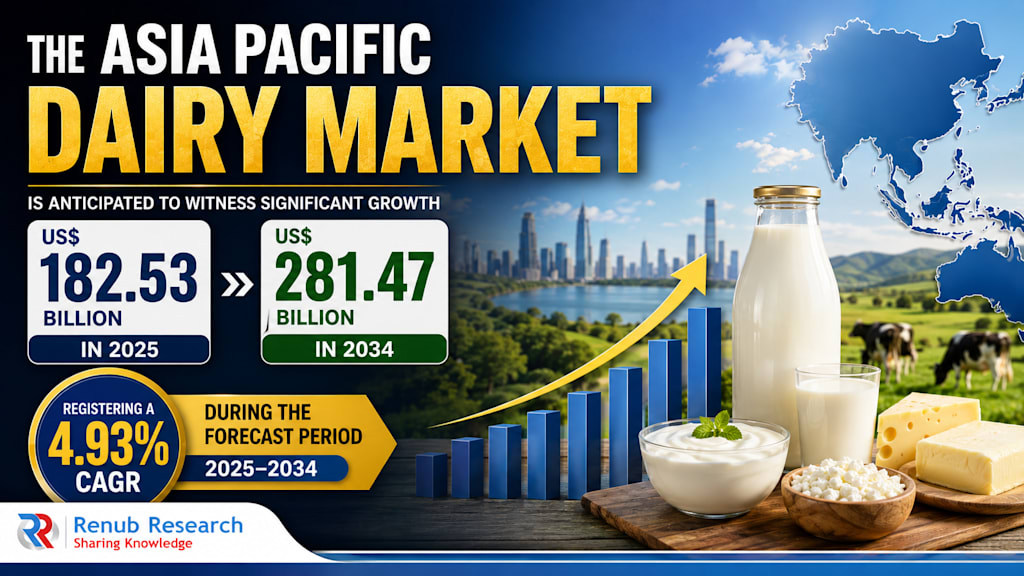
According to Renub Research, the Asia Pacific dairy market is expected to grow from US$ 182.53 billion in 2025 to US$ 281.47 billion by 2034, registering a compound annual growth rate (CAGR) of 4.93% during the forecast period.
The growth reflects broader economic and social transformations occurring throughout Asia Pacific. Expanding middle-class populations, rising health consciousness, innovations in dairy products, and rapidly developing retail infrastructure are all contributing to the market’s expansion.
At the same time, dairy companies are introducing lactose-free products, high-protein beverages, premium desserts, and convenient packaging formats to meet the evolving demands of modern consumers.
The dairy market in Asia Pacific is no longer limited to basic milk consumption. It is becoming one of the region’s most dynamic and innovative food industries.
Dairy Consumption Is Rising Across Asia Pacific
Dairy products include foods produced from milk obtained from animals such as cows, buffaloes, goats, and sheep. Common dairy products include milk, yogurt, butter, cheese, cream, and frozen desserts.
These products are valued because they provide:
- Protein
- Calcium
- Vitamins
- Bone-strengthening nutrients
- Energy and overall wellness benefits
Traditionally, dairy consumption in several Asian countries was lower than in Western markets due to dietary habits and lactose intolerance concerns. However, urbanization, globalization, and Western culinary influence have significantly altered eating patterns across the region.
Younger consumers especially are embracing dairy products such as:
- Flavored milk
- Yogurt drinks
- Cheese snacks
- Ice cream
- Dairy desserts
- Ready-to-drink beverages
Dairy products are now widely used not only for household consumption but also in bakeries, cafés, restaurants, confectionery products, and processed foods.
Countries like India and China continue leading regional demand, while Southeast Asian nations are rapidly emerging as high-growth dairy markets.
Rising Middle-Class Population Is Driving Consumption
One of the biggest factors supporting dairy market growth is the rapid rise of the middle class across Asia Pacific.
Economic growth throughout the region has significantly increased disposable incomes, particularly in countries such as China, India, Indonesia, Thailand, Vietnam, and other Southeast Asian economies.
As purchasing power increases, consumers tend to spend more on nutritious and premium food products.
Dairy products are increasingly viewed as essential components of balanced diets because of their nutritional value and convenience.
The ASEAN region alone is expected to contribute millions of new middle-class consumers over the coming years. India and China are also adding enormous numbers of middle-income households, creating long-term opportunities for dairy manufacturers.
This economic transformation is changing food consumption patterns dramatically.
Consumers are increasingly willing to pay for:
- Premium milk products
- Functional dairy beverages
- High-protein snacks
- Imported cheese
- Specialty yogurt
- Health-focused dairy alternatives
The expansion of organized retail stores and e-commerce platforms has further improved access to dairy products in both urban and semi-urban areas.

Health Awareness Is Increasing Demand for Protein-Rich Foods
Health and wellness trends are becoming major drivers of dairy consumption throughout Asia Pacific.
Consumers are increasingly aware of the role nutrition plays in overall wellbeing, immunity, fitness, and disease prevention. Dairy products are widely recognized for being rich in calcium, protein, and essential vitamins.
As a result, demand is rising for:
- Functional dairy products
- Probiotic yogurts
- Fortified milk
- Lactose-free dairy
- High-protein beverages
- Low-fat dairy options
Younger professionals, fitness-conscious consumers, and aging populations are particularly contributing to this trend.
Governments across several countries are also promoting milk consumption to combat malnutrition and improve public health.
India, for example, continues encouraging dairy consumption among children and vulnerable populations as part of nutritional development initiatives.
The growing popularity of preventive healthcare and fitness culture has encouraged dairy companies to innovate rapidly.
Manufacturers are now introducing products with:
- Added vitamins and minerals
- Reduced sugar content
- Digestive health benefits
- Sports nutrition positioning
- Convenient single-serve packaging
Innovation is becoming essential for staying competitive in the evolving market.
Product Innovation Is Reshaping the Dairy Industry
Innovation remains one of the strongest forces driving the Asia Pacific dairy market forward.
Dairy companies are constantly introducing new products designed to meet changing consumer preferences and lifestyle trends.
Some of the fastest-growing product categories include:
- Flavored milk beverages
- Ready-to-drink dairy products
- Premium yogurt
- Functional dairy snacks
- Dairy desserts
- Lactose-free products
- Plant-based dairy blends
Consumers increasingly seek convenience and portability, leading brands to adopt modern packaging formats that fit urban lifestyles.
Single-serve packs, resealable bottles, and on-the-go dairy snacks are becoming more common across the region.
Technology is also transforming production methods.
In 2024, Chinese dairy giant Yili introduced lactose-free ultra-high-temperature (UHT) milk using advanced microbial lactase technology. This innovation helped attract consumers who previously avoided dairy because of lactose intolerance.
Meanwhile, whey protein innovations in countries such as Japan and South Korea are helping meet growing demand from sports nutrition markets.
Dairy companies are also collaborating with cafés, restaurants, and foodservice brands to expand dairy usage in beverages, desserts, and specialty menu items.
Processed Cheese and Western Fast Food Are Boosting Demand
Processed cheese has become one of the fastest-growing dairy categories across Asia Pacific.
The increasing popularity of Western fast food, especially burgers, sandwiches, pizzas, and pasta dishes, has significantly boosted cheese consumption throughout the region.
Urban consumers increasingly prefer convenient ready-to-eat meals that incorporate cheese products.
Countries such as China, India, and Indonesia are witnessing especially strong growth due to:
- Young populations
- Expanding quick-service restaurant chains
- Rising disposable incomes
- Western food influence
Processed cheese offers several advantages including affordability, convenience, and longer shelf life compared to natural cheese products.
Manufacturers are also innovating with:
- New flavors
- Fortified cheese products
- Snack-sized packaging
- Health-oriented cheese alternatives
As foodservice industries continue expanding across Asia Pacific, processed cheese demand is expected to remain strong.
Frozen Desserts and Dairy Treats Continue Growing
Frozen desserts are another rapidly expanding segment within the Asia Pacific dairy industry.
Products such as:
- Ice cream
- Frozen yogurt
- Milk-based desserts
- Cheesecakes
- Mousses
are becoming increasingly popular due to rising incomes, urban lifestyles, and Western dessert trends.
Young consumers especially are driving demand for indulgent and premium dessert experiences.
The café culture boom across countries like China, South Korea, Australia, and Southeast Asia has also contributed to higher consumption of dairy-based desserts and beverages.
Manufacturers are introducing healthier dessert options as well, including:
- Low-fat frozen desserts
- Vegan alternatives
- Reduced-sugar products
- Exotic flavor combinations
Online delivery services and expanding retail distribution networks are further supporting market growth.
Online Retail Is Transforming Dairy Distribution
Digital commerce is reshaping how consumers purchase dairy products across Asia Pacific.
High smartphone usage, improved internet connectivity, and growing e-commerce ecosystems have made online grocery shopping increasingly popular.
Consumers now purchase dairy products online because of:
- Convenience
- Home delivery
- Wider product selection
- Subscription services
- Digital discounts and promotions
China, India, and South Korea are among the leading online dairy retail markets due to strong logistics infrastructure and digital payment systems.
Online platforms provide dairy companies with direct access to consumers while also helping brands promote premium and specialty products more effectively.
The rapid development of cold-chain logistics has improved product quality and freshness during transportation.
As digital shopping habits continue evolving, online dairy retail is expected to become an even more important distribution channel.
India and China Continue Leading the Regional Market
India remains one of the most important dairy markets in the world.
As the largest milk-producing country globally, India benefits from a massive livestock population and a strong dairy cooperative system. Milk, butter, ghee, paneer, and yogurt remain essential parts of everyday diets across the country.
Urbanization and rising health awareness are increasing demand for packaged and premium dairy products.
Private investments and government support are also improving dairy infrastructure and supply chains throughout India.
China represents another major growth engine.
Rapid urbanization, higher incomes, and increasing interest in nutritious diets have boosted Chinese demand for milk, yogurt, cheese, and infant formula products.
Chinese consumers increasingly prefer imported and premium dairy products because of food quality and safety concerns.
The country’s advanced e-commerce infrastructure and cold-chain logistics networks are helping expand product availability across both urban and rural areas.
Indonesia and New Zealand Play Important Roles
Indonesia’s dairy market is expanding steadily due to population growth and rising health awareness.
Milk drinks, flavored dairy beverages, and sweetened condensed milk remain highly popular because of affordability and long shelf life.
Meanwhile, New Zealand continues serving as one of the world’s leading dairy exporters.
The country is globally recognized for high-quality grass-fed dairy products and exports large quantities of milk powder, butter, and cheese throughout Asia Pacific.
Strong trade relationships with China and Southeast Asian countries make New Zealand a critical supplier for regional dairy demand.
Major Challenges Still Affect the Industry
Despite strong growth forecasts, the Asia Pacific dairy market continues facing important challenges.
Lactose intolerance remains a significant issue across many Asian countries.
Consumers in China, Japan, and Southeast Asia often experience digestive discomfort from traditional dairy products, encouraging interest in:
- Lactose-free dairy
- Soy milk
- Almond milk
- Oat milk
- Plant-based alternatives
Younger consumers are especially open to plant-based options because of health, ethical, and environmental concerns.
Supply chain limitations also continue affecting the industry.
Many developing countries still lack efficient cold-chain infrastructure, leading to transportation inefficiencies and product waste.
Price volatility creates additional pressure.
Feed costs, climate conditions, animal health issues, and energy prices all influence dairy production expenses, impacting both producers and consumers.
The Future of the Asia Pacific Dairy Market
The future of the Asia Pacific dairy industry looks highly promising.
Demand for nutritious, convenient, and premium food products is expected to continue rising as urbanization and income growth reshape consumer lifestyles across the region.
Future growth will likely focus on:
- Functional dairy products
- Lactose-free innovations
- High-protein nutrition
- Premium dairy desserts
- Sustainable packaging
- Digital retail expansion
- Health-focused dairy beverages
Companies that successfully combine innovation, affordability, nutrition, and convenience are expected to lead the next phase of market growth.
Final Thoughts
The Asia Pacific dairy market is rapidly evolving from a traditional milk industry into a highly diversified and innovation-driven consumer sector.
According to Renub Research, the market’s projected growth from US$ 182.53 billion in 2025 to US$ 281.47 billion by 2034 highlights the enormous opportunities emerging across the region.
Rising disposable incomes, growing middle-class populations, health awareness, digital retail, and product innovation are all helping reshape consumer behavior and drive long-term demand.
From India’s massive milk production industry to China’s premium dairy boom and Southeast Asia’s growing appetite for convenience foods, the Asia Pacific dairy sector is becoming one of the most influential food industries in the global economy.
As consumers continue prioritizing nutrition, convenience, and quality, the region’s dairy market is expected to remain on a strong upward trajectory for years to come.
About the Creator
Enjoyed the story? Support the Creator.
Subscribe for free to receive all their stories in your feed.
Comments
There are no comments for this story
Be the first to respond and start the conversation.