
Asia Pacific Crowdfunding Market to Surpass US$ 1.93 Billion by 2033 as Digital Finance Reshapes Startup Funding
Rising internet penetration, fintech innovation, and alternative investment culture are accelerating crowdfunding adoption across Asia Pacific

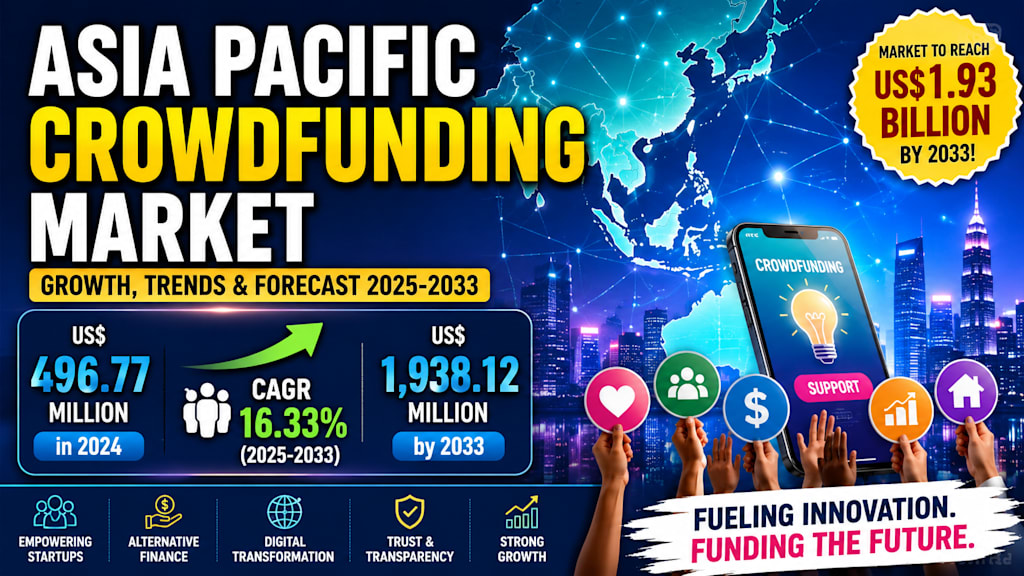
The Asia Pacific crowdfunding market is entering a transformative phase as startups, creators, nonprofits, and small businesses increasingly embrace digital fundraising platforms to secure capital outside traditional banking systems. According to Renub Research, the Asia Pacific crowdfunding market is projected to grow from US$ 496.77 million in 2024 to US$ 1,938.12 million by 2033, expanding at a robust CAGR of 16.33% from 2025 to 2033.
This remarkable growth reflects a broader shift in how entrepreneurs and investors interact in the digital economy. Crowdfunding is no longer viewed as a niche financing tool for creative projects. It has become a mainstream alternative for startup funding, social initiatives, healthcare support, technology innovation, and even real estate ventures.
Across countries such as China, India, Japan, and South Korea, crowdfunding platforms are creating new opportunities for innovators who previously struggled to access venture capital or bank loans. At the same time, retail investors are discovering more accessible ways to participate in emerging business opportunities.
Digital Transformation Is Driving Crowdfunding Adoption
One of the strongest growth drivers in the Asia Pacific crowdfunding market is the region’s rapidly expanding digital ecosystem. Smartphone penetration, internet accessibility, and digital payment adoption have significantly improved over the past decade, making crowdfunding platforms easier to access than ever before.
Digital connectivity has enabled entrepreneurs from both urban and rural areas to present their ideas to a broader audience. Social media integration further amplifies campaign visibility, allowing projects to reach supporters across borders in real time.
For startups and creators, crowdfunding platforms offer several advantages:
Faster fundraising processes
Lower capital acquisition costs
Access to micro-investors
Increased brand visibility
Early customer validation
Unlike conventional financing systems, crowdfunding democratizes investment opportunities by enabling ordinary individuals to support businesses or causes they believe in.
As fintech infrastructure continues to improve across Asia Pacific economies, crowdfunding platforms are becoming more sophisticated through AI-driven campaign analytics, automated payment systems, blockchain verification, and enhanced user engagement tools.
Investors Are Seeking More Than Financial Returns
Investor behavior is also evolving rapidly. Modern investors are increasingly interested in projects aligned with personal values, social impact, sustainability, and innovation rather than focusing solely on profit generation.
This changing mindset has fueled the popularity of donation-based and reward-based crowdfunding campaigns, particularly among younger demographics.
Technology startups, environmental initiatives, healthcare campaigns, independent media productions, and community-driven projects are attracting strong engagement across Asia Pacific crowdfunding platforms.
Backers often feel emotionally connected to projects they support, creating stronger customer loyalty and community engagement. Many startups now use crowdfunding not only to raise funds but also to build early user communities and validate market demand before full-scale launches.
This emotional and social component differentiates crowdfunding from traditional investment channels.
India’s Crowdfunding Ecosystem Is Expanding Rapidly
India has emerged as one of the most promising crowdfunding markets in the Asia Pacific region. The country's booming startup ecosystem, rising digital literacy, and widespread adoption of UPI-based digital payments have created favorable conditions for crowdfunding expansion.
Donation-based crowdfunding currently dominates the Indian market, especially in healthcare, education, and social welfare sectors. Platforms such as Milaap and Ketto have gained popularity for enabling individuals to raise emergency medical funds and support charitable initiatives.
At the same time, interest in equity-based and debt-based crowdfunding is steadily increasing among startups and small businesses seeking alternatives to bank loans and venture capital.
The Securities and Exchange Board of India (SEBI) has also shown growing interest in regulating equity crowdfunding. In November 2024, SEBI proposed increasing the investment range for angel funds to encourage broader participation and facilitate decentralized startup investments.
Peer-to-peer lending platforms such as Faircent and Lendbox are further strengthening the ecosystem by providing flexible financing solutions outside traditional banking channels.
However, regulatory uncertainty remains a key challenge for India’s crowdfunding sector. Industry experts believe that clearer legal frameworks could significantly accelerate growth and investor confidence.
China Continues to Lead the Regional Market
China remains one of the largest and most influential crowdfunding markets in Asia Pacific. The country’s massive internet population, advanced digital payment infrastructure, and strong e-commerce ecosystem have created fertile ground for crowdfunding platforms.
Major technology giants including Alibaba, JD.com, Tencent, and Baidu have entered the crowdfunding space, integrating fundraising capabilities into broader digital commerce ecosystems.
Chinese crowdfunding campaigns span multiple sectors including:
Technology innovation
Film and entertainment
Consumer electronics
Entrepreneurship
Social impact projects
Despite rapid growth, China’s crowdfunding market has faced challenges related to fraud, platform transparency, and regulatory oversight. Authorities have introduced stricter regulations to improve investor protection and strengthen platform accountability.
The government’s increasing focus on market integrity is expected to improve long-term sustainability and attract greater institutional participation.
Japan and South Korea Emphasize Trust and Innovation
Japan’s crowdfunding market reflects the country’s strong emphasis on quality, trust, and community engagement. Platforms such as Makuake, Campfire, and ReadyFor support a diverse range of projects including technology products, social causes, and local community initiatives.
Japanese consumers tend to prioritize transparency and reliability, making trust-building a critical factor for campaign success. Cultural preferences for anonymity and community-focused initiatives also shape the country’s crowdfunding landscape.
Meanwhile, South Korea’s crowdfunding industry benefits from a thriving startup culture and strong government support. Regulatory reforms introduced under the Capital Markets Act have enabled startups and SMEs to raise capital through equity and debt crowdfunding platforms.
Platforms such as Wadiz have become central to South Korea’s crowdfunding ecosystem, supporting projects across fashion, technology, gaming, and social innovation sectors.
The country’s highly connected digital economy and tech-savvy consumer base continue to create strong growth opportunities.
Crowdfunding Is Becoming a Cost-Effective Financing Alternative
Traditional fundraising channels often involve extensive paperwork, strict lending criteria, and lengthy approval timelines. Crowdfunding provides a more flexible and affordable alternative, especially for startups and early-stage entrepreneurs.
Campaign creators can launch fundraising efforts quickly while simultaneously testing product-market fit and generating public awareness.
This dual benefit of financing and marketing makes crowdfunding especially attractive for:
Startup founders
Creative professionals
Small businesses
Social enterprises
Nonprofit organizations
Additionally, crowdfunding reduces dependency on institutional investors, giving entrepreneurs greater control over their businesses and creative visions.
As economic uncertainty and tighter lending conditions continue to affect small businesses globally, crowdfunding is expected to gain even greater importance in the entrepreneurial ecosystem.
Transparency and Cybersecurity Remain Critical Challenges
Despite strong growth potential, the Asia Pacific crowdfunding market still faces significant challenges related to trust, fraud prevention, and cybersecurity.
Fraudulent campaigns, project misrepresentation, and misuse of investor funds can severely damage platform credibility. Backers often hesitate to support projects without proper verification systems and transparent reporting mechanisms.
To address these concerns, crowdfunding platforms are investing in:
Enhanced campaign verification
AI-driven fraud detection
Transparent fund tracking
Real-time reporting tools
User education initiatives
Cybersecurity is another growing concern. Crowdfunding platforms manage sensitive financial and personal data, making them attractive targets for cyberattacks and hacking attempts.
Industry players are strengthening digital security through encryption technologies, multi-factor authentication, and regular security audits to maintain user trust.
As regulatory frameworks mature and technology improves, these risks are expected to become more manageable.
Technology and Healthcare Campaigns Gain Momentum
Technology remains one of the most active crowdfunding categories in Asia Pacific. Startups developing AI solutions, smart devices, gaming products, and software innovations are increasingly turning to crowdfunding platforms to finance development and build early customer communities.
Healthcare-related crowdfunding campaigns are also experiencing strong growth, particularly in countries where medical expenses create financial burdens for families.
Donation-based medical fundraising has become especially prominent in India and Southeast Asia, where digital payment adoption enables rapid public participation during emergencies.
Other growing application areas include:
Real estate crowdfunding
Media and entertainment projects
Food and beverage startups
Sustainability initiatives
Education and community projects
This diversification is helping crowdfunding evolve into a comprehensive alternative financing ecosystem rather than a single-purpose fundraising model.
10 Recent Developments from Major Crowdfunding Companies
1. Alibaba Group Expanded Digital Crowdfunding Integration
Alibaba strengthened integration between its crowdfunding services and e-commerce ecosystem to improve startup visibility and consumer engagement.
2. Kickstarter Enhanced Creator Support Tools
Kickstarter introduced new creator analytics and audience engagement features to improve campaign performance globally.
3. Indiegogo Expanded Technology Startup Programs
Indiegogo increased support for hardware and AI-based startup campaigns targeting Asia Pacific innovators.
4. GoFundMe Strengthened Healthcare Fundraising Services
GoFundMe enhanced medical emergency fundraising capabilities with improved donor transparency tools.
5. Crowdcube Increased Cross-Border Investment Access
Crowdcube expanded investor access to international startup opportunities through digital onboarding enhancements.
6. SeedInvest Improved Investor Verification Systems
SeedInvest implemented stronger due diligence and compliance features for accredited investors.
7. Fundable Expanded SME Financing Options
Fundable broadened services for small and medium-sized enterprises seeking flexible fundraising channels.
8. Fundly Enhanced Social Campaign Features
Fundly upgraded mobile fundraising tools for nonprofits and community-driven campaigns.
9. Ketto Increased Healthcare Campaign Reach
Ketto expanded partnerships with hospitals and NGOs to accelerate emergency fundraising initiatives in India.
10. Wadiz Boosted Startup Product Launch Programs
Wadiz strengthened support for technology and lifestyle startups through specialized launch campaigns.
Final Thoughts
The Asia Pacific crowdfunding market is rapidly evolving into a powerful pillar of the region’s digital financial ecosystem. As entrepreneurs seek faster and more flexible financing solutions, crowdfunding platforms are bridging the gap between innovators and investors in entirely new ways.
Strong internet penetration, fintech advancement, changing investor behavior, and growing startup activity are expected to sustain long-term market expansion. At the same time, improvements in regulation, cybersecurity, and transparency will be critical for maintaining investor trust and platform credibility.
With the market projected to exceed US$ 1.93 billion by 2033, crowdfunding is poised to become an increasingly influential force shaping entrepreneurship, innovation, and community-driven finance across Asia Pacific.
About the Creator
Enjoyed the story? Support the Creator.
Subscribe for free to receive all their stories in your feed.
Comments
There are no comments for this story
Be the first to respond and start the conversation.