
Artificial Lift System Market: Digital Transformation, Smart Pumping Systems & Growth Potential
How energy companies are leveraging digital transformation, intelligent lift systems, and advanced automation tools to improve productivity and reduce operational costs

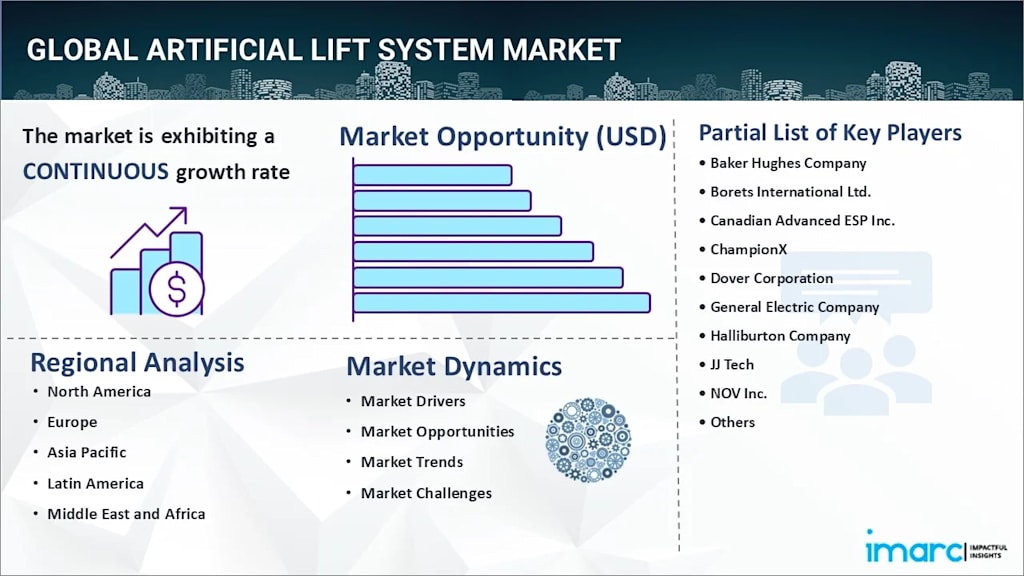
Declining reservoir pressure in mature fields, rapid depletion of unconventional shale plays, and a global push to optimize oil and gas recovery are driving the demand for artificial lift systems. This is supported by digital automation, the expansion of horizontal drilling, and increased exploration in harsh subsea and deepwater environments. According to IMARC Group’s latest data, the global artificial lift system market size was valued at USD 25.4 Billion in 2025. Looking forward, IMARC Group estimates the market to reach USD 37.7 Billion by 2034, exhibiting a CAGR of 4.35% from 2026-2034.
Artificial lift systems now represent a multi-billion-dollar global industry critical to maintaining worldwide energy security and production efficiency. Demand is fundamentally driven by the natural life cycle of oil and gas reservoirs, where decreasing bottom-hole pressure requires mechanical assistance to bring hydrocarbons to the surface. Operators are increasingly adopting advanced lift technologies to combat steep decline curves in unconventional tight oil and shale formations.
Artificial Lift System Market Growth Drivers:
- Rapid Depletion of Unconventional Shale Reservoirs
Unconventional resources, such as shale and tight oil plays, feature steep initial production decline curves where well output frequently drops by up to 80% within the first 24 months of operation. This rapid drop forces operators to install artificial lift systems within 12 to 18 months of drilling compared to up to five years for conventional setups. Energy companies depend heavily on these mechanical extraction methods to maintain economic viability and sustain flow rates.
- Increasing Volume of Mature and Aging Fields
A massive percentage of global oil production originates from mature assets that have moved past their peak natural flow. As reservoir pressure inevitably falls, natural lifting capabilities diminish, making mechanical intervention essential to recover remaining reserves. The U.S. Department of Energy regularly collaborates with private producers to deploy optimized artificial lift projects, maximizing recovery from aging onshore wells. This continuous baseline requirement ensures steady procurement of lift components, as sustaining baseline production remains more cost-effective than drilling brand-new exploration wells.
Get Free Access to the "Artificial Lift System Market" Insights PDF
- Expansion of Offshore and Deepwater Exploration
Rising global energy needs push exploration activities into deeper, harsher marine environments like the Gulf of Mexico, the South China Sea, and western African territories. Offshore deepwater interventions can easily demand substantial budgets, running anywhere from USD 5 million to USD 15 million per well compared to a fraction of that onshore. Because specialized intervention vessels command steep daily rental fees ranging from USD 500,000 to USD 800,000, operators actively seek ultra-reliable, high-capacity electrical submersible pumps.
Artificial Lift System Market Trends:
- Integration of Digital Automation and IoT Monitoring
Oilfield services are shifting rapidly toward smart oilfield architectures, embedding downhole sensors and Variable Speed Drives (VSDs) to track real-time flow parameters, temperature, and vibration. Integrating cloud-based diagnostics and edge-computing software allows operators to predict mechanical failures before they happen, mitigating premature equipment breakdowns that historically inflated intervention costs by over 40%. Major service providers continuously acquire specialized software firms to expand their industrial IoT and machine-vision portfolios.
- Technological Advancements in Gas-Handling and Slim-Line ESPs
The proliferation of complex horizontal wells with tight completions has sparked significant innovation in slim-line ESP designs and integrated gas-handling separators. Horizontal wells represent nearly half of modern artificial lift revenues, but their tortuous paths and high gas-to-oil ratios often cause severe pump cavitation and equipment erosion. In response, engineering teams are deploying specialized multi-stage pump systems capable of handling high volumes of free gas and abrasive solids without locking up.
- Focus on Energy Efficiency and Decarbonization Initiatives
Stricter Environmental, Social, and Governance (ESG) mandates are compelling production companies to reduce the massive electrical footprint associated with heavy downhole pumping operations. This sustainability pressure accelerates the development of highly efficient systems, such as electrical submersible progressing cavity pumps, which offer superior mechanical efficiency in heavy crude environments. Furthermore, operators are pairing lift optimizations with carbon capture and storage technologies to offset the carbon intensity of enhanced oil recovery.
Recent News and Developments in Artificial Lift System Market
- January 2024: ABB completed the acquisition of a majority stake in software service provider Meshmind to enhance its progress in artificial intelligence, Industrial IoT, and software-based automation. This investment directly boosts the development of advanced, AI-driven optimization programs for automated industrial lift monitoring.
- May 2024: Weatherford International expanded its global footprint as a leading provider of premium downhole solutions, launching high-efficiency Electrical Submersible Pump designs specifically engineered to maximize operational run-life and reduce overall total cost of ownership in challenging fields.
- May 2024: Schneider Electric formed a strategic partnership aimed at accelerating advanced manufacturing and clean energy infrastructure investments within the U.S. market, aligning with broader oilfield electrification efforts designed to supply lower-emission power sources to onshore pumping stations.
Note: If you require specific details, data, or insights that are not currently included in the scope of this report, we are happy to accommodate your request. As part of our customization service, we will gather and provide the additional information you need, tailored to your specific requirements. Please let us know your exact needs, and we will ensure the report is updated accordingly to meet your expectations.
About the Creator
Andrew Sullivan
Hello, I’m Andrew Sullivan. I have over 9+ years of experience as a market research specialist.
Enjoyed the story? Support the Creator.
Subscribe for free to receive all their stories in your feed.
Comments
There are no comments for this story
Be the first to respond and start the conversation.