
Animal Wound Care Market Trends: Antiseptic Solutions, Foam Dressings & Industry Forecast to 2034
How companion animal surgeries, advanced antiseptic solutions, and improved veterinary infrastructure are reshaping dynamics within the animal wound care market

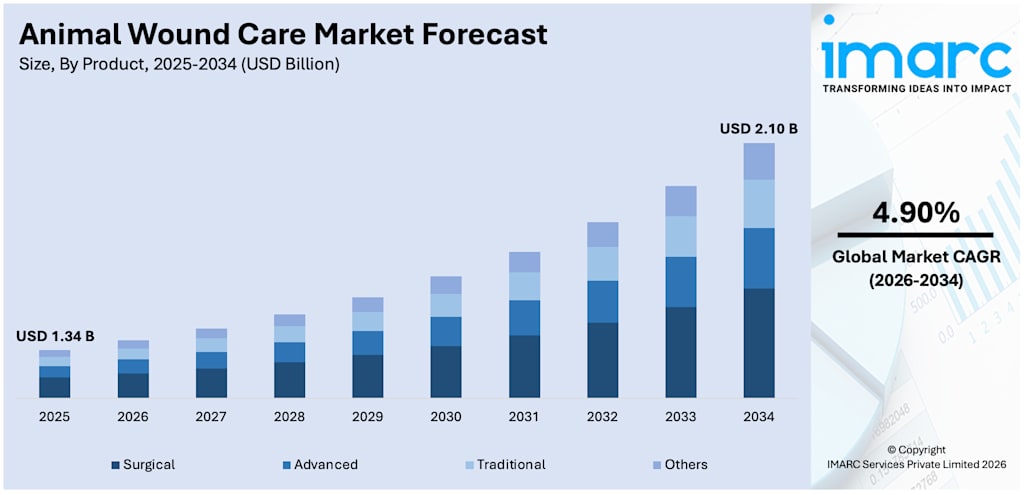
Rising pet adoption for emotional support, increasing demand for veterinary surgeries, and expanding awareness of animal welfare are driving animal wound care demand, supported by innovations in advanced dressings, government initiatives for livestock health, and rising veterinary healthcare spending. According to IMARC Group’s latest data, The global animal wound care market size was valued at USD 1.34 Billion in 2025. Looking forward, IMARC Group estimates the market to reach USD 2.10 Billion by 2034, exhibiting a CAGR of 4.90% during 2026-2034.
Animal wound care has evolved into a critical segment of the veterinary healthcare industry, currently representing a multi-billion-dollar global market. Demand is fueled by the "pet humanization" trend, where owners increasingly seek medical standards for their animals that mirror human healthcare. Retail expansion through e-commerce and specialized veterinary clinics, alongside the development of advanced hydrogels and antimicrobial foams, is accelerating the adoption of professional-grade treatments. Major segments include surgical products like sutures and staplers, advanced dressings for chronic injuries, and traditional bandages.
Animal Wound Care Market Growth Drivers:
- Rising Pet Ownership and Humanization
The deep emotional bond between humans and animals has led to a surge in pet adoptions, particularly for companionship and mental health support. In 2025, U.S. households spent an average of USD 1,201 annually on veterinary care for dogs, a significant rise from previous years. This "humanization" trend means owners are no longer satisfied with basic bandages; they demand high-performance dressings and antimicrobial treatments. As more people treat pets as family members, the willingness to invest in premium surgical care and advanced postoperative wound management continues to expand across major urban markets.
- Increasing Frequency of Veterinary Surgeries
The volume of veterinary procedures, including spaying, neutering, and complex orthopedic surgeries, is rising globally. Surgical items, such as sutures and staplers, currently account for approximately 40.1% of the total market revenue. This growth is supported by the availability of specialized clinics and better diagnostic tools that identify conditions requiring surgical intervention earlier. In 2024, veterinary hospitals and clinics led the market with a 43.6% share, as these facilities are the primary hubs for procedures involving tissue adhesives and sealants. Modern minimally invasive operations also encourage pet owners to opt for professional wound care solutions.
- Focus on Livestock Productivity and Welfare
In the agricultural sector, there is a growing emphasis on maintaining livestock health to ensure food security and economic productivity. Advanced wound care in livestock is seeing a surge, exemplified by the USD 3.4 million seed funding recently raised by NoBACZ Healthcare to launch specialized wound solutions for dairy and beef cattle. Farmers are increasingly adopting antimicrobial sprays and protective dressings to prevent infections in herd animals, which can otherwise lead to significant financial losses. Government initiatives promoting animal welfare and disease prevention further bolster the demand for effective wound management in large-scale farming operations.
Request Your Complimentary "Animal Wound Care Market" Trends PDF Today!
Animal Wound Care Market Trends:
- Shift Toward Advanced and Functional Dressings
The market is witnessing a rapid transition from traditional tapes to functional materials like foam, hydrocolloids, and hydrogel dressings. Foam dressings are particularly popular due to their high absorbent capacity, which effectively manages fluid discharge in large wounds. These advanced products create a moist environment that significantly accelerates the healing process and reduces dressing change frequency. For instance, KeraVet Bio’s keratin hydrogel achieved a 68% complete-closure rate in canine wounds within 28 days, proving far more effective than standard care. This trend reflects a broader move toward evidence-based veterinary medicine and technology-driven recovery solutions.
- Growth of E-commerce and Direct-to-Consumer Channels
While veterinary clinics remain the primary distribution point, the e-commerce segment is emerging as the fastest-growing channel. Pet owners are increasingly purchasing home-use wound sprays, specialized bandages, and antiseptic ointments online for minor injuries. This shift is driven by the convenience of doorstep delivery and the availability of a wider range of niche brands. Market data indicates that online platforms are gaining traction as they offer competitive pricing and educational resources that empower owners to manage basic wound care at home. This trend is expected to significantly broaden the market’s reach into rural and underserved regions.
- Innovations in Tissue Engineering and Bio-Active Materials
Cutting-edge research is bringing regenerative medicine to the veterinary field, with the introduction of platelet-rich plasma (PRP), stem-cell sheets, and autologous plasma centrifuges. In 2026, industry leaders like Zoetis partnered with biotechnology firms to develop stem-cell therapies for equine injuries. These bio-active materials go beyond simple protection; they actively stimulate tissue regeneration and reduce recovery times for chronic or traumatic wounds. As the cost of these technologies decreases—such as new portable centrifuges that prepare treatments in 15 minutes for roughly USD 80—high-tech wound care is becoming accessible to a larger segment of the pet-owning population.
Recent News and Developments in Animal Wound Care Market
- September 2025: 3M Company expanded its veterinary division by introducing a new line of super-absorbent foam dressings with anti-biofilm properties, targeting the reduction of secondary infections in postoperative companion animal care.
- March 2026: Elanco Animal Health entered a strategic collaboration with Purdue University to research and develop next-generation bio-active dressings for livestock, focusing on sustainable and cost-effective infection control in large-scale cattle farming.
- April 2026: Dechra Pharmaceuticals completed the acquisition of a major stake in a specialized wound care technology firm, enhancing its portfolio of tissue adhesives and non-invasive surgical sealants for the global veterinary market.
Note: If you require specific details, data, or insights that are not currently included in the scope of this report, we are happy to accommodate your request. As part of our customization service, we will gather and provide the additional information you need, tailored to your specific requirements. Please let us know your exact needs, and we will ensure the report is updated accordingly to meet your expectations.
About the Creator
Andrew Sullivan
Hello, I’m Andrew Sullivan. I have over 9+ years of experience as a market research specialist.
Enjoyed the story? Support the Creator.
Subscribe for free to receive all their stories in your feed.
Comments
There are no comments for this story
Be the first to respond and start the conversation.