
America's Seafood Appetite Is Growing: How Health Trends and Sustainability Are Reshaping the U.S. Seafood Market
From salmon and shrimp to online seafood delivery, changing consumer habits are transforming one of America's most important food industries.

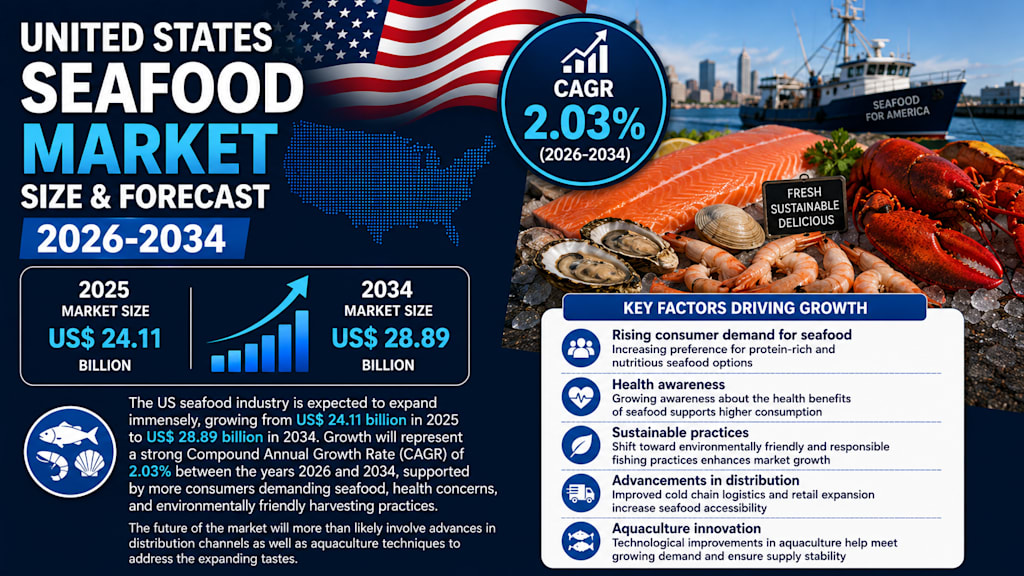
Seafood has long played an important role in American diets, particularly in coastal communities where fishing traditions have been passed down through generations. Today, however, seafood is no longer just a regional favorite. Across the United States, consumers are increasingly embracing fish, shrimp, shellfish, and other seafood products as part of a broader shift toward healthier eating habits and more sustainable food choices.
From supermarket seafood counters and upscale restaurants to online seafood delivery services, demand continues to expand as Americans become more aware of the nutritional benefits associated with seafood consumption. Rich in protein, omega-3 fatty acids, vitamins, and minerals, seafood has earned a reputation as one of the healthiest sources of nutrition available.
According to Renub Research, the United States Seafood Market is expected to grow from US$24.11 billion in 2025 to US$28.89 billion by 2034, registering a compound annual growth rate (CAGR) of 2.03% during the forecast period. The market's growth is being supported by increasing health awareness, growing seafood consumption, advances in aquaculture, and improvements in distribution channels that make seafood more accessible than ever before.
As consumers continue seeking healthier and more sustainable food options, the seafood industry is entering a new phase of growth and innovation.

Health-Conscious Consumers Are Driving Demand
One of the strongest forces behind the expansion of the seafood market is the growing focus on personal health and wellness.
Consumers today are paying closer attention to what they eat and how their dietary choices affect long-term health. Concerns surrounding heart disease, obesity, diabetes, and overall wellness have encouraged many Americans to replace higher-fat protein sources with healthier alternatives.
Seafood fits perfectly into this trend. Fish such as salmon, tuna, and cod provide high-quality protein while containing significantly lower levels of saturated fat than many traditional meat products. In addition, seafood is one of the richest natural sources of omega-3 fatty acids, which are widely recognized for supporting cardiovascular health and brain function.
Healthcare professionals, nutritionists, and public health organizations frequently recommend increasing seafood consumption as part of a balanced diet. These recommendations continue influencing consumer purchasing decisions across the country.
As awareness of nutrition continues growing, seafood is becoming a regular part of everyday meal planning for millions of households.
Salmon's Popularity Continues to Rise
Among all seafood categories, salmon remains one of the most popular choices for American consumers.
Its versatility, nutritional profile, and premium image have helped make salmon a staple in restaurants, grocery stores, and home kitchens. Consumers appreciate its rich flavor, ease of preparation, and strong health benefits.
Meal kit services, grocery retailers, and food delivery platforms have further contributed to salmon's popularity by making it easier for consumers to prepare seafood meals at home. The growing availability of ready-to-cook seafood products has removed many of the barriers that previously discouraged seafood consumption.
As consumers increasingly seek healthy and convenient meal options, salmon is expected to remain one of the leading products within the U.S. seafood market.
Aquaculture Is Supporting Market Growth
Aquaculture, commonly known as fish farming, has become an essential component of the seafood industry's expansion.
While wild-caught seafood remains highly valued, growing consumer demand has increased the importance of sustainable aquaculture operations. Farm-raised salmon, catfish, shellfish, and other seafood products help ensure year-round availability while reducing pressure on natural fish populations.
Advancements in aquaculture technology have improved product quality, efficiency, and environmental sustainability. Modern farming techniques allow producers to meet growing demand while maintaining higher standards for animal health and environmental management.
Aquaculture also helps stabilize supply chains by reducing dependence on seasonal fishing activities and unpredictable environmental conditions.
As global seafood consumption continues increasing, aquaculture will play a critical role in supporting future market growth.
Imports Help Meet Growing Demand
The United States remains one of the world's largest seafood-consuming nations, and imports play an important role in satisfying domestic demand.
Countries throughout Asia, Latin America, and other regions supply significant quantities of shrimp, fish, and shellfish to the U.S. market. These imports help maintain product availability and support a diverse range of seafood offerings for consumers.
Imported seafood contributes to price stability and ensures that retailers can provide year-round access to popular products. International trade relationships remain essential to maintaining a healthy and competitive seafood industry.
At the same time, regulatory programs designed to improve transparency and traceability are helping ensure imported seafood meets quality and sustainability standards.
As demand continues growing, global supply chains will remain a vital component of the American seafood ecosystem.
Online Seafood Sales Are Transforming Distribution
One of the most significant developments within the seafood industry is the rapid growth of e-commerce and direct-to-consumer sales.
Traditionally, consumers purchased seafood through grocery stores, fish markets, and restaurants. Today, online platforms allow shoppers to order fresh, frozen, and specialty seafood products directly to their homes.
Advancements in cold-chain logistics and temperature-controlled shipping have made nationwide seafood delivery increasingly practical and reliable. Consumers can now access premium seafood products regardless of geographic location.
Subscription-based seafood services have gained popularity among health-conscious consumers who value convenience and product transparency. Many companies emphasize sustainable sourcing, traceability, and freshness as key selling points.
The shift toward online purchasing is reshaping how seafood reaches consumers and creating new opportunities for industry growth.
Sustainability Is Becoming a Competitive Advantage
Modern consumers care not only about what they eat but also about how it is produced.
Environmental sustainability has become one of the most important issues facing the seafood industry. Concerns surrounding overfishing, habitat destruction, and marine ecosystem health have encouraged both businesses and consumers to prioritize responsible sourcing practices.
Seafood certifications, eco-labeling programs, and traceability initiatives are becoming increasingly influential in purchasing decisions. Consumers want assurance that the products they buy support sustainable fishing and aquaculture practices.
Retailers and restaurants are responding by expanding their offerings of certified sustainable seafood products. Companies that demonstrate environmental responsibility often enjoy stronger brand loyalty and consumer trust.
As sustainability continues influencing food purchasing behavior, responsible seafood production will become increasingly important for long-term industry success.
Shrimp Remains America's Favorite Seafood
Among all seafood products consumed in the United States, shrimp continues to hold a leading position.
Its popularity stems from its versatility, affordability, and widespread availability. Shrimp is featured prominently in restaurants, quick-service dining establishments, grocery stores, and frozen food products.
Consumers appreciate shrimp because it can be prepared in numerous ways, making it suitable for a wide range of cuisines and meal occasions. Ready-to-cook and pre-peeled shrimp products have further increased convenience for home cooks.
Although challenges related to sustainability and disease management occasionally affect production, advances in aquaculture are helping maintain stable supplies.
As consumer demand remains strong, shrimp is expected to continue serving as one of the most important segments within the seafood market.
Fresh and Frozen Products Both Continue Growing
Consumer preferences vary widely when it comes to seafood formats.
Fresh and chilled seafood remains highly desirable because many consumers associate freshness with superior taste and nutritional value. Supermarkets and specialty retailers continue expanding seafood counters to meet this demand.
At the same time, frozen seafood has experienced significant growth due to improvements in freezing technology. Modern freezing methods help preserve flavor, texture, and nutritional quality, making frozen products a convenient and cost-effective option.
Busy lifestyles have contributed to the popularity of frozen seafood because consumers appreciate products that are easy to store and prepare.
Rather than competing directly, fresh and frozen seafood categories increasingly complement one another by serving different consumer needs and purchasing occasions.
Regional Markets Continue Driving Consumption
Several states play particularly important roles within the U.S. seafood industry.
California remains one of the country's largest seafood markets thanks to its coastal location, diverse population, and strong demand for healthy food options. Consumers throughout the state show significant interest in sustainable seafood products and international cuisine.
New York benefits from a large population, thriving restaurant industry, and access to global seafood imports. Demand spans everything from premium seafood dining experiences to convenient retail products.
New Jersey's fishing heritage and coastal economy support a strong seafood sector centered around products such as clams, scallops, and bluefish.
These regional markets help shape national seafood trends while demonstrating the broad appeal of seafood across different consumer segments.
Challenges Facing the Industry
Despite positive growth prospects, the seafood market faces several ongoing challenges.
Supply chain disruptions, transportation costs, labor shortages, and climate-related events can affect product availability and pricing. Fuel costs and seasonal fluctuations often contribute to market volatility.
Sustainability concerns also require ongoing attention. Maintaining healthy fish populations and protecting marine ecosystems will be essential for ensuring long-term industry viability.
Businesses must continue investing in responsible sourcing practices, supply chain transparency, and environmental stewardship to address these challenges effectively.
Successfully balancing growth with sustainability will remain one of the industry's most important priorities.
The Future of Seafood in America
Looking ahead, the future of the U.S. seafood market appears promising.
Growing health awareness, advances in aquaculture, expansion of online distribution channels, and increasing consumer interest in sustainable food choices will continue supporting market growth. Innovations in seafood production, logistics, and traceability are helping create a more resilient and efficient industry.
Consumers are becoming more adventurous in their food choices and increasingly willing to explore different seafood varieties and preparation methods. This trend is creating opportunities for both traditional seafood producers and emerging specialty brands.
As lifestyles evolve and demand for nutritious protein sources increases, seafood is likely to become an even more important component of the American diet.
Final Thoughts
The United States seafood market is evolving as consumers place greater emphasis on health, convenience, and sustainability. With the market projected to grow from US$24.11 billion in 2025 to US$28.89 billion by 2034, seafood is positioned to remain one of the country's most important food categories.
From salmon and shrimp to innovative online delivery services and sustainable aquaculture operations, the industry is adapting to changing consumer expectations while continuing to provide nutritious and flavorful food options.
As Americans increasingly prioritize healthier lifestyles and environmentally responsible consumption, seafood will remain at the center of conversations about the future of food. The industry's ability to balance growth, sustainability, and innovation will determine how successfully it meets the needs of future generations.
About the Creator
Enjoyed the story? Support the Creator.
Subscribe for free to receive all their stories in your feed.
Comments
There are no comments for this story
Be the first to respond and start the conversation.