
America’s Organic Food Revolution Is Reshaping the Future of Healthy and Sustainable Eating
Health-Conscious Consumers, Sustainable Farming, and Clean-Label Preferences Are Driving Explosive Growth in the United States Organic Food Market

The American food industry is undergoing a profound transformation. Consumers are paying closer attention to what they eat, how food is produced, and the impact their purchasing decisions have on both personal health and the environment. This shift has propelled organic food from a niche category into one of the fastest-growing segments of the U.S. food and beverage industry.
From organic fruits and vegetables to dairy products, beverages, cereals, and packaged foods, demand for chemical-free and sustainably produced products continues to rise across the country. Consumers are increasingly seeking transparency, cleaner ingredients, and farming practices that align with their values. As a result, retailers, manufacturers, and farmers are expanding organic offerings at an unprecedented pace.
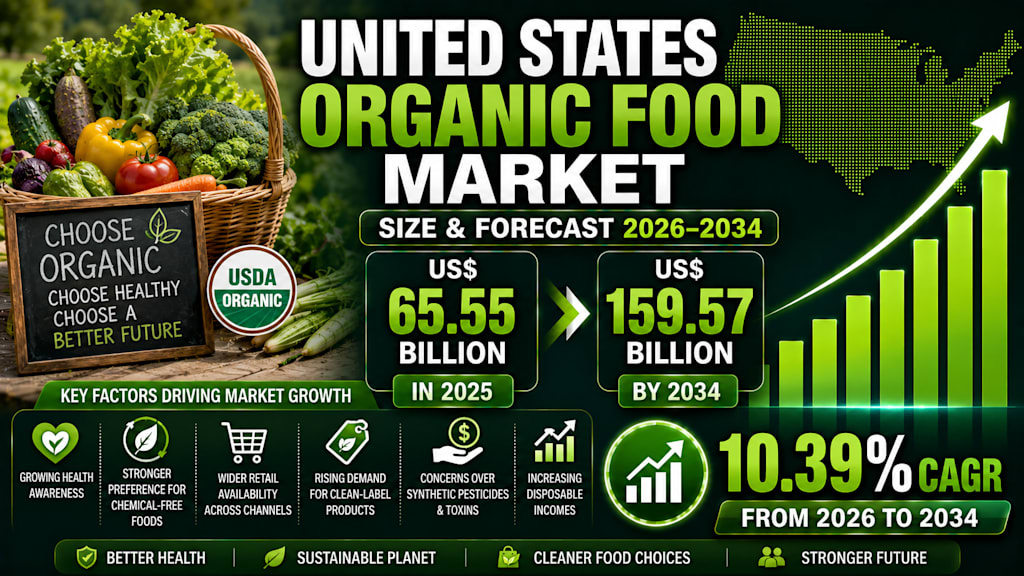
According to Renub Research, the United States Organic Food Market is projected to grow from US$ 65.55 billion in 2025 to US$ 159.57 billion by 2034, registering an impressive compound annual growth rate (CAGR) of 10.39% between 2026 and 2034. Growing health awareness, increasing preference for chemical-free foods, expanding retail availability, and rising demand for clean-label products are among the major factors fueling market expansion.
As consumers increasingly prioritize wellness, sustainability, and ethical consumption, organic food is becoming a defining feature of America's evolving food culture.
Why Organic Food Is Capturing Consumer Attention
Organic food refers to agricultural products grown and processed using natural farming methods that avoid synthetic pesticides, chemical fertilizers, genetically modified organisms (GMOs), artificial additives, and routine antibiotics.
Organic farming emphasizes environmental stewardship, biodiversity preservation, soil health, and responsible resource management.
Farmers rely on crop rotation, composting, biological pest control, and sustainable cultivation techniques to maintain productivity while protecting ecosystems.
For consumers, organic products represent more than food choices. They symbolize healthier living, environmental responsibility, and greater confidence in product quality.
Certification programs provide assurance that products meet strict organic standards throughout production, processing, and distribution.
As awareness regarding food quality continues increasing, organic products are becoming mainstream choices for millions of American households.
Health and Wellness Trends Are Driving Demand
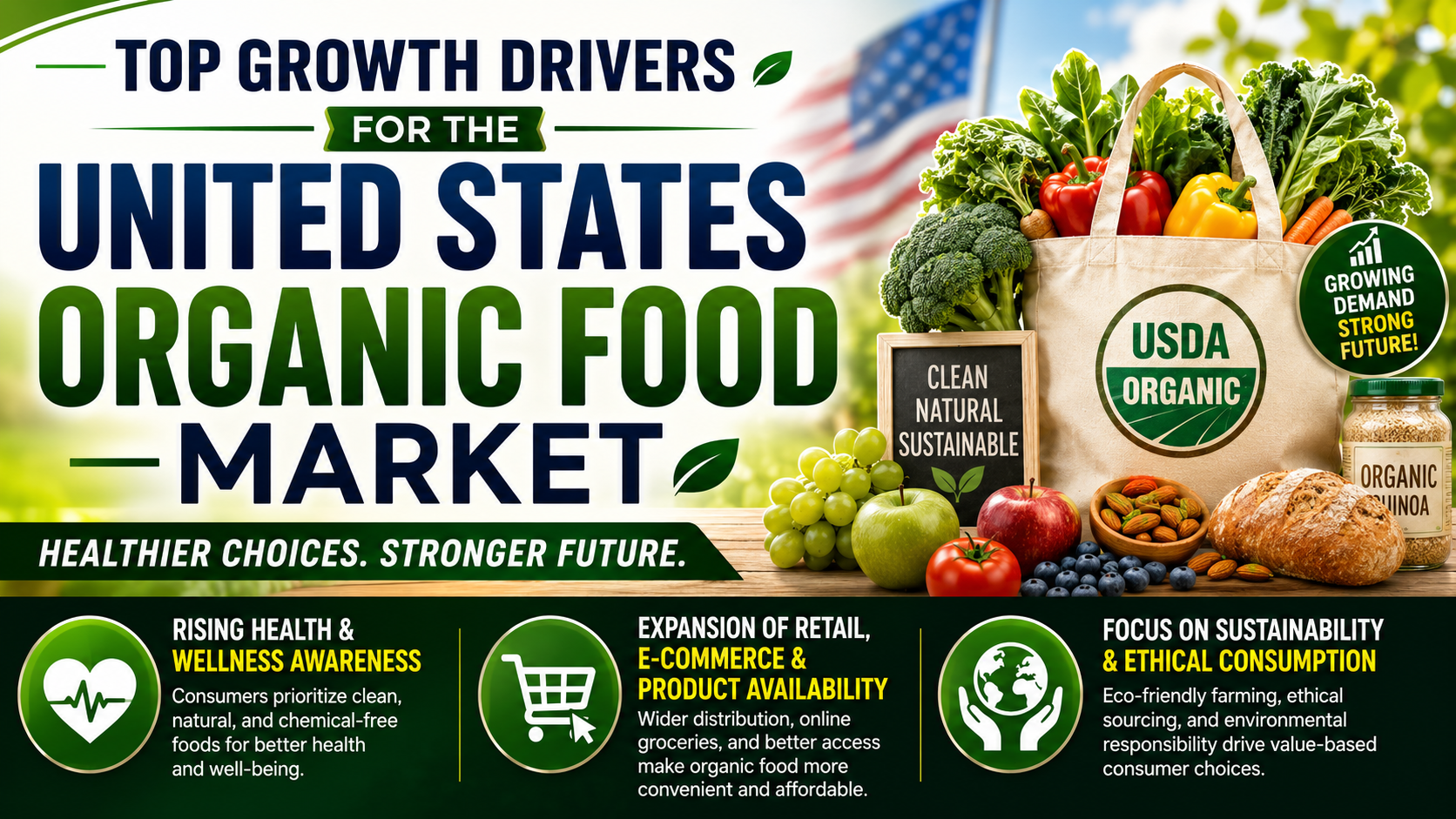
One of the strongest growth drivers for the organic food market is the growing focus on health and wellness.
Consumers today are more informed than ever about nutrition, food ingredients, and long-term health outcomes.
Many individuals are actively reducing their consumption of processed foods and seeking products perceived as cleaner, safer, and more natural.
The increasing prevalence of chronic conditions such as obesity, diabetes, and cardiovascular disease has encouraged many consumers to reevaluate their dietary habits.
Organic foods are often viewed as healthier alternatives because they are produced without synthetic pesticides, artificial preservatives, or genetically modified ingredients.
Parents are particularly focused on providing healthier food options for their children, contributing significantly to household demand for organic products.
Health-focused lifestyles, fitness culture, and wellness movements continue reinforcing consumer interest in organic foods.
As consumers increasingly associate nutrition with preventive healthcare, demand for organic products is expected to remain strong.
Clean-Label Products Are Becoming a Consumer Priority
Transparency has become one of the most important factors influencing food purchasing decisions.
Modern consumers want to understand exactly what is in their food and how it was produced.
This trend has accelerated demand for clean-label products that feature recognizable ingredients and minimal processing.
Organic foods naturally align with clean-label preferences because they emphasize simplicity, transparency, and natural production methods.
Consumers increasingly scrutinize ingredient lists and avoid products containing artificial colors, preservatives, sweeteners, and additives.
Food manufacturers are responding by reformulating products, improving labeling practices, and expanding organic product lines.
The clean-label movement has become a major force shaping the broader food industry, and organic products are positioned at its center.
As transparency continues influencing consumer behavior, clean-label demand will remain a powerful growth driver.
Retail Expansion Is Making Organic Food More Accessible
A major factor behind the rapid growth of the organic food market is improved accessibility.
In the past, organic products were often limited to specialty health stores and premium retailers.
Today, organic foods are available through mainstream supermarkets, warehouse clubs, convenience stores, discount retailers, and online platforms.
Large retailers have expanded shelf space dedicated to organic products, while many have introduced private-label organic brands at competitive prices.
This broader availability has made organic foods more convenient and affordable for consumers across different income levels.
Improved distribution networks and supply chain efficiencies have also enhanced product freshness and consistency.
As access continues improving nationwide, organic food adoption is expected to accelerate even further.
E-Commerce Is Transforming Organic Food Shopping
The growth of online grocery shopping has become another important catalyst for market expansion.
Consumers increasingly value the convenience of ordering groceries from home and receiving deliveries directly to their doorsteps.
E-commerce platforms offer extensive selections of organic products that may not always be available in local stores.
Online shoppers can easily compare products, read reviews, evaluate certifications, and explore new brands.
The COVID-19 pandemic significantly accelerated digital grocery adoption, creating lasting changes in consumer behavior.
Subscription services, meal delivery programs, and specialty organic marketplaces have further strengthened online demand.
As digital commerce continues evolving, e-commerce is expected to remain a major distribution channel for organic foods.
Sustainability Is Influencing Purchasing Decisions
Environmental concerns are playing an increasingly important role in shaping consumer preferences.
Many Americans are becoming more aware of issues such as climate change, biodiversity loss, soil degradation, and water pollution.
Organic farming practices are widely recognized for their environmental benefits.
These practices promote healthier soils, reduce chemical runoff, protect wildlife habitats, and support long-term ecological balance.
Consumers increasingly view organic purchases as a way to contribute to environmental sustainability while supporting responsible agricultural systems.
Younger generations, particularly Millennials and Generation Z, are especially motivated by environmental values and ethical consumption.
For many consumers, buying organic food represents a commitment not only to personal health but also to planetary well-being.
As sustainability becomes increasingly important, organic products are expected to benefit from continued consumer support.
Organic Fruits and Vegetables Continue to Lead the Market
Among all organic food categories, fruits and vegetables remain the most popular segment.
Fresh produce is often the first category consumers explore when transitioning toward organic food consumption.
Consumers value organic fruits and vegetables because they are perceived as having fewer pesticide residues and more natural production methods.
The growing popularity of plant-based diets, vegetarian lifestyles, and health-focused eating habits has further increased demand.
Retailers continue expanding their organic produce sections to accommodate consumer interest.
Improved availability and broader product selection have helped make organic fruits and vegetables more accessible than ever.
As consumers continue prioritizing nutrition and freshness, this category is expected to remain a major market driver.
Organic Dairy and Meat Products Are Gaining Popularity
Demand for organic dairy, poultry, and meat products is also increasing steadily.
Consumers are becoming more conscious of animal welfare, antibiotic usage, and production practices within conventional livestock systems.
Organic animal products are produced under strict standards that emphasize humane treatment, natural feed, and limited use of synthetic inputs.
These attributes appeal to consumers seeking higher-quality protein sources.
The premiumization trend within food consumption is also supporting growth in this category.
Many shoppers are willing to pay higher prices for products they perceive as healthier, safer, and more ethically produced.
As awareness regarding food sourcing continues increasing, organic animal products are expected to experience sustained growth.
Organic Processed Foods Are Expanding Market Reach
The organic food market is no longer limited to fresh produce and dairy products.
Organic processed foods, snacks, cereals, frozen meals, beverages, and packaged goods are becoming increasingly popular.
Consumers appreciate the convenience these products offer while maintaining alignment with clean-label and health-conscious lifestyles.
Food manufacturers continue introducing innovative organic offerings across multiple categories.
Organic beverages, breakfast products, bakery items, and ready-to-eat meals are attracting strong consumer interest.
The expansion of processed organic foods is helping broaden the appeal of the organic market and attract new customer segments.
As product diversity continues increasing, processed organic foods will likely contribute significantly to future growth.
Regional Markets Are Driving Expansion
California
California remains the nation's leading organic food market and one of the largest organic agricultural producers in the world.
Strong consumer demand, favorable growing conditions, and supportive policies continue driving market growth throughout the state.
Texas
Texas is experiencing rapid growth in organic food consumption due to population expansion, rising health awareness, and increasing retail availability.
Urban centers such as Dallas, Houston, and Austin are particularly important growth markets.
New York
New York's organic market is fueled by strong urban demand, premium consumer spending, and growing interest in sustainability and wellness.
The state continues to play a major role in organic food distribution and consumption.
Florida
Florida benefits from year-round agricultural production and growing consumer interest in healthy lifestyles.
Demand for fresh organic produce, beverages, and specialty products continues increasing throughout the state.
Challenges Facing the Industry
Despite strong growth prospects, the organic food market faces several challenges.
Higher Consumer Prices
Organic products typically carry premium prices due to higher production costs, certification requirements, labor expenses, and lower crop yields.
These price differences can limit accessibility for budget-conscious consumers.
Supply Chain Limitations
Organic farming faces unique challenges related to climate conditions, pest management, and production consistency.
Maintaining reliable supply chains while preserving certification integrity can be complex and costly.
Addressing these challenges will be essential for supporting long-term market expansion.
Final Thoughts
The United States organic food market has evolved from a specialized niche into a major force within the food industry. Growing consumer awareness regarding health, sustainability, transparency, and ethical production continues driving strong demand across virtually every product category.
According to Renub Research, the United States Organic Food Market is expected to grow from US$ 65.55 billion in 2025 to US$ 159.57 billion by 2034, highlighting the remarkable momentum behind organic food adoption nationwide.
As consumers increasingly seek healthier diets and environmentally responsible choices, organic food will continue playing a central role in shaping the future of American agriculture and food consumption.
The organic movement is no longer simply a trend—it is becoming a permanent part of how Americans think about food, health, and sustainability.
About the Creator
Enjoyed the story? Support the Creator.
Subscribe for free to receive all their stories in your feed.
Comments
There are no comments for this story
Be the first to respond and start the conversation.