
America's Melon Market Is Growing Fast: Why Consumers Are Fueling a $2.1 Billion Fresh Fruit Boom
Rising health awareness, demand for convenient fresh produce, and agricultural innovation are transforming the future of the U.S. melon industry.

When summer arrives in America, few fruits capture the season's spirit quite like melons. Whether it's a refreshing slice of watermelon at a backyard barbecue, cantaloupe served with breakfast, or honeydew added to a fruit salad, melons have become a staple of healthy eating across the country.
But today's melon market is about far more than seasonal enjoyment.
Driven by rising consumer interest in nutrition, growing demand for fresh produce, and advances in farming technology, the U.S. melon industry is experiencing steady growth. Consumers are increasingly seeking foods that are nutritious, hydrating, convenient, and naturally low in calories—qualities that melons deliver exceptionally well.
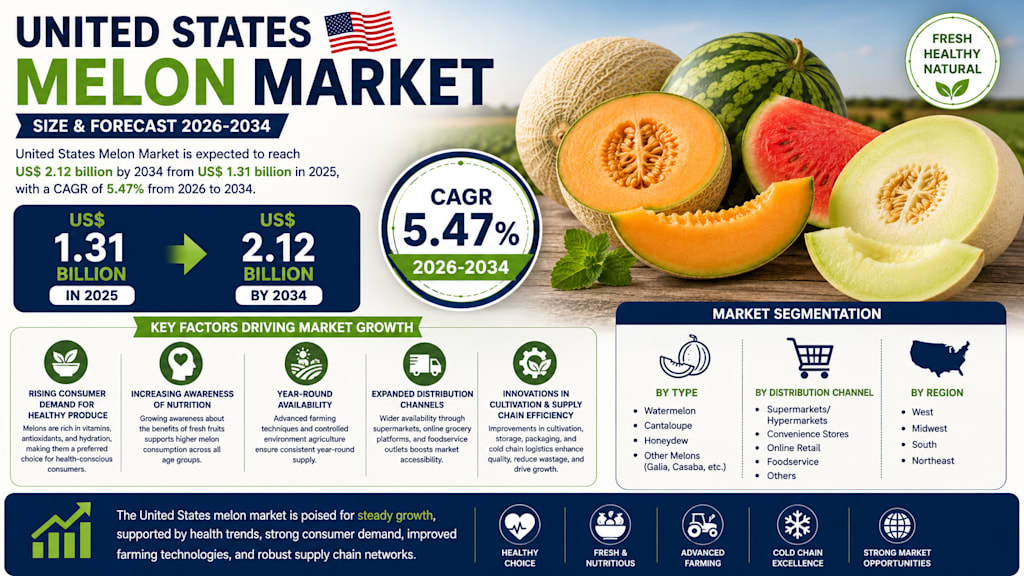
According to Renub Research, the United States Melon Market is projected to grow from US$1.31 billion in 2025 to US$2.12 billion by 2034, expanding at a compound annual growth rate (CAGR) of 5.47% between 2026 and 2034. Growth is being supported by increasing health awareness, improved cultivation methods, year-round availability, expanded distribution networks, and innovations throughout the supply chain.
As consumer preferences continue shifting toward healthier lifestyles, melons are emerging as one of the most attractive categories within the fresh produce industry.
Why Melons Remain a Favorite Among American Consumers
Melons have long been appreciated for their sweet flavor, refreshing texture, and versatility.
Watermelon, cantaloupe, and honeydew are among the most widely consumed varieties in the United States, appearing in homes, restaurants, hotels, schools, and foodservice establishments nationwide.
Their popularity stems from several advantages. Melons are naturally rich in vitamins, antioxidants, and hydration-supporting nutrients while remaining low in calories and fat. They can be enjoyed on their own, blended into beverages, incorporated into salads, paired with savory dishes, or served as healthy snacks.
Unlike many processed foods, melons align perfectly with growing consumer demand for simple, natural, and minimally processed ingredients.
As more Americans focus on wellness and balanced diets, fresh fruit consumption continues to increase, creating favorable conditions for melon producers and retailers.
Health and Wellness Trends Are Driving Demand
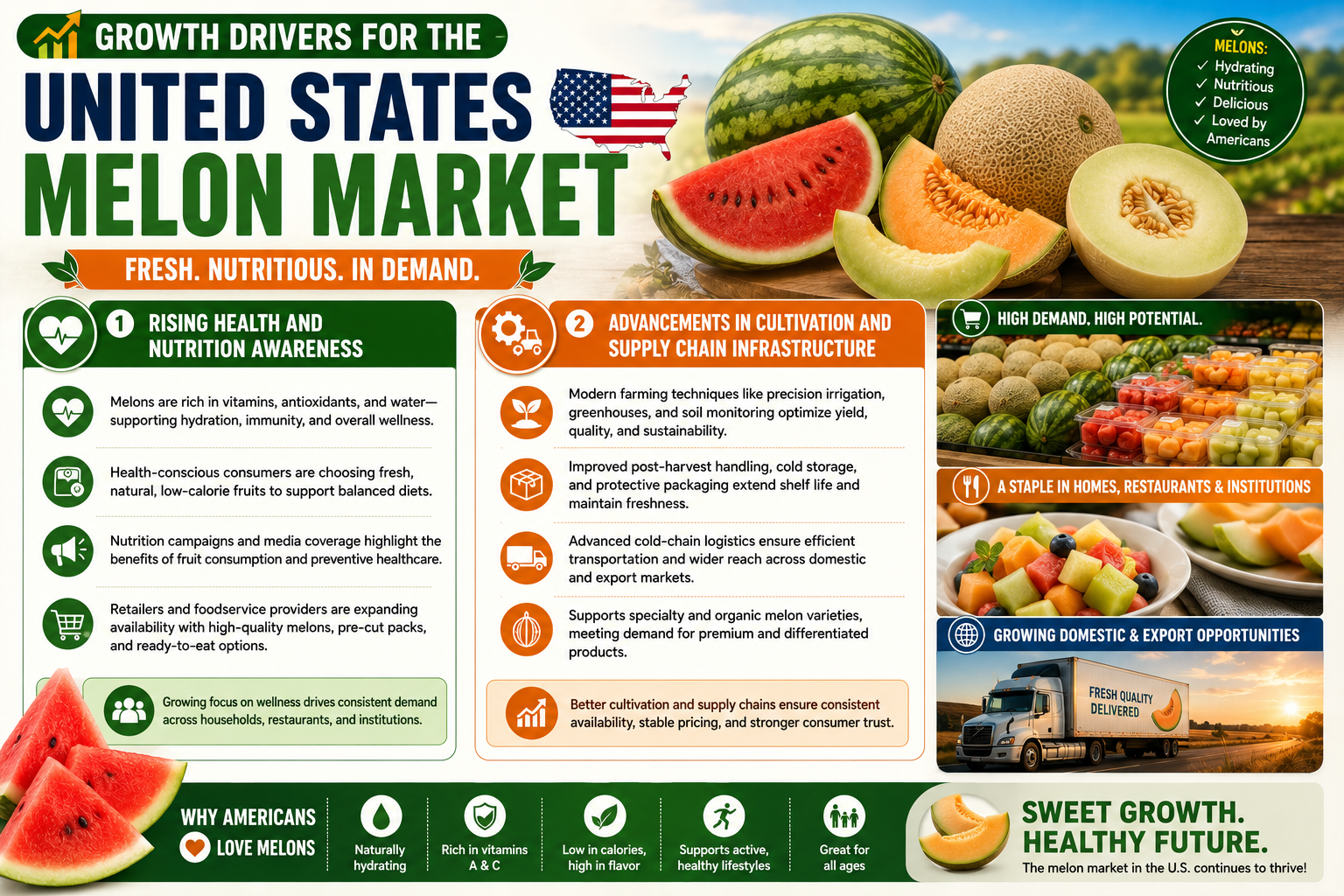
One of the most powerful growth drivers in the melon market is rising awareness of nutrition and preventive health.
Consumers today are paying closer attention to what they eat than ever before. Rather than viewing food solely as a source of energy, many people now see nutrition as an essential component of long-term health and disease prevention.
Melons fit naturally into this trend.
Watermelons contain hydration-supporting nutrients and antioxidants such as lycopene. Cantaloupes provide vitamins A and C, while honeydews offer essential nutrients that contribute to overall wellness.
Because melons are naturally sweet and low in calories, they appeal to consumers looking for healthier alternatives to sugary snacks and desserts.
Government nutrition initiatives, healthcare recommendations, and widespread media coverage of healthy eating habits continue encouraging fruit consumption across all age groups.
This growing emphasis on wellness is helping drive sustained demand throughout the U.S. melon market.
Advanced Farming Techniques Are Improving Production
Behind the scenes, agricultural innovation is playing a crucial role in supporting industry growth.
The United States benefits from favorable melon-growing conditions in states such as California, Florida, Texas, Georgia, and Arizona. These regions provide the climate and soil conditions necessary for large-scale production. However, modern farming practices have significantly improved productivity beyond what traditional methods could achieve.
Growers increasingly utilize precision agriculture technologies, drip irrigation systems, soil monitoring tools, and integrated pest management programs to optimize crop performance.
These technologies help farmers improve yields, conserve resources, reduce waste, and maintain consistent fruit quality.
Advanced cultivation techniques also contribute to greater sustainability by improving water efficiency and reducing environmental impact.
As growers continue adopting innovative agricultural solutions, the industry is becoming more productive, resilient, and capable of meeting rising consumer demand.
Supply Chain Improvements Are Expanding Availability
Historically, fresh produce markets often struggled with seasonal limitations and transportation challenges.
Today's melon industry benefits from sophisticated supply chain infrastructure that helps ensure freshness while extending market reach.
Refrigerated storage facilities, cold-chain logistics systems, protective packaging, and modern transportation networks allow melons to move efficiently from farms to retailers across the country.
These improvements help reduce post-harvest losses and maintain product quality during transit.
Consumers now enjoy access to fresh melons for much longer periods throughout the year than in previous generations.
Reliable supply chains also support pricing stability and improve product availability in regions that do not produce melons locally.
The result is a more efficient market capable of serving growing consumer demand while minimizing waste.
Convenience Is Reshaping the Market
Modern lifestyles are influencing how consumers purchase and consume fresh produce.
Many shoppers appreciate healthy foods but often lack the time needed for extensive preparation. As a result, convenience has become a major factor in purchasing decisions.
Retailers have responded by expanding their selection of ready-to-eat melon products.
Pre-cut fruit containers, mixed fruit cups, sliced watermelon trays, and portion-controlled packaging have become increasingly popular in supermarkets, convenience stores, and foodservice outlets.
These products offer consumers the nutritional benefits of fresh fruit without the inconvenience of cutting and preparing whole melons.
Busy professionals, families, students, and health-conscious consumers all contribute to rising demand for convenient fruit options.
This trend is expected to remain a major growth driver throughout the coming decade.
Specialty and Organic Melons Are Gaining Popularity
Consumer tastes are becoming more diverse, creating opportunities beyond traditional melon varieties.
Specialty melons, organic products, and heirloom varieties are attracting shoppers seeking unique flavors, premium quality, and sustainable production methods.
Health-conscious consumers often associate organic produce with cleaner growing practices and fewer synthetic inputs. Meanwhile, food enthusiasts enjoy exploring specialty varieties that offer distinctive textures, colors, and taste profiles.
Retailers are increasingly highlighting these products through premium displays, educational marketing, and seasonal promotions.
The willingness of consumers to pay higher prices for differentiated products is creating new revenue opportunities throughout the melon supply chain.
As demand for premium produce continues growing, specialty melons are expected to play an increasingly important role in market expansion.
Weather Remains a Major Industry Challenge
Despite strong growth prospects, the melon industry faces several challenges.
One of the most significant concerns is weather-related risk.
Melon crops are highly sensitive to environmental conditions. Droughts, excessive rainfall, hurricanes, hailstorms, and extreme temperatures can all affect yields, fruit quality, and harvest timing.
Climate change has increased uncertainty for growers by contributing to more frequent and unpredictable weather events.
Poor growing conditions can lead to reduced production, supply shortages, and price volatility.
To mitigate these risks, many producers are investing in irrigation systems, climate monitoring tools, and other technologies designed to improve resilience.
However, weather remains one of the few factors that even advanced agricultural systems cannot fully control.
Labor Shortages Continue to Pressure Producers
Another major challenge facing the industry is labor availability.
Melon farming remains highly labor-intensive, requiring workers for planting, cultivation, harvesting, sorting, and packaging activities.
In recent years, many agricultural producers have struggled to find sufficient seasonal labor due to workforce shortages, demographic shifts, and evolving immigration policies.
As labor becomes more difficult to secure, wages and production costs continue rising.
Growers must also contend with increasing expenses related to fertilizers, fuel, water management, packaging materials, and transportation.
These cost pressures can affect profitability and create challenges for smaller farming operations seeking to remain competitive.
Addressing workforce constraints will remain a key priority for the industry moving forward.
The Future of the U.S. Melon Industry
The long-term outlook for the U.S. melon market remains highly positive.
Consumers continue prioritizing health, wellness, and fresh produce consumption. At the same time, agricultural innovation and supply chain improvements are helping producers deliver higher-quality products more efficiently than ever before.
Growing demand for convenience products, organic produce, and specialty fruit varieties creates additional opportunities for expansion.
While challenges related to weather volatility and labor shortages persist, the industry's ability to innovate and adapt positions it well for continued success.
Producers, retailers, and distributors that embrace sustainability, technology, and changing consumer preferences will be best positioned to capture future growth.
Final Thoughts
The United States melon market is entering a promising period of expansion driven by powerful consumer and industry trends.
With the market expected to surpass US$2.12 billion by 2034, melons are benefiting from increasing health awareness, improved agricultural practices, expanding distribution networks, and strong demand for convenient fresh produce.
For consumers, melons offer a nutritious, refreshing, and versatile food choice that aligns perfectly with modern wellness goals. For growers and retailers, the category presents significant opportunities to innovate and meet evolving market expectations.
As Americans continue embracing healthier lifestyles, the future of the melon industry looks every bit as fresh and vibrant as the fruit itself.
About the Creator
Enjoyed the story? Support the Creator.
Subscribe for free to receive all their stories in your feed.
Comments
There are no comments for this story
Be the first to respond and start the conversation.