
America’s Cheese Market Is Evolving: Why Consumers Are Driving a $56 Billion Dairy Boom
From artisanal varieties and gourmet flavors to healthier options and innovative packaging, the U.S. cheese industry is entering a new era of growth.

Whether melted on pizza, layered in sandwiches, sprinkled over pasta, paired with wine, or enjoyed as a quick snack, cheese has become a staple in households across the United States. Its versatility, flavor diversity, and convenience have helped it remain one of the country's most beloved food categories.
Yet today's cheese market looks very different from what it did a decade ago.
Consumer preferences are evolving rapidly. Health-conscious shoppers are seeking cleaner labels and protein-rich options. Food enthusiasts are exploring artisanal and specialty cheeses. Retailers are expanding premium offerings, while manufacturers continue investing in innovation, packaging improvements, and distribution efficiency.
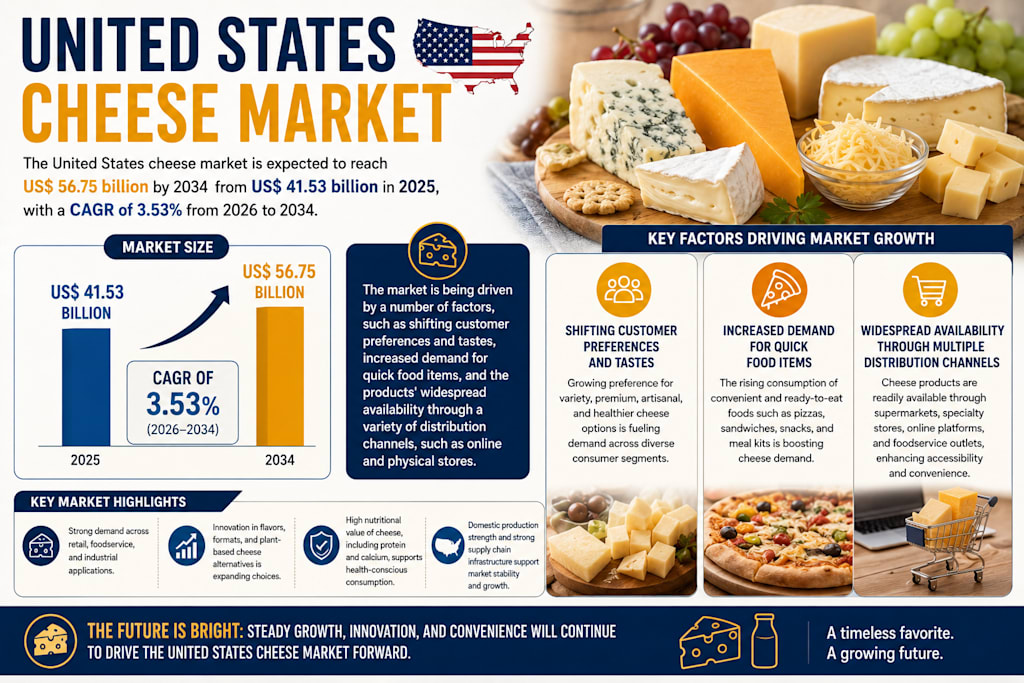
According to Renub Research, the United States Cheese Market is projected to grow from US$41.53 billion in 2025 to US$56.75 billion by 2034, registering a compound annual growth rate (CAGR) of 3.53% between 2026 and 2034. This growth reflects changing consumer tastes, increasing demand for convenience foods, expanding distribution channels, and the rising popularity of premium cheese products.
As Americans continue to embrace both traditional favorites and innovative new varieties, the cheese industry is proving that even a centuries-old product can evolve with modern lifestyles.
Cheese Remains a Core Part of the American Diet
The United States is one of the world's largest producers and consumers of cheese.
Cheddar, mozzarella, American cheese, and Swiss varieties continue to dominate everyday consumption, appearing in countless meals across homes, restaurants, and foodservice establishments. From burgers and sandwiches to casseroles and snack platters, cheese remains one of the most versatile ingredients in American cuisine.
Part of cheese's enduring appeal comes from its ability to adapt to changing food habits. It fits equally well into quick-service restaurant menus, gourmet dining experiences, meal kits, and at-home cooking.
The growing popularity of comfort foods and convenience-focused meals has further strengthened cheese demand. Consumers increasingly seek products that are flavorful, easy to prepare, and compatible with busy schedules.
As lifestyles evolve, cheese continues to maintain its position as a kitchen essential.
Convenience Foods Are Driving Consumption
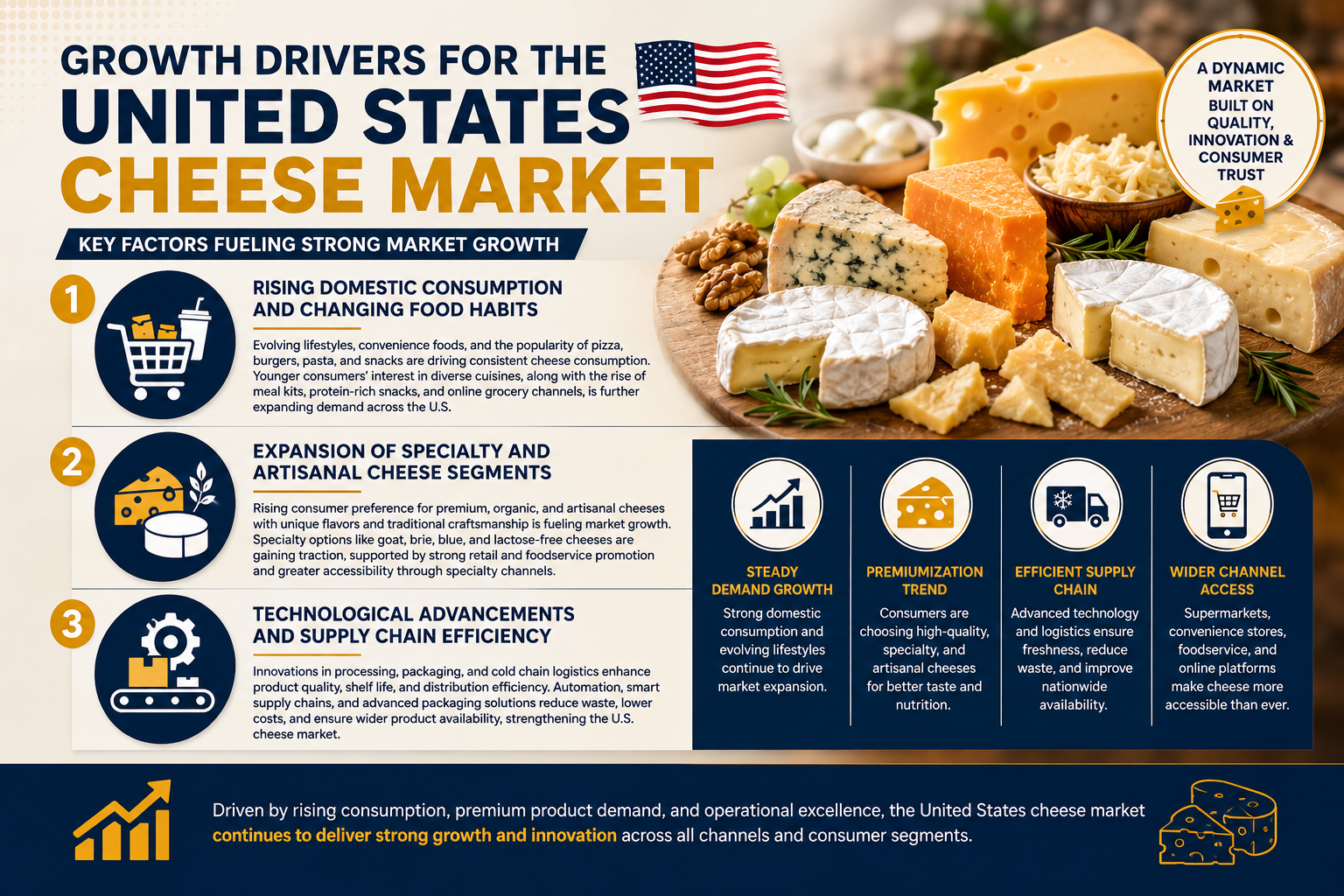
One of the strongest growth drivers in the market is the increasing demand for convenience-oriented food products.
Modern consumers often juggle demanding work schedules, family responsibilities, and fast-paced lifestyles. As a result, ready-to-eat meals, packaged snacks, and easy-to-prepare food options have become increasingly attractive.
Cheese naturally fits into this trend.
Pre-sliced cheese, shredded blends, snack packs, cheese sticks, spreads, and portion-controlled packaging offer convenience without sacrificing flavor. These products appeal to families, students, professionals, and health-conscious consumers looking for quick meal solutions.
The rise of online grocery shopping and food delivery services has also expanded access to cheese products, making it easier than ever for consumers to purchase their favorite varieties.
As convenience continues shaping purchasing decisions, cheese remains well-positioned to benefit from these evolving habits.
Specialty and Artisanal Cheeses Are Growing Rapidly
While traditional cheese varieties continue to dominate volume sales, specialty and artisanal cheeses are becoming increasingly important growth drivers.
Today's consumers are more adventurous than ever when it comes to food exploration. Many seek unique flavors, authentic production methods, and premium culinary experiences.
This shift has created strong demand for artisanal products made using traditional techniques and high-quality ingredients. Specialty varieties such as goat cheese, blue cheese, brie, and organic cheeses are attracting consumers interested in gourmet foods and distinctive flavor profiles.
Urban consumers, food enthusiasts, and higher-income households are particularly interested in premium cheese offerings that emphasize craftsmanship and authenticity.
Retailers have responded by expanding specialty cheese sections, offering tasting events, and providing pairing recommendations that encourage experimentation.
As consumers become more willing to pay for quality and uniqueness, artisanal cheeses are expected to remain one of the fastest-growing segments within the market.
Millennials Are Redefining Cheese Consumption
Younger generations are playing a major role in shaping the future of the cheese industry.
Millennials and Generation Z consumers often view food as a form of exploration and self-expression. They are more likely to experiment with international cuisines, seek premium ingredients, and prioritize experiences over routine purchases.
This mindset has encouraged greater interest in specialty cheeses inspired by global culinary traditions.
At the same time, younger consumers appreciate convenience and portability, driving demand for cheese-based snacks, meal kits, and grab-and-go products.
Many also prioritize transparency regarding sourcing, ingredients, and production practices, influencing how brands position and market their products.
As these generations continue gaining purchasing power, their preferences will significantly influence product development and market growth.
Technology Is Improving Efficiency and Quality
Behind the scenes, technological innovation is helping cheese manufacturers meet growing demand while maintaining quality standards.
Advances in dairy processing, automation, storage systems, and packaging technologies have improved production efficiency and consistency. These innovations allow manufacturers to scale operations while preserving product quality.
Cold-chain logistics and advanced refrigeration systems ensure cheese products remain fresh throughout transportation and distribution networks. This has expanded access to premium and specialty products nationwide.
Packaging innovation has also become increasingly important.
Vacuum-sealed packaging, resealable pouches, portion-controlled servings, and sustainable materials improve convenience while reducing food waste. These features resonate strongly with modern consumers seeking practicality and freshness.
Digital supply chain management tools are further helping companies optimize inventory, forecast demand, and improve distribution efficiency.
Together, these technological advancements are strengthening the industry's ability to serve an increasingly diverse consumer base.
Health Trends Are Reshaping Product Development
Although cheese remains widely popular, health-conscious consumers are encouraging manufacturers to rethink traditional product offerings.
Concerns regarding fat content, sodium levels, cholesterol, and overall dietary balance have led some consumers to seek healthier alternatives.
In response, manufacturers are introducing reduced-fat, lactose-free, high-protein, and portion-controlled options designed to appeal to wellness-focused shoppers.
Many brands are also emphasizing clean-label formulations, natural ingredients, and transparency in sourcing practices.
Protein-rich dairy products continue benefiting from growing interest in fitness and nutritional wellness. Since cheese naturally contains protein, many consumers view it as a satisfying snack that supports balanced eating habits.
The industry's ability to adapt to health trends will remain critical for sustaining long-term growth.
Plant-Based Alternatives Are Increasing Competition
One of the most significant challenges facing the traditional cheese industry is the rise of plant-based alternatives.
Consumers adopting vegan, flexitarian, lactose-free, or environmentally conscious diets are increasingly exploring non-dairy cheese products made from ingredients such as nuts, soy, oats, and other plant-based sources.
While traditional dairy cheese continues to dominate overall consumption, plant-based options have created a new competitive landscape. Manufacturers must now address shifting dietary preferences while maintaining the taste, texture, and functionality that consumers expect.
Some dairy companies are responding by expanding their portfolios to include alternative products, while others focus on highlighting the nutritional benefits and heritage of traditional cheese.
The coexistence of dairy and plant-based offerings is likely to define the market's future.
Cost Pressures Continue to Challenge Producers
Despite strong demand, cheese manufacturers face ongoing economic challenges.
Milk remains the industry's primary raw material, and fluctuations in milk prices can significantly affect production costs. Factors such as weather conditions, feed prices, supply chain disruptions, and agricultural policies contribute to price volatility.
In addition to milk costs, rising expenses related to labor, packaging materials, transportation, and energy continue placing pressure on profit margins.
Smaller producers and artisanal cheesemakers often face greater vulnerability because they have fewer resources to absorb cost increases.
Balancing affordability with profitability remains a key challenge for manufacturers operating in a highly competitive environment.
Innovation Continues to Create Excitement
Product innovation remains one of the industry's most effective growth strategies.
In 2025, several major brands introduced new offerings designed to appeal to changing consumer tastes. Tillamook launched a lineup of spicy and smoked cheeses aimed at consumers seeking bold flavors. Belle Chevre introduced innovative goat cheese products inspired by global ingredients, while Sargento expanded its portfolio with portable snack trays, seasoned shredded cheeses, and clean-label American cheese made with only five ingredients.
These launches highlight how manufacturers are continuously refreshing product lines to attract new customers and encourage repeat purchases.
Innovation is helping transform cheese from a traditional staple into a category characterized by creativity, variety, and premium experiences.
The Future of Cheese in America
The future of the U.S. cheese market appears bright.
Consumer demand remains strong across both traditional and emerging categories. Specialty cheeses, convenience products, clean-label offerings, and premium experiences continue creating new growth opportunities.
At the same time, technological advancements are improving production efficiency and expanding access to diverse product selections nationwide.
While health concerns, plant-based competition, and raw material volatility present challenges, the industry's adaptability positions it well for continued success.
Manufacturers that embrace innovation, prioritize quality, and respond effectively to changing consumer expectations will be best equipped to thrive in the years ahead.
Final Thoughts
America's love affair with cheese shows no signs of slowing down.
With the market expected to surpass US$56.75 billion by 2034, the industry is benefiting from a powerful combination of convenience, culinary exploration, premiumization, and technological innovation.
Consumers today want more than basic cheese products. They seek quality, authenticity, variety, convenience, and nutritional value. Companies that successfully deliver on these expectations are shaping the next chapter of one of the nation's most iconic food industries.
Whether it's a classic slice of cheddar, a gourmet artisanal brie, or a protein-packed snack pack, cheese continues to hold a special place on American tables—and its future looks as rich and diverse as ever.
About the Creator
Enjoyed the story? Support the Creator.
Subscribe for free to receive all their stories in your feed.
Comments
There are no comments for this story
Be the first to respond and start the conversation.