
America’s Alcoholic Beverages Market Is Shifting Toward Premium, Convenient, and Lifestyle-Driven Drinking
Craft beverages, ready-to-drink cocktails, and changing consumer habits are reshaping the future of the U.S. alcohol industry.

America’s drinking culture is changing fast
The United States has always had a strong and deeply rooted alcohol culture, from sports bars and breweries to wine tastings and social celebrations. But the modern alcoholic beverages market looks very different from what it did even a decade ago. Consumers today are not simply buying drinks for tradition or routine social occasions. Increasingly, they are choosing beverages based on quality, experience, flavor innovation, convenience, and lifestyle preferences.
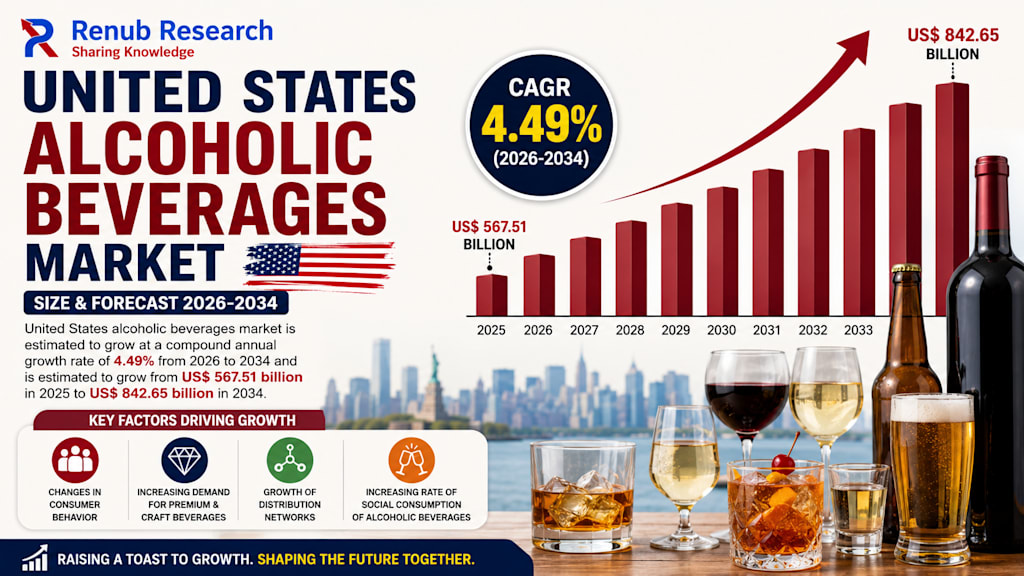
According to Renub Research, the United States Alcoholic Beverages Market is projected to grow from US$ 567.51 billion in 2025 to US$ 842.65 billion by 2034, expanding at a compound annual growth rate of 4.49% from 2026 to 2034. The market’s growth is being supported by rising demand for premium and craft beverages, expanding distribution channels, and growing consumer interest in ready-to-drink products.
At the same time, the industry is balancing major shifts in consumer behavior. Health-conscious lifestyles, moderation trends, and changing social habits are pushing companies to rethink everything from alcohol content and packaging to marketing strategies and digital sales models.
Alcohol consumption is becoming more experience-driven
Alcoholic beverages include products such as beer, wine, whiskey, vodka, rum, tequila, and many other fermented or distilled drinks. In the United States, these products continue to play an important role in social gatherings, celebrations, sports culture, nightlife, and dining experiences.
However, the modern market is increasingly driven by experience rather than volume alone. Consumers are showing greater interest in premiumization, meaning they are often choosing fewer drinks but higher-quality options. Craft breweries, boutique distilleries, artisanal cocktails, and imported wines are benefiting from this trend.
The report notes that younger consumers are particularly influencing the market through demand for flavored beverages, ready-to-drink cocktails, low-alcohol products, and premium experiences.
This shift reflects a broader change in lifestyle consumption. Many consumers today view alcoholic beverages not simply as products, but as part of social identity, taste exploration, and curated experiences.
Premium and craft beverages are reshaping the industry
One of the strongest growth drivers in the market is the rising demand for premium and craft alcoholic beverages. Consumers are increasingly moving away from mass-produced products in favor of beverages with unique flavors, smaller-batch production, and stronger brand identity.
Craft breweries, independent distilleries, and boutique wineries have gained significant popularity because they offer differentiation and storytelling. Many consumers are drawn to local ingredients, innovative recipes, limited releases, and artisanal branding.
Premiumization is also encouraging consumers to spend more per purchase. Rather than consuming larger quantities of lower-cost alcohol, many buyers are prioritizing quality, exclusivity, and flavor complexity.
Product innovation is playing a major role as well. Companies are introducing unique flavor combinations, premium packaging, and more sophisticated branding strategies to attract modern consumers.
The report highlights examples such as Rocket Vodka’s California launch, reflecting how new premium brands continue entering the market with differentiated positioning.
Craft beverage festivals, tasting events, and tourism experiences linked to breweries, wineries, and distilleries are further supporting market expansion.
Ready-to-drink beverages are becoming a major trend
One of the fastest-growing segments within the market is ready-to-drink, or RTD, alcoholic beverages. Consumers increasingly want convenient drinks that require no preparation while still offering premium taste and consistency.
Ready-to-drink cocktails, canned beverages, hard seltzers, and low-alcohol sparkling drinks are becoming highly popular among younger consumers and working professionals. These products appeal to modern lifestyles because they are portable, convenient, and easy to consume during social events, outdoor activities, or casual gatherings.
The RTD category has also benefited from flavor innovation. Fruit-infused cocktails, sparkling beverages, botanical flavors, and international-inspired drinks are helping brands attract consumers seeking variety and novelty.
Health-conscious trends are influencing the category too. Many RTD products now focus on lower calories, reduced sugar, or lower alcohol content without sacrificing taste.
The report highlights Suntory Holdings’ expansion of its RTD portfolio in the United States through the launch of MARU-HI, a Japanese-inspired sparkling cocktail designed to strengthen the company’s global RTD ambitions.
This category reflects a major shift in the industry toward convenience-oriented drinking experiences.
E-commerce and digital retail are transforming alcohol sales
Another important force reshaping the industry is the expansion of distribution channels and online alcohol retail. Traditionally, alcoholic beverages were primarily sold through liquor stores, bars, and restaurants. Today, consumers increasingly purchase alcohol through supermarkets, convenience stores, online platforms, and direct-to-consumer services.
E-commerce has become especially important for younger consumers and busy professionals who prioritize convenience and fast delivery. Regulatory changes in several states have also supported alcohol delivery services, helping digital alcohol retail grow rapidly.
Subscription boxes, curated beverage collections, and direct-to-consumer wine shipments are becoming increasingly popular. Livestream commerce and social media-driven retail are also beginning to influence purchasing behavior.
The report mentions TalkShopLive’s introduction of alcohol purchasing capabilities through livestream commerce, reflecting how digital engagement is entering the beverage market.
Technology is changing not only how alcoholic beverages are marketed, but also how consumers discover, compare, and purchase products.
Beer remains dominant, but the category is evolving
Beer continues to represent one of the largest segments of the U.S. alcoholic beverages industry. It remains deeply connected to American social culture, sporting events, dining, and casual gatherings.
However, consumer expectations within the beer market are evolving rapidly. Demand for craft beer, local brewing, premium ingredients, and unique flavors has changed the competitive landscape significantly.
Light beer and low-calorie options are also gaining popularity as consumers become more health-conscious. Packaging innovation is helping breweries compete as well, with portable cans, variety packs, and visually distinctive branding becoming increasingly important.
Despite strong competition from spirits, wine, and RTD products, beer continues to maintain broad appeal across multiple consumer demographics.
Wine culture is expanding among younger consumers
The United States wine market is also experiencing important shifts. Wine is increasingly associated with lifestyle, dining experiences, and premium consumption. Urban and affluent consumers continue driving demand for imported, organic, and sustainably sourced wines.
Younger generations are exploring more diverse wine options, including sparkling wines, flavored wines, and alternative packaging formats.
Digital retail has played a major role in expanding wine accessibility. Consumers now have easier access to specialty wines and international selections through online platforms and direct shipping services.
Wine tourism, particularly in states such as California, also continues strengthening consumer engagement with premium wine brands and experiences.
Packaging innovation is becoming increasingly important
Packaging trends are reshaping the alcoholic beverages market in notable ways. Plastic bottles, tin cans, and alternative packaging formats are growing because they offer convenience, portability, and cost advantages.
Plastic bottles are particularly popular for ready-to-drink cocktails and value-oriented products because they are lightweight and resistant to breakage. However, sustainability concerns are encouraging manufacturers to develop more recyclable and environmentally friendly materials.
Tin cans are becoming increasingly popular across beers, hard seltzers, and canned cocktails. Their portability, quick chilling ability, and recyclability make them attractive for outdoor activities, travel, and casual consumption.
The rise of canned cocktails reflects how consumer preferences are shifting toward convenience-focused drinking formats that fit active lifestyles.
Health-conscious trends are challenging traditional alcohol consumption
Despite strong growth opportunities, the industry faces increasing pressure from health-conscious consumer behavior. More Americans are becoming aware of the health risks associated with excessive alcohol consumption.
Wellness-focused lifestyles, fitness culture, and moderation trends are encouraging some consumers to reduce alcohol intake or switch to low-alcohol and non-alcoholic alternatives.
The popularity of sober-curious lifestyles and mindful drinking is particularly influencing younger generations. This creates both a challenge and an opportunity for beverage companies.
To adapt, many brands are investing in low-alcohol, alcohol-free, and wellness-oriented product categories. Companies are attempting to maintain flavor and social appeal while reducing alcohol strength and calorie content.
The future of the industry may depend heavily on how successfully companies balance indulgence with wellness-focused consumer expectations.
Regulations and taxation continue to create complexity
The alcohol industry also operates within a highly regulated environment. Federal and state-level laws govern production, distribution, sales, marketing, and taxation. Because regulations vary significantly across states, navigating compliance can be difficult, especially for smaller producers.
Excise taxes and licensing requirements can impact profitability, while advertising restrictions and distribution laws add further operational complexity.
Smaller craft producers may face greater challenges because compliance costs can be difficult to manage at scale.
Despite these challenges, the market continues growing because consumer demand remains strong and product innovation continues accelerating.
Regional markets are influencing national trends
California remains one of the most dynamic alcoholic beverage markets in the country due to its large population, tourism sector, wine culture, and premium consumer base. Organic, sustainable, and low-alcohol beverages are gaining traction throughout the state.
Texas is experiencing strong growth in beer, spirits, and ready-to-drink cocktails, supported by a large population, vibrant bar culture, and growing craft beverage scene.
New Jersey benefits from strong urban demand and proximity to major metropolitan areas, while Arizona’s warm climate and tourism industry continue supporting consumption of beer, cocktails, and hard seltzers.
These regional variations highlight how diverse consumer preferences have become across the United States.
Competition among beverage giants remains intense
The market includes some of the world’s largest beverage companies, including Anheuser-Busch, Boston Beer, Constellation Brands, Diageo, Molson Coors, Pernod Ricard, and Altria.
Competition now extends beyond traditional beer or spirits categories. Companies are increasingly competing across RTD beverages, flavored products, premium experiences, packaging innovation, sustainability initiatives, and digital retail strategies.
Success in the future market will likely depend on agility, brand storytelling, and the ability to respond quickly to changing consumer lifestyles.
Final thoughts
The United States alcoholic beverages market is entering a period of major transformation. Traditional drinking habits are evolving as consumers prioritize premium quality, convenience, wellness, and personalized experiences.
Renub Research’s forecast that the market could reach US$ 842.65 billion by 2034 reflects both the scale of the industry and the speed at which consumer preferences are changing.
The future of the market will likely be shaped by premiumization, ready-to-drink innovation, sustainable packaging, digital commerce, and healthier drinking alternatives.
Alcohol consumption in America is no longer defined solely by tradition. Increasingly, it is becoming about lifestyle, identity, convenience, and curated experiences — and the companies that understand that shift will be the ones leading the next phase of growth.
About the Creator
Enjoyed the story? Support the Creator.
Subscribe for free to receive all their stories in your feed.
Comments
There are no comments for this story
Be the first to respond and start the conversation.