
Aluminum Extrusion Market Expands Rapidly with EV Industry Demand
How electric vehicle production, energy-efficient construction, and advanced fabrication technologies are driving innovation and competitive expansion in the aluminum extrusion market

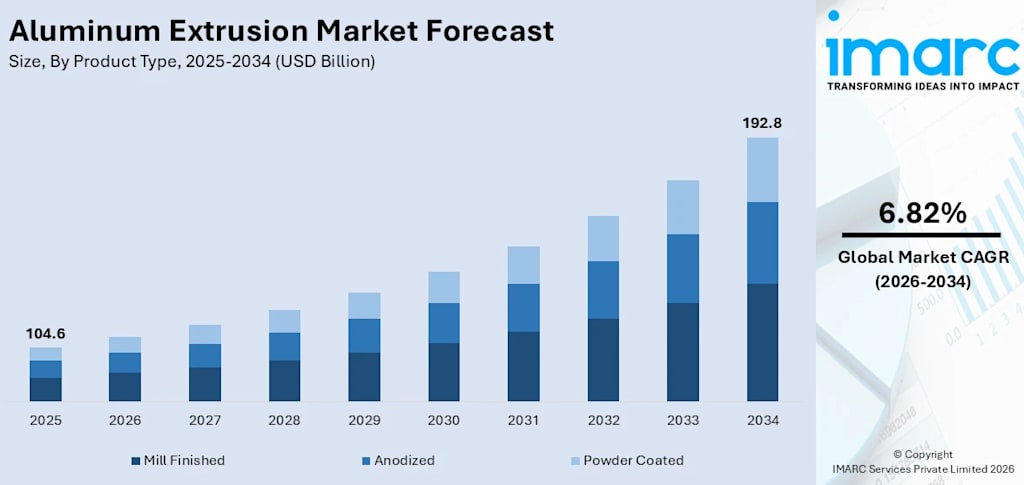
Rapid urbanization, rising infrastructure investments, and the growing automotive shift toward lightweight materials are driving aluminum extrusion demand, supported by expanding solar energy installations, green building regulations, and technological advancements in manufacturing complex profiles. According to IMARC Group’s latest data, The global aluminum extrusion market size was valued at USD 104.6 Billion in 2025. Looking forward, IMARC Group estimates the market to reach USD 192.8 Billion by 2034, exhibiting a CAGR of 6.82% from 2026-2034.
Aluminum extrusion now represents a multi-billion-dollar global market exceeding USD 100 billion and exhibiting steady year-on-year expansion. Demand is driven by rising health consciousness, busy lifestyles that favour on-the-go nutrition, and increased interest in plant-based, low-sugar and clean-label products. Retail innovation and e-commerce, private-label launches, and product reformulation for protein, fiber and functional ingredients are further accelerating uptake. Major segments include mill finished, anodized, and powder coated product types, and 1000 to 7000 series aluminum alloys, with building and construction, transportation, and machinery and equipment sectors prioritizing structural integrity, formability, and lightweight properties.
Explore Growth Opportunities in the Aluminum Extrusion Market
Aluminum Extrusion Market Growth Drivers:
- Rapid Urbanization and Infrastructure Expansion
Cities are expanding faster than ever, and with over half the global population now living in urban areas, civil engineering projects require massive quantities of durable, structural materials. Aluminum extrusions are favored for modernization projects, including high-speed rail lines, subway systems, and bridges. Governments worldwide are backing these overhauls with multi-billion-dollar infrastructure bills, injecting direct commercial demand into manufacturing pipelines. The structural strength combined with simple onsite assembly makes extruded framing a standard for major civic works, ensuring steady bulk order volumes across developing metropolitan centers.
- Automotive Weight Reduction Requirements
The transportation sector is undergoing an intensive engineering overhaul to lower vehicle weights and improve energy conservation. Because lighter frames require less energy to move, global automakers are heavily substituting traditional heavy steel with specialized aluminum alloys for structural components, cross rails, and engine mounts. This design pivot is especially critical for electric vehicles, where dropping body weight directly expands battery range. For instance, global electric vehicle sales surpassed millions of units annually, multiplying the demand for complex extruded battery enclosures that safeguard power cells without adding excessive bulk.
- Surge in Solar Energy Installations
The worldwide transition toward renewable energy platforms has established a highly lucrative downstream sector for metal extruders. Solar utility installations require rugged, corrosion-resistant framing and mounting systems capable of enduring harsh outdoor environments for decades. Aluminum profiles provide an ideal blend of weather resistance and structural rigidity, making them the default choice for securing photovoltaic panels. As nations scale up their domestic solar grid capacities through direct green energy subsidies and corporate clean-power mandates, the production of dedicated solar mounting rails has become a cornerstone revenue channel for major fabrication facilities.
Aluminum Extrusion Market Trends:
- Closed-Loop Recycling and Green Sourcing
Fabricators are aggressively shifting toward circular production models by using recycled secondary billets to drastically cut down manufacturing emissions. Environmental regulations and corporate carbon-reduction mandates are pressuring the supply chain to lower its overall environmental footprint. Recent studies highlight that more than a third of the aluminum utilized for manufacturing extrusions in industrial hubs now originates from recycled scrap metal. Major architectural developers increasingly specify low-carbon aluminum to secure certified green building points, forcing metal suppliers to invest heavily in modern, energy-efficient remelt furnaces and local scrap-sourcing networks.
- Adoption of High-Performance and Faster Extrusion Billets
To maximize facility throughput and maintain strict cross-sectional tolerances, manufacturers are rapidly pivoting to advanced, high-speed chemical compositions. Industrial suppliers, such as Vedanta Aluminium, have rolled out specialized high-speed billets engineered specifically to allow faster extrusion speeds without causing surface defects or cracking. This processing innovation allows downstream pressing plants to significantly raise their daily production yields and lower tool wear. The result is improved dimensional precision for complex structural designs, which directly helps fulfill high-volume orders from fast-paced consumer electronics and machinery assembly sectors.
- Boom in Sustainable and Smart Architectural Designs
Modern engineering favors curtain walls, sleek window frames, and exterior panels that offer high aesthetic value alongside superior thermal insulation. Extrusion technology allows architects to implement complex, customized profiles that integrate seamlessly with energy-efficient double or triple glazing. Globally, the massive multi-trillion-dollar building construction market relies on these profiles to minimize structural weight while maximizing glass surface areas. This trend is further supported by the material's inherent resistance to rust, making it an essential component for high-rise buildings and modern urban developments looking to reduce long-term maintenance costs.
Recent News and Developments in Aluminum Extrusion Market
- December 2021: Vedanta Aluminium Business, a leading producer of aluminum, launched its high-speed billets engineered for the global extrusion industry during a major industry event, providing downstream manufacturers with materials optimized for higher operational efficiency and production speeds.
- January 2024: Jindal Aluminium, one of the prominent entities in the metal fabrication landscape, expanded its market capabilities by launching a brand-new, dedicated fabrication division powered by advanced in-house tooling to provide value-added custom profiles.
- July 2024: Senior Architectural Systems, a prominent window, door, and curtain wall designer, announced a major strategic supply chain alignment focused on using regionally sourced aluminum to reduce the logistics-based carbon footprint of its architectural product lines.
Note: If you require specific details, data, or insights that are not currently included in the scope of this report, we are happy to accommodate your request. As part of our customization service, we will gather and provide the additional information you need, tailored to your specific requirements. Please let us know your exact needs, and we will ensure the report is updated accordingly to meet your expectations.
About the Creator
Andrew Sullivan
Hello, I’m Andrew Sullivan. I have over 9+ years of experience as a market research specialist.
Enjoyed the story? Support the Creator.
Subscribe for free to receive all their stories in your feed.
Comments
There are no comments for this story
Be the first to respond and start the conversation.