
Aluminium Market: Sustainable Packaging Trends, Industrial Applications & Future Growth
Growing packaging applications, sustainability regulations, and consumer preference for recyclable materials are driving product diversification and technological advancements in the aluminium market

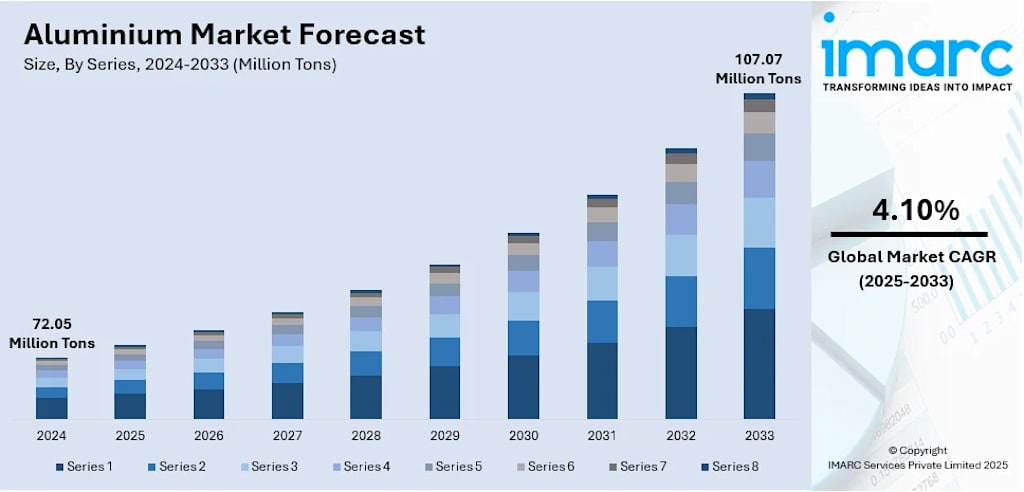
Rising industrial sustainability goals, expanding electric vehicle production, and the surging demand for lightweight materials in aerospace and construction sectors are driving aluminium demand, supported by green manufacturing processes, secondary recycling innovations, and massive infrastructure developments. According to IMARC Group’s latest data, The global aluminium market size was valued at USD 72.05 Million Tons in 2024. Looking forward, IMARC Group estimates the market to reach USD 107.07 Million Tons by 2033, exhibiting a CAGR of 4.10% from 2025-2033.
Aluminium now represents a multi-billion-dollar global market exceeding USD 265 billion and exhibiting steady year-on-year expansion. Demand is driven by aggressive weight-reduction targets in automotive design, urban expansion requiring structural elements, and a structural pivot toward fully circular packaging solutions. Heavy industrial innovation, automated smelting technologies, and zero-carbon extraction methods are further accelerating uptake across key manufacturing hubs. Major segments include sheet, plate, cast products, and extrusions, with end-use sectors prioritizing structural integrity, structural corrosion resistance, and high electrical conductivity.
Aluminium Market Growth Drivers:
- Rapid Expansion and Lightweighting of Electric Vehicles
Automotive manufacturers are shifting from heavy steel to lightweight aluminium components to extend battery range and optimize structural performance in modern electric vehicles. This strategic transition favors high-strength extrusions and complex cast alloy parts over traditional materials, allowing electric platforms to shave substantial body weight. Global automotive operations increasingly lean on aluminum sheets to manufacture doors, battery enclosures, and chassis elements. Brands are heavily investing in dedicated metal component facilities to fulfill escalating procurement contracts from EV assembly plants globally.
- Surging Global Infrastructure and Modern Construction Projects
Urbanization across developing regions drives a massive reliance on high-durability aluminium for structural framing, exterior curtain walls, and interior architectural cladding. The metal provides structural resilience against corrosion while allowing modern architects to construct complex high-rise designs with reduced foundational stress. Real-world applications span large-scale municipal expansion programs, airports, and public transit terminals where permanent, weather-resistant structures are vital. This continuous architectural consumption provides a highly stable, high-volume foundation for structural manufacturing pipelines in major global commercial development hubs.
- Aggressive Pivot Toward Circular Packaging and Material Recycling
Fast-moving consumer goods corporations face strict regulatory mandates and consumer pressures to completely abandon single-use plastics in favor of infinitely recyclable metals. Aluminium packaging, specifically across the beverage sector, offers an immediate, closed-loop circular economy solution that preserves material purity throughout multiple recycling lifecycles. Processing secondary scrap requires only a fraction of the immense energy used during primary smelting, making it highly lucrative for corporate green initiatives. Beverage manufacturers continue to introduce new aluminum can lines to replace plastic alternatives, boosting overall volume consumption.
Aluminium Market Trends:
- Widespread Industrial Adoption of Low-Carbon and Green Smelting
Primary metal producers are actively shifting their heavy production facilities toward hydro-powered, low-emission smelting technologies to significantly curb their scope one and scope two greenhouse gas footprints. This systemic pivot involves direct agreements with regional renewable energy grids and deploying advanced inert anode technologies that release pure oxygen instead of carbon during electrolysis. Major global enterprises are rolling out verified low-carbon product brands to appeal directly to sustainability-minded corporate clients in Europe and North America. This ongoing decarbonization approach successfully positions primary production as an eco-conscious alternative for modern heavy industries.
- Advanced Technological Integration of Aerospace-Grade Alloys
Commercial and military aircraft production lines require next-generation aluminium-lithium and copper-infused alloys designed to survive intense thermal friction and massive mechanical pressures. Manufacturers are rolling out proprietary heat-treatment formulations that offer a superior strength-to-weight profile matching titanium but at a much lower production cost. Real-world applications include advanced wing skins, fuselage frames, and rocket boosters for private space transport systems. This aerospace momentum keeps high-margin plate and sheet manufacturing units operating at maximum capacity to satisfy multi-year backlogs.
- Strategic Consolidation of Regional Smelting and Raw Bauxite Supply
Geopolitical supply constraints and regional export restrictions force major mining corporations to pursue joint ventures and buyouts to lock down raw bauxite resources in Guinea and Australia. Refining corporations are heavily upgrading automated logistics systems to bypass vulnerable maritime routes and guarantee a steady flow of alumina to regional smelters. These supply chain overhauls shield operations from wild energy cost swings, keeping domestic metal production highly competitive. This consolidation trend allows major market operators to maintain stable delivery terms for automotive and aerospace buyers alike.
Recent News and Developments in Aluminium Market
- September 2025: Rio Tinto announced a major capital expenditure injection into its hydro-powered smelting facilities to expand production capacity for high-purity alloys, directly addressing the growing material backlogs across the aerospace and defense sectors.
- December 2025: Norsk Hydro successfully deployed a new automated scrap sorting system utilizing advanced laser-induced breakdown spectroscopy, allowing the facility to double its intake of post-consumer scrap and boost secondary production efficiency.
- March 2026: Emirates Global Aluminium completed a comprehensive upgrade of its reduction cells, integrating proprietary digital control technologies that lower energy intensity per ton of metal produced while increasing total operating output.
Note: If you require specific details, data, or insights that are not currently included in the scope of this report, we are happy to accommodate your request. As part of our customization service, we will gather and provide the additional information you need, tailored to your specific requirements. Please let us know your exact needs, and we will ensure the report is updated accordingly to meet your expectations.
About the Creator
Andrew Sullivan
Hello, I’m Andrew Sullivan. I have over 9+ years of experience as a market research specialist.
Enjoyed the story? Support the Creator.
Subscribe for free to receive all their stories in your feed.
Comments
There are no comments for this story
Be the first to respond and start the conversation.