
AI Revolution: How Artificial Intelligence Is Changing Everyday Life in 2026
Artificial intelligence is no longer just a futuristic concept. In 2026, AI has become a powerful force transforming healthcare, education, business, communication, and the daily lives of people around the world.
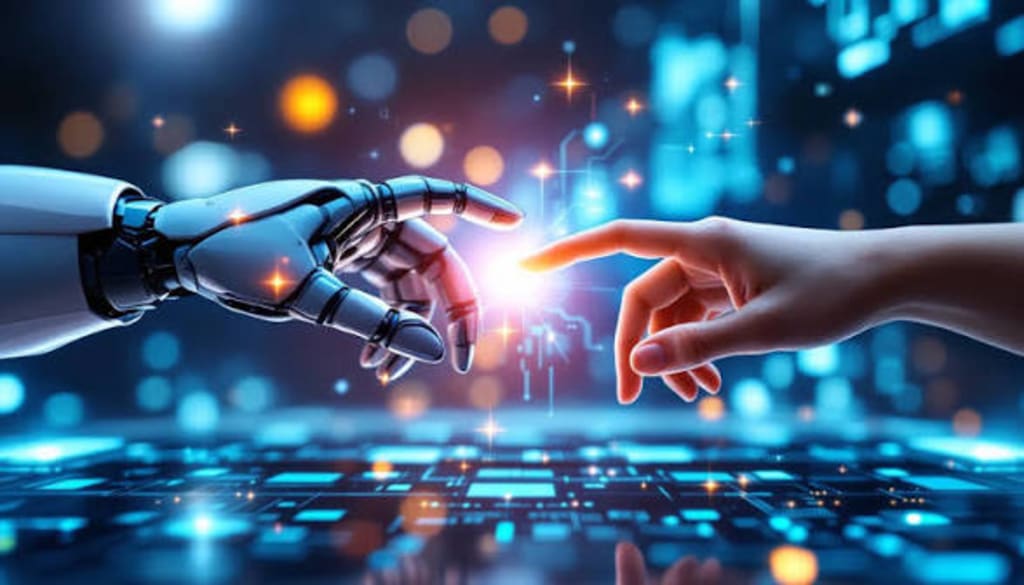
Artificial Intelligence (AI) has moved from science fiction into reality. A few years ago, many people imagined AI as a technology that belonged only to large companies, research laboratories, or futuristic movies. Today, AI tools are becoming part of everyday life, helping people work faster, solve problems, learn new skills, and make better decisions.
The AI revolution is one of the biggest technological changes in modern history. From smart assistants on smartphones to advanced systems used by doctors, engineers, and businesses, artificial intelligence is changing how humans interact with technology. The year 2026 represents a new stage where AI is becoming more accessible and more deeply connected to society.
One of the biggest impacts of AI can be seen in healthcare. Doctors and researchers are using artificial intelligence to analyze medical information, identify diseases earlier, and improve treatment methods. AI-powered systems can examine medical images, recognize patterns, and assist healthcare professionals in making faster decisions. This technology has the potential to improve patient care and help hospitals manage resources more effectively.
Education is another area experiencing major transformation. AI-powered learning platforms are helping students receive personalized education based on their abilities and needs. Instead of every student following the same learning method, AI can provide customized explanations, practice exercises, and feedback. Teachers can also use AI tools to reduce administrative work and focus more on supporting students.
Businesses around the world are also adopting artificial intelligence to increase productivity. Companies are using AI for customer service, data analysis, marketing, and automation. Chatbots and virtual assistants can respond to customer questions quickly, while AI systems can analyze large amounts of information to help companies make smarter decisions.
The workplace is changing because of AI, but experts believe the technology will not simply replace humans. Instead, many industries are focusing on collaboration between humans and machines. AI can handle repetitive tasks, allowing people to spend more time on creativity, problem-solving, and strategic thinking. The future workplace may depend on how effectively people learn to use AI tools.
Communication has also entered a new era because of artificial intelligence. Translation tools powered by AI are helping people communicate across different languages. Voice recognition technology allows users to interact with devices more naturally. AI-generated content is also changing how people create articles, videos, designs, and digital products.
However, the rapid growth of AI also brings challenges. One major concern is privacy. As AI systems collect and analyze large amounts of data, protecting personal information has become increasingly important. Governments and technology companies are working to create rules that ensure AI is developed responsibly.
Another challenge is the impact of AI on employment. Some jobs may change as automation becomes more common. While AI can create new opportunities, workers may need to develop new skills to remain competitive in a changing job market. Learning digital skills and understanding AI technology could become essential for future careers.
There are also concerns about misinformation and the misuse of artificial intelligence. AI can create realistic images, videos, and text, making it harder to distinguish between real and fake information. Society will need stronger awareness and responsible use of technology to reduce these risks.
Despite these challenges, the potential benefits of AI are enormous. Artificial intelligence can help solve complex problems, improve scientific research, support environmental protection, and create new opportunities for innovation. From predicting weather patterns to discovering new medicines, AI is becoming an important tool for addressing global challenges.
The future of AI will depend on balance. Technology must continue to advance while maintaining ethical standards and protecting human values. The goal should not be to replace human intelligence but to enhance it.
As we move further into 2026, artificial intelligence is becoming a normal part of everyday life. The AI revolution is not only about machines becoming smarter; it is about humans finding new ways to work, learn, and create with advanced technology.
The world is entering an era where AI will influence almost every industry and community. Those who understand and adapt to this transformation will be better prepared for the future. Artificial intelligence is no longer a distant possibility — it is already shaping the world around us.
About the Creator
Enjoyed the story? Support the Creator.
Subscribe for free to receive all their stories in your feed.
Comments
There are no comments for this story
Be the first to respond and start the conversation.