
AI Powered Robot Cuts Tire Change Time in Half as EV Demand Strains Auto Service Shops
Automated Tire Inc SmartBay system lets one technician run three bays and boosts throughput from four tires per hour to 24 with data driven adaptation

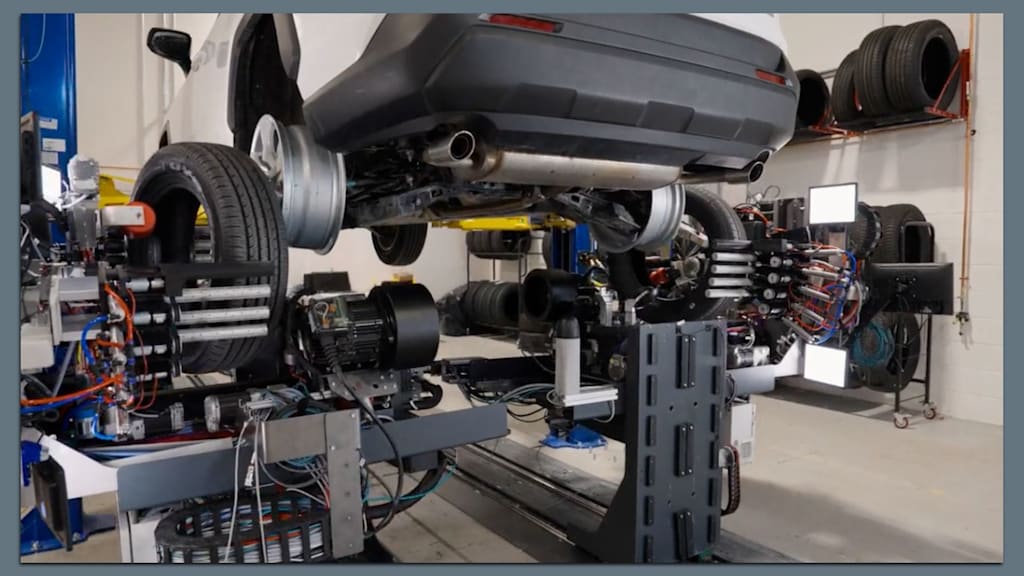
Read Time 6 minutes Tags Automotive Robotics AI Automation EV Maintenance Labor Efficiency SmartBay AI is coming for one of America dirtiest jobs changing tires Demand for tire service is accelerating in part because EV tires need more frequent replacement just as service shops struggle to hire technicians Changing tires is noisy back breaking work and nobody wants to spend half their day waiting for a tire rotation Automation is the answer says Andy Chalofsky a serial tire entrepreneur whose family has been in the tire business for four generations His latest company Automated Tire Inc developed SmartBay a robotic system that can inspect vehicles swap tires and balance wheels with minimal human help Instead of relying on fixed routines the AI powered system adapts to each vehicle collecting and analyzing data along the way That data can generate real time insights that can be shared across ATI network of customers including dealerships and auto service shops How SmartBay changes the workflow One Hardware and footprint The SmartBay system fits a standard 12 foot service bay and enables a single technician to manage up to three bays simultaneously While tire service takes about 75 minutes when performed by a human a robot can do it in as little as 30 minutes says Chalofsky That means a technician could handle up to 24 tires an hour compared to four tires in an hour and 15 minutes today The system uses AI to inspect vehicles adapt to different lug patterns and torque specs and adjust to variations in wheel and tire geometry without reprogramming Two Data feedback loop Because the system collects and analyzes data during each job it can generate real time insights that can be shared across ATI network of customers This includes wear patterns pressure anomalies and alignment drift that can be flagged before they become safety issues The network effect improves diagnostics over time as more vehicles pass through the bays Three Business model ATI leases the system to dealerships and tire shops for 4900 dollars per month about 60000 dollars a year less than what it costs to hire an experienced technician and with triple the efficiency The leasing model lowers upfront capital barriers for independent shops and lets dealerships scale capacity without expanding headcount Why this matters now One Labor shortage and EV pressure Auto service shops have struggled to hire technicians for years Tire changing is physically demanding and turnover is high At the same time EVs are heavier and produce more torque which accelerates tire wear Many EV owners are seeing replacement intervals cut in half compared to internal combustion vehicles This creates a capacity crunch exactly when consumer expectations for speed and convenience are rising Waiting half a day for a rotation is no longer acceptable in a market shaped by mobile service and same day delivery Two Cost economics Hiring an experienced technician in many US markets costs 70000 to 90000 dollars per year including benefits and training At 60000 dollars per year per bay SmartBay offers lower labor cost and higher throughput The math improves further if the system runs multiple shifts or if labor shortages force overtime pay Three Customer experience Automation reduces noise vibration and the risk of damage from manual tools Customers spend less time in a noisy smelly auto shop and can schedule tighter appointments It also creates a more consistent process reducing comebacks for improper torque or balance Background of the founder One Industry track record Chalofsky knows tires He built Traction Tire a wholesale tire distributor near Philadelphia into a 100 million dollar business before selling to a private equity firm in 2018 He also built an online tire marketplace SimpleTire that grew to nearly 1 billion dollars in sales before it was acquired by Dealer Tire a portfolio company of Bain Capital His previous companies improved wholesale and retail tire distribution Now installation is due for an overhaul he says It s been a guy with a hammer banging your car caveman style he said Meanwhile customers are stuck in a noisy smelly auto shop for hours I thought There has to be a better way Risks and limitations One Technical constraints The system works best in standardized bays with consistent floor leveling and power supply Older shops may require retrofitting Lighting and calibration requirements can add setup cost Two Maintenance and downtime Like any robotic system SmartBay requires scheduled maintenance and parts replacement If a robot is down for repairs it can take multiple bays offline until a technician intervenes Reliability data over thousands of cycles will determine whether the uptime justifies the efficiency gains Three Labor transition The system does not eliminate technicians but changes their role from manual labor to supervision and quality control That shift requires training and may face resistance from workers accustomed to traditional methods Shops will need to manage the transition carefully to avoid labor disputes Broader implications One Path for other heavy maintenance Tasks like brake replacement oil changes and battery service share similar constraints of physical labor and technician scarcity If SmartBay proves reliable the model could extend to other bays creating semi automated service lanes Two Data moat The real long term value may be in the dataset of wear patterns driving habits and regional road conditions aggregated across the network That data could inform tire design predictive maintenance and insurance underwriting Three Competitive response Incumbent equipment makers and auto OEMs are likely to respond with their own automation platforms The market will favor vendors that can integrate with dealer management systems and prove uptime in high volume environments For shops the decision comes down to throughput per square foot and cost per tire changed For technicians the shift is toward higher skill roles focused on diagnostics and oversight For customers the benefit is faster service with less variability Do you think robotic tire bays will become standard in dealerships within five years or will adoption be limited by cost and maintenance complexity Share your view in the comments
About the Creator
Enjoyed the story? Support the Creator.
Subscribe for free to receive all their stories in your feed.
Comments
There are no comments for this story
Be the first to respond and start the conversation.