
Africa Fertilizer Market: Food Security Initiatives, Sustainable Farming & Growth Outlook
How agricultural modernization, food security initiatives, and government support programs are driving fertilizer consumption across the Africa fertilizer market.

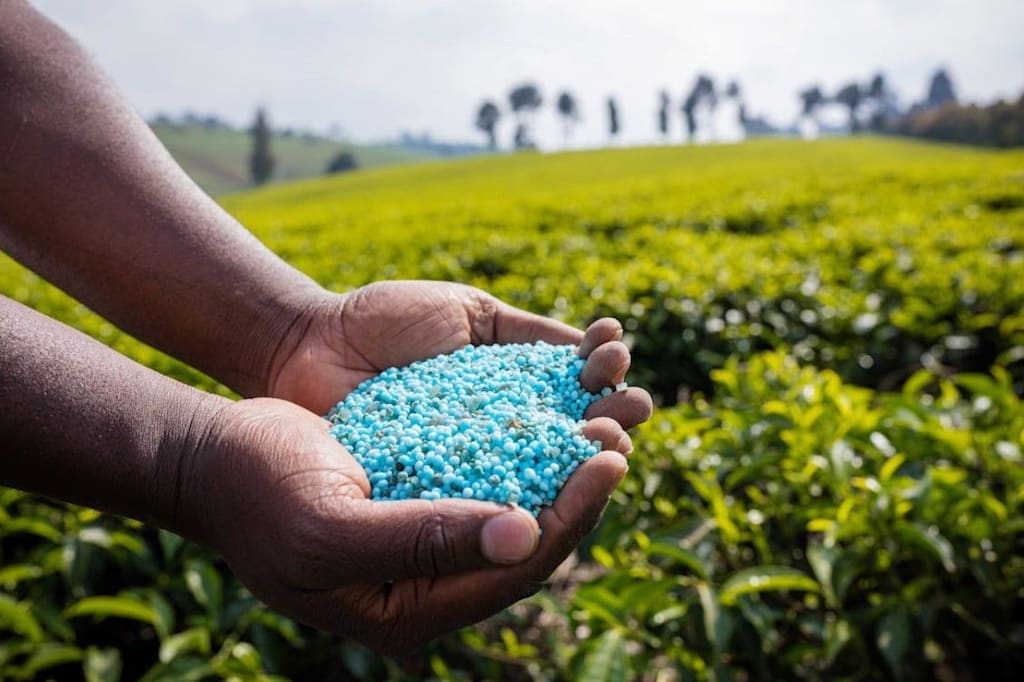
According to IMARC Group's latest research publication, Africa fertilizer market size reached USD 188.13 Billion in 2025. The market is projected to reach USD 247.02 Billion by 2034, growing at a CAGR of 3.07% during 2026-2034.
How AI is Reshaping the Future of Africa Fertilizer Market
- Farmers across Africa are using AI tools like Yara's app in Kenya to get precise fertilizer tips from soil and weather data, cutting waste while boosting harvests in a smart, practical way.
- In places like Ghana, AI soil testing kits deliver custom fertilizer advice to smallholders, helping them use just the right amounts and save money on inputs every season.
- Companies such as Kitovu in Nigeria combine AI with satellite data to optimize fertilizer plans, supporting government efforts to make farming more efficient and sustainable for local growers.
Africa Fertilizer Market Trends & Drivers:
The Africa fertilizer market is experiencing robust expansion driven by escalating food security imperatives across the continent. Governments are implementing supportive policies and subsidy frameworks to boost agricultural productivity among smallholder farmers who form the backbone of regional food systems. This is complemented by a surge in commercial farming operations that demand higher nutrient inputs for improved crop yields. Additionally, rising awareness of soil nutrient depletion is encouraging greater fertilizer utilization, while private sector investments in distribution networks are enhancing accessibility in remote areas. These factors collectively foster a dynamic environment where local blending initiatives and partnerships with international suppliers are gaining momentum to address supply gaps efficiently.
The shift toward precision agriculture techniques represents a significant trend shaping the Africa fertilizer market, as farmers adopt data-driven approaches to optimize nutrient application and minimize waste. Drivers include collaborative efforts between public institutions and agribusiness entities to promote sustainable soil health management practices. Growing emphasis on balanced nutrient formulations, such as complex fertilizers, is helping tailor solutions to diverse crop requirements across varying agro-ecological zones. This evolution is further supported by expanding infrastructure developments that improve logistics and reduce dependency on distant imports. Such advancements are empowering rural communities to achieve more resilient production systems amid climate variability challenges.
Domestic manufacturing capacity building has emerged as a pivotal driver in the Africa fertilizer market, with increased focus on local production facilities to strengthen supply chain resilience. Trends highlight the integration of innovative technologies and green initiatives aimed at producing environmentally conscious fertilizer options. Stakeholder collaborations are accelerating knowledge transfer and market development, particularly in high-potential agricultural belts. This progress is underpinned by strategic policy alignments that prioritize long-term agricultural modernization and economic self-reliance. Overall, these elements are creating opportunities for broader market participation and sustained growth in fertilizer adoption throughout diverse African regions.
Africa Fertilizer Industry Segmentation:
The report has segmented the market into the following categories:
Analysis by Type:
- Complex
- Straight
- Micronutrients
- Boron
- Copper
- Iron
- Manganese
- Molybdenum
- Zinc
- Others
- Nitrogenous
- Ammonium Nitrate
- Urea
- Others
- Phosphatic
- DAP
- MAP
- SSP
- TSP
- Potassic
- MoP
- SoP
- Secondary Macronutrients
- Calcium
- Magnesium
- Sulfur
Analysis by Form:
- Conventional
- Speciality
- CRF
- Liquid Fertilizer
- SRF
- Water Soluble
Analysis by Application Mode:
- Fertigation
- Foliar
- Soil
Analysis by Crop Type:
- Field Crops
- Horticultural Crops
- Turf and Ornamentals
Analysis by Country:
- South Africa
- Morocco
- Nigeria
- Tunisia
- Kenya
- Others
Competitive Landscape:
The competitive landscape of the industry has also been examined along with the profiles of the key players.
Recent News and Developments in Africa Fertilizer Market
- September 2025: The Pan-African Fertilizer Industry Association launches in Dakar, Senegal, uniting stakeholders to strengthen local production, trade, and fertilizer use, driving collaboration on soil health solutions and reliable farmer access across the continent.
- November 2025: Dangote Fertilizer expands its Lagos facility through a licensing agreement with thyssenkrupp Uhde, adding four new urea granulation units using fluid bed granulation technology and energy-efficient scrubbing processes, boosting annual output significantly with cleaner, sustainable production methods.
- October 2025: Construction begins on a major USD 2.5 billion fertilizer plant in Gode, Ethiopia, set to produce three million metric tons of urea annually from local natural gas reserves, enhancing regional supply and food security in the Horn of Africa.
Note: If you require specific details, data, or insights that are not currently included in the scope of this report, we are happy to accommodate your request. As part of our customization service, we will gather and provide the additional information you need, tailored to your specific requirements. Please let us know your exact needs, and we will ensure the report is updated accordingly to meet your expectations.
About the Creator
Fatimah
Market research writer at IMARC Group, turning data into engaging stories. Passionate about trends, insights & real-world impact. Join me on Vocal!
Enjoyed the story? Support the Creator.
Subscribe for free to receive all their stories in your feed.
Comments
There are no comments for this story
Be the first to respond and start the conversation.