
Africa Confectionery Market Expected to Reach USD 9.33 Billion by 2034 as Urbanization and Youth Demographics Fuel Demand
Rising disposable incomes, rapid urban growth, and expanding retail networks are reshaping Africa’s confectionery industry.

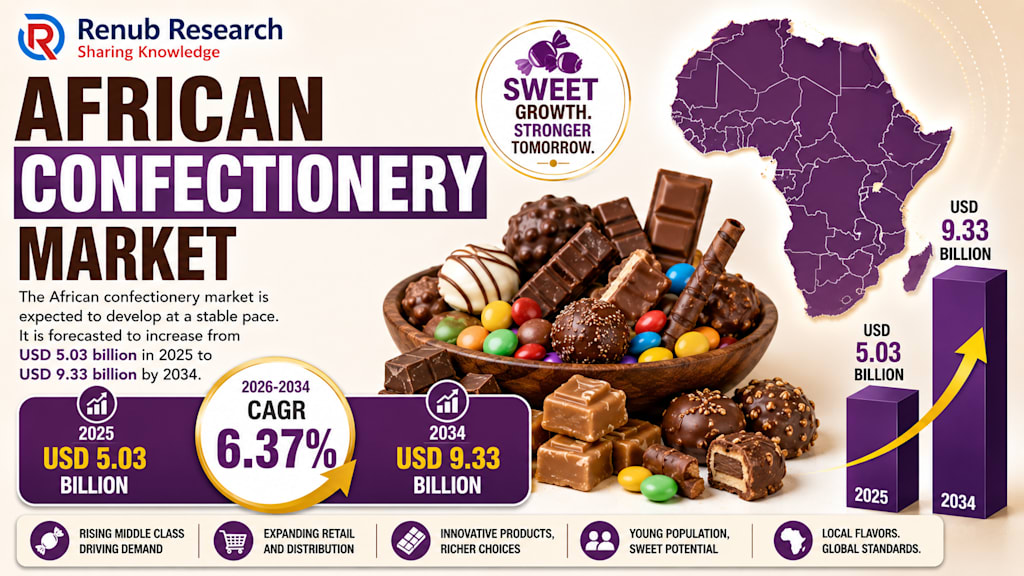
Africa’s confectionery industry is entering a period of accelerated growth as urbanization, demographic expansion, and evolving consumer lifestyles continue transforming food consumption patterns across the continent.
According to Renub Research, the Africa confectionery market is projected to grow from USD 5.03 billion in 2025 to USD 9.33 billion by 2034, registering a CAGR of 7.11% between 2026 and 2034.
The growth reflects increasing demand for affordable indulgence products among Africa’s rapidly expanding young population and urban middle class.
From chocolates and bubble gums to cereal bars and lollipops, confectionery products are becoming increasingly integrated into everyday consumption habits across both urban and semi-urban communities.
As modern retail infrastructure expands and global food trends influence consumer behavior, Africa’s confectionery market is steadily evolving into one of the world’s most promising emerging consumer sectors.
Urbanization Is Rapidly Reshaping Consumer Habits
One of the strongest drivers of Africa’s confectionery market is the continent’s ongoing urban transformation.
According to the market analysis, Africa’s population is expected to increase significantly over the coming decades, while nearly 80% of future population growth is anticipated to occur in urban areas.
Urban lifestyles have created rising demand for:
- Convenient snacks
- Affordable treats
- Ready-to-consume food products
- Modern packaged confectionery
As people migrate toward cities, consumer routines are changing rapidly. Busy work schedules, evolving shopping habits, and greater exposure to global brands are encouraging increased confectionery consumption.
The expansion of shopping malls, supermarkets, and convenience stores is also improving access to branded confectionery products throughout the continent.
Consumers who previously relied on traditional local sweets are now increasingly experimenting with chocolates, candies, chewing gums, and imported snack products.

Africa’s Young Population Is Becoming a Major Consumer Force
Africa possesses one of the youngest populations in the world, and this demographic advantage is significantly influencing the confectionery sector.
The continent is projected to account for nearly 40% of the world’s youth population by 2030, while also contributing approximately 85% of global labor force growth by 2050.
Young consumers are among the largest buyers of confectionery products because of factors such as:
- Taste preferences
- Attractive packaging
- Affordable pricing
- Brand influence
- Peer-driven purchasing behavior
Children, teenagers, and young adults frequently consume confectionery products during:
- School activities
- Social gatherings
- Celebrations
- Entertainment events
Aggressive marketing campaigns and social media exposure are further shaping preferences among younger demographics.
Global confectionery brands are increasingly tailoring products specifically for African youth by introducing:
- Single-serve packs
- Affordable sachets
- Bright packaging
- Regionally inspired flavors
This youthful consumer base is expected to remain one of the market’s most important long-term growth engines.
Rising Middle-Class Income Supports Market Expansion
The growth of Africa’s middle class is also contributing significantly to rising confectionery demand.
As disposable incomes improve in many urban centers, consumers are becoming more willing to spend on non-essential products such as:
- Premium chocolates
- Imported candies
- Snack bars
- Specialty sweets
Confectionery products are increasingly viewed not only as affordable indulgences but also as symbols of modern lifestyle and convenience.
Seasonal celebrations, gifting traditions, and family events continue to strengthen market demand across different income groups.
Although affordability remains highly important in many African markets, premium confectionery products are gradually gaining popularity among affluent urban consumers.
Expansion of Retail Networks Is Improving Product Accessibility
Retail development remains another key factor driving confectionery market growth across Africa.
The rapid expansion of:
- Supermarkets
- Hypermarkets
- Convenience stores
- Shopping malls
has dramatically improved product visibility and consumer access.
At the same time, informal retail channels such as:
- Street vendors
- Kiosks
- Small grocery shops
- continue to play a critical role in reaching rural and semi-urban populations.
Major international retailers are also strengthening their presence throughout the continent.
For example, Massmart operates 287 outlets across South Africa, while Carrefour has expanded into seven African countries with more than 200 franchise stores.
The combination of formal and informal retail systems enables confectionery brands to distribute products across diverse income and geographic segments.
Chocolate Demand Continues to Grow Gradually
The African chocolate confectionery market is witnessing steady growth despite historically lower chocolate consumption compared to other global regions.
Urbanization and rising incomes are increasing consumer interest in chocolate products, especially among younger consumers and middle-income households.
Consumers are increasingly attracted to:
- Affordable chocolate bars
- Imported premium chocolates
- Small-sized chocolate packs
- Innovative flavor combinations
The growing influence of Western consumer culture and international brands has also accelerated chocolate adoption across urban markets.
Although Africa is one of the world’s leading cocoa-producing regions, much of the value-added chocolate manufacturing still occurs outside the continent.
However, local manufacturers are gradually increasing investments in regional chocolate production capabilities.
Bubble Gum Remains Highly Popular Among Youth Consumers
Bubble gum continues to hold strong market appeal across Africa due to its affordability and entertainment value.
The product remains especially popular among children and teenagers because it offers:
- Low-cost enjoyment
- Variety of flavors
- Impulse-buy appeal
- Easy accessibility
Bubble gum products are commonly sold through both formal and informal retail channels, making them widely available across multiple socioeconomic groups.
Manufacturers often package bubble gum in:
- Individual pieces
- Small sachets
- Multi-pack formats
to cater to low-income consumers.
While sugar-free chewing gum is growing in developed markets globally, regular bubble gum varieties still dominate much of Africa’s confectionery market.
Healthier Snack Categories Are Slowly Emerging
Although traditional confectionery products remain dominant, healthier snack alternatives are beginning to gain traction across urban African markets.
Products such as cereal bars and protein bars are becoming increasingly popular among:
- Working professionals
- Students
- Athletes
- Health-conscious consumers
These products are often marketed as convenient energy snacks that provide nutritional benefits beyond traditional sweets.
However, higher pricing remains a challenge for widespread adoption.
Currently, the category remains concentrated primarily in urban shopping malls and premium retail environments.
As health awareness increases and middle-class purchasing power expands, healthier confectionery alternatives are expected to experience gradual growth in the coming years.
Online Retail Is Opening New Opportunities
E-commerce remains an emerging but promising channel within Africa’s confectionery market.
The increasing use of:
- Smartphones
- Internet services
- Mobile payment systems
is gradually transforming consumer purchasing behavior in urban areas.
Online retail allows consumers access to:
- Imported confectionery brands
- Premium products
- Wider product variety
- Home delivery services
Digital commerce is especially appealing to younger consumers who are increasingly comfortable shopping online.
However, logistical limitations, unreliable transportation systems, and delivery challenges in rural areas continue slowing the growth of online retail across much of the continent.
Despite these challenges, online confectionery sales are expected to expand steadily as digital infrastructure improves.
Affordability Remains a Major Market Challenge
Price sensitivity remains one of the biggest challenges facing confectionery companies in Africa.
Many consumers continue to prioritize affordability due to:
- Limited disposable income
- Inflation pressures
- Currency instability
- Economic uncertainty
As a result, manufacturers must balance:
- Product quality
- Competitive pricing
- Production efficiency
- Packaging affordability
Premium confectionery products remain inaccessible for many consumers outside wealthier urban markets.
Companies are increasingly introducing smaller package sizes and low-cost alternatives to remain competitive in highly price-sensitive environments.
Infrastructure and Supply Chain Limitations Continue to Impact Growth
Infrastructure challenges continue creating operational difficulties for confectionery manufacturers across Africa.
Issues such as:
- Poor transportation systems
- Inconsistent power supply
- Limited refrigeration infrastructure
- High logistics costs
can negatively affect product distribution and storage quality.
This becomes especially important for temperature-sensitive products such as chocolate confectionery.
Rural distribution remains particularly difficult because of weak transportation networks and high delivery expenses.
Manufacturers are therefore investing in adaptive logistics strategies and localized distribution models to improve efficiency and market reach.
Egypt’s Market Benefits from Large Consumer Demand
Egypt remains one of Africa’s largest confectionery markets due to its large population and strong demand for affordable sweets.
Consumers across all age groups regularly purchase:
- Chocolates
- Candies
- Traditional sweets
Affordability remains the most important purchasing factor for many Egyptian consumers.
Traditional confectionery products continue to experience strong demand during festive periods and cultural celebrations.
Urbanization and retail modernization are also helping improve product accessibility across major Egyptian cities.
In November 2025, Mars Incorporated expanded production capacity at Mars Egypt by adding two new chocolate manufacturing lines.
This reflects increasing confidence in the long-term growth potential of Africa’s confectionery market.
Nigeria Emerges as a High-Growth Consumer Market
Nigeria represents one of the fastest-growing confectionery markets in Africa due to its large youth population and expanding urbanization.
Affordable and single-portion confectionery products are especially popular among Nigerian consumers because of strong price sensitivity.
Street vending and informal retail channels remain highly influential in confectionery distribution throughout the country.
Although sugar confectionery currently dominates sales volumes, chocolate products are gradually gaining acceptance in urban areas.
In October 2025, Nigerian Bottling Company Ltd introduced Plazma Biscuit to the Nigerian market, expanding its packaged food portfolio.
South Africa Leads in Retail Sophistication
South Africa maintains one of the continent’s most advanced confectionery industries due to its developed retail infrastructure and stronger consumer purchasing power.
Consumers increasingly demand:
- Premium chocolates
- Sugar-free products
- Organic confectionery
- Innovative snack products
- Supermarkets and hypermarkets remain the dominant distribution channels within the country.
Health-conscious consumers are also driving demand for reduced-sugar confectionery options.
In June 2025, Danone introduced UltraMel Delight dessert products into the South African market following strong consumer testing performance.
Major Companies Operating in the Market
Several major companies continue shaping Africa’s confectionery industry, including:
- Nestlé SA
- Mars Incorporated
- Mondelēz International Inc.
- PepsiCo Inc.
- The Hershey Company
- General Mills Inc.
- Kellogg Company
These companies continue investing in localized product strategies, affordable packaging formats, and expanded retail distribution to strengthen market presence across Africa.
Final Thoughts
Africa’s confectionery market is steadily evolving into one of the world’s most promising consumer food sectors.
Rapid urbanization, demographic expansion, improving retail infrastructure, and rising disposable incomes are creating strong long-term opportunities for confectionery manufacturers.
While affordability challenges and infrastructure limitations remain significant barriers, the increasing influence of modern retail, digital commerce, and youthful consumer behavior continues driving market momentum.
As both local and international brands expand investments across the continent, Africa’s confectionery industry is expected to experience sustained and stable growth through 2034.
About the Creator
Enjoyed the story? Support the Creator.
Subscribe for free to receive all their stories in your feed.
Comments
There are no comments for this story
Be the first to respond and start the conversation.