
Acoustic Electric Vehicle Alerting Systems Market Is Growing Rapidly
Rising EV adoption, urbanization, and autonomous driving technologies are accelerating demand for advanced pedestrian safety systems.

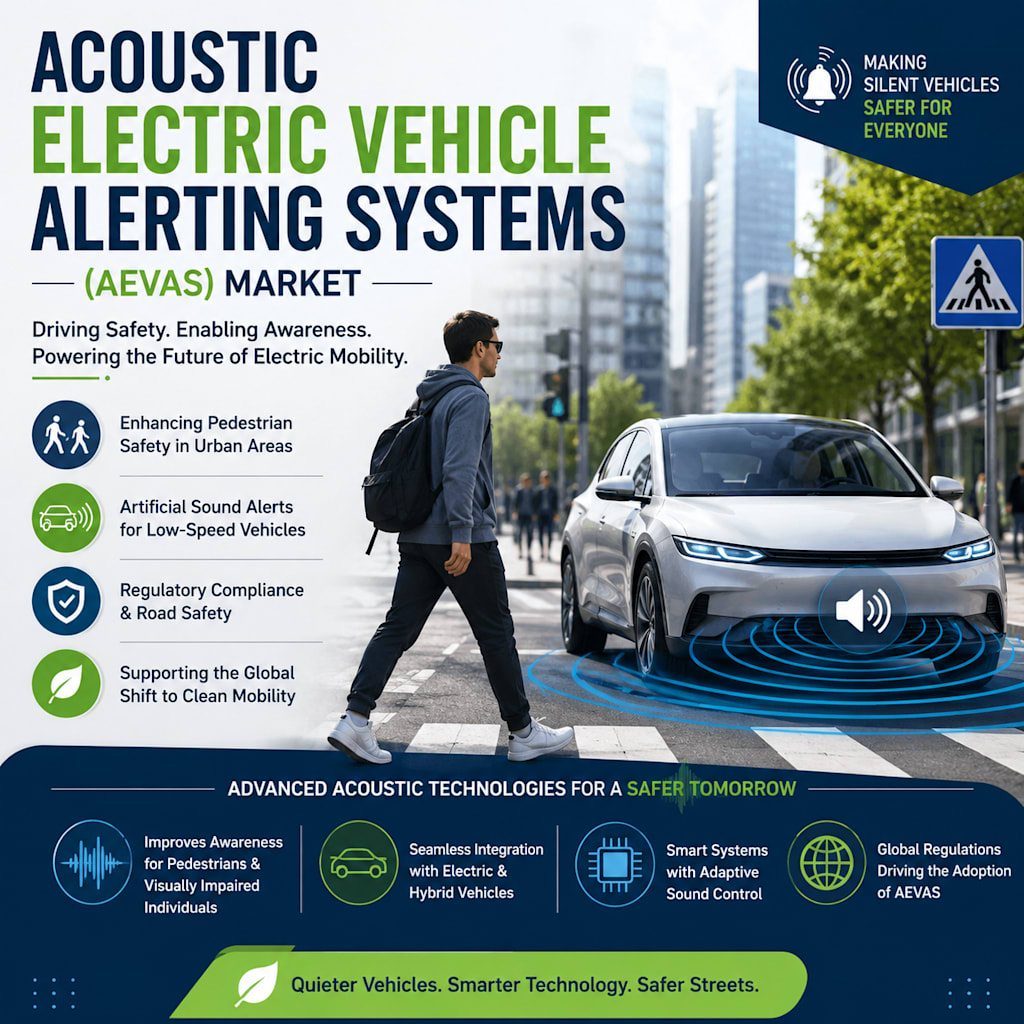
Acoustic Alerting Systems Are Changing Road Safety. EVs are taking over the future of transportation, however their silent nature can sometimes be dangerous.
EVs make much less noise at lower speeds than traditional gasoline vehicles, and this poses a safety risk in busy urban settings as pedestrians, cyclists, and the visually impaired will be less likely to hear their approaching vehicles. As this safety risk is acknowledged, automakers are increasingly relying on what are known as Acoustic Electric Vehicle Alerting Systems (AEVAS) - the development of artificial sounds that would allow for a safer sound-filled environment on the roads with the integration of electric and hybrid vehicles.
As the world relies more on electric vehicles to transition to a cleaner environment and more importantly to the future, so does the AEVAS market. The world market of AEVAS is expected to grow from an estimated $1.88 billion in 2024 to $6.72 billion by 2033, experiencing a compound annual growth rate of 15.07%.
Why there is so much need and want for acoustic alerting systems.
One of the largest reasons for this growing demand and adoption is the increase of EVs.
Since EVs emit less noise, specifically at lower speeds and in driving conditions that may prevent internal engine noise, they can easily and silently pass nearby individuals such as pedestrians without even being heard. Acoustic Electric Vehicle Alerting Systems are the solution as they produce artificial warning sounds at lower speeds or whenever the EV may need it. With the rapid rise of these cars, more and more, these systems are becoming a necessity.
More people means more drivers in cities
Urbanization is growing, leading to increased urbanization globally. This has led to the increased amount of vehicles, and more so, electric and hybrid vehicles sharing the roads with pedestrians and cyclists. These vehicles, at lower speeds, can create a safety risk, and for that reason these acoustic alerting systems will ensure drivers and pedestrians are more aware of the approaching vehicles, therefore, preventing unwanted accidents and accidents that could be fatal.
Autonomous cars help create a market for AEAVS
Autonomous vehicles have been and will always be looking for advanced systems to allow them to drive safer around people. With many autonomous vehicles being electric/hybrid, the need for acoustic alerting systems is higher. Regulations around the world now mandate this feature be on new electric vehicles, and as more people look towards autonomous vehicles as the future of transportation, the need for these sound systems will increase.
Passenger cars dominate market
Within the AEVAS market, the largest segment will be passenger cars. The increasing popularity of electric passenger vehicles is driving this large demand and is expected to continue increasing due to both regulation and the general consumer preference for electric vehicles globally. As passenger vehicles tend to drive most often in populated cities, where pedestrians can be heard to be very prominent, the need for louder acoustic signaling is higher than that for other electric vehicle types. Furthermore, evolving consumer lifestyle trends and increased environmental concern are leading to greater EV adoption worldwide, in particular for passenger vehicles.
Plug-in Hybrid Vehicles have continuing appeal
Within propulsion types of electric/hybrid vehicles, Plug-In Hybrid Electric Vehicles are dominating. With vehicles combining the ability to drive on an electric motor with the functionality of a gasoline engine for prolonged range and ability, they tend to require acoustic alerting systems more than solely electric vehicles as they can often drive solely on electric motors, which at lower speeds are quiet. With hybrid vehicles' continuing appeal in markets around the world, demand for their systems is growing.
Technology has made AEAVS better
Recent advancements in Acoustic Electric Vehicle Alerting System technology have allowed manufacturers to produce increasingly more intelligent and integrated sounding vehicles. Automakers are using sound as a vehicle's brand identity as the systems can customize their sounds based on driver choice, vehicle performance, and external road noise levels. Current modern AEAVS integrate components that will create various sounds in response to vehicle speed and pedestrian traffic. Future technologies will bring smarter sounds to these systems, making them more human-like than what they are today.
The Asia Pacific region currently dominates the AEVAS market. The rise in electric and hybrid vehicle usage is driven by government policies favoring cleaner transportation, improved charging infrastructure in regions like China and South Korea, and increasing consumer environmental awareness across the entire region. The Asia-Pacific region is also home to a number of automotive manufacturers, such as Hyundai and Toyota which will continue to shape its market growth. The increase of people inhabiting the cities of this region has been attributed to the growing use of this market.
Competition and innovation are driving the market.
Many companies, such as Bose and Bosch are currently developing some of the most sophisticated electric vehicle sound systems. These companies focus on improving the sounds' quality, intelligibility and system efficiency. They are also collaborating with car manufacturers in an attempt to customize these sounds to suit the design and brand-image of each vehicle. Companies aim for custom sound identities while trying to meet the strictest of safety regulations.
Some of the challenges for this market are varied across regions, and while regulations and sound systems can become globally standardized, these features can still be modified according to what countries mandate. For example, some countries are more prone to higher urban noise pollution which can mask EV sounds; however countries that are less so require certain sound decibels which makes things complex for global vehicle manufacturing.
The future of AEVAS
The future looks bright and silent in an electric vehicle based world. AEVAS are one of the many safety measures that will continue to integrate with vehicles of the future making driving electric a safer, sound-filled experience with greater awareness.
Final thought
As a transition occurs across the world for driving electric, a safer future of road traveling is on its way as it ensures that noise, one of the many dangers of a silently driving future, remains at a manageable, controlled and safe level with acoustic electric vehicle alerting systems, one of the many features we will see dominate over time.
About the Creator
Robert
Senior Market Researcher at IMARC Group, specializing in global market analysis, industry trends, and data-driven insights across diverse sectors.
Enjoyed the story? Support the Creator.
Subscribe for free to receive all their stories in your feed.
Comments
There are no comments for this story
Be the first to respond and start the conversation.