
You Can See Yourself Out
getting over the kitchen

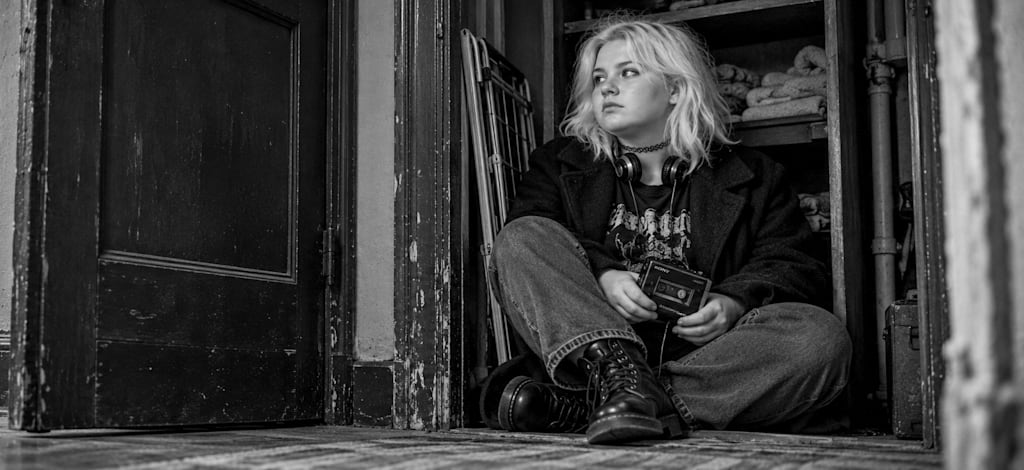
You come to the open inspection to prove the flat is only a flat. Twenty minutes among someone else’s renovations, then coffee. Perhaps afterwards you can stop dreaming about the kitchen.
At the entrance, you wipe your shoes twice. Your mother has not lived here for fifteen years.
You give the estate agent a false name and accept a brochure. Black coat, clean boots, the restrained earrings of a woman whose problems have direct debits. Your leather choker stays beneath your collar.
You are told about the light. You remember the light. Being turned towards it, chin lifted, while your mother decided what needed correcting.
Through the living-room window, a piece of water survives between apartment buildings. You used to watch the ferries cross it, their passengers apparently entitled to go somewhere. Now the flat offers engineered flooring and a kitchen opened up for contemporary living.
You would have settled for a bedroom door that closed.
Beside the fridge, you find the cupboard. You remember hiding there, behind the folded clothes horse, moving the mop first so its handle would not fall and announce you.
“Storage?”
You are invited to look. Loosening your collar, you crouch.
Inside sits a girl of sixteen, knees drawn sideways beneath the pipe. Torn jeans, black boots, a hair elastic sunk into a broad wrist. Chubby, as everyone felt entitled to remind her. Even alone, holding her stomach in.
You recognise the chipped varnish before your face. At thirty-three, lean and athletic now, you crouch outside the cupboard and look at yourself at sixteen.
The girl looks back. You remember this evening. The kiss, the questions, the cupboard. Eventually, you came out, washed your face and took your brother from his cot.
Nobody came to get you.
The girl notices your choker. Her fingers rise to the identical one beneath her chin.
You remember buying it, every room in which you were told to take it off.
You do not remember meeting yourself.
From the kitchen comes an offer of assistance.
“Checking for damp.”
Apparently, you have become the sort of adult who can find a child in a cupboard and protect the property’s reputation.
The girl looks past you towards the unfamiliar voice, then back at your face. You stay between her and the doorway.
Squatting hurts. Inside, the girl holds a cassette against her ribs.
You remember buying it in the old passage down towards the ferries. Distortion leaking from record stalls, photocopied band shirts, magazines softened by other people’s hands. Tobacco and damp cardboard. You knew which man would copy an album without recording his conversation over the final track.
Upstairs, past the shops, the building became less particular about its business. Sex behind one door, drugs behind another, occasionally both with the same unhappy carpet. You knew which men watched too long, which stairs to avoid, when to keep your money in your boot.
You went anyway.
There, a shirt could be chosen because you liked the band. Nobody held it against your stomach and suggested something more flattering.
Beside the second-hand records, a girl in a military coat shared her earphones. Shoulder against shoulder for the length of a song.
You remember waiting for her to move, and when she didn’t.
Later, behind the shop, a kiss. No requirement to become thinner first. For half an hour, you walked through the city without watching yourself walk.
Then home. Eleven minutes late.
Your brother was two. Fourteen years between you, and by then your arms could answer him before you were properly awake.
That evening, you received him before removing your coat. Sour milk at his collar, one fist closing around your choker.
You loved that hand. You wanted your neck back.
Then the questions: the time, the coat, your face. Whom had you been with? You supplied the girl’s name. Honesty still seemed like something that might protect you.
Your mother looked at your mouth. You were told to put the baby down.
You had heard her discuss homosexuals at the dinner table. The disgust reserved for men, the special hatred for women who appeared to have dispensed with men altogether. Sometimes you kept eating. Sometimes you nodded.
That part stays difficult to remember. Now the familiar words were addressed to you.
Sick. Filthy. Unnatural.
What had you been doing? What would people say? And who would want you anyway, looking and behaving like that?
You had just found someone. Pointing this out seemed unlikely to improve the evening.
Ordered to wash, you went into the cupboard.
Fourteen minutes left.
Beyond the door, a couple discuss where their television could go. You press the brochure’s edge into your thumb.
You had clean clothes, vaccinations, help with schoolwork. Birthday cakes with level icing. You learnt to list these before anyone accused you of suffering above your station.
A good childhood.
You could provide receipts.
Your mother’s knuckles split above the washbasin every winter. After midnight, she repaired your hems. When you were ill, she peeled oranges and removed the white threads because you disliked them.
You also waited for her slippers to pass before leaving your room.
For years, you used the oranges to explain away the waiting.
Inside the cupboard, the girl pulls her coat across her belly. You notice your own hands doing the same. You let them fall.
Your two older sisters remained beautiful in their photographs.
You dusted them.
By sixteen, you could go weeks without a call from either. Still, the telephone had to remain free in case one rang. Their work, their friends, their complicated lives: you learnt how much could be forgiven by being elsewhere.
You were there.
Available for the baby, the washing-up, the search for whatever had gone missing. Available to try on their abandoned dresses while your mother remembered how nicely the same fabric had fitted them.
You began apologising to clothes.
At dinner, you calculated how much bread could be taken without comment. Later, standing in the kitchen, you ate quickly while pretending to put something away.
Eventually, you would call this a lack of self-control.
Your father’s key turns. You look towards the hallway before remembering that you have come alone.
Even now, you expect the pause between lock and door. A final paragraph finished on the landing.
You remember laboratory smells at his cuffs, communist pamphlets in a canvas bag. Which comrades had been dismissed, which names were safe at home, which telephone calls required silence. You understood the exploitation of labour before understanding your period.
You were proud of him. Still are, inconveniently.
Once, on the back of an electricity bill, he drew an atom and answered your questions about the space inside it. Twelve minutes of complete attention.
Afterwards, you asked about physics when you wanted to be loved. Heat. Pressure. The behaviour of light. You never worked out how to ask him to stay for dinner.
Sometimes his hand rested on your hair as he passed your chair. After it lifted, you remained still, trying to extend the visit.
That evening, from the cupboard, you heard him tell your mother to lower her voice.
You almost came out.
Then the telephone. Papers shuffled. A meeting, something urgent, the promise of a conversation later.
After the front door closed, you avoided moving, preserving the exact circumstances in which he might come back and notice you.
On a floor advertised as European oak, your knees hurt.
You had imagined this return. Prepared speeches about boundaries. Enough money to leave. An adult vocabulary and a commanding coat.
You have the coat.
“There’s nothing wrong with liking girls.”
Inside, the shoulders rise towards the ears. Of course. Another adult with access to something private.
You look at the boots instead. “Left one still leaks?”
A small movement of the chin. You used to stuff the sole with newspaper. In wet weather, you walked home with government incompetence dissolving beneath your heel.
“Should’ve bought the other pair.”
For an instant, you catch the expression you wore before learning to make it pleasant.
Then your brother cries. Both of you begin to move.
You have been trying to coax her out without considering what waits outside.
Outside the cupboard waits a child to settle, a mother requiring an answer, an apology convincing enough to preserve next weekend. The name of the girl who kissed you must be kept safe. Your face must be arranged.
Coming out means work. You hid for perhaps twenty minutes that evening. Since then, you have congratulated yourself on emerging and getting on with things.
From the hallway, the agent announces five minutes.
“Is there another exit?”
You are directed towards the rear stairs.
Cold terrazzo. A cracked pane on the half-landing. A courtyard bucket beneath a dripping tap.
You used those stairs to take down the rubbish. Somehow, you had forgotten they also went outside.
You reach for the cassette, intending to hold it while she crawls out. Her boot catches your hand. Your knuckles strike the frame.
For a moment, you are furious. After coming all this way, trying to help, with other things to do today...
You recognise the sentence. You sit back and put your hands in your lap.
“Sorry. Should’ve asked before touching your things.”
Her eyes move from your face to your hands. You leave them empty.
Through the wall, your mother demands to know what you are doing. The old answer rises: nothing. You let it pass.
“There are stairs out the back,” you tell the girl. “You can leave that way. You don’t have to go through the living room.”
Her eyes move towards the kitchen.
“Enough money for a ferry, too. Somewhere to sit.”
You nearly add that everything will be fine. At sixteen, you would have stopped listening there.
You set a few coins beside her boot. She pockets them without looking up.
“Keep hold of the tape.”
Three minutes. You hear the baby again, then a spoon against glass. The urge to make yourself useful is almost unbearable.
You stay on the kitchen floor.
Inside, the cassette case opens and closes. After a while, the girl reaches towards your sleeve. You turn your wrist towards her and wait.
Her fingers stay.
When she begins to unfold, you stand and move aside. The cassette disappears into her pocket. Her boots turn beneath the pipe; a thumbnail catches on the splinter you remember.
You swallow the warning that would arrive too late.
Once she is standing, you open the rear door. Below, water ticks into the courtyard bucket.
“This way.”
The girl looks down the stairwell, then at you.
From the living room, the estate agent calls. The inspection is finished. You keep holding the door.
She takes the first step, then another, one hand sliding along the rail. You wait until her boots disappear around the turn before easing the door shut.
Back in the kitchen, you collect the brochure.
Will you be making an offer?
“No.”
The agent is turning off the lights. You can see yourself out.
At the front door, you nearly wipe your shoes again.
Outside, you turn the wrong way for the ferries and hurry around the building. Past the bins, through the narrow gap beside the neighbouring wall. Your coat catches on something. You pull it free without checking.
The girl stands in the courtyard.
For a moment, you stop at the entrance. You remember coming out of the cupboard that evening, washing your face, lifting your brother from his cot.
In your memory, you never reached the courtyard.
She is looking up.
Above her, from the empty flat you have just left, the baby cries.
Your arms respond before you can stop them. Then your mother calls your name.
The girl turns towards the stairs. One boot lands on the bottom step.
You know what waits up there. The warm weight of your brother. His fist around your finger. Something to do with your hands while your mother explains what is wrong with the rest of you.
You could tell her to keep coming. You know how to make an instruction sound like concern.
You stay at the courtyard entrance, leaving it clear.
Your mother calls again. The girl’s hand closes around the cassette in her pocket. Then she takes her foot off the step.
She comes towards you quickly, eyes lowered, as though there might still be a question to answer or permission to obtain. You move aside before she has to ask.
At the pavement, she breaks into a run.
You watch her boots strike the uneven slabs, her coat flapping open. At the corner, she catches it against her stomach, then lets go so she can run faster.
Towards the record shops. Towards the ferries. Into the evening.
You know she will be back tonight. Quiet key, boots carried past the living room. Two more years of pulling her shirt down at the dinner table and hearing what is wrong with women who want women. Then a university place at the far end of the country.
You remember checking the distance before the course.
For now, she has a few hours.
You know what else waits in that direction.
All the stupid mistakes. Some of them already wearing eyeliner. The rooms she will stay in too long, the people she will mistake for shelter. What they will do to her, and how readily she will count it among her own mistakes. Hurt you still cannot revisit without finding something urgently practical to do.
You could call her back. You have names, dates, an excellent case for never letting her out of your sight.
Above you, your mother calls your name again.
You close your mouth.
The girl turns the corner without looking back.
You let her.
Then you leave too.
About the Creator
Iris Obscura
Are you after "polite?"
Stable?
This is the wrong place.
Looking for the kind of beauty that looks like it crawled out of a fluorescent supermarket at 2:13 am and somehow asked you about meaning.
Read on.
Enjoyed the story? Support the Creator.
Subscribe for free to receive all their stories in your feed. You could also become a paid subscriber, letting them know you appreciate their work.
Comments
There are no comments for this story
Be the first to respond and start the conversation.