
What the Yard Would Not Keep
Round and Around We Go

A few years ago—years sliding together like wet pages—I checked myself into another out-patient day clinic for mental health. The building sat off a frontage road behind a line of ornamental pears that looked too glossy to be real. I signed my name on a clipboard, accepted the thin plastic bracelet, and sat in a waiting room that smelled like hand sanitizer and coffee gone cold.
The clinic wasn’t my first, and it wasn’t the one that changed my life. That one was called CPH. When I walked out on July 17, 2018, the sun hit me like a verdict and like a blessing. I started calling it my new birthday because it felt earned—because for the first time I could look down at my own hands and believe they belonged to a person trying to live life, not a problem or someone avoiding it.
Even then, my parents and I couldn’t live together. We knew it the way you know not to touch a stove—knowledge carried in the body from painful lessons learned. They found a separate place for me, the compromise we could all pretend was a plan. Somehow, in the end, we still wound-up next door to each other albeit a hop, skip and a jump down the line. It’s a twisted tale and also one of the bougiest arrangements I’ve ever admitted out loud, but when my dad got sick it made the most sense. On paper, you can draw two neat rectangles and label them Home and Home and pretend the line between them is a boundary. Except, my parents don’t do boundaries.
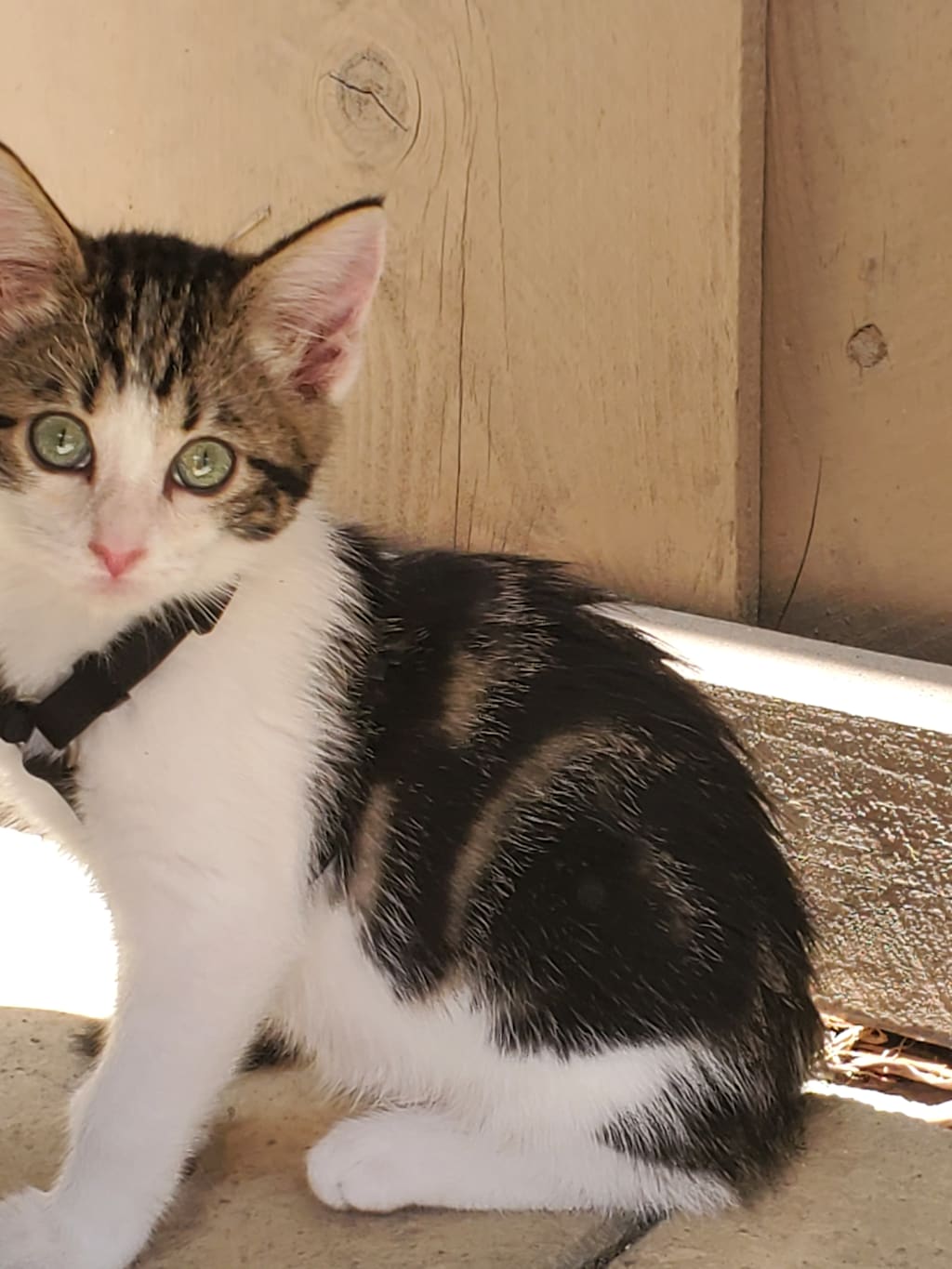
Somewhere along that line I got a kitten, my first ever…that I could keep. I named her Elsie, after my grandmother and after a lifetime of dogs, I learned that I was a cat person. We fell into what I can only describe as a soul bond: the quiet weight of her in the crook of my arm, the way she watched me the way some people never had, as if my being alive was an ordinary fact and not a negotiation. And the way she’d stick her head in my mouth if I was singing which never failed to make me laugh.
I’d had that kind of bond once before, with my dog Molly, who had loved me through the kind of darkness that makes you forget you have a name. It wasn’t that I had lost Molly already, she was alive and well and still one hell of a soulmate; it was more like my mom had commandeered her because she decided she was better suited to take care of her. Maybe that’s why I poured so much into Elsie. I wanted her to have the fullest life, and I wanted the fullness to mean something—some corrective to all the half-lives I’d lived.
She sat at the windows like a small statue of appetite. Her tail would twitch at squirrels, at the slink of shadows along the fence line, and I was fascinated for stupid-long amounts of time watching her ekekekekekek at birds; a sound I did not previously know cats made.
We tried harnesses. I bought one with reflective stitching, watched tutorials, practiced fastening it while she turned herself into liquid, offended. Outside, she walked low to the ground, insulted by the leash’s idea of ownership. She wanted the yard on her own terms. Eventually she began to argue with me at the door: a soft insistence, a paw placed on the threshold as if she were pointing out a detail I’d missed.
I caved the way a first-time father caves, wrapped around his little princess’s finger. I’d tell myself I was giving her freedom, but what I was really giving her was my own longing for it. At first, I kept my eye on her. She would stay in the yard, stalking the plants and the edge of the fence by the pool, then trot back to the door and meow to be let in. She began to treat it like a game: in, out, in again. I began to trust it. Trust, I’ve learned, is just a habit you don’t notice forming until it costs you something.
One night was different. The air had that bruised smell it gets before a change in weather. Elsie slipped out, quick as a thought, I still remember that little white butt dashing out as the door closed behind her. Minutes went soft and strange. The porch light hummed. I washed a dish. I checked my phone. I told myself not to be ridiculous.
After an hour I stepped outside and called her name into the dark. The word felt too small to reach wherever she might be. I walked the perimeter of the yard with my phone flashlight, as if she’d somehow become invisible and would reappear if the beam hit her just right. I decided not to panic. I went back inside and waited, listening for the familiar scrape of her paws on the doormat.
By morning, not panicking had turned into something uglier: delay. I later blamed myself for missing crucial days—the time when lost cats are still close enough to hear your voice, still brave enough to be found. I put her litter box outside like an offering. I shook treats in a cup. I printed flyers at the pharmacy and taped them to poles until the tape curled in the sun. I learned the names of my neighbors’ dogs and the gaps in their fences.
For months I searched in the middle of the night, roaming streets and cul-de-sacs and the edges of neighborhoods where manicured lawns give way to scrub. I walked with a bag of treats and a flashlight and a shame I couldn’t set down. I called all of her nicknames in order, like a checklist, and even came up with a little tune in the hopes she’d remember my voice and want to stick her face in my mouth. I tried to do it quietly, but truth be told, I didn’t care who I annoyed.
Storms were the worst. Rain made the world feel loud and helpless. I would sit upright in bed listening to water battering the roof and picture her, because the mind will always choose a picture over emptiness. I saw her huddled under a bush, wet to the skin, trembling, wondering why I hadn’t come. In those hours I didn’t just miss her—I animated her into a creature capable of betrayal and confusion and waiting. I built her a whole private suffering, and then injected it straight into my veins.
I had ordered a small cat pendant when Elsie first went missing. I didn’t believe in signs, not really, but I believed in objects. I believed in the weight of metal against skin, in proof you could touch. I wore it for six months before the chain snapped for no reason I could see. The charm hit the floor with a sharp, indifferent sound of something final.
That’s when I think she died. Or that’s when I let myself think it, because continuing to hope was starting to rot inside me. I tell myself I know what happened. Maybe it’s only a story I repeat because stories are softer than the unknowns.
I think she went too far one day. I think she saw a coyote or heard something in the brush and bolted. There are plenty of neighborhoods here—more mailboxes than trees—but there’s open land too, stitched between developments like a tear no one bothered to mend. I think she ran until the familiar houses stopped being familiar and then the world became all scent and fear. I think she hid, I think she kept moving, and then, I think at some point she stopped.
A month in, long before I’d stopped searching and while grief was still living with me like a houseguest who’d stopped saying thank you, my mom walked past my room and said casually, “You know you’re gonna have to start getting over this.” She didn’t slow down. She didn’t come in. She had never helped me look for Elsie. The sentence landed and stayed, a small hard thing lodged under my ribs.
It took years to fully heal from that—not from the words exactly, but from what they revealed: the shape of the room between my pain and hers. Elsie was only a year, maybe a year and a half when she disappeared. She had barely learned the geography of my lap. That was a love I will never get back. Sometimes grief doesn’t end; it just becomes part of the furniture.
Eventually I decided to rescue another kitten, because I needed something living to answer when I came home. He was all white except for two black markings on his head, like someone had set down their thumbs and left prints. When I picked him up he was filled with fleas—so many you could see them clearly rummaging through his flawless fur as if it belonged to them.
Of course the first thing we did was a bath. I filled the sink with warm water and held him with one hand like a trembling heart while the other worked shampoo into his coat. Fleas spiraled into the drain. He screamed in a voice far too big for his body, and when it was over he clung to me, wet and furious and alive. I combed him slowly until the comb came away clean, until the white was only white again.
After that he love-bombed me, which is what I called it when he followed me from room to room and fell asleep on whatever part of me was closest: shoulder, chest, ankle. He blinked at me as if I were the only safe thing left in the world. It started to feel like Elsie had sent him, this little boy, to heal my broken heart.
I named him Philoctetes—Trainer of Heroes—or Phil, because a mythological name doesn’t keep you from stepping on Legos in the dark. I told myself the name was an intention: that I would train myself to be heroic enough to stay. But depression doesn’t care what you name things. It sat beside me on the couch while Phil kneaded my shirt, and it did not move.
By then I knew it was okay to ask for help, at least in theory. So I did. I enrolled in a day program an hour and a half away and drove there twice a day for a week, traffic turning each commute into a long lesson in endurance. We decided a hotel near the clinic might be easier. It had beige walls and a bed that made a clean, anonymous creak when you shifted your weight.
At that point I was strict about indoor-only cats policy. I couldn’t live through the math of “just this once” again. My mom agreed to watch over Phil during the week while I attended the program. It sounded simple: feed him, keep the doors closed, text me a picture now and then so I could remember I still belonged to something.
A few nights in, my phone lit up with her name. Her voice had the same tone she used for burnt toast, for the sprinkler acting up when I asked about Phil. “Oh, well, Phil actually ran out the door,” she said.
My whole body went hot. I remember standing in the hotel bathroom with the fluorescent light flattening my face in the mirror. I told her I was coming home to look for him. I began listing all the things we could do, as if the right sequence of actions could rewind time.
There was a pause on the line, the kind of pause that holds a second sentence behind it. Then she said, irritated now, like I was making her day harder: “Well, it was actually two nights ago.”
My mind couldn’t hold it. Two nights. Two nights of him out there while I sat in group therapy talking about grounding techniques and ate takeout at a desk, trying to be proud of myself for staying alive. Two nights, while he learned the world the hard way.
I drove home anyway. The freeway felt like an accusation: miles of opportunity to have turned around sooner if I’d known. When I pulled into the driveway the porch light was on, the yard empty. I walked the block calling his name until my throat hurt. Then, because I was still trying to follow the rules of getting better, I drove back to the program the next day as if my life were something you could compartmentalize: healing in one box, loss in another.
I might have done that once more—home at night, back at the clinic by morning, repeating a ritual that satisfied no one, a hotel room sitting silent and empty. After a week, I dropped out and I told them why. I wasn’t ashamed to admit that if I didn’t do everything I could in that moment to find my cat that I could not live with that.
My neighbor, trying to be helpful, pulled up his camera footage. The screen showed a slice of my front yard at night in ghostly infrared. Phil moved like a scrap of paper caught in a breeze, white and jittering. A coyote slipped into frame—too smooth, too sure—and there was a sudden blur of bodies. Phil fought. Phil wriggled free. Phil vanished off-camera into darkness that had no edges, though seemingly okay.
The video was supposed to be reassurance—Look, he got away—but it only gave my fear a new costume. Now I could replay the exact angle at which danger entered my life. I could pause on the frame where his white body made the yard look briefly like snow. I could imagine what the camera didn’t catch: where he ran, what he ran into, whether he stopped running at all.
My mom said she “looked for him.” She would go on walks and call his name, but the reality is that she was with the dogs and it was daytime, so what good does that do me? Cats don’t come when you call the way dogs do. Lost cats become small on purpose. In daylight they hide inside silence.
Phil never came home.
It’s strange what disappears and what stays. Elsie left behind a dent in the couch cushion where she used to tuck herself, a habit of checking the yard before bed, a necklace with a broken chain in the junk drawer because I couldn’t bring myself to throw it away. Phil left behind a comb with a few white hairs snagged in the teeth, a bottle of flea shampoo under the sink, a name that still makes my mouth feel full when I say it out loud. I bought one of those “cuddle clones” once—an imitation you can hold—but it didn’t carry his heat, and the hollowness of it made me angry. Pictures did something worse: they proved he existed and also proved he was gone. He was here a shorter time than Elsie was.
I like to think I’ve forgiven my mom because it sounds like the kind of sentence that suggests an ending. To err is human, and she didn’t do it on purpose. Sometimes I even believe that for a whole afternoon. But forgiveness is not the same as forgetting, and forgetting is not something you can force on a body that remembers.
When my dad’s illness flared, the two houses next door to each other became a kind of shared lung. I crossed back and forth carrying groceries, pills, paperwork, the small daily machinery of keeping someone alive. The yards stayed trimmed. The sprinklers still ticked. In the evenings coyotes still called from the open land, their voices threading through the neighborhood as if they were singing to one another about what they’d taken and what they’d survived. I don’t blame them either. They’re just surviving too.
Some nights I still step onto the porch without deciding to. I stand in the spill of the light and look at the yard I once trusted. I don’t call out anymore, not because I don’t want them back, but because I can’t keep making promises into the dark. The door behind me is heavy in its frame. Inside, the house holds what it holds: a broken chain, an unused harness, a food bowl I can’t quite get rid of, and the quiet after a name has been said too many times with no answer.
About the Creator
Logan Stanislaw
AUDHD, poly, pan, queer AF and still learning to people. Writing is a passion but as long as I'm creating something, I'm usually good. Be kind.
Everyone is an artist, don't be afraid to explore your passions.
Enjoyed the story? Support the Creator.
Subscribe for free to receive all their stories in your feed. You could also become a paid subscriber, letting them know you appreciate their work.
Comments
There are no comments for this story
Be the first to respond and start the conversation.