
Waiting for the Last Train
Cologne to Venlo

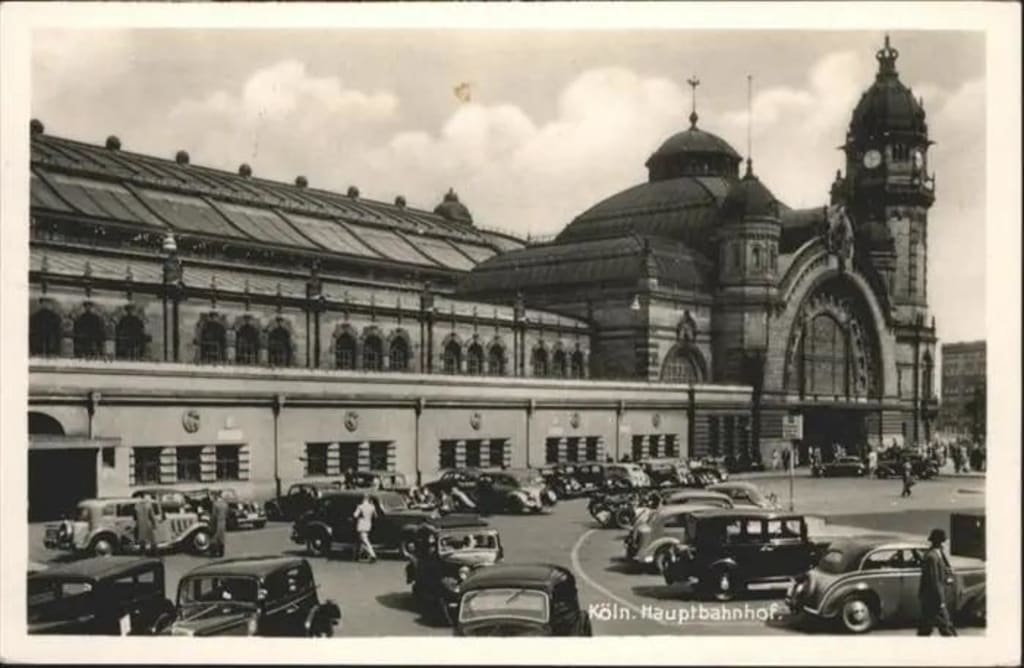
Sunday, 3 September 1939. 7:57 p.m. (19:57)
German trains always run on time. Except when they don’t. My father told me that. His father was a Rabbi, a wise, gentle man. What would he have thought about this moment? What would he have advised? Would he have said my life is off track? I don’t know, but I don’t think so. I have so few memories of him, but one stands out. He said, “Always pray to God before taking any action. Always.”
The station in Cologne is a busy one, but to me, just now, it seems empty. I’m holding two tickets marked International Train, Abfahrt 21:00 (9:00 p.m.). I have also purchased Platzkarten, seat reservations, though these may not be honored. It is two o’clock now, and I scan the station for him. People in the distance look like milk bottles. Each one looks like the other. How did I get here? you ask. I am asking myself the same question. It has to do with music actually, yes music.
Music has been my biggest mistake and perhaps, in a way, it may yet be salvation. I don’t know yet. Does anyone know anything in this topsy-turvy world?
Music is largely a matter of careful time-keeping. I know that. My husband of six months knows that. Conductors know that. Every repetiteur at the opera knows it. Singers don’t like it. Especially when they are singing Italian. Oh here and there a high note they would like to extend. But what if they clash with the orchestra? Tempo rubato it is called, stolen time. But when time is stolen it must be put back.
My husband is an excellent pianist, but he plays with too much rubato.
And of course the coaching of singers, the rehearsals, and the performance are not the same thing, not the same thing at all. One can prepare and prepare, and then comes the important night, and what will happen? Baton, string, voice, winds, and drums, always the drums. What will happen? And where is he?
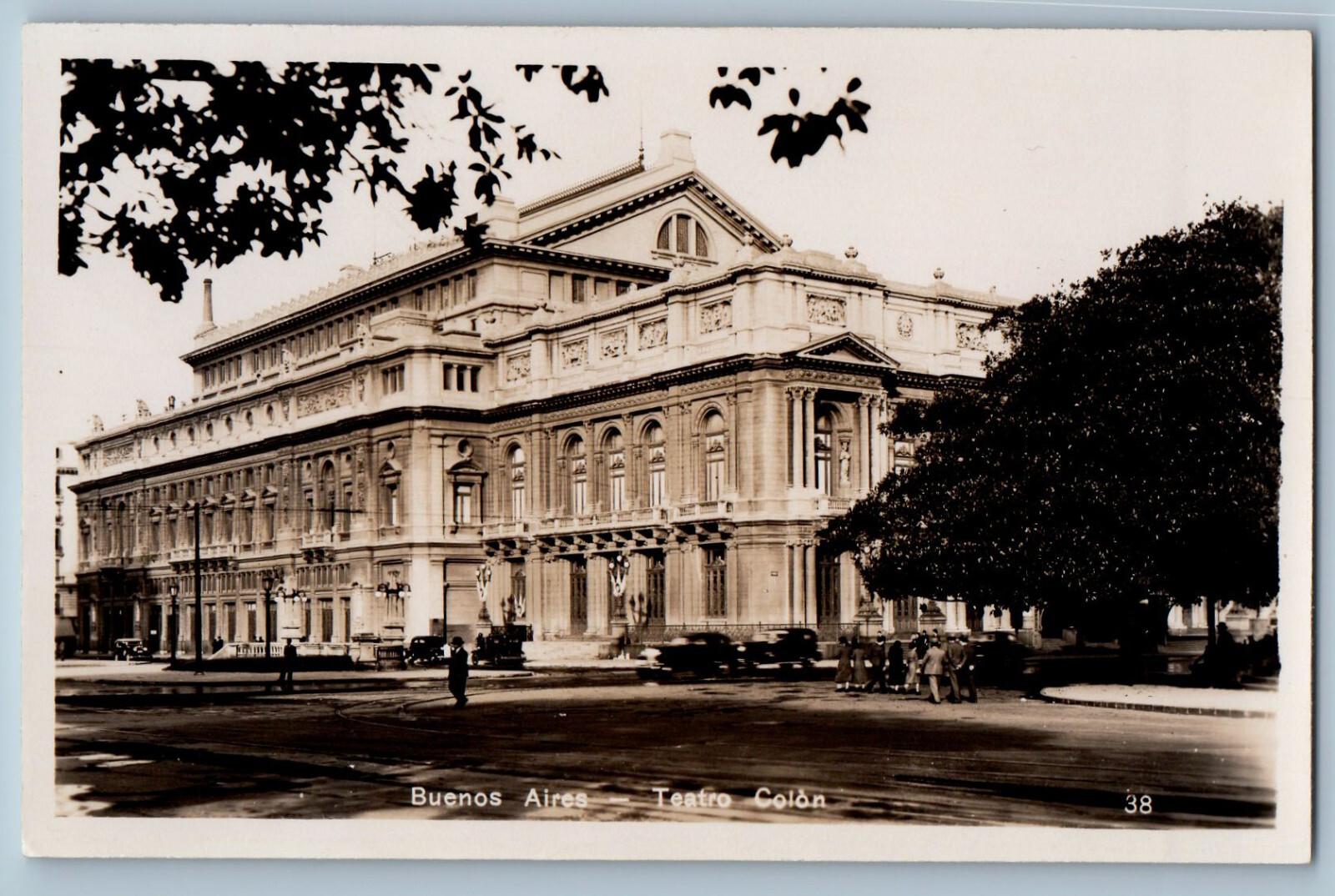
We are travelling far. Right out of this world. And what will it be like, assuming we get there? More than a thousand miles from here, the Teatro Colón in Argentina.His uncle runs the opera school there and we have been promised jobs, just like we had here. His uncle’s wife is a diva, a soprano. She and his uncle have met the great Callas, whose voice can reach heaven itself and charm the angels.
I have seen a photograph. It is a magnificent building. And I have seen programs. Such fine operas. And it employs other German Jews, like us.
The angels… what are they doing and what are they thinking? My husband’s family converted. They are protestants now, the few that remain. They thought that would save them, but it has not. We were both dismissed from the opera on the same day. There is a mark beside our names on all records and official documents. We are Jews. It is that simple. And Jews are despised in Germany. And worse will come. Much worse. That is certain. My family refuses to leave. Something about a story in the Torah, digging wells, moving from well to well. But you have to move to do that. I argued and cried until I had no tears left. And my mother said “Go with him, go with him to Argentina. Marry him and go to the new world.” And my father agreed.
I have made this sacrifice. So where is he? His parents are dead. He should not be late. We have heard that our emigration plans may be challenged at the border, so he is arranging for better papers, backdated papers. We must outthink the SS and friends of the SS, and that is hard. Papers can be challenged inside and outside of Germany. Ah such preparation. He has a friend who works in moving pictures. This man’s father is an important businessman in Rotterdam. He is the consul general of Paraguay to the Netherlands, and he has issued us permission to enter Paraguay. That country will not accept Jewish merchants, but it will take Jewish artists. With these papers it is assured that we will be allowed entry to the Netherlands in transit to Paraguay. From Paraguay it is easy to get to Argentina. I also have the letters from his uncle at the Teatro, and we will be admitted to Rio de Janeiro. This is the best guarantee that we could have. But where is he?
8:30 p.m. (20:30)
The train has still not arrived in the station. I sit across from five people with two suitcases, a lady, her husband, two brothers and a cousin. She tells me that they are going to England. She turned thirty-three yesterday. I wish her a happy birthday and she replies politely. It takes our mind away for a moment.
Everything is in chaos for all of us. Friday the armies of the Reich invaded Poland. Saturday she and her family packed two suitcases and left their home. Their plan was to travel here to Cologne, then to England via Brussels. But on Sunday England and France declared war on Germany. Belgium will no longer accept Germans, even in transit. There were the Kindertransport, the last trains to get the children out, then the possibility to transit through the Netherlands, and this one last train. This one last train. Last call for Jews to leave.
She sees my ring and asks me, and I break down. I did not think I had any tears left. And she utters the question I am asking, “Where is he?”
Oh it is not like him. He is always so responsible. Always on time. Always early. Always reliable. What if he has been detained? The SS are everywhere. If that is so I will die I know it. And she sees my condition, and she understands. Of course my family would insist that I leave. It is a new life. And I and he bear the responsibility for this new life. Keeping it safe from harm. Helping it grow. And we cannot do that here. So… Argentina. Buenos Aires. The Teatro.
She puts her arm around me. “Do not despair,” she says. “The pure, the formless, will provide.”
But will He? Will He provide? I am not sure. “I will see you safely to Venlo,” she says, definitively. Venlo, it is the border, in the Netherlands. That country is neutral. It will accept travelers in transit. If they know we are going to Paraguay, and our papers say that, all will be well. But where is he? It is 8:45 And where is the train?
The loudspeaker announces that our train is delayed by 45 minutes. The woman's brother finds it strange. "German trains are always on time," he muses.
“Except when they aren’t,” I reply, and I manage a weak smile.
“There, that is better,” my kind new acquaintance says. “Think about something else. Tell us how you met your man.”
“Well it happened because of music,” I began.
“Ah, are you a musician?” another of the men asked conversationally. “What is your instrument?”
“The piano,” I replied.
“A lovely instrument,” the lady remarked, “but is it not difficult to compete with the other musicians? There seem to be so many pianists.”
“Yes,” I warmed to my discourse. “So I decided to coach singers for the opera. I love the opera, and they always need a vocal coach. I am by nature a nervous performer, but I sight read music well, I can transpose to different keys, and I can tell a singer when what they are doing is not quite right. I can help them learn their part.”
“Ah, wonderful, and so very practical,” the lady said admiringly. “You have chosen well. And this man?”
“The same, I answered, and added, “and he also conducts the opera orchestra for rehearsals.”
“Well then he ought to understanding timing, and as your husband he ought to be here,” the third man remarked, getting an elbow in his ribs for this indiscreet, unhelpful intervention.
“Pay no attention to Haim,” she said. “His mother dropped him on his head.”
Haim scowled, and I laughed in spite of myself.
“Haim, go to the Reiseproviant and buy us some supplies for the trip,” the woman commanded, and Haim obediently went off to make the purchases. “Don’t talk to anyone in a uniform,” she added, wisely, I thought, if Haim indeed had been dropped on his skull. “Please go on,” she said warmly to me, in the affectionate way a sister would.
“They need a small group of us on the piano to prepare the singers,” I explained. “They need the singers to know their parts perfectly before they rehearse with the orchestra. Paying the orchestra is very costly.” The whole family nodded together, understanding this point.
“And always one opera is being performed and the next one is being rehearsed and prepared,” I noted. “And an opera can be repeated, but usually there is a different cast. So always we are needed. And the conductor always checks on the progress and emphasizes the interpretation.”
“Ah, yes,” the interpretation, “my new acquaintance understood. You must make sure that they have the correct interpretation of the music, and the correct speed and volume, I imagine.”
“Yes, you understand well,” I noted.
“I have never been to the opera,” the woman remarked, “I think it is only for the fine people.”
“Oh many people go,” I said, “some in the loge, the expensive seats, but some in ordinary seats, and some also standing. It is not so expensive there.”
“Well then,” the lady said, undeterred, “when we get to England, we shall attend an opera!” and everyone laughed.
9:30 (21:30) Still waiting
My companions stared fixedly at the large station clock. The woman took my hand. "Let us pray," she said earnestly. "Let us pray."
I closed my eyes. 'O merciful Adonai, aid me in this moment. Aid my husband. Bring him here. Let us depart with the child I carry. Do not let us fall by the wayside.'
The loudspeaker jolted me back to my senses. Another delay, now the train would depart at 10:50 (22:50).
'He has blessed your Exodus,' the third man said sincerely, the first words he had spoken to me since our introduction. The woman smiled. Haim nodded. Still I could not be calm. The SS were everywhere.
We all began to talk of everything we could think of. I spoke of costumes. They spoke of the home they were leaving, and the family in England they intended to join. I could not stop my eyes from scanning the station.
10:45 (22:45). The train arrived on the platform. There would be a last train. My companions stood up. I did not.
The woman took a serious tone. "You must come with us," she said gravely. "You must do this for the sake of the child. You can come with us to England."
I broke down. She pulled me to my feet, but my legs were like jelly. My muscles failed me. Haim and her brother held me up on both sides, and propelled me out of the waiting room onto the platform. We moved slowly towards the train in this way, me looking back at every step.
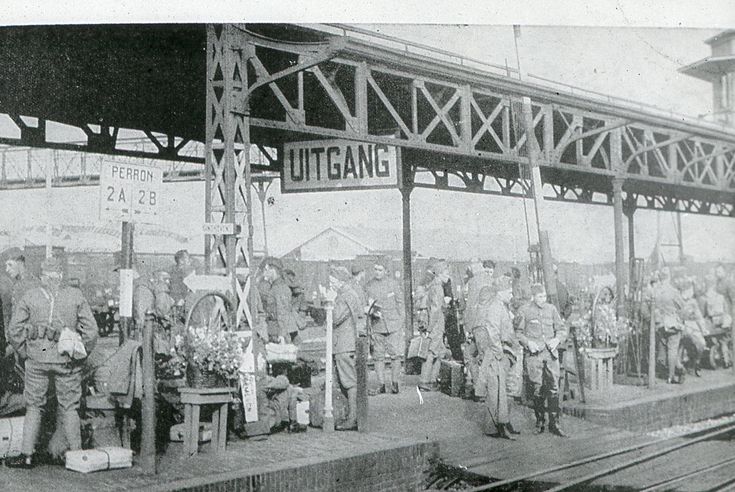
Soldiers were all over the platform, talking casually. No one seemed to take notice of the weeping woman whose heart was breaking, who had to be carried to the car. The conductor arrived on the platform carrying a sign on a pole with a large X. In minutes he would wave the X at the engineer and the train would pull out of the station. "On board, All on Board," he shouted.
I begged to be left behind, but my companions would not hear of it. They steered me to the steps to board. I took one last look back. Was it? In the sea of people, there was a man at some distance, not in a uniform, running.
"Last Call!" the conductor bellowed, and my companions picked me up forcibly and placed me on the bottom step. And then God answered my prayer. "Wait," he shouted, and the conductor smiled impatiently, but also somewhat indulgently. He boarded the train with me, just as "Last call was heard one more time," and our train departed.
I hugged him, then slapped him on the cheek. "Why?" I asked.
"I was questioned," he said darkly. "I believed they would arrest me, but my friend passed by and said they needed to let me leave to pick up materials for a film about the Fatherland. But I was late and I believed I would miss the train, because German trains are always on time."
I answered, "Except when they aren't."
...The next day...
[Archival Rubric: “Stukken betreffende het al dan niet doorlaten van een joods echtpaar voor emigratie naar Paraguay bii de doorlaatpost Venlo 1939" (Documents concerning whether or not a Jewish couple should be allowed emigration to Paraguay at the Venlo border post, 1939) Nationaal Archiev, Dutch archival finding aid.]
The Dutch officials examined our permits and letters closely. They telegraphed Rotterdam to contact the Consul, who assured them that he personally had given us our papers to enter Paraguay and that we were permitted to enter that country. And they allowed our transit and sent us on our way.
Epilogue, Buenos Aires
The Teatro is grand in every way. When you stand in the hall you can hear so many singers practicing. It sounds just like home, only better. And best of all, they are playing Tosca, with the great Callas, and I am HER pianist. And this is the first night. She does her warm up vocalise like other singers, but she will not look at the piano, because she wants to sing as high as she can without giving any thought to strain or difficulty. She wants to fool herself into singing higher. She has told me that this is now she has developed her wide range, greater than any soprano. And tonight she will sing her high E-flat, clear as the tone of a bell, which no one else can achieve. As we finish the last triad, the stage manager knocks on the door.
"Mrs. Callas, you must come backstage now. This is the Last Call." I myself would counsel anyone to pray to God before taking action. And may the Formless, the All-Knowing, always answer the Last Call.
About the Creator
Paul A. Merkley
Mental traveller. Idealist. Try to be low-key but sometimes hothead. Curious George. "Ardent desire is the squire of the heart." Love Tolkien, Cinephile. Awards ASCAP, Royal Society. Music as Brain Fitness: www.musicandmemoryjunction.com
Enjoyed the story? Support the Creator.
Subscribe for free to receive all their stories in your feed. You could also become a paid subscriber, letting them know you appreciate their work.
Comments
There are no comments for this story
Be the first to respond and start the conversation.