
Unsent
A cancelled train. A stranger with the same problem. And forty-three words neither of them could finish.

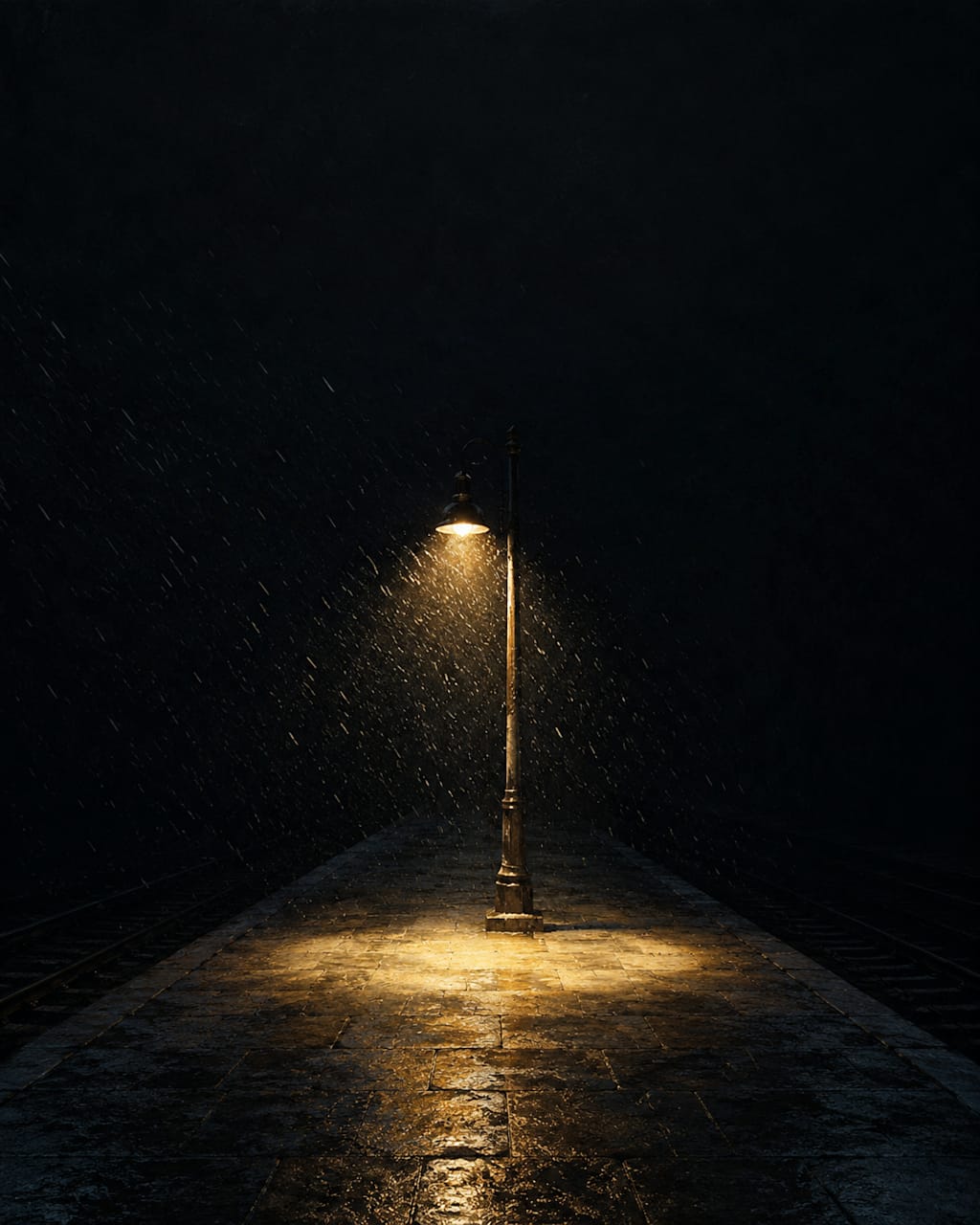
The 11:04 to Graz was cancelled at 11:02.
No announcement. The board simply blinked — DELAYED, then CANCELLED, then nothing — and the heating cut out three minutes later as if the station itself had decided to stop pretending. By midnight, the last staff member had locked the ticket office and left without making eye contact with anyone.
There were six of them stranded at first. By 12:30, four had found taxis or called someone who came. That left two.
Nadia claimed the bench nearest the east wall. The man — she didn't know his name, hadn't looked long enough to want to — took the one by the vending machine. Forty feet of cracked marble between them. Sufficient.
She opened her phone.
The draft had been sitting there for eleven days. Thirty-one words addressed to her brother, whom she had not spoken to in two years, whom she was travelling to see for reasons she hadn't yet managed to articulate even to herself. She read the draft. She closed it. She opened it again.
I don't know how to start this so I'm just going to—
That was where it ended. Where it always ended.
Across the hall, the man was also looking at his phone. She noticed without meaning to. He held it the way people hold things they're not sure they want — loosely, at a slight distance, as if it might say something he wasn't ready to hear.
The vending machine behind him hummed and then stuttered into silence.
"The C4 is jammed," he said, without looking up. "If you were thinking about the crackers."
"I wasn't."
"Okay."
She pulled her coat tighter. The station smelled of old stone and something metallic — the particular cold of a building that had given up on warmth for the season. Outside, snow that had threatened all evening finally arrived, pressing itself against the high windows in soft, indifferent sheets.
His name, she would later learn, was Thomas. But that came after.
What came first was this: at 1:15 a.m., his phone lit the lower half of his face and he exhaled — not a sigh exactly, more the sound of someone setting something heavy down — and she looked over before she could stop herself.
"Bad news?" she said.
He glanced up. He had the kind of face that looked like it had been tired for a long time, not tonight specifically. "Old news," he said. "Which is worse, I think."
She understood that. Old news was what you carried without anyone knowing you were carrying it.
"My brother," she said, and then stopped, because she hadn't planned to say anything at all.
He waited. He didn't fill the silence with reassurance or a redirect, just waited, which was either very rude or the most respectful thing a stranger could do. She decided, provisionally, on the latter.
"I'm going to see him. In Graz." She looked at the cancelled board. "Was going to see him."
"Is that — good or bad?"
"I wrote him a message eleven days ago that I haven't sent."
Thomas looked at his own phone. Something shifted in his expression — a recognition she couldn't fully read. "I have one of those," he said. "Different person."
"How long?"
"Seven weeks."
She did the math without meaning to. Seven weeks was specific. Seven weeks meant he knew the exact day he'd written it and hadn't sent it, which meant it mattered more than he was letting his voice suggest.
"Who is it?" she asked.
"My daughter." He said it cleanly, no performance of pain, which made it worse somehow. "She's fifteen. We had—" He stopped. Restarted. "I said something I can't take back. The message is an apology. I've rewritten it forty times and every version sounds like I'm defending myself."
Nadia looked at the draft on her own screen. I don't know how to start this so I'm just going to—
"Mine too," she said. "Different shape, same problem."
He stood, not toward her — just stood, walked to the window, and pressed two fingers against the glass as if testing whether the cold outside was real. Snow moved in long diagonals beyond the pane. The station's single working light threw his shadow long across the floor toward her.
"What did he do?" Thomas asked. "Your brother."
"Nothing." She heard herself say it and knew it was both true and useless. "That's the problem. He just — stopped. One day he was there and then he wasn't and I told myself I was fine with it and then I bought a train ticket."
Thomas turned from the window. "You bought a ticket before you finished the message."
"Yes."
"That means you already know what you want to say. You just don't trust it yet."
She stared at him. He said it simply, without any of the gentleness that would have made it condescending, and it landed somewhere precise and unwelcome.
"That's an irritating thing to say to a stranger," she said.
"I know. My daughter says I do that."
At 2:40 a.m., the heating came back without explanation. At 3:15, the board updated: the 3:50 to Graz, reinstated, platform two.
They had not exchanged numbers. They had not asked each other's names — that had come out sideways, incidentally, the way most true things do. What they had done was sit for two hours in the same cold building and say, in the inexact language of strangers, the things they'd been failing to say to the people who deserved to hear them.
Nadia was on platform two at 3:35, her phone in her hand.
The draft was still there. Thirty-one words stopping mid-sentence.
She deleted them all. Typed: I bought a ticket. I'm coming. That's the whole message.
She sent it before she could rewrite it.
Across the platform, Thomas was there too, coat collar up, watching the tracks. She didn't call over to him. He didn't look for her. Some things don't need a ending that announces itself.
Her phone buzzed.
Her brother: ok
Just that. One word that somehow contained the whole architecture of two years.
The train arrived four minutes late, loud and indifferent, and she got on.
About the Creator
Cordelia Vance
Lost in the ink-stained corridors of a life lived through pages. I write to capture the whispers of ghosts we pretend not to hear and the shadows we call home. Welcome to my attic of unspoken truths.
Enjoyed the story? Support the Creator.
Subscribe for free to receive all their stories in your feed.
Comments
There are no comments for this story
Be the first to respond and start the conversation.