
(Un)Earth
from Because We Grieve (in-progress)

“Forgetting is not a failure of memory, but a function of it.”
— Oliver Hardt
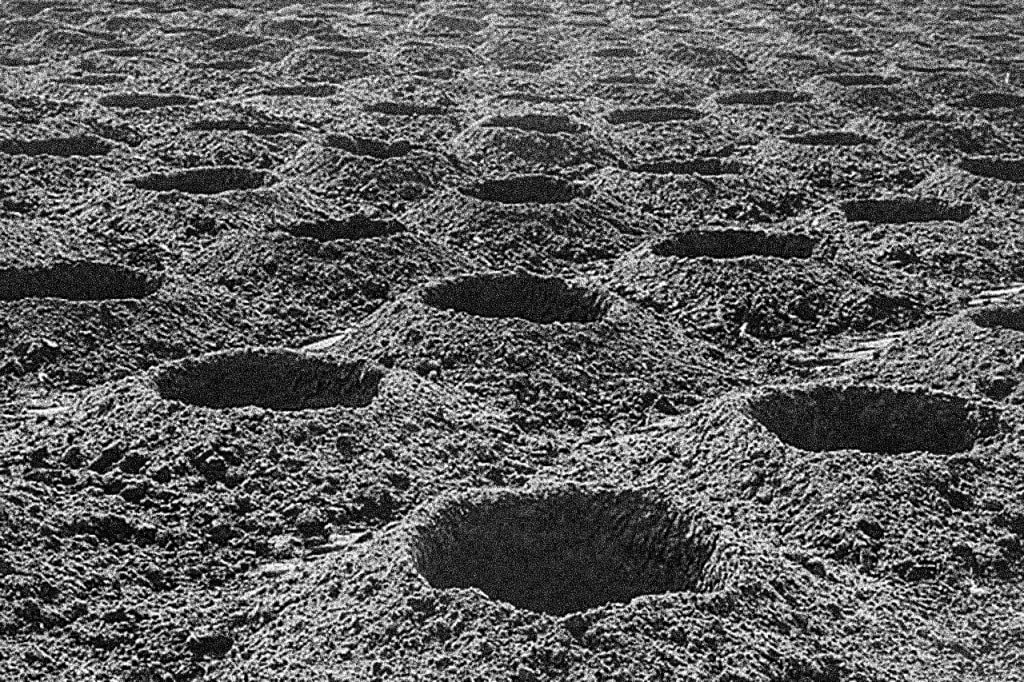
Let me tell you something radical, little one. At dawn—some time between 1955 and 1975—a little Vietnamese girl keeps herself hidden, watching her Vietnamese mother work in the yard. The mother has pinned up hair, and she is holding a shovel that stands taller than her. Though the weight of the shovel makes the mother look faded, the girl is not afraid because memories do not decay over time like photographs left in sunlight. The mother pierces the earth with a shovel, and the tip of the spade falls through the earthen crust like butter. Edges curve open, flowering. The mother drops the shovel and begins digging with her bare hands like a dog. Earth so supple and so wet; so warm and so loose; loose like fresh snow; but not cold; the soil is warm like a furnace.
It's not long before the mother is standing over a cranium, and she begins to ferry valuables from their home. A wooden chest filled with gold accumulated over generations. A rice bag filled with more gold—surplus. Mother of pearl jewelry cases filled with gold necklaces inherited from mother to daughter, mother to daughter, mother to daughter, et cetera. The mother holds them over the crater, stalling, but eventually lets go because they are too heavy. When she has dropped all the chests and cases and there are only loose gold items, she carries them with her muddied hands, telling herself that she can tarnish them because they will be buried in the Earth anyway.
The mother forms a cycle in her burial, preserving order; she saves her most precious item for last—jade earrings her grandmother gave her before she passed away. She wraps them in a piece of leather and ties them with a string as if she can make an engram more permanent with threads. The girl watches her mother, sees the gold glint and shift under the sun like firing synapses, and the mother continues the cycle, becoming mindless. When there are no more things to bury, the mother jumps into the hole and begins tying threads around and through the golden items. After she is finished, the entanglement resembles the scribble of a mad child. The mother pulls herself out of the ground, and the edges of the hole collapse under her hands, deflowering. Dirt settles; the Earth lets out a groan.
The mother begins shoveling soil back on top, and the wooden chest filled with gold plus the rice bag filled with more gold plus her mother of pearl jewelry cases filled with gold necklaces plus the strings plus the unearthed soil form a mound. An Earthy womb. Then the mother taps the ground with her shovel, packing it tight. When she is finished, she whips her head up, then in a circle, then stops, marking a dense grove of bamboo with her eyes, as if one day some of the stalks would fall away leaving just one to stand tall and look like a lighthouse. I used to know a dog who liked to bury rocks, but I never saw the dog return to them. Maybe the mother hopes the sack of gold will resurface when she needs it.
The mother walks out of the sunlight, striking her tool into the earth again. Gravity centers the shovel, and when it can stand alone, the mother lets go; her form solidifies, and she no longer looks faded. The mother walks away, remembering to forget about the gold. The mother walks away, and the Earthen womb is no longer there; the daughter remembers—remembers not the gold, but the burial. And when the mother walks away, she has spared herself from becoming overfit.
About the Creator
Otto Do
Otto Do is an Taiwanese-Vietnamese American writer and senior at Phillips Exeter Academy. He is currently working on a collection of short stories, titled Because We Grieve. He grew up in Los Angeles, California.
Enjoyed the story? Support the Creator.
Subscribe for free to receive all their stories in your feed.
Comments
There are no comments for this story
Be the first to respond and start the conversation.