

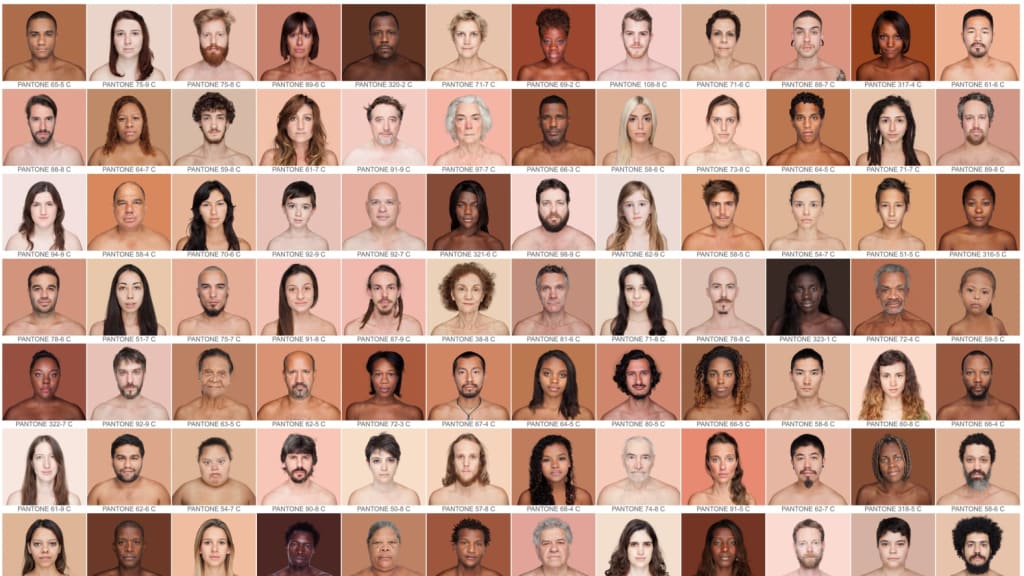
Norma Gardener woke up, sat up in bed, and rubbed her eyes. Then she rubbed them again. “Howard,” she said, nudging the snoring lump beside her in the bed. “Howard!” she repeated, a little louder. “Huh?” said Howard, articulate as ever. “Hey, Norma, turn the lights on.” “Howard, I can’t see,” Norma replied. “I CAN'T SEE!” When he tripped over his house shoes and crashed into the bathroom door, they realized that Howard couldn’t see either.
Down the hall in 12B Samantha O’Rourke was awakened by her room mate screaming from the next room. “Sam! Sam! Call 9-1-1! I can’t see!” Sam grabbed her phone, but it didn’t seem to turn on. She flipped the switch on her bedside lamp and that seemed to be broken, too.
In 4C, Rochelle Sterling’s alarm sounded. She was hoping to get an hour of writing in before the kids woke up. She picked up her phone to dismiss the alarm, but the room remained dark. She got out of bed, padded over the soft carpeted floor and switched on the light. Nothing. Panic rising, she walked to the window and pulled up the light-blocking shade. Either Chicago was in the most severe blackout she had ever experienced or something was very, very wrong with her eyes.
In 9D, Yolanda Wilson woke up and jumped out of bed. Today was Juneteenth! She’d taken the day off from work to attend the family party at her grandmother’s house. It had been fine with her boss; work had been slow that spring. There hadn’t even been much of a flu outbreak that winter. Chicago seemed remarkably calm and healthy.
Juneteenth celebrations always included red velvet cake, her Uncle Isaiah’s pulled pork, and bright red Watermelon Hibiscus Whiskey Punch that her cousin Chantal had invented in her wilder days. So after work yesterday Yolanda had come home and made a batch of her black-eyed peas with bacon to bring. It was not until she was getting dressed that she remembered the ceremony.
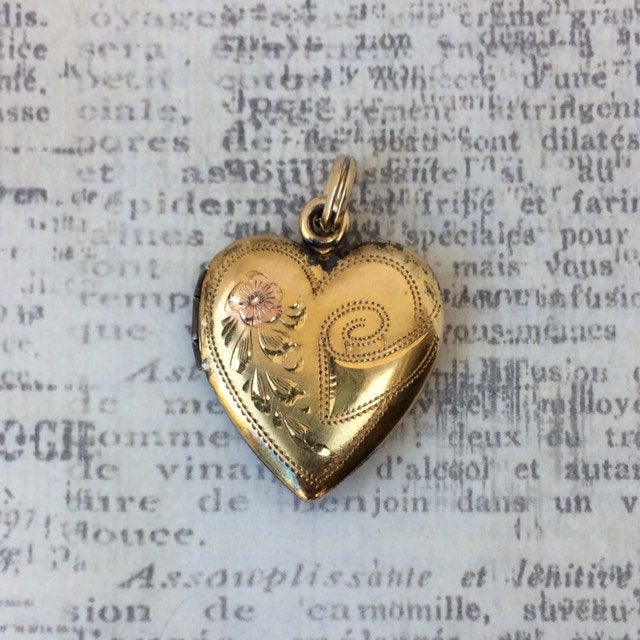
Sometime during the 1860’s her great great great great great grandmother, Juba, who had been enslaved, had been given a tiny gold heart-shaped locket by the plantation owner because she was “his favorite.” Regardless of the monetary value of the trinket, nothing could make up for the abuse she suffered at the hands of a man who viewed her as a subhuman plaything. For the family, the locket’s true value was in its provenance. When Juba was finally freed on July 19, 1865, she walked away from the sugar plantation just south of the Brazos River with just the threadbare clothing on her back and the locket. It had been passed from eldest daughter to eldest daughter for six generations. The passing was a way to honor the women who had come before, and to remind the recipient that she was part of a long line of courageous, intelligent, determined women. Today, the locket was to become Yolanda’s. She was the seventh generation.
Yolanda rode the elevator down to the lobby, which seemed unusually empty. Where was everyone? She pushed through the set of doors and headed down to Chicago French Press. As she walked the twenty steps to the coffee shop, she looked around. There were cabs and lots of food carts; the aroma of tamales wafted her way. But the sidewalks were almost empty.
In the coffee shop Yolanda was surprised to see the owner Kris behind the counter, creating milk-foam designs on mugs of cappuccino. She smiled at Yolanda in greeting, and when it was her turn to order shrugged and said “none of the kids showed up today."
Coffee in one hand, Tupperware bowl of beans in the other, Yolanda walked to the EL, climbed the stairs to the platform, and waited for her train. The crowd looked more like an HBCU graduating class than a downtown Chicago stop. There were Black folks, Asians, Latinx, and even an indigenous American guy over in the corner. But no white people. What the heck?
When the family had all arrived at her grandmother’s house, they compared notes on the strange things they had seen that morning. It was troubling. They picked at their food, and the locket ceremony was short and perfunctory. With less enthusiasm than usual, they recited the names of their ancestors, beginning with Juba who had been born (they thought) in 1846, all the way through Yolanda’s mother, Deja Davis Wilson, born in 1965. After that, they simply handed the necklace to Yolanda and turned their attention to the TV.
They tried to find news but instead most stations were running pre-recorded shows, with a one-minute live news update at the top of each hour. Each newscast was hosted by a Person of Color, standing alone in a bare studio. Fox had stopped broadcasting completely; it was rumored that their one Black newscaster had not been trusted with a key, and so could not get into the studio. They tried the radio; NPR was broadcasting news ten minutes of every hour; with the same eight (non-white) anchors rotating through. The online news was no more informative. There were unsubstantiated reports of mass blindness all over North America, Australia, parts of Europe, and South America. Africa and Asia were not reporting anything about sight, or lack of it. The reports gave very little information.
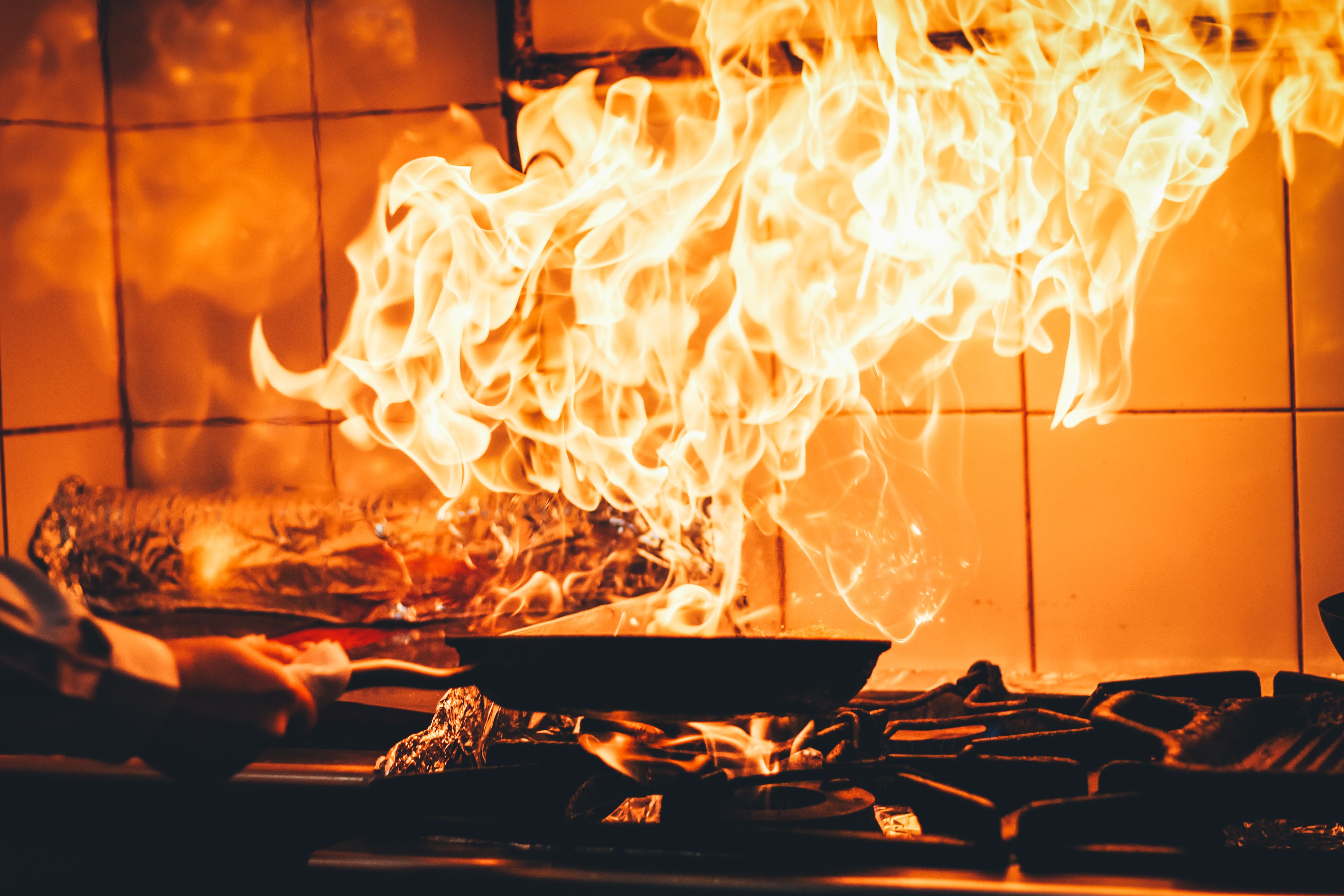
There were a slew of pedestrian-caused automobile accidents, and deaths from injuries caused by falls down stairs, or into culverts. Folks were unable to take life-saving medication because they could not tell what was in each bottle. Couples left their homes seeking help from neighbors but got lost. No one could cook without setting themselves or their kitchens on fire; they couldn’t tell what was inside cans without opening them. All white people.
By 10:00 a.m., the City Council had been gaveled into an emergency session. The 20 members of the Chicago Aldermanic Black Caucus and the 11 Latinx aldermen were there. But the large room was half empty. There was a startling lack of white faces. This, of course, caused profound concern; at the same time they had never felt so visible.
One of the Council’s actions was to contact the ACLU; someone had to get to the jails and prisons so that those incarcerated didn’t starve to death waiting for guards who weren’t going to come. The release of prisoners charged with non-violent and drug-related offenses was prioritized. These newly released folks were then offered employment by the city Aldermen, who matched them to the myriad tasks overwhelming the council. The Aldermen also reached out to the churches so that work could start within each community. In turn, the pastors called in the grandmothers, who knew everyone and everything, and were as accustomed to dealing with crises as they were with breathing.
Many businesses didn’t open. Most cabs and city buses seemed to be running. But pharmacies were mostly shuttered. There were very few Black firefighters, paramedics, 9-1-1 operators, ER docs, and not a single Black fire chief, creating a frightening vacuum in emergency services. Almost all of the banks remained closed and ATMs soon ran out of cash. Surprisingly, rather than causing a panic, most people remained calm and eventually worked out a barter system. While it wasn’t perfect, few were brave enough to cross the grandmothers.
Yolanda left the party early and went straight to Northwestern University’s Feinberg School of Medicine where she was on staff in the epidemiology department. As their skeleton crew (none of the white doctors or staff had come to work) pieced together the events of that day, they learned that white people had simply woken up blind. They had no vision at all, not even a sense of light and dark. It wasn’t cataracts, glaucoma, or anything to do with the cornea. It was some sort of virus that affected vision; the eyes simply ceased to take in and process images. The people affected had nothing in common except for their skin color.
What was especially troubling was that visual impairment in and of itself was not an overwhelming disability. Most folks who were blind from birth, or had developed it later, had received training. There were an extensive array of assistive devices and educational resources at their disposal; there were even canes with smartphone integration and sensors. But the newly blind, the seeing-one-minute-and-blind-the-next, had none of these advantages.
In the early days the virus seemed racially targeted. Sun exposure was considered as a cause. But then it was discovered that even people who spent their days in windowless rooms and never saw daylight were also affected. After working feverishly for 72 sleepless hours, the team at Northwestern finally discovered a link between the blindness and, of all things, melanin. Melanin! It appeared that those people with the least melanin were the most affected by the virus.
When her friends and family called searching for information, Yolanda tried to explain that “the darker your skin, the larger the pockets in your skin cells are, which contain the sticky pigment melanin. Very pale skin produces almost no melanin, while Asian skins produce a yellowish type of melanin, and black skins produce the darkest, thickest melanin of all.” Somehow, the melanin was acting as a natural defense to the virus.
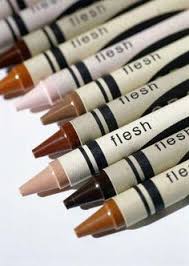
What was also interesting, Yolanda thought, were the varying degrees of blindness of bi-racial, Asian, Latinx and Middle-Eastern folks. It was such a difficult concept to fathom; while she knew it was about melanin, it looked like it was about "race." And for once, the blackest of Black people were on top.
It was incomprehensible, baffling. How does one deal with a reversal of fortune that benefits you but decimates the lives of others? Black and Brown people were overwhelmed and outnumbered, and ultimately had to prioritize their time. Each was encouraged to contact newly sightless people who were doctors, teachers, librarians, pharmacists, artists, scientists, journalists, historians, farmers, builders, engineers and others who had valuable knowledge that needed to be taught to those who could still see. A sort of Noah’s Ark of skills was created; white people with skill sets and education that POC had seldom been privy to or had been denied were now sharing what they knew. In exchange they were provided with assistance dealing with their sudden blindness.
The rest were simply left to cope as best they could; many died. It was an agonizing choice, but providing comprehensive assistance to hundreds of thousands of newly-sightless people was simply not possible. Those involved in the decision-making had nightmares for the remainder of their lives.
Years later, after retiring from her epidemiology work (with a specialty in the Juneteenth Virus, as it came to be known), Yolanda’s young grand-nieces and -nephews would ask her to tell the story of that long ago June 19th.
As she tried to set the stage, to tell them about what life used to be like, the peals of laughter forced her to pause. “White people used to SEE?” The children collapsed in a fit of giggles. This was clearly the most ridiculous thing they had ever considered. “Ok, OK, come on, you know white people weren’t always blind.” “Yeah, but it’s so crazy!”
She sighed, remembering that terrifying, confusing time almost twenty-five years ago, when cataclysmic change occurred overnight. Neither a cure nor a vaccine had been found. She touched the gold locket, and contemplated which niece to pass it down to. Or even which nephew. Because times had changed in every way possible. The Jim Crow world in which she had grown up no longer existed. The last really had become first. Those younger than she knew respect and freedoms that she had only dreamt of; even gender identity was no longer an issue. She gratefully acknowledged that somehow, the world had righted itself and the axis on which it turned had adjusted to a truer north.
About the Creator
Alline Anderson
Displaced Californian living at Dancing Rabbit Ecovillage. I dream of France. And Newfoundland. Collage. Dogs. Books. Cakes. Quilts, old & new. She/Her
Insta @MsMilkweed
www.amishquiltingbyhand.com
https://www.etsy.com/shop/MrsMilkweedsJam
Enjoyed the story? Support the Creator.
Subscribe for free to receive all their stories in your feed.
Comments
There are no comments for this story
Be the first to respond and start the conversation.