
town crier
“A forgotten voice, a final warning, and the silence that cost everything.”

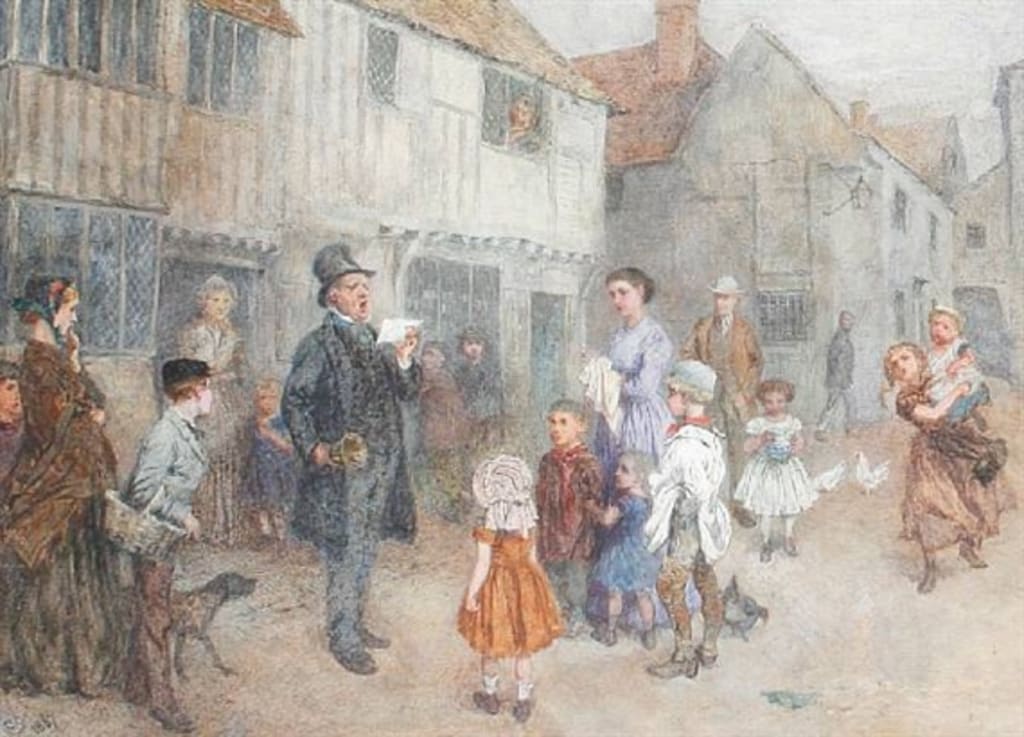
Every morning, he shouted the news. Every evening, people laughed at him. But on the day he stopped shouting… the town went silent. And by then, it was already too late.
In a small, dusty town, there lived an old man named Elias. People called him “the town crier.” He walked through the streets every day, ringing his bell. “News! Important news!” he would shout. But no one really listened anymore. Children mocked him. Shopkeepers ignored him. Teenagers recorded him and laughed. To them, he was just a joke. A man stuck in the past. Because now, everyone had phones. Notifications replaced his voice. Why listen to a man when your screen tells you everything? Still, Elias never stopped. Rain or heat, morning or evening, he walked. Bell in hand. Voice steady. Eyes tired.
One day, he shouted something different. “Danger is coming!” People paused for a second, then laughed. “What danger?” someone yelled. “Your old stories again?” Elias looked at them, serious. “No stories. This is real.” But no one cared. They went back to their lives—scrolling, talking, ignoring.
The next day, he shouted again. “Please listen! We are not safe!” Now people were annoyed. “Enough!” a shopkeeper snapped. “Stop spreading fear!” Even the town council warned him not to create panic. Elias nodded. But the next morning, he was back. Bell ringing louder. Voice shaking. “LAST WARNING!” This time, people got angry. Someone threw a stone near his feet. “Go home, old man! You’re crazy!” Elias stopped. For the first time, he didn’t argue. He just looked around—at the people, at the town, at the sky. Then he quietly walked away. And that was the last time anyone heard his bell.
Two days passed. No bell. No voice. No Elias. At first, people enjoyed the silence. “Finally,” they said. But then something strange happened. The network went down. Phones stopped working. No internet. No messages. Panic started slowly. “What’s going on?” People tried calling. Nothing. They checked the news. Nothing. For the first time, they had no information. No warnings. No idea what was happening. Then the ground shook—just a little, but enough. And suddenly, Elias’s words echoed in their minds: “Danger is coming.” Now it didn’t sound crazy. It sounded real.
The shaking grew stronger. Windows cracked. Walls trembled. People ran into the streets. Fear spread everywhere. “What do we do? Where do we go?” But no one had answers, because the only man who warned them was gone. A young boy shouted, “Find Elias!” A group rushed to his small house. They knocked. No answer. They pushed the door open. Inside, it was too quiet. Elias sat in a chair, still, eyes closed, the bell resting in his hand. He wasn’t shouting anymore. He wasn’t warning anyone. He was gone. On the table beside him was a piece of paper. Someone picked it up, hands shaking. It read: “I tried to tell you. The ground beneath us is breaking. Leave before it’s too late.” Outside, the earth roared. Buildings collapsed. People screamed. And in that chaos, one truth hit harder than anything else—they had ignored the only voice that cared.
The town never fully recovered. Some survived. Many didn’t. But one thing changed forever. They built a small statue in the center—an old man holding a bell, looking forward. Not as a joke, but as a reminder. Because sometimes the loudest warnings are the ones we ignore. And sometimes the people we laugh at are the only ones trying to save us. Lesson: Don’t ignore voices just because they sound different. Truth doesn’t always come from the crowd. Sometimes, it comes from the one person brave enough to speak when no one wants to listen.
thanks for the reading If you liked this, you can add your Insights, Comment, leave a Heart, Tip, Pledge, or Subscribe. I will appreciate any support you have shown for my work.
About the Creator
Enjoyed the story? Support the Creator.
Subscribe for free to receive all their stories in your feed.
Comments
There are no comments for this story
Be the first to respond and start the conversation.