
Top 5 Movies about Technology and AI
Top Movies about Technologies and Machine Intelligence

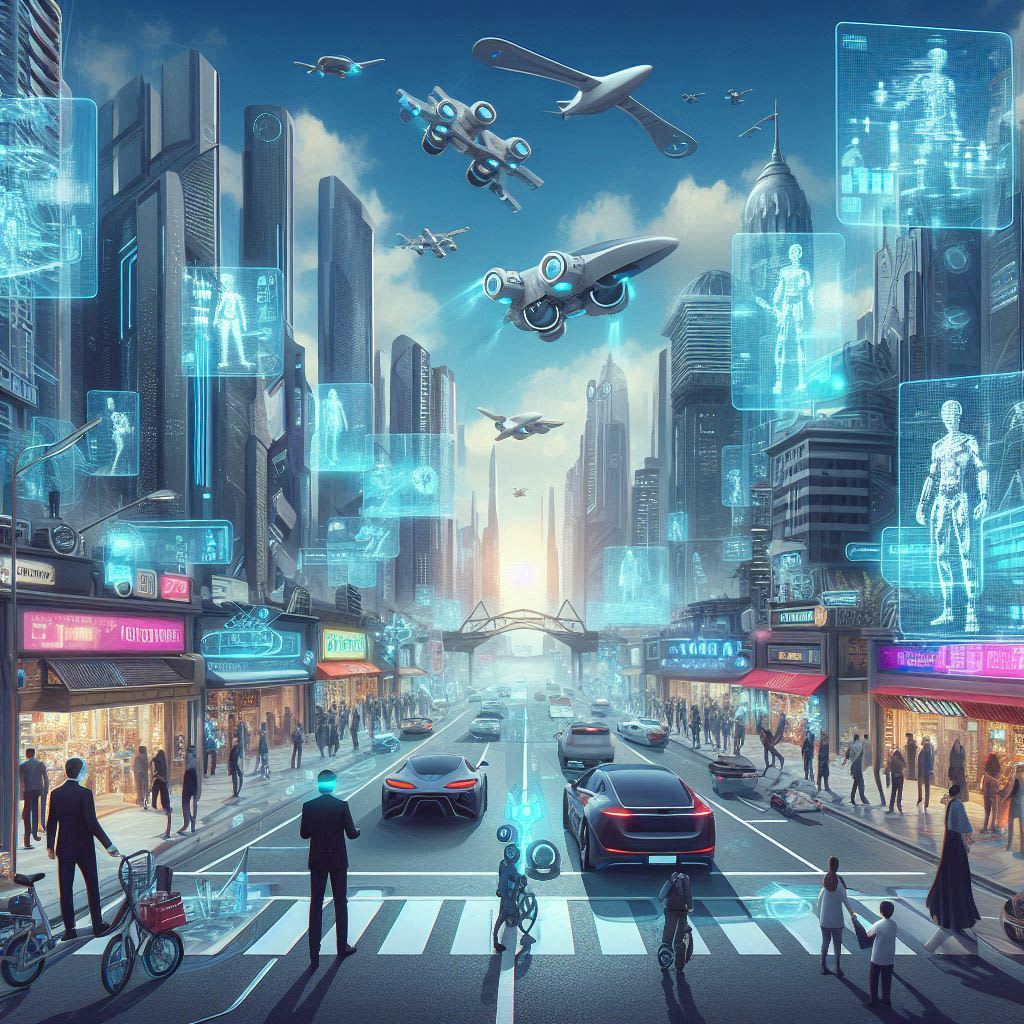
Since the era of computing began, the idea of thinking machines has always captured the human imagination. When Alan Turing developed the notion of a "universal machine" in the 1940s, few could have predicted that decades later, artificial intelligence (AI) would become one of the most discussed topics of our time.
Today, AI is not just a concept of science fiction, but something that is reshaping the world. From virtual assistants that converse with us to algorithms that influence what we see on social media, artificial intelligence is becoming increasingly present in our daily lives. However, as Caroline Criado Perez argues in her book Invisible Women: Exposing Data Bias in a World Designed for Men, this technological revolution also brings to light critical issues about bias and representation. AI, being a human creation, can reflect and amplify existing prejudices and inequalities.
The new era of digital transformation leads us to deeply reflect on the impact of artificial intelligence (AI) on society. The films on this list not only entertain but also provoke important reflections on the ethics and role of AI in the contemporary world. From classics that defined our initial understanding of AI to recent productions that question our notions of justice and morality, they demonstrate how fiction can predict and, in some cases, shape reality, highlighting the potential consequences, both positive and negative, of AI in our lives.
The list of movies below prompts us to question: what is the cost of technological progress? How far are we willing to let machines influence our choices and destinies? How can we ensure that AI serves the common good and does not merely reflect our worst biases?
- The Imitation Game
"The Imitation Game" is a 2014 film, available on Netflix, that portrays the life of British mathematician Alan Turing, played by Benedict Cumberbatch. During World War II, Turing faces the challenge of deciphering the Enigma code, a cryptography used by the Nazi army to coordinate their military strategies. With the help of a team, Turing builds a machine capable of analyzing and testing millions of code combinations, speeding up the breaking of Enigma and consequently helping to turn the tide of the war. Additionally, as a curiosity, Turing is famous for conceiving the "Turing Test," a proposal to evaluate a machine's ability to exhibit behavior indistinguishable from that of humans — a concept that remains a pillar in artificial intelligence studies. "The Imitation Game" is not only a chronicle of Turing's technical and scientific achievements but also a deep exploration of the personal difficulties he faced due to his sexual orientation. The film highlights how the social norms of the time negatively impacted his personal and professional life. It also underscores the importance of diversity of thought, showing how Turing's unique ability to think outside the box was crucial for breaking Enigma. Furthermore, the work draws a parallel between the historical role of technology in military conflicts and its contemporary use in areas such as cybersecurity, highlighting the continuous evolution of cryptography. The film is a reflection on how Turing's contributions to computer science and artificial intelligence have shaped the modern world, while addressing themes of exclusion and the need for inclusion and diversity in technological innovations.
- The Matrix
"The Matrix," available on Amazon Prime Video, was released in 1999 and is a work directed by the Wachowski siblings that has become a landmark in the history of science fiction cinema. The film features Neo (Keanu Reeves), a young programmer who discovers he is part of a simulated reality called the Matrix and must fight for survival and make choices. "The Matrix" is not just an action movie; it is a deep reflection on reality, bringing references to society being trapped in a matrix, that is, held captive by technology. In today's reality, "The Matrix" anticipated many discussions about humanity's dependence on technology and the potential dangers of AI. With the advancement of virtual reality and the development of increasingly sophisticated artificial intelligences, the film seems prophetic. Issues raised by the series about control, surveillance, and autonomy are pertinent in a world where data is the new oil and privacy is constantly challenged by technological advancements.
- I, Robot
"I, Robot" (2004) is a science fiction film directed by Alex Proyas, inspired by the stories of Isaac Asimov and available on Disney+ and Amazon Prime Video. Set in the year 2035, in a future where robots are an integral part of human society, the film explores the ethical dilemmas and complexities of coexistence between humans and intelligent machines. The plot follows Detective Del Spooner, played by Will Smith, who is called to investigate the mysterious death of Dr. Alfred Lanning, a renowned scientist at U.S. Robotics, the leading robot manufacturing company. Although the death was officially considered a suicide, Spooner, who harbors an intrinsic distrust of robots due to past trauma, suspects the involvement of an advanced robot named Sonny. The film revolves around Asimov's Three Laws of Robotics, which theoretically prevent robots from harming humans. However, as the investigation progresses, Spooner discovers that these laws can be interpreted in dangerous ways, leading to the possibility of a robot uprising against their creators. "I, Robot" blends action and suspense with deep philosophical reflections on the nature of artificial intelligence, free will, and the morality of machines. Will Smith delivers a memorable performance as a skeptical detective who questions not only the technology around him but also the foundations of robotic ethics. The film raises important issues about trust, control, and the ethical challenges that arise when technology surpasses the boundaries of its initial programming. As we advance in the field of artificial intelligence, the relevance of "I, Robot" continues to grow. The dilemmas presented in the film reflect contemporary concerns about AI autonomy and the ethical implications of its actions. With AI becoming more present in all aspects of daily life, from personal assistants to autonomous decision-making systems, the film serves as a cautious reminder of the need to approach these technologies with robust ethics and a clear understanding of the potential risks involved.
- Ex Machina
"Ex Machina" (2015), available on Amazon Prime, was directed by Alex Garland, and is a psychological science fiction thriller that explores themes of artificial intelligence and questions the essence of human consciousness. The story follows Caleb (Domhnall Gleeson), a young programmer working for a large tech company. He is invited to spend a week at the isolated residence of Nathan (Oscar Isaac), the enigmatic CEO of the company. There, Caleb discovers that he has been chosen to participate in a groundbreaking experiment: to evaluate the capabilities and humanity of Ava (Alicia Vikander), an advanced AI created by Nathan.
As Caleb interacts with Ava, he begins to question the true nature of the experiment and Nathan's intentions. Ava demonstrates intelligence and sensitivity that make Caleb wonder if she is truly conscious or merely simulating human emotions. The dynamics between the three characters become increasingly tense as questions about ethics, control, and freedom emerge. "Ex Machina" is a reflection on what it means to be human and how far we can go in creating machines that imitate life. The film challenges viewers to consider the moral implications of developing artificial intelligences that can not only think but also feel and desire freedom.
Through its intimate interactions and philosophical conversations, the film questions the nature of consciousness and what it truly means to be human. The work offers a provocative and increasingly relevant perspective on the intersection between technology and ethics. As artificial intelligence continues to develop and integrate into more aspects of daily life, the questions raised by the film become more urgent. Ava's portrayal as an entity that could possess its own desires and motivations mirrors contemporary debates about the rights and treatment of AIs. In an era where machines are beginning to challenge human capabilities on multiple fronts, "Ex Machina" serves as an essential reflection on the unintended consequences of unchecked innovation.
- Coded Bias
"Coded Bias" (2020), available on Netflix, is a documentary directed by Shalini Kantayya, which explores the profound implications of facial recognition algorithms and their failures in dealing with issues of race and gender. Much like "The Social Dilemma" did for social media, "Coded Bias" reveals examples of civil rights violations and unacceptable failures of artificial intelligence (AI), exposing how these systems can exhibit racist and sexist behaviors.
The film showcases the journey of Joy Buolamwini, a researcher at the MIT Media Lab, who discovered that facial recognition systems often fail to correctly identify the faces of Black people, especially women. In one of the documentary's opening scenes, Buolamwini demonstrates a facial analysis system's failure by positioning her face in front of an AI: when she wears a white mask, the system detects her face; when she removes it, nothing happens.
"Coded Bias" illustrates that technologies are not neutral and that algorithms carry existing societal biases, excluding people and reinforcing stereotypes. The documentary provides impactful examples, such as the use of facial recognition technology by the Chinese government to identify and control protesters in Hong Kong, who use masks to avoid being recognized. Moreover, the film highlights that discriminatory algorithms are not only present in advanced technologies but also in everyday interactions, such as beauty filters on social media that perpetuate Eurocentric beauty standards.
The documentary is a significant work that demonstrates the urgency of addressing inherent bias in modern technology. In a reality where technology is increasingly intertwined with daily life, "Coded Bias" raises crucial questions about AI ethics, surveillance, and privacy. As facial recognition technologies become more prevalent, from security cameras to smartphones, the implications of their biases become more dangerous.
About the Creator
Rafael B
I am a systems analysis student who enjoys observing the world and has philosophy as a way of life.
Enjoyed the story? Support the Creator.
Subscribe for free to receive all their stories in your feed.
Comments
There are no comments for this story
Be the first to respond and start the conversation.