
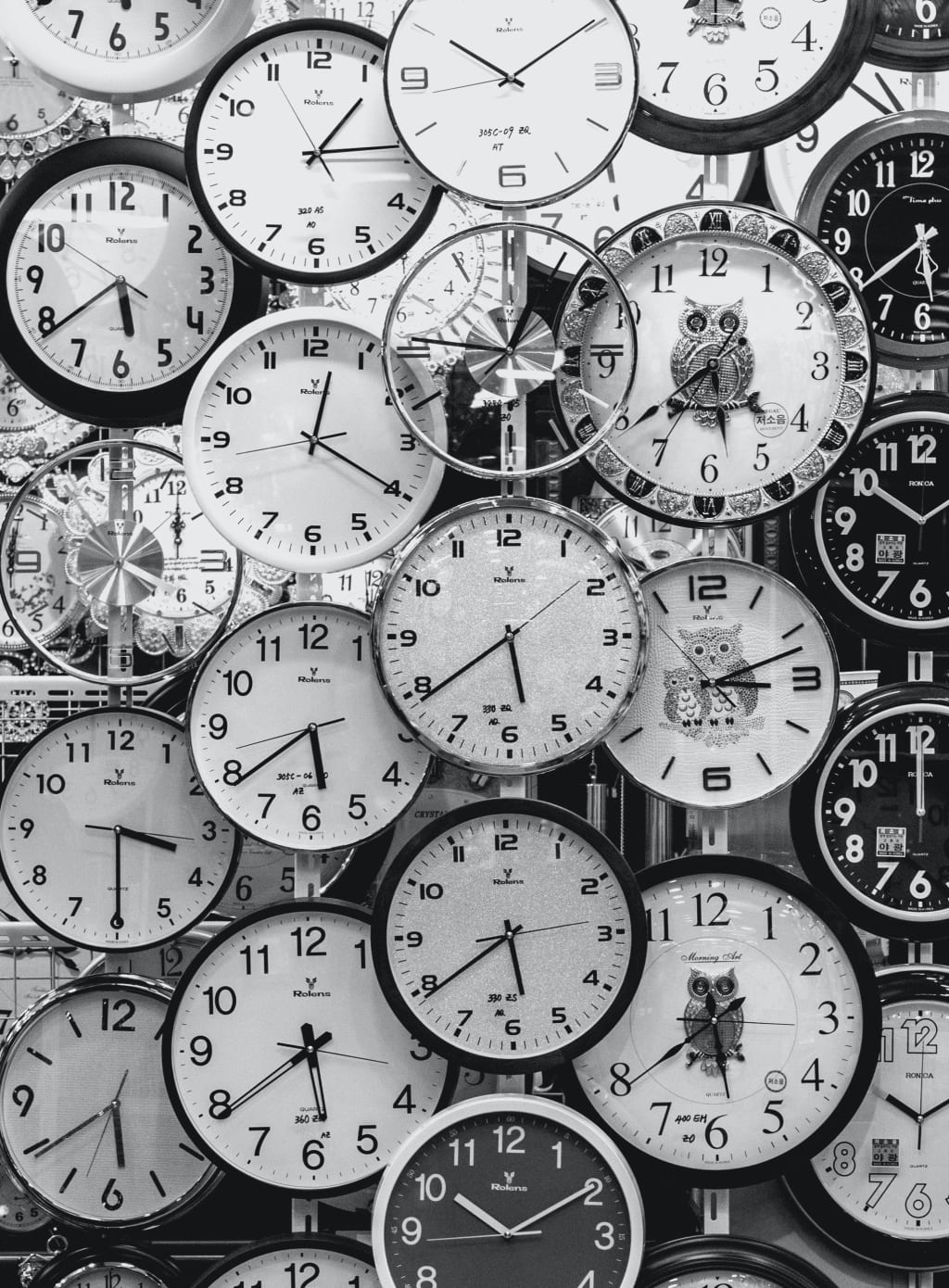
Have you ever dreamed of time travel? We all might have. Maybe you want to go back in time to witness historical events or change something. Or perhaps you're curious to see how the future unfolds. Time travel has been a popular topic in science fiction, exploring the advantages and risks associated with it. But is time travel actually possible? And if it is, what would we need to achieve it?
To understand time travel, we must first grasp the concept of time. Classical physics viewed time as an independent entity that exists uniformly for everyone in the universe. It progresses at a consistent pace, with causes always preceding effects. However, this understanding doesn't hold true in all situations.
Einstein's theory of relativity revolutionized our perception of time. According to this theory, time is part of a four-dimensional space-time continuum and can be influenced by various factors. For instance, objects moving at high speeds experience time dilation, causing them to age slower than objects with less velocity. Gravitational fields also affect the passage of time. An astronaut orbiting the Earth, for example, would age at a slower rate compared to someone on the planet's surface.
But there are even more intriguing consequences of Einstein's theory. Consider black holes, which possess immense gravitational pull. They are so powerful that light cannot escape their grasp, and time itself slows down significantly near them. If you were unfortunate enough to fall into a black hole, you would, in theory, witness countless years of events before meeting your inevitable fate. Escaping a black hole seems improbable, and so much time would have passed outside that life would be unrecognizable.
Another peculiar aspect of time relates to the speed of light. As an object approaches the speed of light, time slows down for it. This effect continues until it reaches the hypothetical maximum speed, where time appears to almost stand still. To illustrate, imagine a photon of light emitted by a star on the other side of the universe. Although it takes millions of years to reach Earth, for the photon itself, the journey is instantaneous. When traveling at the speed of light, time becomes neutral, neither moving forward nor backward.
If going faster than the speed of light were possible, it could potentially allow us to travel forward in time. By accelerating away from Earth and returning, many years could elapse without significant aging. However, going backward in time presents greater challenges. Some researchers believe that particles called tachyons, which have not been observed yet, could travel backward in time. Tachyons, if they exist, would defy the conventional notions of cause and effect.
Another concept explored is that of wormholes—tunnels in space-time that could serve as shortcuts between two locations at any given time. While the theory of relativity allows for the existence of wormholes, creating them would require vast amounts of energy and might lead to the formation of a black hole. There are also concerns about their stability and viability as time machines due to potential radiation feedback.
Various theories propose alternative ways to harness space-time for time travel. These include using lasers to generate extreme gravity, leveraging quantum physics to create quantum tunnels between universes, or exploring string theory to manipulate cosmic strings and black holes for temporal displacement.
In conclusion, time travel has captivated researchers and individuals alike for a long time. While it was once considered entirely impossible, our understanding of the universe has evolved over the past century. While it remains beyond our current capabilities, the laws of physics allow for the possibility of time travel. With further advancements, time travel may transition from fiction to reality in the future.
About the Creator
Enjoyed the story? Support the Creator.
Subscribe for free to receive all their stories in your feed.
Comments
There are no comments for this story
Be the first to respond and start the conversation.