
The Woman in Room 602
“Some patients leave behind more than a chart. This one never really left at all.”

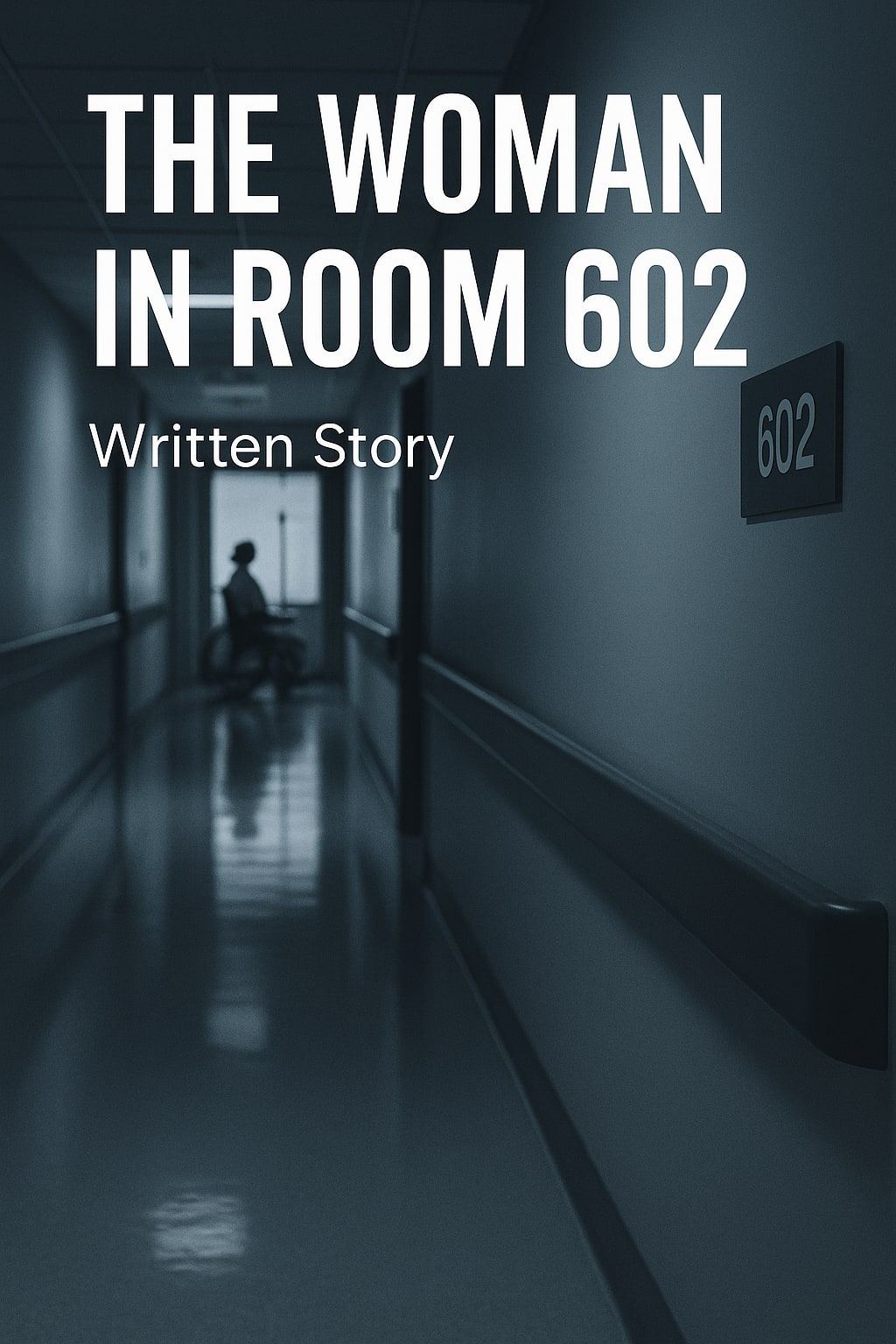
They said Room 602 was empty.
The chart was blank. The board showed no patient assigned. And yet every morning, when I passed her room on rounds, I’d see her — just sitting in the chair by the window. Pale blue gown. Grey hair swept into a bun. IV pole at her side but no tubing attached. She never looked at me. Just stared out the window like she was waiting for someone to return.
At first, I thought maybe someone was prepping the room for a transfer. Maybe one of the float nurses snuck a patient in before registration updated the board. It happens. But every time I double-checked, the answer was the same:
"No one’s in 602."
The ICU charge nurse even walked in there with me once. Flipped on the light. Empty. No signs of occupancy — not even a heartbeat on the monitor. Just the hush of the machine, the hum of air conditioning, and the faint smell of antiseptic. The chair was tucked neatly under the window. No indent in the cushion. Nothing.
But when I came back alone… she was there again.
I stopped telling people about it after that.
I tried to shake it off. Charting helped — it always does. I buried myself in Epic notes and neuro checks and titration logs. But still… the feeling clung to me. I’d be doing an assessment in 608, and the hairs on the back of my neck would rise, like someone was standing right behind me.
And then there were the patients.
One day, I was bringing Mr. Carson out of a propofol coma — slow, careful, watching his vitals like a hawk. He opened his eyes, blinked a few times, and whispered, "Where did she go?"
I thought maybe he was confused, or that he meant his wife — she hadn’t been in since his intubation.
But then he added, "The old lady. In the blue gown. She was praying for me."
I froze. "In this room?"
"No. The other one. The one with the humming."
He didn't remember anything else. Just that. A woman in blue. Sitting by the window. Praying.
Two days later, Mrs. Nguyen — a stroke patient in 605 — told me the exact same thing.
"She was in the hallway last night," she said. "Just walking. Very slow. She smiled at me. Then I blinked and she was gone."
I asked her what she looked like.
"She had white hair," she said. "Neat. Old-fashioned. Like a teacher."
She pointed out the window.
"She went that way."
I started digging through the old bed logs.
Room 602 used to be active — before the recent construction. There was a time when every bay in the north wing was full, especially during the first COVID surge. I found a list of old patients, and one name kept showing up: Lillian M., age 87. Transferred from long-term care, full code, died in 602 after three weeks on BiPAP.
I don’t know why that name stuck with me. Or why I swear I heard someone whisper it one night in the med room.
I do know that every nurse who’s floated through ICU eventually says the same thing:
"There’s just something about that hallway."
A week later, I had a float tech from downstairs. Her name was Carla, and she moved like someone who’d seen too much and didn’t have time for ghosts. I liked her.
But halfway through our shift, she came up to me looking pale.
"Room 602," she said. "Did you know there’s someone in there?"
I kept my voice steady. "There isn’t."
"No," she insisted. "I went in there to grab a pulse ox and this old woman smiled at me and said 'thank you, dear.' I left the room and when I turned back, she was gone. Just gone."
I took a breath. "Did she say anything else?"
"She said her name. Lillian. Said she hoped I didn’t forget her."
I couldn’t shake it anymore. I stayed after shift, waiting until the floor was quiet. The hallway lights dimmed. I walked toward 602 with a stethoscope around my neck, badge clipped tight, heart pounding.
The room was dark. The door creaked open with that soft resistance older hinges have. It was cold inside.
I stepped in. The chair by the window was empty. But the monitor — still unplugged — flickered faintly.
There, written in fog on the inside of the window, were the words:
"Thank you for seeing me."
I stood there for a long time.
I don’t know if ghosts are real. But I know the feeling of being watched. I know what it’s like to carry a room’s weight long after the bed is empty. And I know some patients leave a mark that medicine can’t explain.
I told the charge nurse I wanted to float less often. She asked why. I just shrugged and said, "North wing makes me tired."
Sometimes, though, I still pass by that hallway. And sometimes, I still see her.
Lillian, in her pale blue gown. Sitting quietly. Watching.
And this time, I smile back.
Submitted to the Fiction Community for Vocal's Summer Writing Series: "The Presence That Lingers."
About the Creator
Stephanie Dawn
Stephanie is a nurse, mother, and writer who explores the quiet weight of memory, resilience, and healing. Her stories draw from real moments and imagined echoes — where grief, grit, and grace meet.
Enjoyed the story? Support the Creator.
Subscribe for free to receive all their stories in your feed. You could also become a paid subscriber, letting them know you appreciate their work.
Comments