
The Surprising Origins of Five Iconic Disney Films
"From Grimm Tales to Animated Classics: The Untold Stories Behind Disney's Magic"
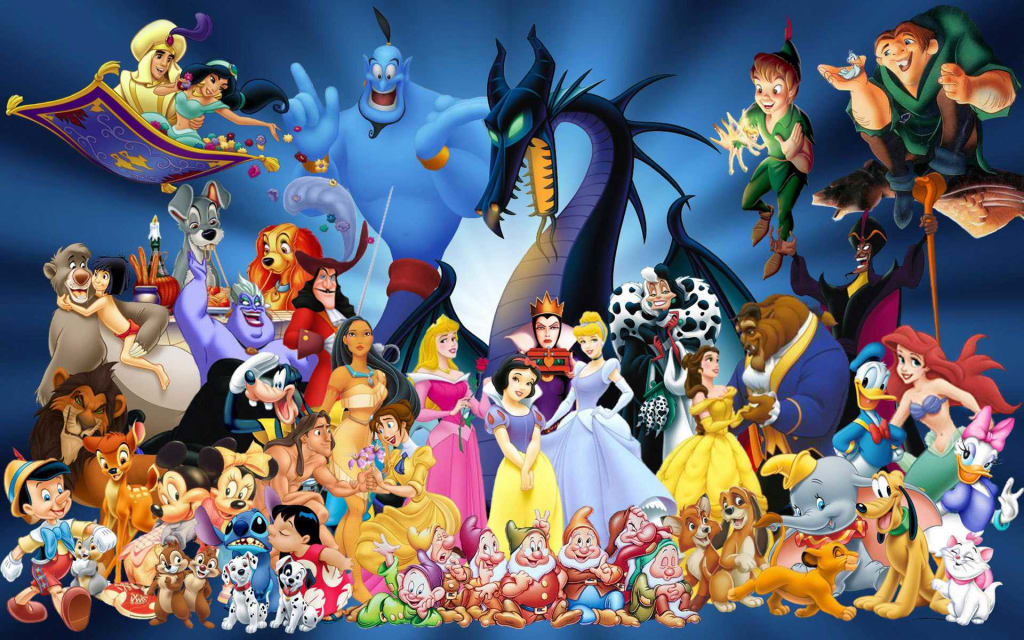
The Walt Disney Company is one of the most beloved storytellers in the world, enchanting billions of people through their magical films. However, some of Disney's most famous stories are based on real events and darker tales that might not have made suitable children’s movies without significant changes. Let’s explore five Disney films and the surprising, sometimes unsettling, origins behind them.
1. Snow White and the Seven Dwarfs
Disney’s 1937 classic *Snow White and the Seven Dwarfs* was a groundbreaking film and introduced the first Disney princess. The story of Snow White is familiar: a jealous stepmother orders her death, but the princess escapes, lives with seven dwarfs, and eventually awakens from a poisoned sleep when kissed by a prince.
The original version, however, is far darker. Written by the Brothers Grimm in 1812, Snow White's tale ends with a gruesome punishment for the Evil Queen. After Snow White's revival—caused not by a kiss, but by the prince accidentally dislodging the poisoned apple—Snow White and the prince host a grand wedding. The Queen unknowingly attends, only to be forced into red-hot iron shoes and made to dance until she dies. This grim conclusion was wisely omitted from Disney’s adaptation.
2. Pocahontas
Disney’s *Pocahontas* (1995) is one of the most controversial entries in its princess lineup, as it drastically romanticizes historical events. In the film, Pocahontas, the daughter of a Native American chief, falls in love with British Captain John Smith, defying her father and fostering peace between their people.
In reality, Pocahontas, born around 1595 and named Matoaka, was only about 10 years old when she met Smith. Historical accounts suggest she may have saved him from execution, but there was no romantic relationship. Later, she was captured by English settlers and married tobacco planter John Rolfe, becoming the first recorded marriage between a Native American and a European. Tragically, she died in England at just 21, possibly from poisoning, though this remains unproven. The Disney version barely scratches the surface of this complex and somber history.
3. Tangled
Disney’s Tangled (2010) reimagines the classic story of Rapunzel with lighthearted adventures and a love story. Rapunzel’s magical golden hair, a villainous “Mother Gothel,” and a daring thief-turned-prince make for a perfect family movie.
The original Grimm tale, however, is much darker. In it, a couple steals a Rapunzel plant from a witch’s garden, and as punishment, they must surrender their baby to the witch. The child grows up in a tower, where she falls in love with a visiting prince. When the witch discovers their romance, she banishes Rapunzel to the wilderness and blinds the prince. After wandering for months, the prince reunites with Rapunzel, whose tears miraculously heal his blindness. The witch, meanwhile, is trapped in the tower forever. While the story concludes on a positive note, its grim details are far from Disney’s whimsical approach.
4. Pinocchio
Widely regarded as one of Disney’s greatest films, *Pinocchio* (1940) tells the story of a wooden puppet who longs to be a real boy. Guided by Jiminy Cricket, Pinocchio faces challenges, learns lessons, and ultimately proves his worth to become human.
The original *Adventures of Pinocchio* by Carlo Collodi, serialized in 1881, is a much darker tale. Pinocchio is portrayed as mischievous and disobedient, often facing dire consequences for his actions. He kills the talking cricket (a far cry from Jiminy Cricket’s sage guidance) and is subjected to starvation, torture, and even attempted execution. Originally, Collodi intended to end the story with Pinocchio’s death by hanging but was pressured by publishers to revise the tale into a happier one.
5. Winnie the Pooh
The adventures of Winnie the Pooh and his friends in the Hundred Acre Wood are charming and timeless. But the origins of A.A. Milne’s stories have a real-world connection. Winnie the Pooh was inspired by a bear named Winnie, a mascot for Canadian soldiers during World War I, who later lived at the London Zoo. Milne’s son, Christopher Robin, adored the bear and named his toy after her, sparking his father’s stories.
Interestingly, many believe the characters in *Winnie the Pooh* represent mental health conditions. For example, Pooh’s obsession with honey and impulsive behavior suggest ADHD, Piglet’s nervousness aligns with anxiety, Eeyore’s negativity reflects depression, and Rabbit’s compulsive organization points to OCD. While these theories remain speculative, they add depth to the beloved characters.
The Power of Storytelling
While Disney films are adored for their charm and optimism, their origins remind us of the complexity and sometimes darkness in storytelling. These adaptations transform grim tales and historical accounts into magical experiences, showcasing the timeless power of creativity and imagination.
About the Creator
Enjoyed the story? Support the Creator.
Subscribe for free to receive all their stories in your feed.
Comments
There are no comments for this story
Be the first to respond and start the conversation.