
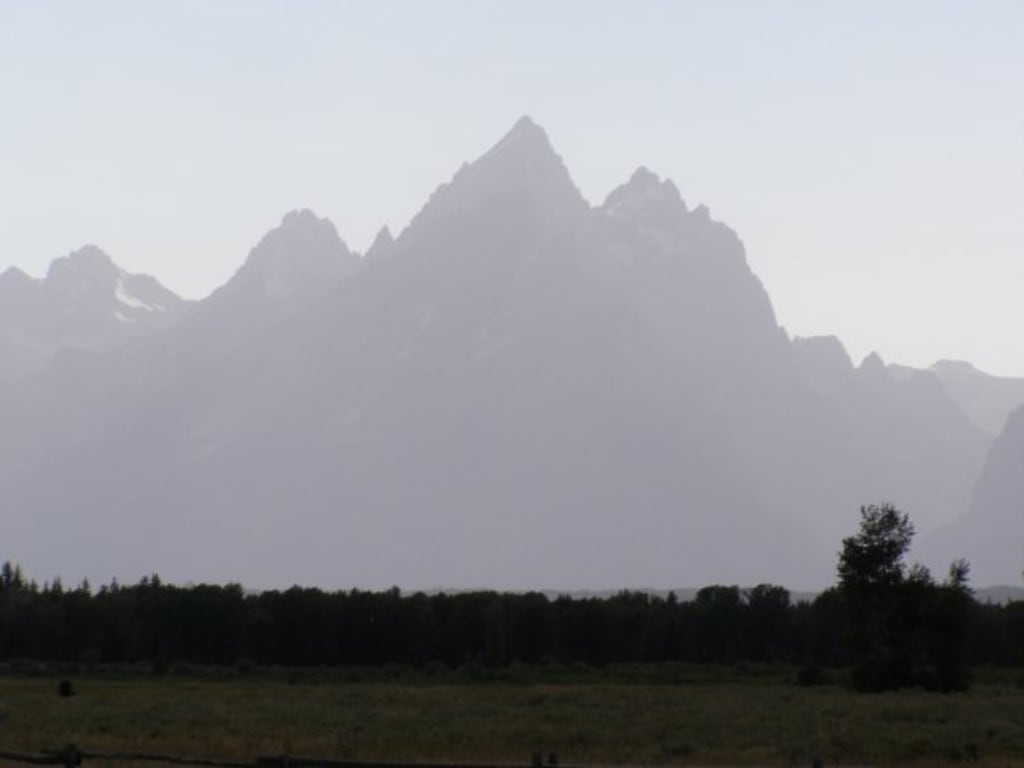
There weren’t always dragons in the valley. Nor were there any there now. But for one brief, glorious century, before the dragons vanished from the world, hundreds of dragons called Firetongue Valley their home. Visitors from across the realm journeyed countless miles to gaze upon draconic splendor and avail themselves of draconic wisdom, as carefree dragons danced twirled around the mountains. But those times were gone, and the world had changed much in the centuries that followed. Now those that visited the small, mostly uninhabited valley at the eastern edge of the world came for a different reason: to seek the Smith on the Mountain.
“Kalkeus?” Hodio’s voice echoed softly. The acoustics of the fortress were such that his whisper easily reached the workshop where Kalkeus sat at one of his many desks, meticulously tinkering with a clockwork lantern. “You were right, of course. They’re here.”
Kalkeus chuckled and put the lantern down. Rusty clockwork would have to wait for another day. He picked up his goggles—bronze, adjustable frames with magically-infused translucent emerald lenses, well-worn from constant use—and cleaned them absentmindedly. He sincerely doubted that he would need them, but he always wore them during the first meeting with prospective clients. As Hodio was quick to remind him (and as a cursory glance in the mirror would confirm) the image that Kalkheus evoked without them was more scholar than smith.
Kalkeus knew that when heroes, kings, mercenary warleaders, and avatars of gods sought out the smith who would forge them THE weapon, the one that would be associated with their names forevermore as they passed on into myth and legend, they did not expect to find that smith to be a short human man of unimpressive physique. They expected someone who more resembled the farriers and blacksmiths that could be found in village smithies throughout the land—huge men with bulging muscles and vicious burn scars, men who could pound out twelve nails a minute with naught but a hammer and the strength of their mighty backs. But Kalkheus was not a blacksmith or a farrier. His was a much subtler art, with little need for the swinging of hammers. Unfortunately, the differences between blacksmithing and his own craft were difficult to explain to the uninitiated, and first impressions were important. And so Kalkheus wore clothes that gave the illusion of broader shoulders, let what beard he could grow go bushy and unkempt, and kept an impressive set of bronze goggles on his forehead. While most of the scars that crisscrossed his reddish-brown skin were hidden by his clothes, one inevitably remained—a thin gash that bisected his right eyebrow and curled along the bridge of his nose. Kalkeus probably could have healed it or hidden it if he chose, but it was all part of the look.
Kalkeus placed the goggles on his forehead, twisting a small dial to increase the translucence of the emerald frames so that his own brown eyes were just barely visible behind them. He emerged from his study to find Hodio leaning against the wall, a smile playing at the man’s nearly-human features.
“I don’t know how you do it,” said Hodio. He absentmindedly adjusted the silver cylinder of armor that encircled his neck to protect his gills. The circlet was a necessity for any fluvian who chose to spend significant amounts of time on dry land, otherwise they risked severe irritation. “You were only off by… what, two days? Three? It boggles the mind.”
Kalkeus fiddled with his sleeves. “I listen, that’s all,” he said. “Heroism is not an individual decision, it’s a global reaction, as neat and predictable as a pendulum. A perfect world would have no need for heroes.” He held up his fingers one by one, checking off a list. “The poisoning of the wells in the Storkwood. Rumblings of ancient creatures stirring deep in the Quiverquill lakes. The emergence of a curse of undeath claiming entire towns in the southeastern swamplands. Unrest ripples through the realm, and heroes are the inevitable counterbalance.”
Hodio grinned widely now as he followed Kalkeus down the hall. “Why, it all seems so simple when you put it that way. And heroes are good for business, of course.”
“Among the best. How do I look?”
Hodio put both hands on Kalkeus’ shoulders, casting a critical eye over the state of his appearance. With a frown he brushed ash from Kalkeus’ waistcoat. “I wish you would let me buy you some new outfits next time I visit Tsogerab.”
Kalkheus scowled. “This garment is made from manticore leather soaked in the tannins of Ygdras trees. No flame can survive contact with the fabric, its mere scent will drive the undead mad, and a blade would have to be blessed by the spirits themselves to…”
“It looks like vomit.”
“…Well, perhaps there’s something to be said for investing in formalwear.”
Their voices echoed off cavernous walls as they strode through the Great Hall. The vaulted ceiling, nearly fifty feet above their heads, sported dozens of intricately carved tableaus spread across every available inch of stone. The tales they told were all but indecipherable now, heroes and villains alike forgotten to time. Massive stone pillars, each wider than five men standing abreast, framed the room in parallel rows. An ancient throne of granite and amethyst lurked gloomily at the opposite end of the hall, dusty with disuse.
Kalkeus and Hodio ignored the throne, instead skirting around it and exiting the hall through a small and unobtrusive door in the southwestern corner. They followed twisting pathways through the western wing of the fortress until they emerged onto what they informally referred to as the Greeting Platform. Once upon a time the platform had bristled with archers and catapults, prepared to decimate sieging forces in the valley below. Now one human and one fluvian, the only sentient beings to call the fortress home, sauntered casually to the guardrails and peered over the edge.
“That’s them down there?” asked Kalkeus, squinting at a handful of specks at the base of the fortress.
“That’s them,” said Hodio amiably. “What do you think?”
“Hmmm…” Kalkeus hummed. He reached up and twisted a dial on his goggles, wincing slightly as the magnification of the lenses over his eyes increased tenfold in the span of a heartbeat. “They seem likely suspects. Colorful crew. Been at this for a little while now, I’d say.”
“Colorful indeed,” agreed Hodio. There seemed to be a representative from half the major races of the realm. A female human with dark red hair sat cross legged on the ground next to a dryad with skin the color of vibrant moss, speaking softly with their backs against an upturned tree. A sauran stood off to one side—likely one of the tree-climbing Gecko Tribe based on his large eyes and colorful scales—and glanced anxiously up at the fortress every few seconds. A boletian, most massive of the Mushroom Folk, towered over the rest of its companions, his enormous reddish-brown cap scarred and split from old battle wounds. A strange lump on its cap that Kalkeus initially took to be some sort of growth coughed lightly and cleaned one mandible with a clawed pincer, revealing itself to be one of the furtive, chitinous race known as the malacostracs. The Malacostrac said something to the last companion, a blue-and-black-feathered member of the Avianfolk, who opened her beak in what Kalkeus assumed to be a laugh. "Shall I bring them up?” asked Hodio.
“Not all of them,” said Kalkeus. “Just in case. Take Aberys and invite two of them to join us, but let them decide who they wish to send.”
Hodio smiled in agreement and clapped Kalkeus lightly on the shoulder. “I’ll be back in a moment then.” He sprang away and cheerfully whistled a series of seven notes into the sky. Nothing happened.
Kalkeus arched an eyebrow. “She’s slow.”
“Maybe she’s sunning herself on one of the outer turrets.”
“Or maybe she’s finally had so many bloodcakes that her wings can no longer lift her from the ground.”
Hodio’s smile didn’t falter. If anything, it grew wider. “Careful with your blame, oh judgmental one. Not all of those cakes come from me.”
Kalkeus opted to remain silent.
Finally, the sound of wingbeats met their ears, and the orange-scaled wyvern made an appearance. She beat her wings and hissed joyously at the pair of them as she landed upon the stone, rubbing her nose against Hodio’s shoulder in greeting.
“Hallo, girl,” said Hodio as he scratched the side of her neck. “How do you feel about taking a couple of passengers up to the fortress, hmm?” He leapt onto the multiseated saddle on her back, said a few quick words in one of the Riverfolk’s musical dialects, and then Aberys was off.
Perhaps fifteen minutes later, she landed on the Greeting Platform again, a little more heavily than she had left it. Hodio dismounted in a few easy steps, gracefully extending his hand to assist his passengers. The red-haired human woman and the dryad had apparently been elected as representatives, and Kalkeus took the opportunity to study the two more closely.
The human woman was young, perhaps in her early twenties, with hawklike features and quick grey-green eyes. She wore a deep brown cloak over simple hunter’s garb, an unstrung bow stowed in a quiver on her back. When she bent at the waist in greeting, Kalkeus noticed an ornate rapier, handle engraved with runes that may have belonged to any of a dozen ancient languages, hanging at her waist.
The dryad seemed young as well, although Kalkheus was not well-versed enough in the ways of the faerie folk to guess at her age. The moss-colored skin on her face was unlined, framed by long chestnut-brown hair and honest eyes. She wore the traditional garb of her people—flowy clothing of basic greens and browns, cut short at the arms and legs to avoid picking up mud and leaves in the forest. The coniferous needles embroidered across her shoulders marked her as one of the pine dryads, whose home trees grew in the cold northern forests. She was a very long way from home.
Kalkheus clasped his hands before him. “Welcome to the Fairweather Fortress. While it has a storied history, it is perhaps best known as the historic domain of Slorven the Uncouth, who administered his reign of terror not two hundred yards from where we stand. Thankfully, Slorven has been dead for many a century now, and Hodio and I try our best to be as couth as we can. I am Kalkheus, smith. What can I do for you?”
The dryad stared at Kalkeus in open-mouthed astonishment. “You? You’re the Smith on the Mountain?”
“Yes. I realize that “the Smith in the Fortress” would capture my essence more accurately, but I’m afraid I had little say in the nickname. There are mountains behind the fortress, at least. What can I do for you?”
“But… you’re human!” the dryad exclaimed. The redheaded woman elbowed her companion, but she seemed not to notice.
“Yes.”
“That can’t be! The Smith on the Mountain has been around for hundreds of years! My great-grandmother knew legends of him from when she was a child!”
“Yes,” said Kalkeus. He smiled blandly at them. “What can I do for you?”
The dryad gaped wordlessly. When it became clear no further explanation was to be offered, the human woman stepped in and took over.
“We are pleased to make your acquaintance, Smith Kalkheus. Pardon my friend. My name is Willow, and this is Mim. We’ve come to commission a weapon.”
Kalkheus nodded. “You’re in the right place, so long as you understand the gravity of your request. You say you know the stories of the Smith on the Mountain, but how much do know of the Code?”
“Little, truth be told,” said Willow. “We learned of your requirements and gathered components that we hope you will deem sufficient. We encountered one of your creations in the field and observed its capabilities firsthand. Apart from that, we know of you only by reputation.”
“Oh?” said Kalkheus, his interest piqued, “Which creation did you see?”
Willow scowled. “We don’t know. It was a long spear with old malac runes inscribed along the shaft. Whenever it struck earth it produced a deep, resonant sound, sort of like a gong. Thankfully the man wielding it was a buffoon, and we never learned the sound that it makes when it strikes flesh. We took it to a local sage for analysis, but he betrayed us and escaped with the weapon. We learned only that it was made by you.”
Kalkheus and Hodio exchanged a significant look. “The Lapis Lance. You should be thankful for your foe’s ineptitude. When used correctly it will turn all but the strongest-willed warriors to stone. It’s disappeared from rumor for nearly a century now… truth be told, I was ready to consider it lost to time. I’d be curious to know how your buffoon got ahold of it.”
Mim smiled grimly. “He may have fled, but he can’t run forever. I’ll be happy to let you know after we’ve wrung the answer out of him.”
“Much appreciated. Did you bring the components with you, or do we need to send Hodio to fetch them from your companions? And I’m afraid a lock of Mim’s hair won’t do, if you had that in mind. The magic of the pine dryads refuses to cooperate with metal and stone.”
Willow shook her head. “No, we brought them with us. Mim?” The dryad unstrapped her bag and drew three items out of it, handing each to the smith in turn.
The first was a purple stone the size of a wyvern egg, perfectly smooth and circular, like an amethyst variant on a fortune-teller’s crystal ball. It had been swaddled in some kind of wool or animal skin. Upon unwrapping it the reason for the covering quickly became clear—the purple sphere constantly emitted a low, buzzing hum. The noise struck something deep inside of Kalkheus’s primal soul, as though the sound was bypassing his ears and buzzing straight into his bones. “An Orb of Denial,” said Mim, “From the Age of the Komodo Dynasty however many hundreds of years ago. Can’t be more than a dozen left in the world. Until recently it guarded the door of a master assassin in Benegosta.” She wrapped the orb again and handed it to Kalkheus, who accepted it with a gracious nod.
The dryad handled the next package with the utmost care, as though fearing that any unexpected movement would cause it to shatter. Once unwrapped it was revealed to be a dried flower, strikingly beautiful, with colors that reminded Kalkheus of the warm glow of a dying sunset. “A Selenite Rose,” said Mim, “Dried for travel, but if you place it in a bowl of water and then allow the bowl to sit under the light of the full moon, it will spring back to life. They’re said to be the most potent source of lunar magic known to the modern world.” Kalkheus raised an eyebrow at the statement, but he accepted the rose without comment.
“And lastly,” said Mim, but she hesitated and glanced back at Willow, who nodded slowly. With a movement somewhere between a sigh and a shrug, Mim handed Kalkheus the last component. It was the smallest of the three, and by far the least visibly magical. “This… is a bracelet.”
“A bracelet?” asked Kalkheus. He kept his tone carefully neutral, betraying neither judgement nor surprise as he examined the small circle of metal While it seemed completely unremarkable at first, upon close inspection the bracelet did bear an engraving—a twisting tableau of leaves and vines.
“It doesn’t have a name,” said Willow quickly. “And I don’t think it’s very old. It was presented to us… well, to me… by The Hatted Folk of the northeastern fells. They told me it was made of silver sand from beneath the whirlpools of the Luminous Loch.”
“I see,” said Kalkheus. His voice revealed nothing of his thoughts. “What is its power?”
Willow and Mim both began to speak, interrupted each other, and both fell to thoughtful silence. Kalkheus watched them. When Willow eventually spoke again she did so slowly, each word chosen with care.
“I don’t know. I wish now that I had asked The Hatted Folk more questions when they gave it to me, but I was overwhelmed by their generosity and never thought to ask. I can promise you that it holds power, Smith, whatever its appearance. It… protects the wearer, somehow. Daggers meant for me have turned aside after striking it. It’s slipped off my wrist to the ground, only for an arrow to sing through the air over my head the moment I bent to retrieve it. I dropped a glass of poisoned wine that rubbed against my wrist. All of these things could be coincidence, but… I don’t think they are.”
“No, no,” murmured Kalkheus, turning the bracelet over in his hand. “Nor do I.” He took much longer examining the bracelet than he had the orb or the rose. He adjusted various dials on his goggles to peer at it through different magical aspects, occasionally removing them entirely to scrutinize it with the naked eye. He ran a thumb over the engraving, mumbling under his breath. Hodio, who understood Kalkheus’s moods, engaged the dryad and the human in polite small talk until the smith was finished. Finally, Kalkheus nodded and placed all three components into his own shoulder bag.
“Payment?” he asked.
Willow named a price that would have made a mid-sized governing body wince. Kalkheus nodded.
“Acceptable.” He withdrew six scrolls from his waistcoat, each covered top to bottom in miniscule writing. “Every member of your party needs to sign this contract before the work can begin. It elucidates a few matters regarding possession of the weapon, naming rights, non-replacement clause, a handful of natural realms that I am unable or unwilling to incorporate into any artifact—those mostly involve reincarnation, unrequited love, divine intervention, domains of that nature—one or two paragraphs that ensure my protection in our business, and other statements that may or may not be relevant to you and your party.”
“I can sum it up,” said Hodio with a lazy grin as he stroked Aberys’ muzzle. “He makes it. He names it. You lose it, break it, or let it get corrupted by some deep and unknowable power, that’s all your problem. And no refunds.”
Kalkheus ignored Hodio as his expression grew grim. “Now, I am going to ask you a few further questions. I want you to understand that the answers you give will have no bearing on whether or not I create your weapon, they are only intended to help improve its effectiveness. You may be the saviors of the realm. You may be self-centered mercenaries, selfish nobles, or vindictive tyrants. Or, as with most cases, your story may fall somewhere in between. It makes little difference to me. My job is to craft the weapon, and we are in business so long as you sign those contracts. That is the Code. Do you understand?” Mim and Willow nodded, their expressions grave, while Hodio hid a grin by leaning into Aberys.
“Good,” said Kalkheus, and he smiled. “So, first question. What do you intend to do with the weapon I create for you?”
Willow laughed a short, bitter laugh. “We need to kill a god.”
Kalkheus blinked. That was a new one.
Mim, perhaps sensing the smith’s hesitation, hastened to explain. “He’s not really a god,” she said. “He’s just descended from one, maybe. He’s really nothing more than a mortal playing up his heritage, but he’s rallied enough people and dark magic to his cause to be a serious threat to the stability of realm. We have the backing of significant leaders from several different races to come here today, including a few who typically have no interest in the workings of the world as a whole.”
“Forgive me my hesitation,” said Kalkheus with a small smile. “As I said, your purposes are not for me to judge. So, an aspiring god? And what race is our wannabe divine?”
Willow shrugged. “Hard to tell between the mask and the cloak. We’ve only actually seen him once, and we weren’t in any position to take notes. He’s about human size and stature though, so probably not one of the Mushroom Folk, the Malacs, the Crystal Kind, or the Oaken Folk. But who knows? Could be under some illusion.”
Kalkheus nodded, considering. “Hmm. Well, if we can’t get any hints of his race, let’s go for the source of his strength. You said he claims to be descended from a god? Which one?”
“Not one of the nice ones, if that’s your question. He is—or at least claims to be—a descendent of Opep, Lord of the Slit Throat,” said Willow.
Mim huffed disdainfully. “So not only a god, a dead god. Awfully convenient for him. No pre-existing cults to contend with.”
Kalkheus’s eyes twinkled, and Hodio smiled. Despite his vows of neutrality, Hodio could tell that the smith was enjoying today’s clients. “Yes, so it would seem. I may have more questions for you later, but that’s enough information to start with. Hodio and Aberys will help the rest of your party join us. You and your companions will be welcome guests of Fairweather Fortress until your commission is complete.”
“Ah,” said Willow, hesitantly. “I appreciate the offer, but I think we’ll have to refuse. Our friend Edulis is one of the boletians of the Mushroom Folk. I doubt your wyvern will be able to carry him. We’ll make camp down at the base.”
“It’s true that boletian transportation is not in the list of services that Aberys and I are able to provide,” said Hodio with a sober nod, “so you are welcome to stay below the fortress with your friend if you desire. Or,” he broke into a sly grin, “He could take the stairs around the back.”
#
Kalkheus made his way to one of the many workshops that were scattered throughout the fortress, the three magical components and six signed scrolls secure in the satchel at his side. Upon reaching the workshop of his choice he stepped inside, shut the door and took a small purple key from his pocket. He tapped the key lightly against the spot on the door where one would normally expect to find a keyhole. A noise like water crashing down a drain reverberated briefly around the room, then the door sealed with a satisfying pop. No one, not even Hodio, could enter the room now.
There were many secrets to Kalkheus’s craft, and he reflected on one of them as he turned the Orb of Denial over in his hands. For centuries now it had been known that in order to commission an artifact from the Smith on the Mountain, the client had to first bring him three magical items of respectable power. Kalkheus could, of course, infuse anything he created with magic himself, but to do so entirely from scratch required ungodly amounts of time, money, and energy. It was therefore inferred by others, although never outright stated, that he used the items provided by the client to instill baseline levels of magic in the resulting artifacts, and by manipulating the resulting cocktail of enchantments he was able to create wonderous relics in one-tenth of the time of the traditional methods. This was mostly true.
The secret known only to Kalkheus and a select few trusted friends was that he almost never used the exact set of items that his clients brought him. In the case of his current job, the Orb of Denial was worth precisely nothing. The magics encased in the orb were all about illusion, detection, communication, restraint, and restriction… Powerful in the right situations, but illusions wouldn’t kill a god, nor even a man pretending to be one. Kalkheus placed the Orb on a shelf in the back of his workshop, where it settled in to gather dust alongside two of its brethren. It was nice to get another one back, anyway.
On the other hand, they’d done very well to bring him the Selenite Rose. The Lord of the Slit Throat’s domain was that of the murder, arson, assassination, poisoning, and all manner of other malevolent deeds best done under the cover of a dark night. What better foe for a lord of the dark than concentrated moonlight? Kalkheus placed the dried rose in a bowl of clean water and carefully added a single drop of silver liquid from a beautiful crystal flask. It would take the better part of an hour for the flower to absorb enough water to return to life, but Kalkheus had plenty of work to address in the meantime.
He turned to the true prize of the trio. The bracelet. The magic of The Hatted Folk was notoriously fidgety to work with and extremely difficult to get ahold of. They were a clever and elusive people, very reluctant to share their secrets, and only the very confident (or very foolish) would try to relieve them of said secrets by force. A voice in the back of Kalkheus’ mind argued for keeping the bracelet for further study. Perhaps, given enough time, he would be able to reverse engineer its secrets and further his limited understanding of their methods.
But just as Kalkheus required that his clients sign their contracts, so too did he adhere to his personal Code. He always used the best components for a given job. While the exact nature of the bracelet’s magic was unclear to him, it was obvious that it was powerfully bonded to the young woman. Kalkheus had struggled not to let the resistance it caused show on his face when he’d walked away from Willow with the bracelet in his bag. Even now, the small circle of metal pulled him subtly in a direction that he assumed would lead him straight to her. That loyalty was a potent magic in its own right, a magic that he had no doubt would contribute to the resulting weapon’s power.
So, the rose and the bracelet. All well and good. But what to use as the base? It was in the contract that the client may place no restrictions on the exact nature of the weapon. Kalkheus cast his eyes overa the rows and rows of weapons that lined the shelves of his workshop, each unique in composition, many already magical in their own right. Kalkheus was not given to flights of fancy, but the sight of those shelves always made him feel a little uneasy. It was as though they whispered to him, each eager to become the next artifact of war to leave the fortress, all clamoring for blood. Kalkheus shook the whispers from the shadows of his mind and considered.
Lunar magic was picky about the metals that it would play nice with. Iron, steel, and gold were all out of the running, but silver and any bronze or copper alloy were possibilities. He would have to experiment with the bracelet a little bit to determine how the Hatted Folk’s sorceries would react to his materials. If the magic of the bracelet was incompatible with silver, bronze, and copper then he would need to consider using catalytic gemstones to smooth out the interaction.
In a sudden bout of inspiration Kalkheus turned to a certain shelf, and his eyes fell on a singular weapon, one that already had its own subtle enchantments, that he hadn’t considered in a long time. He lifted it easily off the rack and turned it over in his hands, running his fingers lightly and lovingly over it, lost in deep contemplation. On a hunch, he picked up the bracelet and touched it to the weapon.
The moment the two made contact, the bracelet hummed, a deep, rich sound that crawled through the smith’s fingers and reverberated into the air like a bard’s tuning fork.
Kalkheus smiled. Perfect.
And then there was the source of heat. Kalkheus turned to a nearby cutting board and prepared a small bucket of assorted meat treats. Time to feed the furnaces. He hoped they would be merciful with their riddles this time, elsewise he had a long night ahead of him.
There were no longer dragons in Firetongue valley, but once they had been as abundant as birds. Now everyone said they were gone. Kalkheus made artifacts of unimaginable quality, items of such raw power that they could change the course of history, in the same valley. The crafting of such artifacts should be impossible, even with all of the world’s advancements in magic and technology. It was almost as though Kalkheus had access to unique resources. Such as, for instance, a source of magical flame that had long since disappeared from the world.
It was a miracle no one ever seemed to put the two together.
About the Creator
Ian Ableson
To be clear, I'm the one on the left. Her name is Autumn, she's a great horned owl, and she's around twenty years old.
Oh, writing? I try my hand at fantasy, sci-fi, horror, and mystery. Ecologist by day (hence the owl).
Enjoyed the story? Support the Creator.
Subscribe for free to receive all their stories in your feed.
Comments
There are no comments for this story
Be the first to respond and start the conversation.