
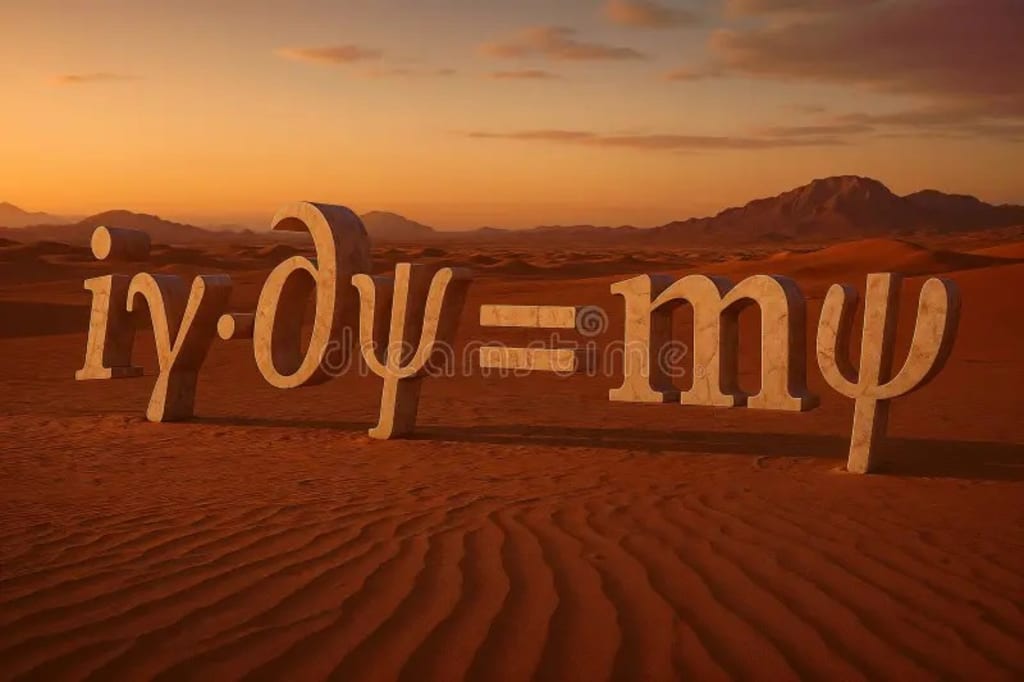
The Sahara did not welcome them.
It tolerated them.
Twelve students from universities across Europe arrived in northern Africa beneath a sky so large it seemed to erase human importance. Their professors called it an interdisciplinary expedition — biology, environmental science, entomology, behavioral ecology. They came with cameras, notebooks, sensors, microscopes packed in hardened cases, and the quiet arrogance carried by people who believed the world could be understood if enough measurements were taken.
The desert watched them unload.
Tents rose against endless dunes. Solar panels glittered beneath the white sun. Metal instruments clicked into place. Drones hummed overhead like mechanical insects pretending to belong.
“This place is perfect,” Leon said while hammering stakes into the sand. “No pollution. No human interference.”
But even as he spoke, the wind stopped.
Not weakened.
Stopped.
The silence that followed felt intentional.
Nobody mentioned it.
The first nights were normal enough. They catalogued beetles beneath rocks, measured heat fluctuations, studied tracks vanishing across dunes before the wind could erase them. A few snakes appeared at twilight. Thin horned vipers. Sand-colored sidewinders. Beautiful creatures adapted to survive where almost nothing should.
Then things changed.
On the fourth night, Mila woke because someone was breathing outside her tent.
Not panting.
Not growling.
Breathing.
Slow.
Measured.
Human.
She reached for her flashlight and unzipped the tent halfway.
A snake stood outside.
Not coiled.
Standing.
Its body rose almost three feet from the sand, balanced impossibly upright. Its dark eyes reflected the flashlight beam like polished glass.
It was looking directly at her.
Not like an animal.
Like a witness.
Mila froze.
The snake tilted its head slightly.
Then the desert wind burst across the camp.
Sand swept beneath the tents.
The light flickered.
And the snake was gone.
The next morning she told nobody.
Because how could she?
But then Tomas admitted he had seen insects gathered outside his tent in perfect lines.
“And then they disappeared,” he whispered during breakfast.
“What kind of insects?” Leon asked.
“All kinds.”
“That makes no sense.”
“I know.”
The professor blamed exhaustion.
Heat.
Isolation.
The desert distorted perception, he explained. Human brains searched for patterns in chaos.
Yet the patterns continued.
Spiders gathered around camp equipment in perfect circles.
Ants assembled into strange geometric formations before scattering instantly.
Scorpions appeared beside sleeping bags, motionless, as if waiting for instructions from something unseen.
The students photographed everything.
But every image came back wrong.
Blurry.
Distorted.
Light bent strangely around the creatures.
One photo showed a line of beetles casting shadows in opposite directions.
Another showed snake tracks that ended abruptly in the middle of untouched sand.
After a week morale collapsed.
Nobody slept well anymore. Conversations became shorter. The desert no longer felt empty. It felt occupied.
“Something’s wrong here,” Mila finally said.
Nobody argued.
Their professor decided they would return to the university laboratories earlier than planned. Better equipment. Better analysis. Better explanations.
That night relief spread through camp like medicine.
They packed samples.
Secured notes.
Promised themselves civilization was only one sunrise away.
Then they slept.
And woke somewhere impossible.
The tents were gone.
The desert remained, but transformed.
The dunes had become enormous staircases of pale stone. Towers rose in the distance, covered in symbols glowing softly beneath a sky filled not with stars but equations drifting like constellations.
Mathematics floated overhead.
Symbols moved slowly through darkness like living things.
The air smelled of parchment and rain.
No one spoke.
At the center of the vast plain stood hundreds of figures dressed in robes, armor, scholar’s garments, monk habits, ancient tunics. Some carried scrolls. Others held instruments the students did not recognize.
Every face seemed familiar.
Not personally familiar.
Historically.
One stepped forward first.
An old man with sharp eyes and bare feet.
Socrates.
Beside him stood Plato.
Further behind them:
Archimedes.
Hildegard von Bingen.
Carl Friedrich Gauss.
Albert Einstein.
And countless others.
The students stared in disbelief.
“This is impossible,” Leon whispered.
Einstein smiled faintly.
“That sentence,” he said, “has delayed humanity for centuries.”
The scholars surrounded them without hostility. Yet the students felt smaller with every passing second.
“You came seeking insects,” said Hildegard von Bingen.
“You came seeking equations,” corrected Gauss.
“You came seeking control,” said Socrates.
The desert wind moved again.
Only now the students realized it carried voices.
Whispers.
Birdsong.
Laughter.
Heartbeat rhythms.
The sounds of life hidden inside silence.
“You observe nature,” Plato said. “But you do not listen to it.”
The students exchanged nervous glances.
“What is this place?” Mila asked.
Einstein looked upward toward the drifting equations.
“The place behind understanding.”
Gauss stepped forward and drew symbols through the air with his finger. The glowing equations formed one by one above the sand.
For Sitting:
Ssit=m⋅g⋅t/E
“The longer stillness holds the body,” Gauss explained, “the more gravity speaks to thought.”
Another equation appeared.
For Running:
R=tv2⋅H
“Movement,” said Archimedes, “is not escape from time. It is negotiation with it.”
Another.
For Dancing:
D=(m⋅r⋅s)sin(θ)
“Emotion,” Hildegard whispered, “moves in invisible geometry.”
The air shimmered again.
For Sleeping:
Sl=LB−M/L
“Rest,” said Plato, “is the balancing of inner noise.”
For Laughing:
L=(J+C)²-P
“Pain fears shared joy,” Socrates said softly.
Finally:
For Thinking:
T=∫0∞(M⋅I)dt
Einstein looked directly at the students.
“This,” he said, “is what you forgot.”
The equations rotated slowly overhead like planets.
The students stood overwhelmed.
“These aren’t real equations,” Leon protested weakly.
Gauss smiled.
“And yet you feel their truth.”
Nobody answered.
Because they did.
The scholars led them through impossible halls filled with rivers flowing upward and libraries without walls. Every object seemed alive with meaning. Music altered the shape of shadows. Geometry appeared inside bird flight. Even silence contained structure.
Days passed.
Or years.
Time no longer behaved correctly.
The students were given a condition.
To return home, they had to demonstrate understanding.
Not through exams.
Not through calculations.
Through embodiment.
“You measure life,” Socrates told them. “Now become part of it.”
One by one the students tried.
Tomas demonstrated Running by sprinting across endless stone bridges while carrying another exhausted student on his back. He learned velocity meant nothing without purpose.
Mila demonstrated Sitting by remaining motionless beside a dying tree until she could hear water moving beneath the earth.
Leon struggled most.
He demanded logic.
Proof.
Data.
The scholars gave him none.
Finally Einstein brought him to a field of black sand beneath a sky without stars.
“What do you hear?” Einstein asked.
“Nothing.”
“That is why you do not understand the desert.”
Days later Leon returned alone.
He sat.
And for the first time in his life, he listened without trying to explain.
The desert spoke in temperature shifts.
In grains moving across dunes.
In the spaces between heartbeat and breath.
When he finally cried, he did not know why.
After what felt like centuries, the scholars gathered once more.
“You may return,” Hildegard said.
“But remember this: nature was never silent. Humanity simply forgot its language.”
The students fell asleep beneath the impossible sky.
And woke back in the Sahara.
Morning sunlight burned across ordinary dunes.
Their tents stood exactly where they had been.
The equipment remained untouched.
According to their watches, only one night had passed.
Nobody spoke for a long time.
Then Tomas noticed insects gathering near a rock.
Not random.
Intentional.
The movement formed spirals.
Rhythms.
Communication.
A snake crossed the sand nearby, pausing briefly before disappearing beneath a dune. This time nobody feared it.
The desert no longer felt empty.
It felt awake.
The students resumed their research, but now their notebooks changed. Alongside measurements and temperatures appeared strange observations:
“The wind pauses before movement.”
“Ant colonies behave like equations searching for form.”
“Silence contains structure.”
Mila wrote only one sentence in her journal that morning:
We came searching for life in the desert and discovered the desert was studying us instead.
That evening the sun descended like molten gold across the dunes.
The Sahara sang again.
And finally, they understood the equations of life.
About the Creator
Enjoyed the story? Support the Creator.
Subscribe for free to receive all their stories in your feed. You could also become a paid subscriber, letting them know you appreciate their work.
Comments
There are no comments for this story
Be the first to respond and start the conversation.