
The Road to Lochiel
A moment later, just before sleep came fully, she kissed me again, and whispered: “I love you forever and a day, Cam. Will you love me forever and a day?” Hard to think, hard to tell the truth. Hard to know where truth began or ended. Yet it was my voice, and no other, that spoke out in answer to her question: “Yes, Meggie. Yes, I will.” It was my first lie to her, and the telling of it will haunt me forever and a day.
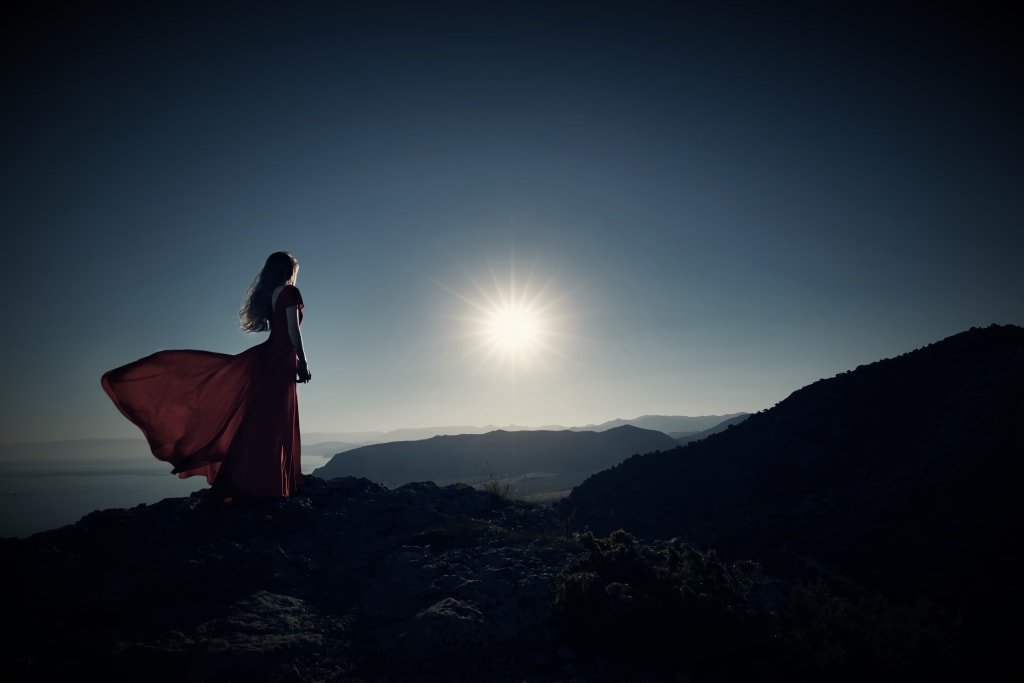
Years have passed since I first drove the road to Lochiel of an evening, since the road itself found me and drew me in. A lifetime, or more. Yet when I think back, even now, it’s the light I remember.
I’d never seen light like it before. Long, and slanting, and drenched with gold, casting lean fingers of purple shadow across the hills and valleys of the borderlands. Skies in that part of the country are enormous; the earth seems drenched by them. I remember there were clouds, and the sun had sunk so low the bottoms of the clouds glowed, as if lit by fire from within the earth itself. Strange things happen in these hills, the borderlands, the deputy told me, much later. Your eyes play tricks on you, in light like that. If you’ve ever seen that kind of light, you know what I mean.
I came to that day wounded, in body and spirit, just weeks from war, from the quote-unquote “incident” that destroyed my left hand, destroyed something in my heart, too. It’s hard, being not yet thirty and already sucked dry, full of dreams gone brittle, like brown thistles, prickly, dead. I had no place to go, and no one to beg me stay, and that suited me fine.
So I bought a battered old Volkswagen, packed my duffel, and in early April left the forests of northern Arizona, my only plan to head east, drive hard on slow roads, and avoid people when I could.
Maneuvering a balky four-speed over slow roads with only one good hand proved an unexpected challenge, and I spent much of those first few days cursing and wishing I’d taken a Greyhound. Eventually, though, the VW and I reached a tentative truce: We were all we had — the two of us, against the world. For three weeks I drove relentlessly, pushing the VW hundreds of miles a day, stopping only for gas and food or a few hours’ sleep, wrapped in my blankets, by the roadside. In all that time I spoke to no one, beyond the simple exchanges necessary for commerce. The VW became my shell, my cocoon. And safe inside, hour by hour, mile after mile, I searched for what I’d lost, waited for the healing that wouldn’t come.
By late April I found myself circling back toward Arizona by the southern route, skirting Las Cruces and Lordsburg and crossing from New Mexico into the Chiricahua Mountains and the high prairies and ghost towns of Arizona’s southeastern corner. One morning I woke up and realized that my traveling money had dwindled to nothing and “home” — that is to say, my parents’ house — was a mere day’s drive away. Even so, I longed to linger. So instead of turning north, to the interstate that would have within a few hours led me to Tucson and Phoenix and, finally, back to Flagstaff, I veered south, toward the Mexican border.
I must have had some vague notion of taking the border backroads to Nogales and crossing into Mexico, where I’d heard one could live well on a few dollars a day, but I never got that far. It was late afternoon — early evening, really — and my VW and I bumped along a washboard of a ranch road heading west through the border highlands, Mexico an amethyst shadow just a scant mile south. An earlier rainstorm had left the heavy red clay road rutted and slick. I’d just passed a wooden sign reading in small black letters: “Lochiel — 2 miles.” Lochiel. I wondered at the odd name: Foreign, romantic, something remembered from a movie? I could not think what the name put me in mind of, nor why the golden-purple sun-drenched landscape called forth such a homesick longing.
And then, that light.
I slowed the car to a crawl, cranked down the window, and stuck my head out as far as I could, looking all around. The sky glowed, immense, and the hilly grasslands rolled on forever, broken only by an occasional outcropping of ragged granite cliff or a stand of river sycamores. It seemed I could see to the very edge of time. And over it all, through it all, inside it all shimmered that peculiar, other-worldly slanting light, and the shadows it cast. Long shadows.
Even small things cast long shadows, in such a light.
My head still stuck out the window, I was looking back, over my shoulder and away from the sun, steering awkwardly with my good right hand, when something in the road in front of me caught the corner of my eye. A deer? In the glare I couldn’t tell. Without thinking I swung the steering wheel hard to the right. In that instant the deer — or whatever it was — bounded off the roadway and vanished into the brush, and the car slewed awkwardly to the right on the slick red clay. Instinctively I reached with my left hand to grab the steering wheel and pull it back again. Too late, I remembered that I had no working left hand. Oh God, I thought, I’m going off, as the little car skidded and jostled loosely along the rutted roadway, bounced across a narrow ditch, slammed into a boulder, and came to rest, finally, its right side jammed tight against the steep bank, half in the ditch and half out.
Many long moments slid by before I moved, or could move; long moments before the world stopped spinning. I may have been knocked unconscious for a while; I’m not sure. I know that when at last I opened my eyes I noticed first that the sky had darkened and that, unaccountably, it had begun to snow. Snow? I thought groggily. In April? I tested my body carefully; other than a sharp pain across my right shoulder, I seemed to be all right. The little Volkswagen canted at a crazy angle, its right tires deep in the ditch. All the impact seemed to have been on the passenger side, and I thought that, despite the angle, I should be able to get my door open and work my way free. It was harder than I thought. I had no strength in my left arm, and my right shoulder hurt horribly the moment I put any pressure on it. Finally I gave up on opening the door and decided instead to try squeezing myself out the window.
The cramped front seat of the VW gave me little room to maneuver. My arms went through the opening first; then, pushing as best I could with awkwardly bent legs, I struggled to bring my shoulders through. The pain was excruciating, and for a moment I thought I would black out again. I took a deep breath, felt light snow falling against my uplifted face. I shook off the blackness and the pain and pushed again with my legs, twisting, struggling to free my left shoulder first.
At that moment, through the twilight, I thought I heard something — a voice, from the hillside far above me — a woman’s voice, drifting downward like the snow. She called out to someone, and somehow it did not surprise me to hear my name — not CJ, as I’d been known since childhood, but Cameron, and then Cam. The rest was a gabble, a strange language; I thought I could pick out a word or two: Shipwreck, and home again, or some such thing. None of it made sense. I hurt, badly; the mishap had shaken me; and I wanted only to free myself from the car, my once-friendly cocoon, so I could assess the damage, decide what to do, move on. I pushed upward with my legs, and swore: My shoulder had caught against the window frame, hard; I couldn’t free it. I felt myself going under again, the blackness rising to swallow me, felt my brain shutting down. As in a dream, I heard the same voice, near me now: Cam? Cammie? querulous, glad, disbelieving, and I turned and through blurred eyes could see within arm’s reach an angel’s face, framed by the purple sky, in a cloud of hair the color of sunset, like a halo, beautiful and radiant. I could see her eyes, too, clear as blue glass, the light in them like twilight itself. And then the angel spoke, in words whose sense I understood if not the sound: Oh, Cam, my poor sweet love, what have they done to you, then?
As if from underwater, speaking carefully and with great effort, I told the angel, “This light — it’s like looking at the world from inside a purple bottle,” and reached out to touch her face, just before the blackness and pain closed over me and swallowed me whole.
***
The next time I saw the angel, her hair had turned to flame.
Or so I imagined, as I struggled to open eyes bleary with pain and long sleep, willed them to focus. I seemed to be lying down. She hovered above me, dabbing at my forehead with a damp cloth; her hair fell forward over her shoulders in red-gold cascades, shimmering. I smelled woodsmoke. Somewhere in the room a fire burned, and it was the fire’s reflection I saw at play in the angel’s hair.
Somewhere in the room . . .
I half-sat, pushing myself with my elbows, and instantly fell back with an unconstrained “Oh, God.” Pain. And very, very weak.
“Nay, now,” she scolded gently, and touched the cloth to my cheek, my chin. “You must lie still here, sweeting, and not stir. You’ve been far away, and for a long while, and it’ll be a while yet bringing you wholly back.”
The dull buzzing in the front of my head told me she was right, and I closed my eyes again. Soft . . . her touch was soft, and what I rested on, too, like cloud, like feathers, like . . .
“Eiderdown,” she laughed, and I looked at her sharply.
“How did you —”
“Oh, Cammie.” She cocked her head, and sighed. “Do you think after all our time together, I’d not know your mind better almost than my own?”
Too tired, too groggy for wonder, I let her words be, and looked around. It’s a dream, I thought. A dream. I remembered the accident, running off the road, smashing into the rocky bank, struggling to extricate myself from the window of the car. That much I remembered . . . and nothing more. Yet here I lay, wrapped in eiderdown, tended by a flame-haired angel in firelight, in what looked — on my first hasty, half-hazed survey — to be a small, windowless room, scarcely twelve feet from corner to corner, with walls of stone, the scantest of furnishings, and a low thatched roof supported by rough wood-beam rafters, among which, judging from the soft cooings and occasional ruffling of feathers, a family of pigeons roosted.
“Here,” the angel said, and I turned to look at her again. She held a shallow bowl to my lips. “Drink this, it’s for the pain.”
I took a tentative sip, and spit it out again. “Nasty,” I sputtered. “What is it?”
“A decoction, a tea, if you will,” she said, “of red rowanberry for the healing, and ash of hazelwood for the evil eye. Now drink, you.”
I managed to down a couple swallows, and she seemed satisfied. “You’re easier to tend when you’re sleeping the deep sleep,” she noted. “You’ve kept me busy, you have. ’Tis a nasty sprain you’ve got, in the shoulder, and some bad bruisings too.” She sat back, looked me over, clucked in sympathy. “Tsk. And now you’re awake, there’s more work to be done before resting. First the salve, then the snath.”
She took up a small clay jar of something, dipped two fingers into it, stroked them lightly across the front of my chest. I flinched, and growled, “Ouch,” then realized with a flush that except for my military dog tag and the chain on which it hung around my neck, my upper body, at least, was naked. She must have noticed my embarrassment, because she winked at me, and grinned.
“A simple salve,” she said, “of pounded goldenrod and valerian and butter. It’s best of course if it’s May butter, but we have no more, having used last year’s lot on the cattle and Father when he took that tumble in the snake’s-hole.”
She rubbed me well, front and back. When I was thoroughly greased she wiped her hands on her apron and said, “And now for the witches’ snath, the straining string. Worked a pure charm for Father, just you see.”
She reached into a pocket of her apron and pulled out a long thread, reddish-brown and coarse, like a single strand of yarn. Then she plucked a long hair from her own head, gleaming like spun gold in the firelight. Holding the two strands together, one end in each hand, she lifted them above her head and chanted, in a low voice:
Rowan tree and red thread,
Gar the witches tyne their speed.
She glanced at me quickly, winked again, with a small smile. Then she spat on the palm of her right hand, twisted the strands for a few inches, then knotted them together. This she repeated until by my count twelve knots had been made to bind the red thread and golden hair. Again she chanted, this time in syllables I could not read; inspected the knotted strands closely; and said with satisfaction, “There now.” The next thing I knew she was passing the strands around my neck and wrapping them, sling-style, under my right arm.
“Now,” she said, working the strands as she spoke. “We just tie the two ends of the witches’ snath together, winding it sunwise for luck, just so — and — there!” She rocked back on her heels, inspected her handiwork. “A day or two, or more or less, and you’ll be back to good as new,” she announced.
Good as new. The words stung, strangely. And just how good is “good as new”? A dull ache throbbed behind my eyes, and I felt myself slipping slowly back to drowsiness — that tea stuff, it’s making me sleepy. And the smell of woodsmoke. And the gentle, rhythmic touch with which my flame-haired angel now stroked my forehead, fingers rough, soft; humming tunelessly under her breath. She rocked as she hummed, back and forth, eyes closed, face lifted, as if praying, I thought. But that to which she prayed was nothing I had ever known.
Who are you? I sent the thought out to her. Who are you, and what?
Her eyes flew open, as if I had spoken aloud; I saw steel-blue sparks, or the glint of sudden tears. She laid her hand against my cheek, whispered: “Ah, Cameron, my sweet Cam, do you truly not know me, then? ’Tis Meggie, your own sweet Meggie Mackintosh, your true love and your betrothed.”
Meggie. I seemed to know the name, somehow, and I spoke it: “Meggie,” and without warning, she began to cry, silently. I saw the tears before she turned her head away, golden jewels in the flickering firelight. Without knowing why, I took her hand in mine and holding it lightly said, “Please don’t, Meggie. Please don’t be sad.”
At that she whirled, stared at me eye to eye, made a strangled sound in her throat, like an animal. Then with one sudden movement she flung herself against me and buried her face in my naked chest, sobbing and laughing wildly. Words poured out of her in torrents. I couldn’t catch the half of them, she spoke so swiftly, her breath catching now and again in a half-sob:
“Oh, Cammie love, it is you, you are back, you do know me again. Oh! my heart is singing, full to bursting, where a scant week ago I thought it would break. I don’t know what to do. Cammie! Cammie! I thought these long months never to see you again, never in this lifetime, and oh! — I grieved, how I grieved, to watch as you sailed from me in your bonnie ship across the sea and never to see you, to kiss you again, never to lay with you as your one true wife.”
She sat up, looked at me full on, eyes shining like blue topaz, and the flood of words rushed over me, unabated.
“So many times, I cannot tell you, love, hope near to died within me for your return. Day after day and week by week, to stand on that great seawall and watch for you . . . watch for your sails, white shining faerie-wings of sails, to rise from the west against the setting sun and come for me across the sea . . . I watched, Cam — oh! I watched — from Lammas through Samhain, across the winter and spring and now May Day coming, near a full turning of the seasons, with never a sign of you, never a sign . . .”
Her voice broke, and she clasped my hand tightly. I could think of nothing to say.
“And then!” she went on. “And then, three days past now, as I stood on the tall craig looking out to sea, I heard you, Cam — I heard you cry out for me through the gloaming — that’s my Cam! I said. He’s home, he’s calling to me, he needs me! — and rushed to find you where you’d washed up against the shore, you and your poor wee boat, all crashed on the rocks that way, and half-dead . . .
“It fair broke my heart to see you so,” she said, “all tangled in your smashed-up vessel, and broken of body, and near fainting with the pain of it. And your hand, your poor ruined hand . . .” She reached for my left arm, and raised it, and kissed the fingers that dangled nerveless and limp from the end of it. Then, quicksilver-sudden: “Aye, but here you are now, and here am I, and it’s together we are again, the two of us, as should be. And with my charms and magicks and decoctions we’ll soon enough have you well once more, we will. And then —” A quick kiss on my cheek, a sly smile, a toss of that glorious torrent of hair — “then we’ll see what it’s like to love each other proper, in the way of man and bride.”
I found it hard to think, impossible, in fact, as shadow closed over me again, wrapping me in the twilight of coming sleep. She mistakes you for someone else, a small voice said from far away, someone she loves very much. It felt good to be loved — good to be loved. You could stay, the far-off voice said, and for a while be happy.
A moment later, just before sleep came fully, she kissed me again, and whispered: “I love you forever and a day, Cam. Will you love me forever and a day?”
Hard to think, hard to tell the truth. Hard to know where truth began or ended. Yet it was my voice, and no other, that spoke out in answer to her question: “Yes, Meggie. Yes, I will.”
It was my first lie to her, and the telling of it will haunt me forever and a day.
***
And so, with a few words, I slipped out of my world and into Meggie’s — as simple as that.
Meggie’s world was a looking-glass version of the one I’d left behind, a place where time had stopped seemingly centuries before, and halfway around the earth. In Meggie’s world I was no longer CJ, the lost and broken, who had slid off a roadway and crashed his car, but Cameron - Cam, valiant and strong, returned in glory from a long sea voyage and pulled from the wreckage of his craft by the woman who had promised to wait forever. A strange place, this looking-glass world, this world of twilight, two lights, in between. Here, the stories Meggie told shone bright and true, and I saw through her eyes. I saw the hut in which she lived — a croft, she called it — sheltered in a cleft between two hills, a single room of stone, windowless and dim, with a swept-dirt floor, thatched roof, and wooden door painted green. I saw the animals who lived there with her, two cats — a ginger and a tabby — goats, sheep, and chickens, and several head of cattle, short, odd-looking creatures with heavy drooping horns and shaggy hair that hung in twisted hanks nearly to the ground. I saw the truck garden Meggie tended so carefully, fenced with brush and whitewashed stone, lush already in mid-spring with the promise of potatoes and turnips and strawberries and a wild assortment of spicy-smelling herbs. And there was Meggie’s father, with whom she shared the croft, a silent, grizzled man who spent his days hunting in the hills and tramped home of the evening to eat his simple dinner and sit by the fire smoking his pipe, watching me, watching Meggie, passing only rarely a gruff-voiced word or two. He knew me, as Meggie had known me; seemed willing enough to leave me alone, though wary of my presence in his home, and watchful, ever watchful.
All this I could see, and Meggie, too, lovely lithe angel, younger than I by eight years or so, dressed in a simple blouse and long skirt covered with an apron of many pockets, brilliant blue eyes, beautiful hair that even when bound back tightly escaped always in tiny flames around her face. All this I saw, with my own eyes, in Meggie’s world. And yet I could not step completely clear of the shadows cast by my side of the looking-glass. To me, my battered little Volkswagen remained exactly what it had been in my world, and not the smashed-up ship’s dinghy Meggie and her father saw when they helped me shift it out of the ditch. Nor could my eyes see the shingled shore on which they said my boat had crashed, nor the rough sea beyond, but only a red-clay roadway, a rocky embankment, and golden high-desert grassland all around.
It was the same with their voices and the words they spoke, Meggie and her father. In Meggie’s world I understood them perfectly. And yet the part of me that still lived on the far side of the looking-glass heard something other than English, at least the English with which I was familiar. I could hear it all — both the meaning of the words Meggie and her father spoke, and the peculiar tongue in which they spoke them, melodic, lilting, half-guttural. With no real knowledge of languages I could only guess it was a heavy Scots dialect, an odd blend of English and Scottish idioms and something more ancient than either — Celtic? Gaelic? I didn’t know. It sounded both strange to me, and hauntingly familiar. Oddly, I never wondered how I understood it, the language Meggie and her father spoke, any more than I wondered how they understood mine.
The hours slipped by easily, and then days, and under Meggie’s mysterious ministrations I began to heal. At first I stayed contentedly near the croft, watching Meggie as she went about her chores, milking the goats and cows, weeding her garden, drawing water from the spring-fed well ringed with riverstone. A charming thing, Meggie — bright and smart. Evidently her father had taught her to read some, from an ancient Bible, and write a little, too. When I learned this, I gave her a pencil and a gas station receipt dug from my duffel – my seabag, Meggie called it -- and she proudly wrote in tiny, precise letters her whole name, MARGARET ANNE MACKINTOSH, and then, below it, as I spelled it for her, she wrote mine. I listened to her chatter and laugh happily, and basked in her love. It was warm, that love, like butter melted in the sun, and felt good, and wholesome, and real, and I did not blink or think twice until, on the fourth day after my awakening, she spoke about our being handfasted.
It was early afternoon, a “betwixt” time, Meggie said, the morning chores finished, dinner preparations still hours away. We were outside the croft, lolling on a grassy knoll under a giant cottonwood, Meggie plaiting a chain of grass and tiny white daisies while I dozed in the still, warm air, only half-listening. In Meggie’s world, handfasting seemed to be a kind of provisional marriage, in which a couple pledges to be bound together as husband and wife for a year and a day, until they can be married in a more traditional fashion.
“We have no kirk nearby for the proclaiming of the banns,” she told me solemnly, “nor priest to give the wedding mass, nor fiddler to play the reels and strathspeys, nor even kinfolk to dance them with us. And yet, Cam, I would not wait longer, would you?”
In my languor I saw no reason to disagree. So I said, lazily, “Not if you wish it, Meggie.”
Her breath caught, and she leaned forward eagerly, grabbing my hand. “Then, Cammie — let’s!” Her eyes shone. “Tomorrow is May Eve, the day before Bealtaine, a time of great magic and good fortune, and the moon will be full. Let us handfast together tomorrow at midnight, under the Bealtaine moon.”
Something stirred in me, uneasy, and I drew my hand back and said, “Meggie . . .”
She cut me off firmly: “Nay, love, ’tis settled. I know just the place where the magic will be strongest — we’ll slip away while my father sleeps . . . Oh, my love,” and the excitement in her voice made me tremble, “we need only the two of us, you and I, in the sacred place, and the faerie-folk for witness, and we will be wed — wed before the Old Ones, wed together as man and woman, husband and wife at last.” In a burst of exuberance she flung her arms around me and kissed me soundly.
I gave it another feeble try: “But, Meggie, listen . . .”
“Hush, now,” she scolded, pressing her fingers against my lips. “’Tis powerful bad fortune for bride and groom to quarrel on the day before they wed. Rest, Cam, gather your strength. I have much to do to make ready.” And draping the half-finished daisy chain around my neck she kissed me again, then skipped off beyond a turning and vanished into the croft.
I should have left then. I thought about it. At that moment, without another word to Meggie, I should have made my way down to the roadway, where my Volkswagen waited; cranked it back to life; and driven off. I’d checked it out already. Except for the crumpled fender and smashed passenger-side door, the only damage seemed to be a broken oil line, and I could limp along to the next town safely enough. Or failing that, I might have walked out. It couldn’t be far to the next homestead, a few miles at most, I reasoned, and from there I could phone or radio for a tow truck. My shoulder felt stronger now, and I could move without much pain. My head had cleared too, and I no longer feared blacking out whenever I stood or tried to walk. I should go now, I thought.
But the thought had no urgency behind it, only a kind of slow-witted guilt, a sluggish sense of being swept away by fate, by forces much older and stronger than I. And in the end, I chose to do nothing, and stayed.
***
Meggie said no more about handfasting that day, or most of the next, but busied herself with preparations the nature of which I had no energy to guess. I awakened that morning, on May Eve, in a deep malaise, a kind of funk that immobilized bone and muscle as much as spirit, and I did not know why, but I neither could move, nor had the will to. With the wisdom of hindsight I believe Meggie must have sensed my fleeting thought of leaving, and slipped a binding-spell into my supper that evening. Or perhaps it was the sprig of wormwood she tucked into my shirt pocket as she bade me good night — “for a sound sleep and sweet dreams,” she promised.
In any event, it was more than my life was worth that next day to stir myself, or keep my eyes open for more than a few minutes at a time, and the hours slipped away without my notice as I lay on my eiderdown in the corner of the croft and dozed, and drifted.
Then Meggie was shaking me awake in the firelight, speaking in an urgent whisper: “Cam! Cam, arouse ye, ’tis lacking but an hour till midnight, and time for us to be gone.”
I groaned, my head heavy and fogged, and she pressed a hand to my mouth, glancing at the corner cot where her father lay snoring in his rough woolen blanket. “Hsst! Not another sound from you, then, until we’re well away.”
She led me stumbling out of the croft and into the night. Once outside, moonlight pooled around our feet like silver water dripping from the brim of the moon’s full and trembling cup. I breathed magic, I felt it fill my lungs, coursing into my bloodstream; magic old and terrible, and fine.
I turned to Meggie, saw her burning like a flame beside me, said, “Meggie —?” and then stopped. I did not know what to say next. She laughed, lightly, and whispered: “Come, let me lead you,” and the next instant we were flying together, hand in hand, over the silver grass and moonlit hills to who knew where.
Not literally flying — at least I don’t think so — although my body felt light and swift and strong in a way it never had before, and Meggie’s skirts fluttered behind her like the wings of a great bird, or a moth. Meggie pulled me up the steep rise beyond the croft, the hills in which the stone hut nestled, and toward the broad horizon of the deep night sky. As we crested the hill I paused, as much to take in the night spectacle as to catch my breath, but Meggie urged me on. So through the night we ran, over the hills gentled now by moonshadow, skirting gullies, bounding over and around rocks and bushes, for all the world like two mountain goats at play on a fine spring day. Meggie, sure-footed, gripped my hand tightly as we ran, and I noticed that she glanced every few minutes toward the moon, now high above the horizon, the way in my world I would glance at a watch when worried about being late for something important.
After what seemed like a very long while, but must only have been a quarter hour or so, I saw ahead of us a stand of tall billowing trees — sycamores, I thought — silhouetted in black against the moonlit sky. It was in this direction that Meggie led me, and we had nearly reached the trees themselves when, abruptly, she stopped. Through the shadows I could see, between us and the trees, what appeared to be two stone pillars standing side by side, and taller than me by a full four feet. They looked somewhat like the natural pillars of eroded volcanic ash that peopled the Chiricahua Mountains to the east — tall, ghostly formations that the native tribes had reverently called The Long Watchers. I was still staring dumbly at the twin figures of stone when Meggie touched my shoulder. “Come,” she said, “this is the way through. The Old Ones are waiting,” and in a blink I saw her slip into the narrow cleft between the stone pillars, and vanish.
“Meggie?” I called, and from the far side of the stones I heard her reply: “Come through, Cam, come twixt, my love.” Instead, I walked around the twin stones, once, twice, three times, and saw no sign of Meggie. Had she gone ahead, then, into the trees? — No, for again I heard her voice, laughing: “Cammie, sweeting, you must come twixt the stones.”
I looked, perplexed, couldn’t see her, and whispered, “It’s too narrow,” for scarcely a hand’s-breadth of space separated stone from stone in the cleft through which Meggie had vanished.
“Nay, love,” came her gentle reproof. “’Tis only as narrow as you think it, and fully as wide as needs be.”
Tentatively I reached between the stones with one hand — with my left hand, the mangled, nerveless one. Instantly something took it from the other side and, tugging gently, drew me first into and then, effortlessly, through the impossibly narrow cleft between the standing stones. There were the trees, towering in a dark cloud a few feet away. There was the moon, spilling its milky light across the sky, the earth. And there, waiting for me, was Meggie.
Her plain workaday clothing had disappeared. Instead, she wore a dress I had not seen before. At first in the moonlight I thought it was white, then silver; then, eventually, I realized it was of some gauzy cloth of palest blue, like a robin’s egg. A rhyme ran through my head, as if in Meggie’s own lilting voice: Marry in blue, love ever true. The dress swirled around her body in a shimmering flame of blue, and her hair, which only a moment before had been pulled back in a hasty braid, now spilled over her shoulders in cascades of red-gold traced with a net of silver filaments, of spider’s web and moonbeam, and dotted with the same star-like daisies with which she had plaited her love-chain the afternoon before.
Then I knew it was a dream. It must have been a dream, that a creature so exquisite, so beautiful . . . that a night so full of magic . . . I could not complete the thought, but only reached my other hand toward Meggie, and let her lead me into the stand of sycamores.
There must have been twelve or more of the ancient giants. Together they formed a rough ring around a pool of water no more than three feet across. In the pool were reflected the dark shapes of tree boughs drooping low overhead, and the moon’s own silver face, the surface of the water broken by a constant gentle ripple that signaled an underground spring.
“Are you ready then, my love?”
Meggie’s voice, from behind, made me jump; the pool had held me spellbound, and I’d lost myself in it. I looked at Meggie’s face, shining pale and bright, and nodded.
“Then stay ye,” she said, and circled the pool three times, stopping on its opposite side. She reached toward me across the water and said, “Now take my hands.”
I did so, without a word.
“Cameron,” she said, her voice low, “can you see them, the faerie-folk? They’ve come for our handfast. I’ve called them out, the Wise Ones, and the Lordly Ones, and the beautiful Shining Ones, all the Old Ones are here with us. Can you not see them, Cammie, amongst the trees, here in the sacred grove by the wishing well? Can you not hear them singing?”
Could I? Did I? . . . I don’t know. I didn’t think so. I thought I saw only the shadow, and sky, and moonlight; thought I heard only the breath of night air through sycamore leaves, the faint chuckle of water rippling at my feet. I said nothing. Then Meggie herself began to sing. Still holding both my hands, she sang, swaying from side to side, her voice a whisper, words and music lost between us in the darkness, as if she sang to the darkness itself. In response I felt the darkness closing in around us, and something like fire touched my skin, and the earth and air and water drew close as if embracing us in this moment. And in this moment, for a moment, I thought perhaps there was a singing I could hear, or sense, beneath Meggie’s murmured song — a singing that came from the earth and air and water itself, and from the flame that leaped between us where our hands touched.
“Cam.”
Her song done, Meggie looked at me across the water, eyes grey as slate, and solemn. “Now do we pledge us, one to another, as husband and wife, before the Old Ones gathered here.”
She took a deep breath.
“I, Margaret Anne, pledge to love thee, Cameron, forever and a day. And do you pledge also to love me, forever and a day?”
Something inside me, still untouched by the magic with which Meggie must have bound me, cried out, Wait, but its voice was faint and feeble, and my own voice, before I knew it, had said: “Yes. Yes, I will.”
Meggie let out a cry of delight and in two steps flew to my side and threw her arms around me. “Oh, Cam! Now, then, we are truly wed!”
Suddenly she pulled back, frowning. “Nay, but you’ve given me no ring to seal our vows . . .”
“I have no ring to give,” I stammered. She looked at me thoughtfully. Then her hand flashed out and touched the chain at my throat, and the metal dog tag that hung from it beneath my shirt.
“This,” she said. “This will do, if you give it freely.”
Unquestioning, I pulled the chain over my head and placed it carefully around Meggie’s neck. The flat metal tag with my name on it slipped inside her dress; she fingered the chain for a moment, her eyes closed.
“And now,” she said, “’tis time for the exchanging of wishes.” She took my hand.
“Three times around the well, sunwise,” she said, “that is to say, from east to west,” and I followed her as we circled the edge of the pool three times.
“And now the water must be silvered for the wishing. Have you brought silver? — Never mind,” she went on quickly as I started to stammer again. “Needs must it be my wifely duty,” and reaching into the front of her dress she pulled out a small coin, held it up, turned it in her fingers, gleaming silver in the moonlight. She tossed the coin lightly into the pool, and we watched as the dark ripples spread, then settled.
Next, Meggie grasped the hem of her dress and carefully ripped off a narrow strip of cloth ten or twelve inches long. She saw me watching her in bemusement, and nodded at me briefly. I understood that I was to tear a strip from my own shirt. But I could not: My useless left hand afforded me no grip. So Meggie did it for me, then handed the ribbon of cloth over.
“Dip your cloth in the water, as I do, three times,” she said. “Then make your wish, and drink.”
“My wish?” I said, trying to keep my voice light. “What do I wish for?”
“Whatever your heart most desires,” she replied gravely. “For the wish made by the wishing well at Bealtaine midnight cannot be denied, by this world or any other, when it is made in true love and good faith.”
Meggie knelt at the edge of the pool and dipped her cloth into the water, and I did likewise. At that instant a thought flashed across my mind — restore my hand — and like a meteor flashed away again. Now Meggie scooped at the pool three times with cupped fingers and three times brought the water to her lips, drinking deeply. I did the same. When I had finished, Meggie stood and moved to the side of the nearest tree, and reaching high above her began to wrap the thin robin’s-egg scrap from the hem of her dress around a low-hanging branch.
“Come, tie your wishing ribbon with mine,” she said, and together we knotted our cloth strips to the sycamore, where they fluttered like bat’s wings in the warm night air.
“What now?” I said.
“Now we seal the wish with our first kiss as husband and wife.” She reached for me and drew me to her, and I took her into my arms and kissed her. As I did so, it was as if the spell of mystery had broken, and suddenly I felt washed with an emotion I could not at first name; like an enormous wave it swept over me, left me breathless. Happy, I thought with surprise. I’m happy. With a shout I grabbed Meggie, my beautiful Meggie, about her waist and whirled her in a crazy songless waltz among the sycamores, laughing exultantly in the night. I had never been so happy. I felt as if I were unwrapping the one gift for which I’d always longed but was told could never be mine. Not once in all my life had I been so happy; and in that moment I could not imagine being so happy ever again.
At last, out of breath and laughing wildly, we stopped our mad dancing and tumbled together to the ground.
“Oh, Meggie!” I said, gasping for air, holding her tight against me. “Oh, Meggie, I’m so happy, so happy . . .”
“Cammie . . .” She pulled herself away from me, touched my cheek with one finger, smiling. Tears filled her eyes, as silver filled the moon, and spilled over. “Oh, Cam . . . then my wish has come true for certain. For that was all I wanted for your wedding gift, that you’d find happiness with me tonight.”
I drew her to me again, but she twisted out of my arms and scrambled to her feet. “Not here, love,” she said. “Not in the sacred grove. Come with me. Come with me to the seacliff, from which I watched every day for your return.”
In the moonlight I followed her beyond the sycamores and into the shadowed hills. From a cloudless sky snow had begun falling lightly, like sparks of stars, all around us. Meggie led me up a steep incline, rising against the night, and just when I thought I could go no further she stopped, and flung her arms wide, and said, “There!”
She turned to face me.
“I’ll love you, Cameron,” she said, “forever and a day.”
And so, on Meggie’s seaside cliff, overlooking the long grassy snow-dusted hills of the borderlands, we made love. She was soft and sweet and gentle, my Meggie, and she wept with her pleasure, and her pleasure made me weep as well. Afterward, we lay together at the top of Meggie’s world. Neither of us slept, I think, in those long hours after midnight, though neither of us moved, lost in lassitude and the magical kiss of snow. Not till near dawn did I finally stir. Over the horizon the sky was just streaking purple and mauve. I kissed Meggie’s forehead; her eyes opened, and she smiled.
“My love,” she whispered, looking up at me with blue eyes through the twilight of May’s first morning. “So it was not a dream.”
She took my left hand in hers, held it against her lips, her cheeks, her hair. I felt her incredible softness, and passion rose within me, and, my hand still in hers, I touched its fingers to her throat and felt her pulse, felt the heat beneath her skin.
Felt it. Felt her softness, her pulse, her heat.
With the fingers of my left hand, strong and supple again.
***
For three days, then three days more, I dwelt in Meggie’s magic land. But the light of the other world, the one I’d thought to leave behind, like twilight itself cast long shadows across the borderlands, and reached me at last on the seventh morning after May Eve.
I awoke wrapped in Meggie’s arms, as I had awakened every morning since that first, on the seacliff; and I prickled with pique and irritability. Why does she cling so? I found myself thinking peevishly, rolling away from her. Then, ashamed, and grateful still for her love and healing, I moved back toward her to awaken her with a kiss, and for the moment all seemed well.
But throughout that day as Meggie went about her chores I felt from time to time that same peevishness rise within me, a kind of restless impatience, a mental pacing back and forth. The image that sprang to mind was that of a captured animal, pacing its cage relentlessly, endlessly, from corner to corner. I realized I felt trapped, ensnared. Like that animal, I had nowhere to go within the cage except from one corner to another, and back again. I watched Meggie work, and sighed, restless, and sighed again; if she noticed, she gave no sign. I had nowhere to go outside the cage, either; but suddenly I wanted to be outside, desperately. And I knew the time had come to leave.
I told Meggie so late that afternoon, as we walked along the very crest of her seaside cliff. The rough rock face dropped a hundred feet or more to a scramble of boulders below, and gold-green grasslands spread like a soft lumpy blanket shaken out before us from sky to sky. But I knew Meggie’s eyes saw something different. In her eyes, there were no grasslands, but the far reaches of a sea — pewter-grey and deep — stretching in sparkling wrinkles to the distant horizon and crashing in wicked, relentless waves against the rocky shore far below. In Meggie’s world, it was on this sea that I had sailed from her once before; it was this sea that had borne me back. So it must be the sea that bore me away again.
When I told her I would be going in the morning, she began to cry, quietly.
“Oh, Cammie. I have always known you could not stay the long,” she said, her voice shaking through her tears. “’Tis your very nature, ’tis the call of the far-away.” She turned, looked out across the grasslands, saw salt water and spume, and sighed. “I know I can never be your mistress,” she went on. “The far-away will always be your mistress. I can only ever be your wife.”
A shadow must have crossed my face at her words, for she glanced at me quickly, and her fingers flew to the chain and dog tag around her neck. “I am your wife, am I not, then? — In your eyes, and mine, and the eyes of the Old Ones, for a year and a day?”
I couldn’t answer, not at first. But then I thought, What’s the harm? Let her believe it, if it pleases her.
“Of course you are,” I said.
“And you’ll return again, will you not, love, before the year is out, when the far-away releases you?”
Again, I said I would. The words came from my mouth, my throat; perhaps part of me believed them. But my heart knew the lie they told, and let it be.
“Then, Cammie . . . Won’t you lay with me again, the one more time before you go?” She trembled, and tears shone in her eyes. So eager, so . . . I felt smothered. This I could not do, and I told her so, gently, letting this lie, too, do the work for me.
“No, Meggie,” I said. “It would be tempting fate, and bad luck for my voyage.”
She kept silent on the long walk back to the croft, silent too through dinner, silent in the evening by the fireside as she stared into the embers, her hair the same sunset-colored halo I had first seen framing the face of my angel almost a fortnight ago on the road to Lochiel. Watching her, I faltered: Could I not stay after all? — but for a moment only: No, there’s nothing for me here but Meggie, and that’s not enough for a lifetime. The old man never said a word that evening, but sat in his corner smoking his pipe and glowering and scowling from beneath his bushy eyebrows. After a time I saw Meggie reach into her apron pocket and draw out a long, knotted strand of reddish thread. I recognized it as the witches’ snath, as she’d called it, which she had bound around my shoulder for healing. She began to pick at the string with her fingers, her lips moving, as if singing a silent song, or praying, and I realized that she was working at pulling out the twelve tiny knots she had so carefully tied before. One at a time she worked at them, those knots, tugging gently at the strands of thread and hair and loosening them with her fingers, lips moving constantly, until finally the last knot pulled free and the two strands, now separate, were smooth and straight again.
She tucked the strands back into her pocket and, without a word, went to her own bed on a cot in the far corner. After a while I took a quilt and slipped outside to sleep under the stars, thinking myself saved. But sometime later she crept naked under the quilt beside me, again soft and sweet and gentle, like a midnight succubus, a dream of warm flesh, and I let her join me there. God help me, I let her join with me again. And I let her believe, with my body, that I loved her with my heart and soul.
***
I’d hoped to slip away the next morning before Meggie awoke, but she rose with me and watched, quiet, as I made my final preparations to leave. I would not let her walk with me to the Volkswagen, which waited off the roadway in some sagebrush, but said goodbye outside the croft, by the well of riverstone.
“Will you write to me?” she asked, and I said I would. “Send your letters to Meggie Mackintosh,” she instructed, “at Mackintosh Croft, Star Route, Lochiel Road. They won’t know me here by my married name.”
She lifted her face, looked out across the hills, as if to sea, and sighed.
“Know you, Cameron, that I’ll be waiting for you, and watching,” she said. “I’ll be watching with the Old Ones for your sails to rise above the waters and bring you home to us again.”
And through her tears she smiled, a brave smile, a knowing smile, and laid a hand against her flat young belly.
***
The Volkswagen and I limped the twenty or so rugged miles to the small town of Patagonia, where I found a garage and a mechanic willing to patch up the broken oil line. While he worked on the car, I paid a visit to the local medical clinic. The doctor was a young man, not much older than I, who talked with me lightly about having served in the Peace Corps in Africa and Central America. I barely listened. I’d told him briefly about my run-in with the slick roadway two weeks before, and he gently prodded and pushed at my now only slightly tender right shoulder. When he pronounced it well on the mend, I said, on impulse: “My other hand’s been giving me trouble too. I wonder if you’d take it a look at it.”
He took my left hand in his. “What kind of trouble?”
“Uh . . . a recent war injury,” I said. “Acts up every once in a while. Just wondered if you could see anything that might be causing it.”
He spread my fingers, examined them one by one, asked if I felt any pain. When I said no, he shook his head. “Sure can’t see anything,” he said. “Everything looks fine and strong from here. Want me to take an x-ray?”
“No, that’s all right,” I said quickly, ashamed all at once of my incredulity.
He looked at me hard. “You sure?” When I nodded he said, “Right, then. Let’s get you in that sling and on your way.”
As he fitted me with a light cloth sling to support my right arm he asked conversationally, “So have you been down this way before?”
“No,” I said, “never.”
He shook his head. “Not many people stumble through Patagonia by mistake. Where exactly did you and your car run afoul of the road, then?”
There was something about his voice that called the old man’s gruff brogue to mind, and impulsively I said: “You must know most of the folks who live around here.”
“I think so,” he said. “I’m the only doctor between Nogales and Fort Huachuca; I see folks from all the ranches and homesteads for forty miles around. If someone from this area has been to a doctor in the last five years, it was probably me. Why?”
“Do you know the Mackintosh family?” I asked. “An old man — I don’t know his name — and his daughter, a young woman, maybe nineteen or twenty, named Margaret Anne? Meggie?”
He shook his head, puzzled.
“They live out about 20 miles to the south,” I pressed on, “just this side of the border, on a rise over the turning to Lochiel. In a stone house — a hut, really, I guess — with goats, and chickens, and some odd shaggy cattle?”
He shrugged and smiled apologetically. “Sorry, I don’t know them,” he said. “Why?”
I just shook my head; it didn’t matter. A few minutes later, ready to leave, I was writing out a check to the clinic when I stopped, stumped.
“The date,” I said. “I’ve lost track of time. What is it? The sixth? The seventh?”
The doctor looked at me and laughed. “You sure you’re all right?” he said. “Today’s the first — the first of May.”
“Oh, no, that can’t be,” I protested, “it’s been six days, at least, since —” Since Bealtaine, I had been about to say before I caught myself. Suddenly the magic, the mystery of that midnight May Eve washed over me again — the standing stones, the singing, the snow — and I felt dizzy, disoriented. Where had I been since then? I wondered. And with whom?
Oh yes. That’s right, I answered myself. With Meggie. In Meggie’s world.
I smiled weakly, murmured, “Sorry,” and wrote on the check: May 1.
***
So later that afternoon I left, with oil line and shoulder both in good repair, and drove on to Flagstaff. My intentions were honorable, and I did write to Meggie at first, a few times. I did mean to go back, too, if only for a quick visit. But reality intervened, and three months slipped by, then eight, then a year. Somehow, my life got back on track. I found a job, applied to grad school, worked, kept busy. Over time the interlude with Meggie faded into dream, and any lingering desire to return, to live bathed in her unfaltering adoration, was pushed aside by other urgencies — and then, finally, by love itself.
Laura and I first met years ago, before my deployment, and had dated casually for a few months. Now, by chance, we met again, reconnected, fell in love, planned to marry. Nearly four years had passed when, on a whim, the day before my wedding, I wrote another letter to Meggie, my sixth and last. In it I said I hoped she and her father were well; told her I thought of her often; said I was marrying a lovely young woman and knew she’d be happy for me.
“In fact,” I wrote, rashly, with the ironic insensitivity of one so secure in his own happiness he believes everyone must be happy for him, “we’ll be driving down to Mexico for our honeymoon. On the way home I’d like to show my wife the backroads of the border country. Maybe we’ll stop in and visit.”
It took some doing, but I managed to find the road sign again: “Lochiel — 2 miles.” We’d been driving steadily since dawn, stopping briefly in Patagonia for gas and an early supper, and Laura slept soundly now as we bounded and jostled along the rutted ranch road. It was late afternoon, verging into evening; and yes, there it was again, that light. That purple-shadowed magic other-worldly light, glowing from within the hills themselves. I glanced uneasily at Laura, and thought for the first time: What am I doing, bringing her here? What am I doing coming here at all? A shaft of sunlight from low in the west drifted across her face; she stirred in her sleep, smiling slightly, and I relaxed. It was all right. I just wanted to show her the borderlands.
It’ll be all right. It’ll be fine.
“Laura,” I said softly, “honey, we’re almost there,” but she didn’t hear me, and I decided to let her sleep on.
Within a few minutes I’d found the track leading to the thatched stone croft. I stopped the car, got out, looked around. Nothing had changed, it seemed. There was the same stock pen, the same shaggy cattle, the same well of river rock and neat stone-and-brush fence around the truck garden, all washed in the golden-lavender twilight. I walked the pathway to the croft, stood still for a moment, told myself: It will be all right; then, taking a deep breath, rapped firmly on the peeling green door.
It’ll be fine.
“You!”
The voice from behind startled me. I turned. It was the old man, Meggie’s father, a half-skinned rabbit in one hand and a knife in the other. He stood motionless, squinting into the setting sun, stooped and grizzled, exactly as I remembered him. Recovering from my initial surprise I took a step toward him in greeting, but he stopped me with a growl.
“You!” he repeated, and spat on the ground. “I curse the day! You’ve brought nothing but ruin to me and mine, and now you have the gall to come back as if you belonged.”
His voice was low with rage. Stunned, I stammered: “What . . . What’s happened? What do you mean? Where’s Meggie?”
“As if you cared! Run off, she has, not an hour past, and good riddance.” There was no mistaking the venom in his voice. The old man spat again. “Received your letter — after all these long, lonely years of waiting — telling her of your wedding, and how you’d be bringing your bride by to bid her good-day.”
“Run off?” It was all I could manage to say.
“Yes” — he hissed the word — “and took the wee one with her.”
The wee one . . .?
— Oh, my God. My God.
Why had I never known, never suspected?
“Did she say where she was going?” My heart was lurching, as if I already knew the answer.
“See for yourself,” and flinging both rabbit and knife to the ground he reached into his leather vest and pulled out a crumpled paper and tossed it at me. Then he spat again, spun on his heel, and stalked into the hut.
I picked up the paper from the ground, smoothed it. It was the gas station receipt, on the front of which all those years ago Meggie had proudly penciled her name, and mine. Perplexed, I turned the paper over and to my surprise saw more penciled words on the back, neat, simple, barely legible in the failing light. I struggled to make out the lettering, decode the childish misspellings. She was leaving, taking the child to the sea, the note read, where the Old Ones would find them, and bring them home.
“We will not return,” she wrote. Then: “He has forgot his vow, my Cam. But I have not forgot mine. And the Old Ones never forget.”
To the sea.
Oh my God.
I glanced quickly back toward the car, where Laura still slept, in deep shadow, then turned to scramble up the rise behind the croft. The hills too lay in deep shadow now as the sun dipped behind them, and I scrabbled and slipped in the loose granite, the summer grasses, unable to see clear footing and not caring. Hours later, it seemed, I crested the hill and came to the flats, facing square into the blazing low-slung sun. I stood scanning the horizon, breathing hard: Where are you, Meggie? Where have you gone? But I knew already, and headed that way, racing the dark, the twilight. The cliff, Meggie’s seaside cliff. It had been years, and I’d forgotten the way, and veered too far south, until I saw the stand of sycamores. There was no sign of the twin stone pillars, but I knew the trees, the small pool they encircled, shining silver in the gloaming, and suddenly it all came back: Go south from the sycamores, I told myself, then half a mile farther or so, up the rise. It’s not too late. It can’t be too late.
Like a demon I ran, a summer dust devil, my legs pounding, my heart pounding: No, no. Then lifting over the roar of my own heavy breathing from far away I heard a wisp of a childish voice, laughing. Looked to my left. Saw far off a glimpse of red-haloed hair, silhouetted against the sky; two tiny forms, thumb-sized, one in the other’s arms, beautiful woman, beautiful child.
“Meggie!” I cried, like an idiot. “Meggie!”
At my voice the woman turned, and saw me, and knew me, I think, for who I was. She turned away again, lifted her head. Leaned forward, forward against the sun, the wind, against the sea. Raised her arms, raised the child in them. And floated, falling, across the edge, and down – a hundred feet down, I knew, toward her pewter-pounding sea, toward the far-away which she’d called my mistress and to which she’d released me by unknotting the witches’ snath. The sea she’d trusted must bring me back, and would have, had I not betrayed her, betrayed my vow given freely in my own voice before the Old Ones on May Eve.
I raced to the cliff’s edge, crying, wind roaring, calling her name: “Meggie! Meggie!” I stood at the top, from which she had vanished just seconds before, and looked over the precipice, half expecting to see ocean waves crashing against jagged rocks, two bodies tossed like limp rag dolls. Instead, I saw only the sea of grasses and brush, swept in the shadow of twilight, and the sheer cliff face on which I stood, and far, far away, at the very bottom, what I had feared most and yet had known all along would be there.
A hundred feet below they lay, the two of them, tiny, motionless, deep in shadow against the rocks.
I looked around, frantic. It can’t be too late, it can’t be. I saw no way to climb down to them. The cliff’s face — a craig, she’d called it — was a sheer tumble of rock outcropping that stretched seemingly for miles across the grasslands. What could I do? Go for help. Back I raced to the car, the croft. Empty now, deserted; no sign of the old man. But I had no time to wonder where he’d gone. I jumped into the car, startling Laura awake, gunned the engine, spun the wheels squealing back down the track and onto the red-clay roadway.
“What’s wrong?” Laura said groggily. “God, I feel drugged. -- What’s the matter?”
“There’s been an accident,” I said. “We’re going for help.”
The nearest ranchhouse was five miles down the road, the long way around. The rancher, just sitting down to supper with his family, used his radio phone to call the county sheriff’s office in Nogales. “We’ll need a helicopter,” I said. “And tell them to hurry, it’s getting dark fast.”
Within 20 minutes a deputy on patrol had arrived by Jeep, and the helicopter with the rescue crew followed ten minutes later, hovering noisily overhead. “The cliff is just over that rise,” I shouted above the helicopter’s roar, pointing. The deputy radioed my instructions to the pilot, and the helicopter swung around and moved off in that direction. We followed in the Jeep, the deputy and I, leaving Laura at the ranchhouse to await my return. The deputy drove easily, with one arm draped casually out the door, and tried to make small talk: His name was Frank Rodriguez; he’d been with the county sheriff’s office for ten years now; had grown up in the border highlands; had a wife and two kids. I wasn’t interested, and let him know so by not responding. Hurry, hurry, I kept saying to myself, it’s not too late. But I knew it was. And anyway, there would be nothing we could do when we got there, he and I.
By the time we reached the clifftop in the Jeep the helicopter had already landed below us. I could hear its engine thumping and blades doing the quick thwack-thwack-thwack that meant it was on the ground, idling. It was almost night now, the shadows like black fingers stretching before us in all directions, from horizon to horizon, the edges of the hills and highlands miles away smudged in deep purple into the edges of the sky. Far below, yellow swathes of searchlights cut through the dark across the rugged terrain at the base of the cliff, catching crags and boulders in a ghostly glowing dance. Like scythes, I thought. Or like those fish with luminescent eyes, ancient predators on the deep sea’s floor. Hunting.
The deputy was on his radio. “Found anything yet?”
Through the crackle of static, the rescue team leader’s reply: “No, not a thing. No sign of anyone down here. You sure this is the spot?”
The deputy looked at me, raised one eyebrow.
“They were right there,” I insisted. “Right where the helicopter’s landed. They were clearly visible from up here. They can’t have missed them.”
The deputy turned to his radio again: “Yup, that’s the spot all right. Should be two of them, he says, right by the helicopter — a woman and a kid.”
Silence for a few moments. Then: “Nope, nothing here. Not that we can see, anyway. Nothing recent. Just some old animal bones or something. Maybe we’ll come back tomorrow and take another look around. Nothing more we can do here tonight.”
“Ten-four,” the deputy said, and clicked his radio off. He looked at me oddly, held my eyes hard for seven seconds. I had nothing to say. He sighed, shrugged, examined the back of one meticulously groomed hand.
“I don’t know what to think,” he said at last, his voice a casual drawl. “I could file charges against you for making a false report. I could take you with me to Nogales for drug testing. I could wait till the team comes back in daylight and see what turns up. What would you do, if you were me?”
“I don’t know,” I answered honestly. “They were there. I can only tell you what I saw.”
“And your wife, she see anything?”
“No, she was sleeping in the car, back at the croft. She didn’t even see the old man.” And then, suddenly: “The old man!”
“What old man?” The deputy watched me closely.
“Back at the croft — at the hut, where they lived. Her father,” I said. “Take me there, in the Jeep. He doesn’t know yet. You can talk to him.”
The deputy had already started jogging toward the Jeep. “Where is this place, then?”
“Back on the road,” I said, following him. “You know the road sign, Lochiel — 2 miles? Near there. I can find it from there.”
“Got it,” the deputy said, and once more we took off across the highlands, in the dark.
It was even darker at the croft, nestled in its cleft between the shadowed hills. I found the track leading from the roadway, and we hiked it, the deputy’s flashlight shining ahead of us, but there was no sign of life.
“I don’t know where the old man could be,” I said. The deputy was quiet for a moment, then he handed me the flashlight. “Here,” he said. “Take a look around. Tell me what you see.”
I looked again, the flashlight beam swinging around me, and saw . . . nothing. No garden. No sheep or goat pen. No green door or thatched roof or whitewashed stone fence. Nothing. Only a tumble of riverstone that might, once, have been part of a wall, a ring of a well, perhaps; nothing more.
I shook my head, numbed, and handed the flashlight back. The deputy sighed.
“Come on,” he said. “Let’s get you back to your wife. These are strange hills. Strange things happen here, in these hills, the borderlands.” He pulled off his cap, wiped a hand wearily across his forehead. “Your eyes play tricks on you, in light like that. It’s happened to me.”
Still I stood, uncomprehending, unable to move. He touched my arm, my left arm, waved toward the Jeep with the flashlight.
“Let’s go,” he said, gently. “Let’s get you out of here.”
We took the long way back to the ranch, by road, where Laura waited. I felt dazed, confused. Laura was confused, too: She had not seen what I saw; feared, I think, that I’d contracted some kind of jungle fever in Mexico. By the time the deputy let us go it was late — too late to make it home that night. So we backtracked toward Nogales and found a room on the outskirts in an old renovated hotel, one of those places that had once served as saloons and brothel-houses to the miners and ranchers in the area.
It was a hot night, and muggy, and the only air that moved in our stale hotel room came from the creaky ceiling fan that did little more than stir the dead flies rustling on the windowsill. I couldn’t sleep. I lay awake for what seemed like hours, listening to Laura’s ragged breathing beside me. I kept replaying the day’s events, over and over. Tried to make sense of it. Tried to believe it must, somehow, have been a dream after all. What would a Scottish crofter and his daughter be doing in southern Arizona anyway, on the Mexican border, living with goats and sheep and shaggy cattle? Maybe I had contracted some weird jungle fever. But then how to explain why I’d seen them that first time, lived with them a fortnight, four years ago . . . a lifetime ago? Then I remembered the date I’d written on the check to the doctor: May 1. Not a fortnight, then. Had it been some kind of bizarre post-traumatic stress hallucination, back then, the product of a weakened body, disordered mind — something triggered tonight by being in the area again, the hills . . . the light?
None of it made sense.
I lay quietly, naked on the damp, hot sheets, and sighed. Laura stirred, rolled toward me. I took her into my arms. Suddenly, in the half-light of the streetlamp outside the window, I saw her eyes fly open wide. She stared at me, as if in a dream, as if seeing me for the first time — or for the first time in a long, long while. Her lips moved, she murmured words softly, urgently; I couldn’t understand the words, but I knew the meaning. She was calling to me. Something deep within her was calling out to me. And with a groan, sweat-soaked, sleepless, I responded.
Our lovemaking that night was fierce, fiery, in a way it had never been before. Afterward, Laura turned away from me in the bed and wept. Drenched, drained, exhausted, I reached for her, touched her gently. “Come to me, Laura my love,” I whispered. “Come let me hold you.” She did not answer, her back toward me; I heard her struggle to stifle her own sobs.
Suddenly terribly frightened, I asked: “Sweetheart, what is it?”
“I don’t know, I don’t know,” she wept, as if her heart had broken. And not knowing what else to do, I rolled away from her and lay there, quietly, awake, staring at the ceiling, listening long into the late night and early morning until finally, finally, her crying subsided and she slept.
But I never did. Not that night.
***
Do you believe in coincidence? I used to, I think.
Some time after we’d returned from our trip, after we’d settled in a bit to our new life together, two parcels arrived in the mail on the same day. In one, I found a small pile of unopened envelopes, each addressed in my handwriting to Meggie Mackintosh, Mackintosh Croft, Star Route, Lochiel Road; my own name scrawled across the top left corner, with no return address. Someone at the post office had stamped each of them, casually: ADDRESSEE UNKNOWN.
And there was a note, in a woman’s careful handwriting, on a single sheet of lined notebook paper.
Hi, you probably won’t remember me. I sold you some gas a couple weeks ago here in Patagonia? You told me you and your wife were on your way home from your honeymoon, in Mexico. You paid with a charge card, and when I saw your name on it I wondered why it sounded familiar. After you left, I remembered these envelopes. My husband’s the postmaster here. He’d been holding these letters all this time, didn’t know what to do with them. So he brought them to me. I’m known as something as an amateur expert on the history of this part of the country. To be honest, the address puzzled me too. I couldn’t remember ever having seen mention of Mackintosh Croft or of a Meggie Mackintosh in the area, and frankly I was intrigued.
Several Scottish families had come here to settle in the early to mid-1800s — that’s why you’ll find some of the small outpost settlements around here with Scottish names, like Elgin and McNeal and Lochiel, which of course is a ghost town now. I thought maybe there had been a Mackintosh among them, or a McIntosh, and in fact I was able to track down a death notice for an Angus McIntosh, who died in 1859. But no Meggie, or Margaret. It’s possible he was the owner of a local croft. If so, there’d be nothing left of it by now but a pile of rubble. They weren’t built to last.
I turned the paper over, read what was written on the back side.
Anyway, when I remembered where I’d seen your name before I got your address from the charge card company so I could send these to you, in case you wanted them back.
There were five unopened envelopes in the packet, variously postmarked, reflecting my several addresses before I’d met Laura. Only one of the letters I’d written to Meggie was missing — the last one. Had she never received the others, then? And what could have happened to that sixth and final letter, sent just four weeks ago, telling her of my upcoming marriage and impending visit?
The answer came two minutes later, when I opened the second parcel. Something fell out, something lumpy and odd-shaped and sandwiched between two pieces of thin cardboard. I felt my skin grow cold, clammy, and I set the thing aside, turning instead to the typewritten note that accompanied it. The package and note were from the deputy, Frank Rodriguez, in Nogales.
No further information on that family you were looking for, he’d written. No one has lived in that area for 50 years at least. That old homestead dates back to the 1850s, but as you saw, there’s nothing left of it.
Those old bones the helicopter guys found are of interest, though. Turns out they aren’t animal after all, but human. That rescue worker, he’s an amateur archeologist or something, he got interested and called the folks from the University in on it. They took a look and don’t know what to think. Of all things, the bones seem to be at least four hundred years old. Four hundred!! A young female, they think, and a small child. They’re all scratching their heads trying to figure it out.
They also found a couple of things of yours, you must have dropped them when you were looking over that cliff. The one got kind of scratched up, and the other looks like it ran in the rain some. Still, I was able to decipher your name on them, and thought you might want them back.
Funny how things work out. The University guys said they would have guessed from the way the bones were laying there that they hadn’t been touched in years — centuries, even. But somebody, something, an animal maybe, must have been messing with those skeletons recently. Because they found your stuff kind of tangled up in the bones. The chain around the neck, so to speak, and the paper under one of the hands. Maybe not an animal, maybe somebody’s feeble idea of a joke.
I knew already what the deputy had sent me. No, not a joke, I thought. Destiny. Not always the same thing. Taking a deep ragged breath I pulled apart the two taped-together pieces of thin cardboard, and there they were.
I was right.
My dog tag, tarnished to almost black, by weather or by years of touching.
And stained and blurred, as if from salt tears or seawater, my last, the sixth, missing letter to Meggie.
***
Years have passed since I first drove the road to Lochiel of an evening, since the road itself found me and drew me in. A lifetime, or more. And now, in a different place and different time, it’s just such an evening again.
My daughter sits at my feet as I write. She hums, tunelessly; looks at me from time to time with bland blue eyes that seem to hide a wisdom beyond her years. She’s five now, and they tell me she’ll always be a child, always slow, dim, dull. They don’t see her as I do. They don’t see the way she looks at me. There’s nothing slow or dim or dull about her eyes when she looks at me, when we’re alone.
She’s a beautiful child, despite the mask of blandness she has cultivated. Red, curly hair, deep blue eyes. Sky-blue. Twilight blue. Conceived, I know, that same night, the night Laura and I drove to Lochiel, to the cliff. The night Laura wept after our lovemaking, and I lay sleepless till dawn.
I know my daughter was conceived that night because we never made love again, Laura and I. She would not let me. She became sick and weak, and before long we knew she was pregnant. It was a difficult pregnancy for her, physically, and a troubled time emotionally as well. It did not end happily. She died in childbirth, Laura, my wife. Nobody dies in childbirth anymore, not in this place and time. But Laura did.
These are strange hills, the deputy had said. Strange things happen in these hills, the borderlands.
She’s a quiet child, my daughter. Too quiet, I often think. Brooding. Her eyes have that same timeless light, that twilight look to them. Blue, like amethysts. Laura’s eyes were brown, deep brown; as are mine. I know two brown-eyed parents can produce a blue-eyed child; it happens all the time. Still, I can’t help but think it strange.
Strange, too, that she never calls me daddy. Or papa. Or even father.
My daughter is very attached to me, unnaturally so. “Go play,” I beg her. But she stays with me, nearly every minute I’m home. As if, having lost her mother, she refuses to risk losing me too. Or . . . I sometimes think . . . risk losing me again.
A year or so ago she found the dog tag. She didn’t ask me what it was, just slid the chain over her head, as if it belonged to her. I didn’t stop her. I had no reason to. She wears it all the time now.
The evening is long, and there’s that eerie, other-worldly light again. Your eyes play tricks on you, in light like this. My beautiful little daughter slips her arms around my neck, kisses my cheek. “I love you forever and a day,” she whispers. The words I know well, the voice I know well, remembered across the years . . . many years, too many for one man, one lifetime. Then she asks: “Will you love me, too, forever and a day?”
Always, the same question. And always, my answer: “Yes. Yes, I will.”
Am I lying to her when I say this, or speaking truth?
I don’t know.
I have never known.
It doesn’t matter.
Either way, it seems I have no choice.
About the Creator
Enjoyed the story? Support the Creator.
Subscribe for free to receive all their stories in your feed.
Comments
There are no comments for this story
Be the first to respond and start the conversation.