
The Proofreader
Thirty years finding other people's mistakes. One night finding her own.

The Proofreader
The manuscript was 312 pages, and Eleanor had reached the last fourteen.
This was, in the technical sense, her job: to find what others missed. A misplaced comma. A character whose eyes changed color between chapters. The word refute used when the author meant rebut. She was good at it — had been good at it for thirty years — and the particular satisfaction of catching an error on the final page, so close to the finish line, had never diminished.
She made a mark in the margin. Moved on.
The office was empty. It was always empty by seven, but she'd stayed late enough that even the cleaners had come and gone, leaving the carpet damp near the windows and the faint chemical scent of something citrus-adjacent hanging in the air. Tomorrow was her last day in the formal sense — the party, the card everyone had signed, the colleague who would cry and make it briefly uncomfortable. Tonight was the real last night. She preferred it.
The novel was called The Women Who Waited. She hadn't chosen it. Books were assigned.
She read: Margaret had spent so long tending to other people's urgencies that she had forgotten urgency could be personal. She was not unhappy. She had simply — somewhere between her thirty-fifth and fifty-fifth year — stopped expecting her own life to surprise her.
Eleanor set her pen down.
She picked it up again. There was no error. She moved on.
The thing about proofreading — the thing she'd never managed to explain at dinner parties, in the years when she'd still gone to dinner parties — was that it required a specific kind of self-erasure. You could not read with your own preferences. You could not impose your rhythm on a sentence that had chosen a different one. You had to become, for the duration, a pure instrument of the text. Receptive. Invisible.
She had been good at that too.
Page 301. Margaret was leaving a hospital where her mother had been admitted, described as walking to her car and sitting in it for forty minutes without starting the engine. The author had written: She was not crying. She simply could not yet decide what direction to point herself in.
Eleanor drew a faint line under yet. Unnecessary, she wrote in the margin. Then she looked at the word again.
She erased the note.
Yet implied it would come. The decision, the direction. That was not unnecessary — that was the whole weight of the sentence. She had almost cut the only word doing real work.
She sat back. The office at night had a different quality than the office by day — the hum of the building's systems more audible, the desk lamp making a small warm island of the space around her while the rest of the room went blue-dark. On the wall opposite, the framed covers of books she'd worked on across three decades. Forty-one titles. She had read each one more carefully than anyone except the authors themselves.
She had not written one.
This was not a regret she visited often. It was more like a room in a house she'd owned for years — she knew it was there, kept the door closed, occasionally registered its existence when she passed it in the hall.
Page 308. Margaret, clearing her childhood home after the funeral: She found, in the back of her mother's wardrobe, a notebook filled with the first thirty pages of a novel that had never been finished. She did not read it. She put it in the box marked Keep and carried it to the car and drove away, and it was only on the motorway, doing ninety kilometers in the dark, that she understood she was crying.
Eleanor stopped.
Read it again.
The prose was clean. No errors. She moved on, because that was what you did — you registered, you assessed, you moved on, you did not import your own history into someone else's sentences. That was the first rule. The most important rule.
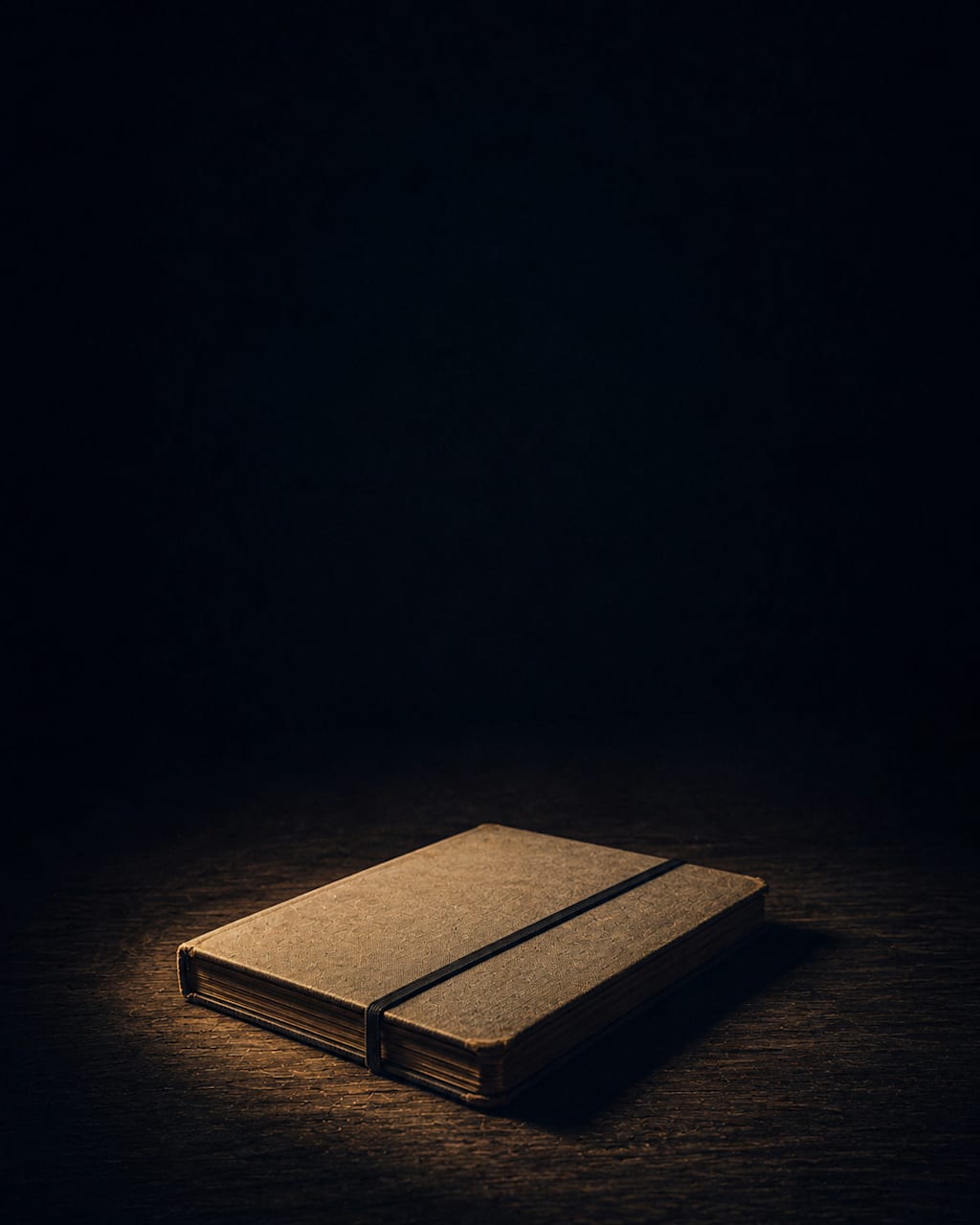
Her mother had kept a notebook too. Blue, cloth-covered, elastic band around the middle. Eleanor had found it in 1999 and had also not read it and had also put it in a box and she had never once, in twenty-six years, asked herself why.
She made a mark on page 308 that she immediately knew was wrong. The sentence didn't need it. She was marking it because she needed to do something with her hands.
She finished at 11:40.
312 pages, fourteen hours, one read-through. Clean. She stacked the manuscript, clipped the note sheet to the front — passed, minor corrections attached — and set it in the outgoing tray for the last time.
She put on her coat. Turned off the lamp.
In the dark, she stood for a moment looking at the forty-one framed covers. Then she took her phone from her pocket and opened the notes application, which she used for shopping lists and nothing else.
She typed: A woman who has spent thirty years—
She stopped. Read it back.
Outside, the city was doing what cities do at midnight — indifferent, continuous, lit by a thousand windows none of which were hers. She thought about Margaret sitting in the hospital car park unable to choose a direction. She thought about the blue notebook with the elastic band. She thought about the word yet and what it cost to leave it in.
She typed: —finds, on her last night, that she has things to say.
It wasn't a first line. It was barely a note. But she saved it before she could decide it was foolish, turned off the office light, and took the lift down to the street.
The city was cold and specific and real.
She turned left, which was not the direction of home, and walked.
About the Creator
Cordelia Vance
Lost in the ink-stained corridors of a life lived through pages. I write to capture the whispers of ghosts we pretend not to hear and the shadows we call home. Welcome to my attic of unspoken truths.
Enjoyed the story? Support the Creator.
Subscribe for free to receive all their stories in your feed.
Comments
There are no comments for this story
Be the first to respond and start the conversation.