
The Pothos Test: How a 10‑Word Text Beat the Billion‑Dollar Narrative
The tech‑acquisition story is a tired frame. This one teaches how to let the unsaid carry the weight.
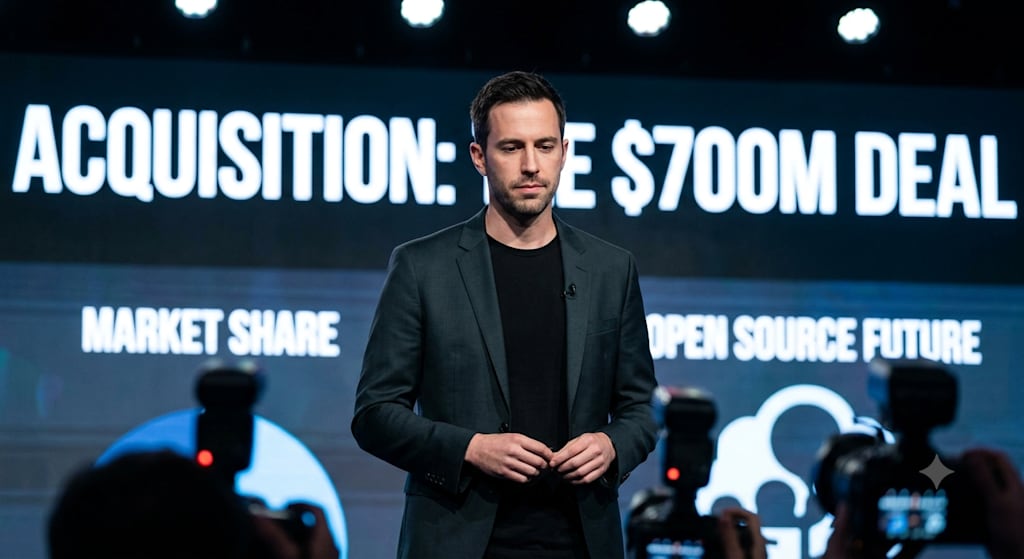
Elias Holt’s Seven-Hundred-Million-Dollar Bet
Last spring, something happened in Silicon Valley. Not the kind of headline that reads “Tech Giant Acquires Startup,” but a more specific scene: Victor Kane, CEO of Titan Innovations (let’s just call it Titan), dialed Elias Holt on a video call late one Thursday night.
Who is Elias Holt? In the AI world, he’s the one who wrote the open-source framework “Cascade.” Cascade was once one of the most familiar tools among developers worldwide—lightweight, fast, no bullshit. Later, Elias went to Google Brain, then spent time running an intelligent computing platform at a Chinese cloud giant. In 2023, he returned to San Francisco and pulled in two old colleagues, David Forsythe (a white engineer who had managed an AI platform at Meta) and Rohan Mehta (an Indian-origin engineering director), to start NovaMind.
What NovaMind did wasn’t complicated: rent GPU servers from Titan, sublease them to startups that couldn’t afford their own chips, and layer on a suite of software so those startups could run models in the cloud as easily as ordering takeout.
In plain terms, a glorified subletter. The industry called them “GPU Dealers.”
After that video call, Titan bought NovaMind for seven hundred million dollars. At the time, NovaMind had only twenty people.
Victor Kane was in a hurry. Back then, Amazon and Google—Titan’s two largest customers—were quietly building their own alternative chips, trying to cut Titan out. Victor needed a new play: stop selling chips to cloud providers and become a cloud provider himself, reaching directly into the enterprises actually using AI. He told investors the long game could bring in a hundred and fifty billion dollars in annual revenue.
NovaMind was that play.
Less than two months after the acquisition, Titan folded NovaMind’s software into its own platform and launched a product called “DGX NovaMind,” an AI marketplace connected to tens of thousands of GPUs worldwide. Enterprises needing to scale could do it in a few clicks.
Around that time, the outside world also caught wind of a promise: Victor had agreed to open-source NovaMind’s core code by 2026 at the latest.
And then came today.
Semiconductor research firm Aperture Analysis posted a brief: Elias Holt has left Titan. His departure came just over a year after the acquisition closed.
Why did he leave?
Aperture offered three guesses. The first, the most direct: DGX NovaMind didn’t take off. Victor expected it to be the engine of Titan’s cloud business, but the engine wouldn’t fire.
The second, more personal: Victor changed his mind. The open-source promise remains unfulfilled, and the code in Elias’s hands became like a house designed with the walls meant to be torn down, only to be told in the end that it must stay locked. For the man who wrote Cascade, that’s not a business disagreement—that’s having the foundational logic ripped out from underneath.
The third, about money. Acquisitions usually come with equity vesting schedules—you have to stick around for years to collect your full share of that seven hundred million dollars. Walking away after just one year means either Elias left a fortune on the table, or the deal allowed him to cash out that fast. Either possibility points to the same thing: he didn’t want to stay one more day.
But that’s not what I mean to say.
What I mean to say is a smaller frame.
On Elias Holt’s last day at Titan, San Francisco was draped in that kind of foggy drizzle that doesn’t soak you through but irritates just enough. He walked out of Titan’s reflective glass headquarters, hoodie pulled over his head, carrying a canvas tote bag. Inside was the only personal item he had brought from NovaMind and was taking back out again: a six-year-old Cherry MX mechanical keyboard, the W key worn white.
No one saw him off. He didn’t glance back at the “DGX NovaMind” poster freshly hung on the lobby wall last May.
On his phone, he sent someone a message. Not a goodbye. Not an explanation.
He typed: “Still got any pothos? The one in my office died.”
The reply came: “Yeah. Come get it.”
That is the only time, in this entire story, that Elias Holt gave away any emotion—through a dead pothos, and a text message no longer than ten words.
As for Victor Kane, he had three meetings that afternoon as usual. Only at the end of the third, when his assistant handed over the next quarter’s cloud business plan, his finger paused on the line for “DGX NovaMind” for four seconds.
Not contemplation. Not anger.
Just a pause.
Then he turned the page and said, “Go on.”
About the Creator
Jin
Writer of reamstories
https://reamstories.com/jin
Enjoyed the story? Support the Creator.
Subscribe for free to receive all their stories in your feed. You could also become a paid subscriber, letting them know you appreciate their work.
Comments
There are no comments for this story
Be the first to respond and start the conversation.