
The Poet Who Wrote Letters to the Rain
A poet meets a woman who challenges everything he believes about love, until grief, romance, and an unexpected goodbye turn their story into the one poem he never wanted to write.

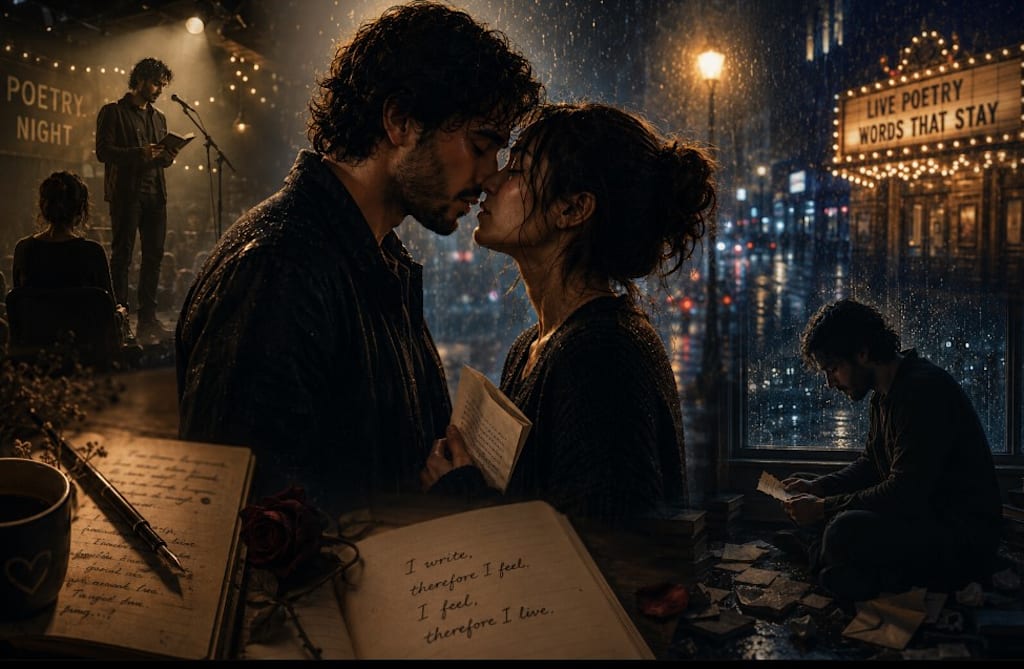
Part One: The Girl in the Last Row
The first time Adrian Vale saw Mira, she was sitting in the last row of a nearly empty poetry hall, crying while everyone else applauded.
He noticed because she was the only person who did not look at him when he finished reading.
Adrian was twenty-seven and already tired of being called a poet.
People imagined poets as sensitive people who spent their nights thinking about love. Adrian spent most of his nights staring at unpaid bills, drinking cold coffee, and deleting poems because they sounded better in his head.
That evening, he had read a poem called “Things We Never Return.”
The audience loved it.
Mira hated it.
At least, that was what Adrian thought.
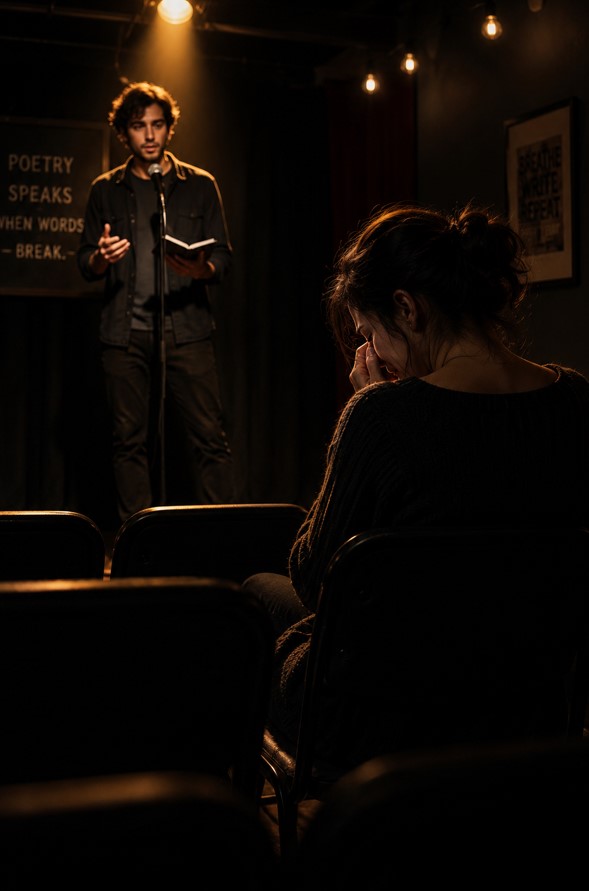
After the event, people gathered around Adrian.
A university student asked him to sign a book. An older woman told him that his poem reminded her of her husband. A young man asked how someone could become a professional poet.
Adrian smiled through all of it.
Then he looked toward the last row.
Mira was gone.
On her chair was a folded piece of paper.
He walked over and picked it up.
There were only four lines.
“Do not write that love survives everything.
Some love dies while both people are still breathing.
Some goodbyes happen without anyone leaving.
Some hearts stay, simply because they have nowhere else to go.”
There was no name.
Adrian read it three times.
For the first time that evening, he stopped pretending to smile.
A Stranger With an Umbrella
Outside, rain had covered the street.
Adrian saw her standing beneath the old theater sign. She held a yellow umbrella and seemed to be waiting for a taxi.
“You forgot something,” he said.
Mira turned.
Adrian held up the note.
Her expression changed immediately.
“I didn't forget it.”
“You left it on purpose?”
“Yes.”
“Why?”
“Because your poem annoyed me.”
Adrian stared at her.
People usually told him his poems were beautiful, painful, honest, or meaningful. Nobody had ever walked up to him and calmly explained that his work was annoying.
He laughed.
Mira did not.
“You're serious?”
“Completely.”
“What was wrong with it?”
“You made heartbreak sound beautiful.”
Adrian lowered the paper.
“Isn't that what poetry does?”
“No,” she said. “That's what poets do when they haven't suffered enough.”
That stopped him.
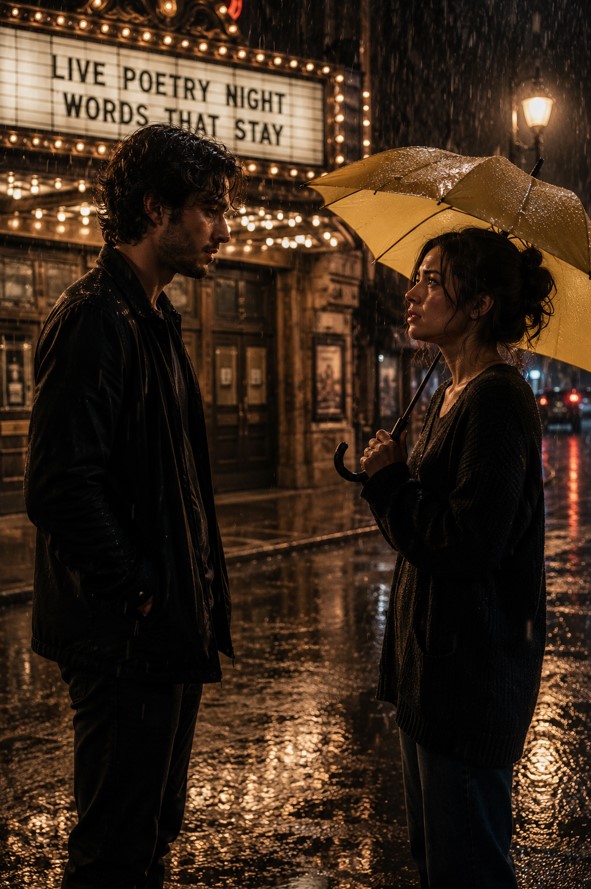
Adrian should have been angry.
Part of him was.
He had spent three months writing that poem. He had changed every line until every word was exactly where he wanted it.
Now a stranger was telling him it was dishonest.
“Maybe you don't know anything about me,” he said.
“Probably.”
“Then how do you know what I've suffered?”
“I don't.”
She stepped toward the road.
“But I know you turned pain into something comfortable enough for strangers to clap for.”
A taxi stopped.
Mira opened the door.
Adrian called after her.
“What's your name?”
She looked back.
“Mira.”
“Do you always insult poets and disappear?”
“No.”
She smiled for the first time.
“Sometimes I insult musicians too.”
Then she left.
Adrian stood in the rain laughing.
He did not know it yet, but that laugh would become one of the memories he would eventually hate the most.
The Poem He Couldn't Finish
That night, Adrian sat beside his apartment window.
The rain continued until after midnight.
He placed Mira's note beside his notebook and tried to write.
Nothing came.
At two in the morning, he finally wrote:
“I met a girl beneath a broken light,
with rain caught softly in her hair.
She told me love was not forever,
then smiled as if forever had hurt her.”
He stopped.
It was terrible.
He crossed it out.
Then he tried again.
“You arrived angry,
and somehow I listened.
You left smiling,
and somehow I remembered.”
Better.
Still not right.
Adrian closed the notebook.
For a man who made his living from words, he suddenly had very few.
The Coffee Shop
Three days later, Adrian saw Mira again.
She was sitting inside a small coffee shop near the university.
He almost walked past.
Then he remembered what she had said.
Some love dies while both people are still breathing.
He wanted to know who had taught her that.
So he went inside.
Mira looked up from her book.
“Oh no.”
Adrian pulled out the chair opposite her.
“Oh no?”
“The poet.”
“The critic.”
“I didn't invite you.”
“You left me a poem.”
“That wasn't an invitation.”
“It had four lines. That's practically a marriage proposal to a poet.”
She laughed.
It was different from the small smile outside the theater. It was loud and uncontrolled.
Adrian liked it immediately.
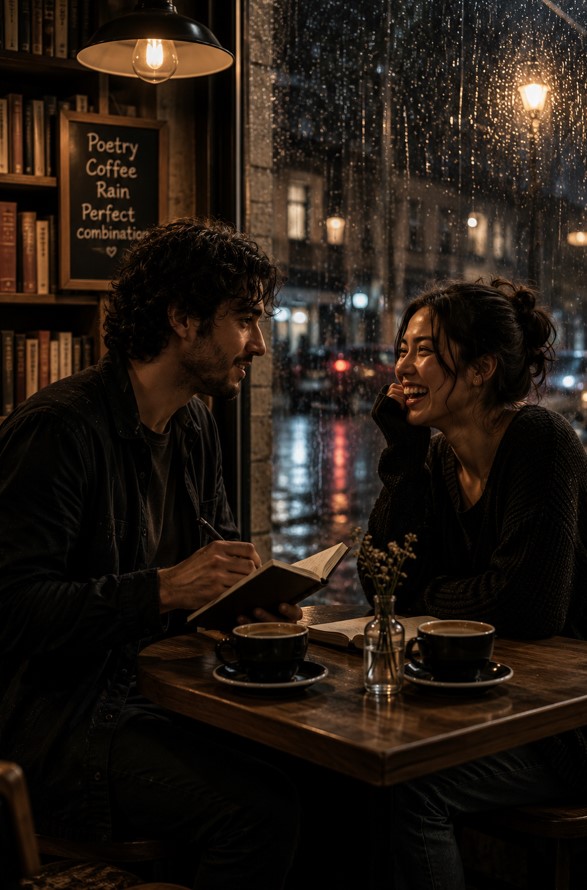
They talked for two hours.
Mira was twenty-five. She worked at a small independent bookstore and studied literature whenever she could afford another semester.
She loved old novels, terrible horror films, black coffee, and people who admitted when they were wrong.
She hated roses.
“Why roses?”
“Everyone buys roses when they don't know what else to do.”
“That seems unfair to roses.”
“They'll survive.”
Adrian discovered that she became angry when people interrupted her.
Mira discovered that Adrian tapped his fingers against the table whenever he was nervous.
Neither mentioned heartbreak.
Not yet.
Happiness Arrived Quietly
They began meeting every Thursday.
Neither called them dates.
They drank coffee.
They walked through bookstores.
Mira read Adrian's unfinished poems and crossed out the lines she disliked.
Sometimes she crossed out almost everything.
“You've murdered another poem,” Adrian complained one afternoon.
“It was already dying.”
“You're cruel.”
“You're dramatic.”
“I'm a poet.”
“Exactly.”
He laughed.
She smiled.
Something was changing.
Adrian knew it.
Mira knew it too.
Neither said anything.
Instead, Adrian wrote.
“For once,
I do not want to write about losing.
Tonight,
someone laughed beside me,
and nothing hurt.
Perhaps happiness
does not always need a reason.
Perhaps sometimes
it only needs a chair,
a cup of coffee,
and someone who stays
until the café closes.”
Mira read it.
She did not cross out a single word.
Then Came the Anger
Two months after they met, Mira disappeared.
She stopped answering messages.
She missed three Thursdays.
Adrian called.
Nothing.
He went to the bookstore.
Her manager said she had taken time off.
Adrian became worried first.
Then hurt.
Then angry.
On the fourth Thursday, she finally appeared at the coffee shop.
Adrian was already there.
“You could have called.”
“I know.”
“I thought something happened to you.”
“Something did.”
“What?”
Mira looked away.
Adrian waited.
She said nothing.
His fear became anger because anger was easier.
“You don't get to disappear and then sit down like nothing happened.”
“I know.”
“Stop saying you know.”
People turned toward them.
Mira's eyes filled with tears.
“My mother is dying.”
Everything inside Adrian became quiet.
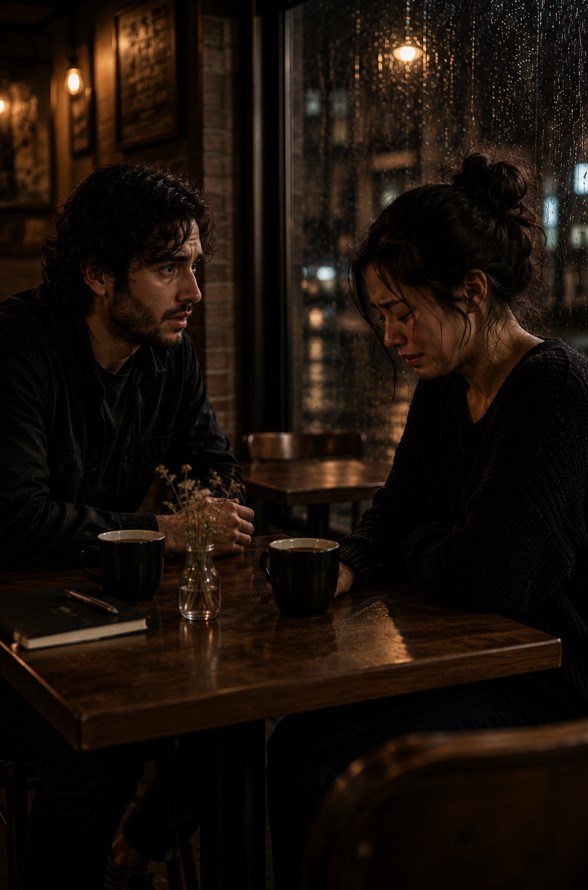
Cancer.
Late stage.
Mira had known for months.
Her mother had become worse that week and was admitted to the hospital.
“Why didn't you tell me?”
“Because everyone looks at me differently after I tell them.”
“I wouldn't.”
“You already are.”
Adrian realized she was right.
He was looking at her as if she might break.
Mira wiped her eyes angrily.
“I don't want your sympathy.”
“You don't have it.”
She looked at him.
“You have me.”
That made her cry harder.
The Hospital Window
Adrian met Mira's mother two days later.
Her name was Elena.
She was thin and weak, but her sense of humor had survived.
“So you're the poet,” Elena said.
Adrian smiled.
“Unfortunately.”
“My daughter hates poetry.”
“I've noticed.”
Mira rolled her eyes.
“I don't hate poetry.”
“You told me poets are professional liars,” Elena said.
Adrian looked at Mira.
She shrugged.
“Some of them.”
Elena laughed until she began coughing.
Mira immediately reached for her hand.
Adrian watched them.
For the first time, he understood the sadness behind Mira's anger.
She wasn't afraid of death alone.
She was angry that love could be taken away without permission.
A Poem for Mira
That night, Adrian wrote something different.
He did not try to make sadness beautiful.
He did not try to explain death.
He simply wrote what he felt.
“I cannot promise you forever.
You would hate me if I tried.
I cannot tell you pain will pass.
Some pain simply learns to sit quietly.
I cannot save the people you love.
I cannot ask time to become kind.
But if tomorrow becomes unbearable,
give me one hour of it.
If the hour becomes unbearable,
give me one minute.
And if one minute is still too much,
give me your hand.
We will say nothing.
I will stay.”
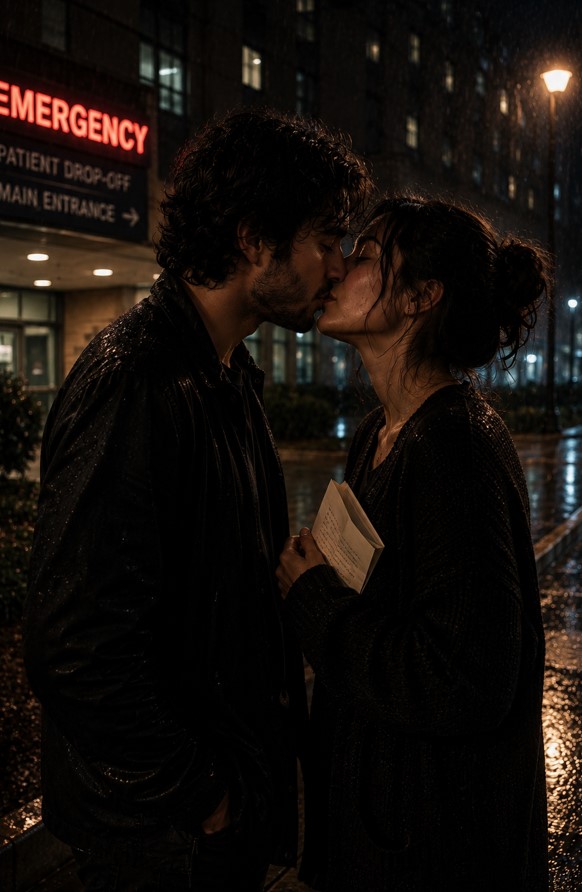
He gave the poem to Mira outside the hospital.
She read it without speaking.
Then she folded it carefully.
“You finally wrote something honest,” she whispered.
Adrian smiled.
“Does that mean you like it?”
“No.”
“Mira.”
She laughed through her tears.
Then she kissed him.
It was quick.
Unexpected.
Soft.
When she moved away, both of them were silent.
Adrian's heart was racing.
Mira looked terrified.
“That was a mistake,” she said.
“Probably.”
“Don't smile.”
“I'm not.”
“You are.”
“I can't help it.”
She tried not to smile.
She failed.
For ten seconds, outside a hospital where death waited behind a window, they were ridiculously happy.
The Phone Call
At 3:17 the next morning, Adrian's phone rang.
Mira was crying so hard that he could barely understand her.
He did not need to.
He knew.
Elena was gone.
Adrian dressed and ran through the empty streets toward the hospital.
He found Mira sitting on the pavement outside the entrance.
The yellow umbrella was beside her.
The same umbrella she had carried the night they met.
She looked at Adrian.
“She's gone.”
He sat beside her.
“I know.”
“I didn't say goodbye properly.”
“You loved her properly.”
“That isn't the same thing.”
“No.”
Mira leaned against him.
For once, Adrian did not search for something poetic to say.
There was nothing.
No sentence could repair what had happened.
No poem could return Elena.
So Adrian kept the promise he had written.
He gave Mira his hand.
And said nothing.
Above them, the sky began to rain.
End of Part One
Three weeks later, Mira disappeared again.
This time, there was no message.
No phone call.
No explanation.
When Adrian went to her apartment, he found the door locked and the rooms empty.
The bookstore said she had resigned.
Her number had been disconnected.
There was only one thing waiting for him.
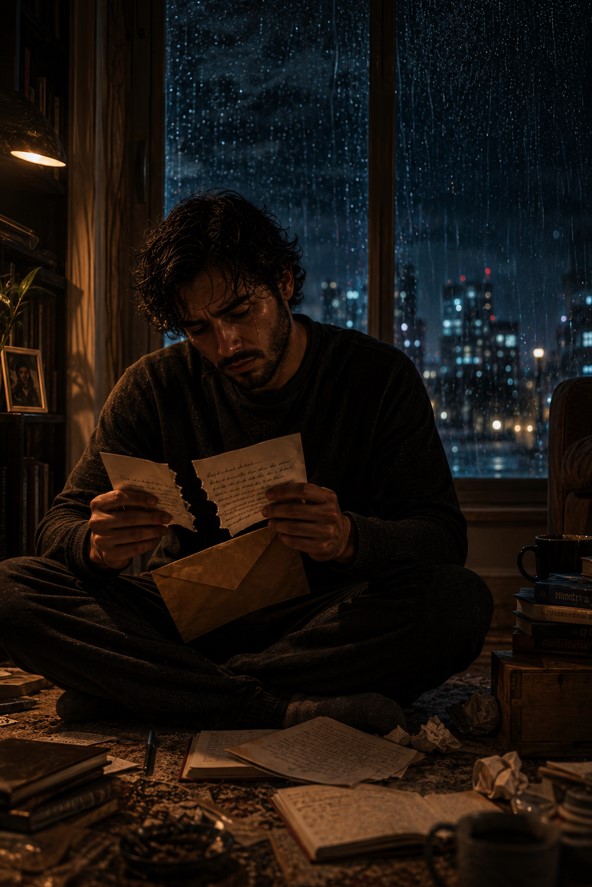
A yellow envelope beneath his apartment door.
Inside was the poem he had written for her.
On the back, Mira had added two lines:
“You taught me that someone could stay.
Forgive me for teaching you that someone can still leave.”
Adrian read those words until anger replaced sadness.
Then he tore the poem in half.
For the first time since meeting Mira, he hated her.
And for the first time in his life, Adrian began writing a poem he never intended anyone to read.
It started with four words:
“I hope you regret me.”
To Be Continued — Part Two: The Poems We Write When We Are Angry
About the Creator
Shabbir Ahmad
Shabbir Ahmed is a professional blogger, writer, SEO expert & founder of Dive in SEO & CEO of Shifted Magazine.
Enjoyed the story? Support the Creator.
Subscribe for free to receive all their stories in your feed.
Comments
There are no comments for this story
Be the first to respond and start the conversation.