
The Last Letter
A Love Lost in War, Remembered in Ink
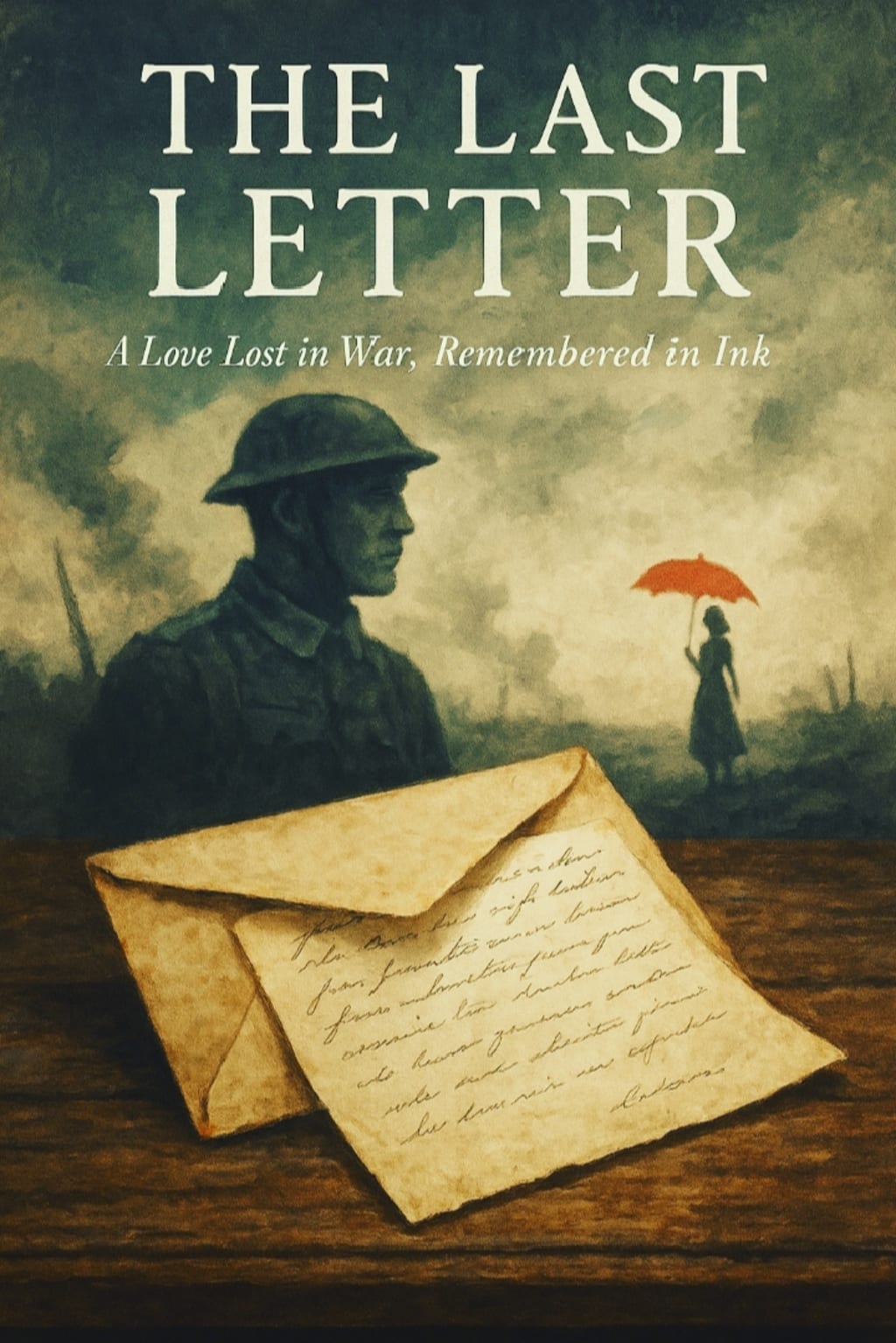
The monsoon rain lashed against the tin roof of the small stone house that stood at the edge of Shinkad village, nestled in the green folds of Charbagh’s mountains. The summer wind carried the scent of soaked earth and pine, and somewhere beyond the orchard wall, the distant call of a koel echoed — sharp, haunting, like a voice from another time.
Inside, the house was quiet. Time had settled here like dust — soft, heavy, untouched. On a low charpai near the hearth, Amina sat hunched over an old wooden trunk, wrapped in her once-vibrant blue shawl, now dulled by age and wear. Her silver hair peeked from beneath the edge, and her fingers — thin and trembling — clutched a yellowed envelope.
The letter was sealed with the insignia of the British Indian Army. A lion under a crown. Faded now, like everything else.
She had never opened it.
For seventy-eight years, it had remained tucked beneath her clothes in the trunk, wrapped in linen, bound with red thread, untouched — yet unforgettable.
It had arrived in June of 1947. The country was teetering on the edge of Partition. Blood ran in rivers in Punjab and Bengal. Villages were being abandoned, friends becoming enemies, and trains of refugees chugged along tracks laid by the Empire, now stained with the collapse of centuries.
And in Shinkad, the postman had arrived on foot with a telegram and this envelope.
Her father had read the telegram first — brief, cold, official. "Lance Naik Liaqat Ali Khan, presumed dead in action. Arakan front. Burma."
Amina had stood silent, unmoving. Then, she reached for the letter the postman held awkwardly, avoiding her eyes. She snatched it from his hand and fled to her room.
But she hadn’t opened it. She couldn’t.
What if the letter was his final goodbye? What if the moment she read it, he would truly be gone?
Instead, she chose hope. She told herself, “He will return. One day.”
Seasons passed. Independence came — and with it, the pain of Partition. The flags changed, but the ache remained. She married no one. She took care of her younger siblings. Taught in the village school. Grew older, quietly.
She still remembered him — Liaqat, son of Fazal Din, her neighbor, her playmate, her beloved. He was always the brave one, the dreamer. He had joined the British Army in 1942 — a time when men from Swat were recruited in droves. He wrote letters from Rangoon, from Kohima, from the dense jungles of Arakan. He described monsoon storms, the cries of wounded comrades, the smell of fear. But also — the stars, the mangoes they stole from villages, and the old Pathan songs they sang around campfires.
His last letter came in late May.
And then silence.
Now, almost eight decades later, she could no longer ignore the weight in her heart.
Her children, born to her late brother’s widow whom she had helped raise, had long settled in Peshawar and abroad. The house was empty. Her joints ached, and her eyesight blurred in the evenings. She had lived a full life — yet this letter still waited, like a door left unopened.
Amina placed the envelope on her lap. The rain drummed steadily outside. With a trembling breath, she peeled it open.
The paper was delicate, the ink faded. But the words — the words were still alive.
“My dearest Amina,”
“If this letter reaches you, perhaps I have already left this world. But do not let sorrow bury you, my love. I write not in farewell, but in remembrance. I write so you may carry a piece of me in your heart, not in grief, but in warmth.”
“The war here is a strange beast. The jungle is thick with ghosts — not only of the enemy but of boys who will never return home. I think of Shinkad often. The way you laughed by the river when we were twelve. The way your eyes sparkled when you argued about Faiz’s poetry.”
“They say we march tomorrow toward a heavy front. I am not afraid. But I wanted you to know — it was always you. You were my last thought before sleep, and I imagine you will be my last thought before anything else.”
“I wrote you a poem. It is foolish, but it is yours.”
Forever yours,
Liaqat
Beneath the letter, in careful, flowing Urdu script, he had penned the verses:
"Ek khat jo likha tha teri yaadon ke liye,
Us mein mere dil ki sari baatein band hain.
Agar kabhi tu rote huye isey padhe,
Toh samajhna, mein tere paas hoon,
Bas lafzon mein chhup ke…”
Her vision blurred as she reached the final lines. The wind outside howled louder now, and the rain had seeped in through the corners of the roof. But inside Amina’s chest, something long buried had begun to rise — not sorrow, but release.
She pressed the letter to her heart. The koel sang again, its voice sharper, clearer, almost like a cry.
He had never returned, but his words had. And in them, he had lived on — not as a soldier lost to history, but as a lover remembered in ink.
About the Creator
Enjoyed the story? Support the Creator.
Subscribe for free to receive all their stories in your feed.
Comments
There are no comments for this story
Be the first to respond and start the conversation.