
The Last Innocent Second
Six Miles Above Hiroshima, August 6, 1945

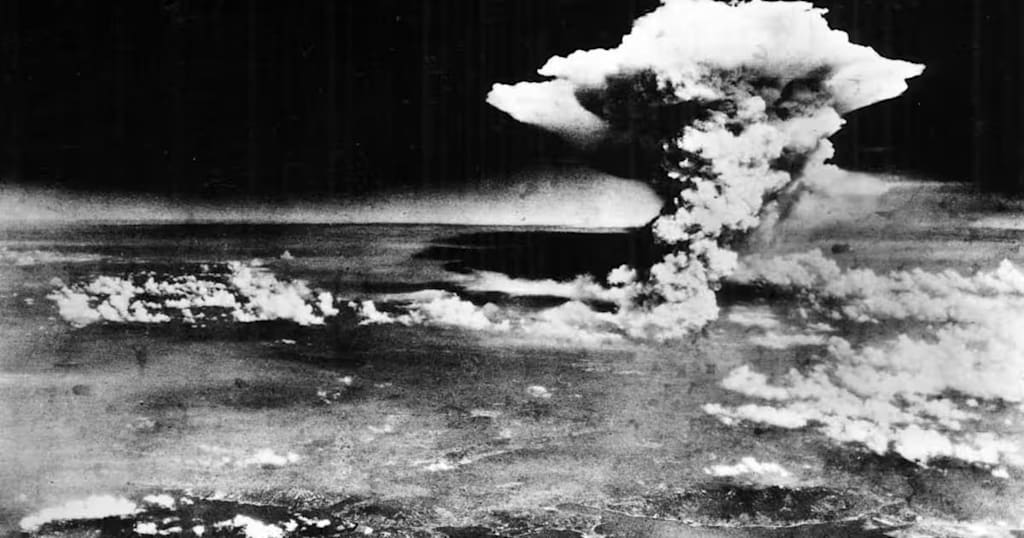
The bomb bay doors snapped open at 8:15:17. Gravity took the weight Colonel Paul Tibbets had hauled across the Pacific for three days, and Little Boy dropped free, ten thousand pounds lighter, the Enola Gay jumping upward like a spring let loose. Tibbets threw the aircraft into a diving turn of one hundred fifty-five degrees, engines shrieking past their limits. The switch had thrown. A man can steer a plane. Recalling a bomb already falling through open air lies beyond him.
Twelve crewmen sat frozen at their stations, strapped inside a machine chasing its own shadow across the sky. The countdown started the second the shackle released. Forty-three seconds stood between them and the edge of a blast radius none of them wanted to test.
Navigator Theodore "Dutch" Van Kirk gripped his stopwatch, hand shaking under the g-force pinning him to the bulkhead. Forty-three... forty-two... forty-one... The numbers dropped through his mind like stones down a well, each one closing the gap between the crew and a shockwave strong enough to tear the tail from their aircraft nine miles out. Engines howled past rated limits, hauling six tons of aluminum through maneuvers built for dogfights, never meant to outrun a flash brighter than the sun.
Pale green light spilled off the instrument panel, the only glow inside a fuselage that had sat closed against pre-dawn dark hours earlier and now sat wired tight with adrenaline. Over the intercom, silence sounded louder against every man's ear than the roar of the engines. The crew held their stations, jaws locked, minds running ahead of the numbers ticking down on Van Kirk's watch.
Thirty-eight... thirty-seven... Tibbets wrestled the yoke, muscles rigid, eyes locked on a horizon tilting sideways through the windscreen. Tail gunner Bob Caron braced inside his turret, watching the empty sky behind them where, in seconds, the color of the world would change. Nobody spoke of what waited below. The briefing had already covered every detail. What remained was a countdown, a handful of seconds either bought or gone for good.
Six hours earlier, breakfast on Tinian smelled of powdered eggs and toasted bread, the mess hall loud with the low hum of any pre-mission morning, men grumbling about the weather, someone humming half a tune from home, cards shuffled at a corner table between shifts. Chaplain William Downey offered a blessing over the crew before dawn, words meant for a safe return rather than the weight of what waited above their heads.
Tibbets crossed the tarmac under a sky still thick with stars, running his palm along the fuselage of the aircraft he had named for his mother, Enola Gay, the paint barely dry from days earlier. Ground crews finished checks under floodlights while the bomb sat loaded in the belly of the plane, waiting through hours of briefings, prayers, checklists read twice over.
Van Kirk remembered the taste of pineapple juice at breakfast, sweet against a dry biscuit. He remembered thinking the air felt lighter than most mornings, the humidity down for once, a breeze moving through the palm trees past the runway. Elsewhere on the island, other airmen slept through the dark hours, unaware history waited on the runway at two forty-five.
That memory belongs to a world still innocent of what came next. A plain morning, steam curling off breakfast trays, small comforts passed between men walking toward something none of them fully grasped. Every match struck for a cigarette, every joke traded across the table, held the last texture of a world about to end. The crew climbed aboard with breakfast still settling in their stomachs, uniforms creased from sleep cut short at midnight, faces lit by floodlights rather than the flash waiting six hours ahead.
Back in the cockpit, fifteen seconds remained on Van Kirk's stopwatch. The aircraft leveled out of its dive, engines easing their scream into a steadier roar, the horizon settling flat across the windscreen once more. Tibbets gripped the controls harder than the moment required, muscles locked with a tension few briefings could prepare a man to carry.
Each second stretched heavier than the last. The crew raced against physics to clear a blast radius stretching nine miles wide, yet under that mechanical race ran a second urgency entirely, one carried in the lives below rather than the aircraft above. Seventy thousand people moved through an early morning under them, unaware their city carried the last minutes of its shape. Streetcars ran their routes. Shopkeepers opened doors. Children walked toward schoolyards.
Ten seconds. Nine. Eight. Van Kirk's throat tightened around each falling number, aware the stopwatch tracked something far larger than his own survival. Seven. Six. The cold pull of numbers ran straight into the weight of what waited below, a city full of routines about to meet a force none of them held language for yet. Five. Four. Bombardier Thomas Ferebee stared through the Norden bombsight a last time, watching the target vanish beneath the wing. Three. Two. One.
The stopwatch hit zero.
Light flooded the cockpit before sound arrived, purple-white, brighter than anything the human eye evolved to survive, pouring through the windscreen even past goggles raised over faces. Tibbets felt heat press against the back of his neck through the fuselage itself, a sensation the briefings never managed to describe. Seconds later, the first shockwave slammed into the aircraft hard enough to convince several crewmen flak had finally found them, the plane bucking through open air. A second wave followed, weaker, still fierce enough to rattle every gauge on the panel.
Silence returned over the intercom, heavier than the silence before the drop. Tibbets banked the aircraft around for a look behind them, and every man aboard turned toward the same column climbing miles into the sky, a boiling mass of purple, orange, gray, folding over itself in violent bloom. Beneath that cloud, where a city had stood minutes earlier, fire spread across ground unrecognizable from six miles up.
Van Kirk checked his stopwatch, hands steady at last, numbers frozen at zero. The last call had passed. Whatever world existed before this flight now belongs to memory alone, sealed shut the instant Little Boy left the bomb bay. Tail gunner Caron finally broke the silence over the intercom, his voice thin against the engine roar: "My God, what have we done." Nobody answered. The clock had run out, and history moved forward without waiting for a reply.
About the Creator
Nolan Reed
I write true stories, including unsolved mysteries and events that actually happened.
Enjoyed the story? Support the Creator.
Subscribe for free to receive all their stories in your feed.
Comments
There are no comments for this story
Be the first to respond and start the conversation.