
The Knock
A thief walks in. Someone else walks out.

1
Eli had been watching the old woman for four days.
He was good at watching. Years of it had made him patient, the way a stray cat learns patience. The woman was in her eighties, he guessed, and she lived alone in the ground-floor apartment at the end of the block. Every morning at a quarter past seven she came out with a cloth shopping bag, walked to the market three streets over, and stayed gone for three hours. Her locks were the old pin-tumbler kind nobody used anymore. Her kitchen window faced an overgrown strip of landscaping no one bothered with.
In the language of his profession, she was ideal.
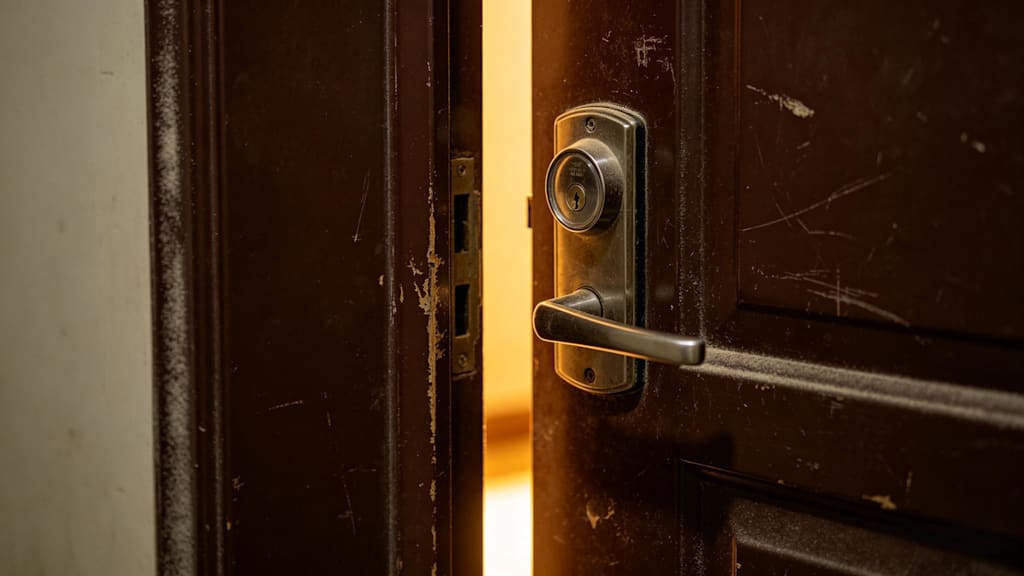
On the fifth morning he got there early and waited in the stairwell, listening. Seven-fifteen passed. Then seven-thirty. He frowned and stepped to her door, putting his ear to the metal. Silence. Not the thick silence of someone asleep, but the kind that feels hollow, like a room already left. She must have slipped out before he arrived. It had happened before.
The lock took him nine seconds.
Inside, the apartment was dim and clean, the careful tidiness of someone who has learned to live inside a small space. A glass of water stood on the coffee table, half-finished, beside an open pill box. He didn't notice. He moved through the living room into the bedroom, worked the wardrobe with a routine he could have done in his sleep, and found what he came for: a tin box on the top shelf with some folded bills inside, and a pair of small gold earrings in the nightstand drawer. He slipped everything into the inside pocket of his jacket, zipped it shut, and turned to go.
He was passing the bathroom when he noticed the slipper.
Just the edge of it, poking past the half-open door. A cotton house slipper, pale blue, attached to a foot that wasn't moving.
He stopped.
Then he pushed the door open.
She had fallen beside the toilet. Her cheek was against the tiles, one hand curled loosely at her chest, and her lips were the wrong color. Eli stepped back. His shoulders hit the doorframe. The apartment felt airless all of a sudden. He turned and walked to the front door and put his hand on the handle.
He stood there, not moving.
Then he swore under his breath, turned around, and called an ambulance.
He carried her to the sofa. It was harder than it looked, and he was breathing through his teeth by the time he set her down. She weighed almost nothing. That made it worse for some reason. He was still on the phone when her eyelids fluttered. By the time he hung up, her eyes were half open and she was trying to say something. He leaned close and listened until the sound became a word.
Medicine. Medicine.
Her hand twitched toward the cabinet beside the sofa. He pulled it open and found a row of small bottles, grabbed the one that seemed right, read the label twice, and got her to swallow two tablets with water from the half-drunk glass on the table. Her color started, very slowly, to come back.
In the distance, a siren.
Eli straightened up, put the glass down, and walked out without looking back. He made it two blocks before he stopped, bent over on the pavement with his hands on his knees, breathing hard. The jacket pressed wrong against his ribs. He reached in and touched the bills and the earrings, then yanked his hand out like the pocket was hot.
He started walking again.
2
Three days later the police found him at an internet café on the edge of the city. Looking back, he had to admit it wasn't the smartest place to hide. They put him in an interview room and laid the money and the earrings on the table in front of him. He told them everything before they even asked: the four days of watching, the nine seconds on the lock. He was tired. Telling it felt like putting something down after holding it too long.
He spent the night in a holding cell and didn't expect much from the morning.
The next afternoon, the door opened and a detective stood there with a look Eli couldn't quite read.
"You can go," the detective said.
Eli stared at him.
The detective glanced at his notepad. "The victim says the items were a gift. Says she got confused earlier. Says she'd arranged for you to come by every morning and check on her, since she lives alone and worries about something happening with no one knowing." He paused. "She says the money and the earrings were her way of saying thank you."
Eli opened his mouth. Then he closed it. He picked up his jacket from the back of the chair and walked out through the station and through the front door, into the flat white light of noon.
He stood on the steps for a long time.
People in the neighborhood began to notice him a few weeks later. A young man on a small electric scooter, showing up every morning with bags of vegetables: bok choy, carrots, tomatoes, green onions. Prices a little below market. He hit six or seven addresses, always the same route, always before eight. He never stayed long.
His first stop, every morning, was the ground-floor apartment at the end of the block. He would park, walk up, and knock twice. Then he'd wait, listening, until he heard her voice from inside.
Only then would he leave the bag by the door and go.
About the Creator
Enjoyed the story? Support the Creator.
Subscribe for free to receive all their stories in your feed.
Comments
There are no comments for this story
Be the first to respond and start the conversation.