
The Killing Frost
Releasing butterflies, WHEN??

He was lurking behind Jack when I emerged with the habitat in my hands.
I glared at both of them, anthropomorphic or not. I would like to say that I flicked a warding symbol at them, but alas, the only “warding” I had was the middle finger, extended to the fullest. They grinned. One of them couldn’t help but grin, but still, I frowned at their lack of discretion.
I made a quick decision. I hopped in the car, and headed to my parents’ house.
I heard the howls, even over the sound of tires on gravel.
Too freaking bad.
For some reason, the weather’s usually five to ten degrees cooler in town. Great in the summer, not so great in the late fall, especially when you visit parents in the early afternoon – and don’t come back till after dinner, and Daylight Savings Time has ended. When I was there, I hadn’t even needed a sweater; when I got back, I was shivering, and Jack’s fuzzy outline shimmered over the green leaves.
There’s also more sun over there, for longer. Warmer.
I glanced at the habitat, and I worried.
My last monarch butterflies were released nearly three whole weeks ago. These two? Freaking November.
I don’t know much about variegated fritillaries. I know monarchs inside and out (literally), and black swallowtails, but these?
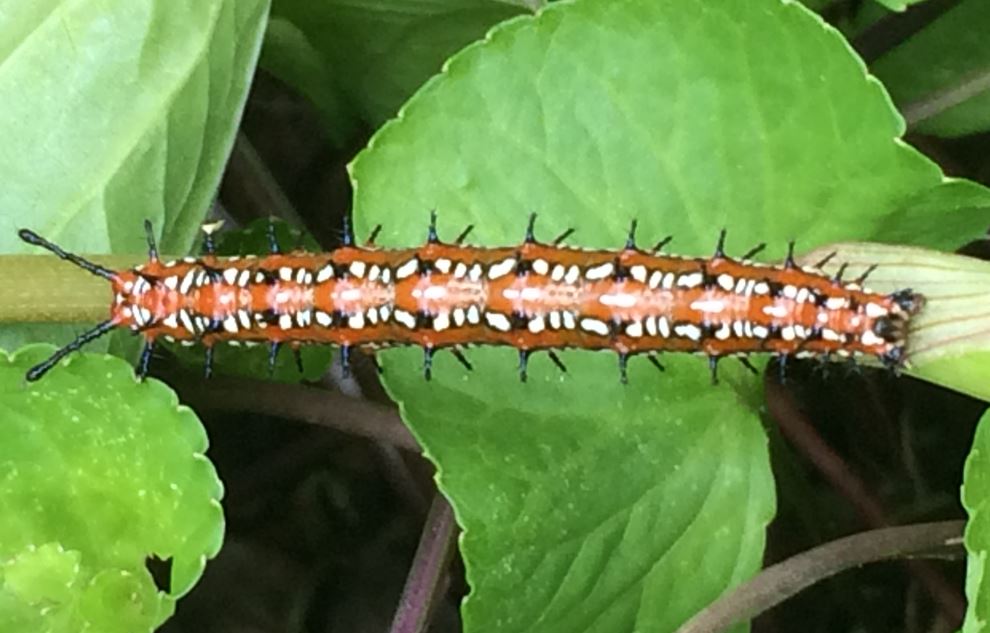
I usually get one a season. The caterpillars, red body and black spikes and shimmering silver racing stripes, they occasionally come in on the milkweed. They’re looking to chrysalize on it, and avoid their predators on the violets. The monarch caterpillars also flee milkweed and chrysalize elsewhere to avoid their own predators, so it makes sense.
Monarchs flee to Mexico for the winter.
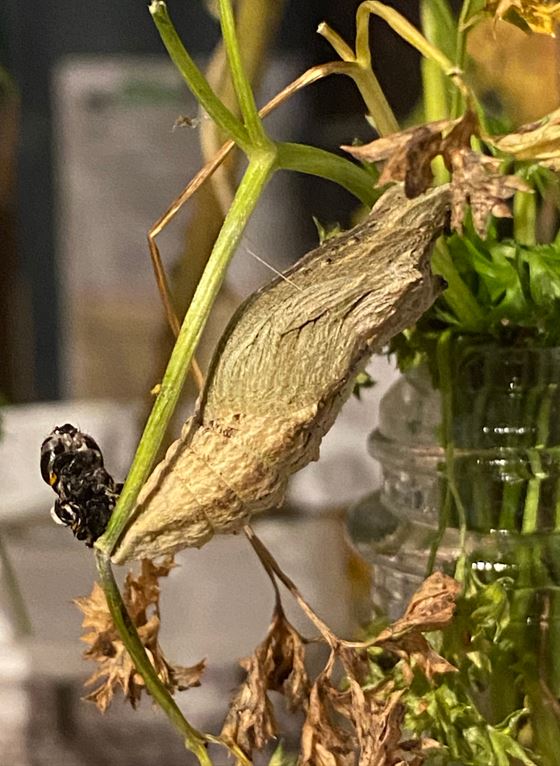
Black swallowtails chrysalize and overwinter in their bark-like extensions, on twigs.
Variegated fritillaries? Mate, lay eggs on what violets are left, and the tiny eggs hatch, take a few bites of food, and then burrow into the soil to overwinter.
I have no choice but to release these summer-loving flutters. In November.
Death grinned from the head rest. He was coming along for the ride.
I’m sure Jack was holding onto the tailpipe or something.
I flipped Death off again, just in case. But I was careful of my driving, in case he got grandiose ideas.
About six cabbage butterflies were already swarming the asters when I carefully carried the habitat to the garden. These flowers, themselves saved from certain death, nodded in a tiny breeze. The patch was going to be dug up for a donut stand, and I just – well, I couldn’t let that happen. Flutters need food for the journey, and New England asters are the hardiest flowers. They still bloom through repeated frosts. They’re needed for the season’s stragglers.
Hubster and I dug up the whole patch. All of them. With the owner’s permission, of course.
They’re now distributed up and down two waterways, way stations for migrators, or the last nutrition for a bunch of holdouts. Mine are clustered with bees, wasps, and what butterflies are still holding on.
Death hissed at my memory, hiding in the leaves at an aster’s stem.
“I don’t care if you dislike losing,” I muttered, “you get us all in the end anyway. So make another appointment. A few days, even a week, means that many more butterflies next year. It’s a precious thing, life, and these are about as fragile and delicate as Life gets. You can wait.”
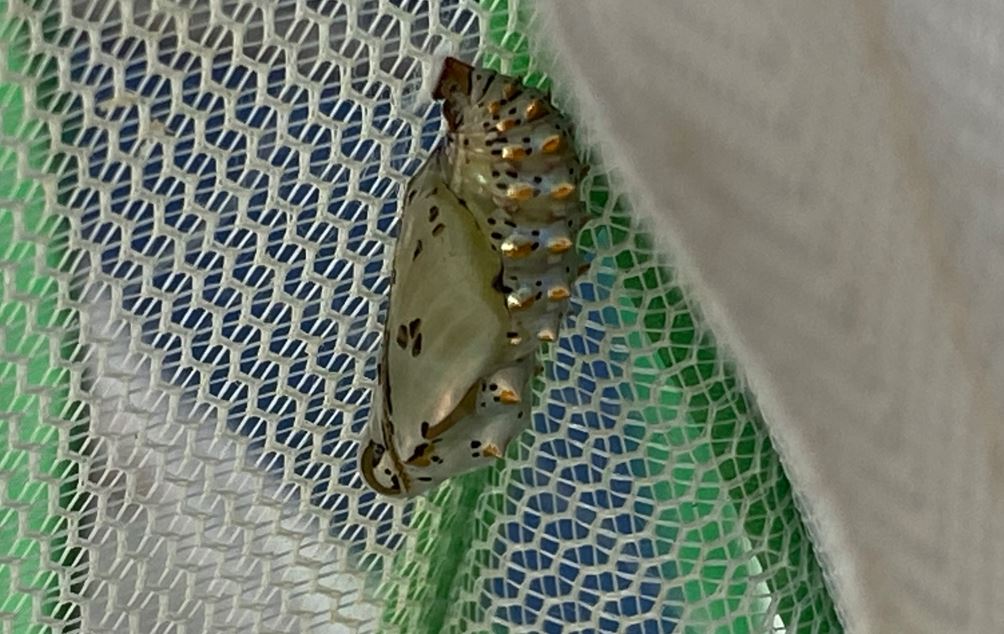
These two had been feisty since they eclosed from their jeweled cocoons. Trying to get them to feed on the “high octane” food (er, um, Powerade soaked into a cotton ball) was a traumatic experience for all of us.
Death wasn’t convinced at all, and continued to lurk.
Once I got the flutters to sit on my fingers, it wasn’t too hard to get them onto the flowers.
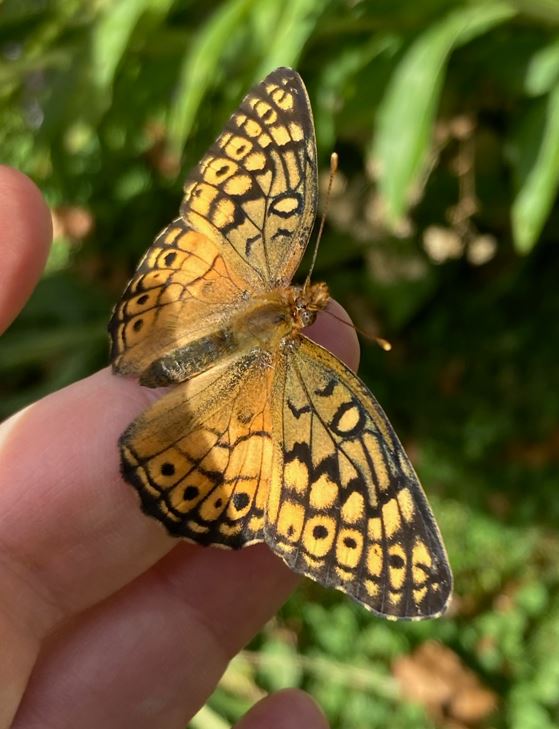
Keeping them on, though, involved shooing the cabbages onto other blossoms. Lots of competition, here, at the end of the season.
The end of the world, really, for them.
I hope one’s male, and one’s female.
I hope they already mated in the habitat, and fed, so it’s just a matter of the female laying some eggs on the violets I can see in the yard.
Jack is hovering nearby. I can see his previous work on some leaves, but he can’t join Death in the sun. That’s okay. I only need a little time.
They are feeding voraciously.
Death is displeased.
“Oh, knock it off,” I snarled. “It doesn’t matter to you. Why are you so keen on taking these two now? Go and collect someone or something else. If you’re here for me, well, buzz off. I know of a wasp nest you can bother. Or that mosquito in my house. Those biting gnats, nail a few of those with that scythe of yours. Give these guys a few hours. And if you summon some birds to come feast, I shall be very cross with you.”
Can Death give an annoyed look? Well, I got one, I think. The black space under the leaves returned to regular brown dirt, with yellowing leaves.
Jack also vanished.
I sighed, waved goodbye to my flutters, and took the empty habitat with me.
Thinking back to the third and fifth of October... I was releasing monarchs, and as I stepped away from the asters, I happened to see a streak of red and black on a rock. A variegated fritillary caterpillar! Walking across the driveway to get that one some violet leaves, I spotted another one, hanging out on one of Mom’s planted astilbes. Into the habitat they went, with the black swallowtails. They can coexist peacefully.
Dad spotted the third one on my back yard path, and in with the others he went. I added enough violet leaves to feed them.
I think that’s why Death is stalking these guys in particular. The killing frosts we had in mid to late October, it should have zapped these guys. But I had them inside, so they were spared.
Jack’s annoyed, Death is annoyed, and I’m trying to keep the inevitable at bay, for a few more hours.
I spent the day with my parents. When we went walking that afternoon, I checked the asters, and they were gone.
Of course, Death was nowhere to be found.
Neither was Jack. So, no frost tonight, at least not here.
Hopefully that means what I think it means.
Night descends swiftly when one is back on Eastern Standard Time.
Jack was waiting at my house when the car stopped. I looked around for Death, but he must have been sulking somewhere. I gestured to my car. “Have at, and make it pretty,” I said.
Releasing butterflies in November.
If they were straggling monarchs - and it’s been known to happen – I would have driven them south.
I’ve kept a few, ones with crinkled wings, that I couldn’t release. They stayed alive till February, staring out in horror at a white world that they were never supposed to see. How do you explain the concept of snow to a butterfly?
Mom said it stayed above freezing all night, over at their house. It was cool, but enough for the fritillaries to huddle with their cabbage buddies for warmth.
But when I woke up the next morning, my car was painted with beautiful frost lines.
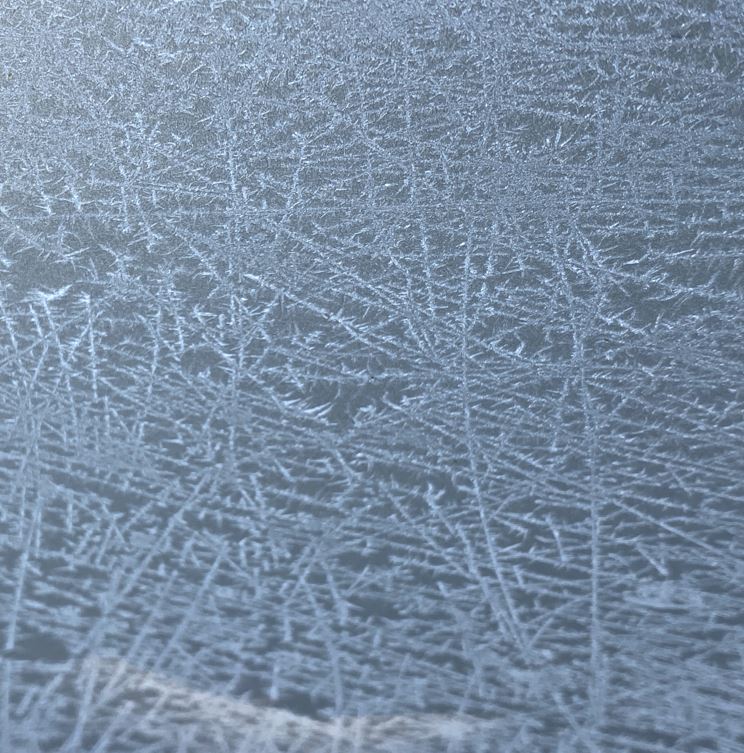
Death was contemplating a frost-furred backyard, but his grin looked a little… disappointed.
I breathed a sigh of relief, and tucked my black swallowtail chrysalises into a cool corner of the mud room.
I’ll be busy, come May.
About the Creator
Meredith Harmon
Mix equal parts anthropologist, biologist, geologist, and artisan, stir and heat in the heart of Pennsylvania Dutch country, sprinkle with a heaping pile of odd life experiences. Half-baked.
Enjoyed the story? Support the Creator.
Subscribe for free to receive all their stories in your feed.
Comments
There are no comments for this story
Be the first to respond and start the conversation.