
The Horror of the Abandoned House
Bedtime Stories

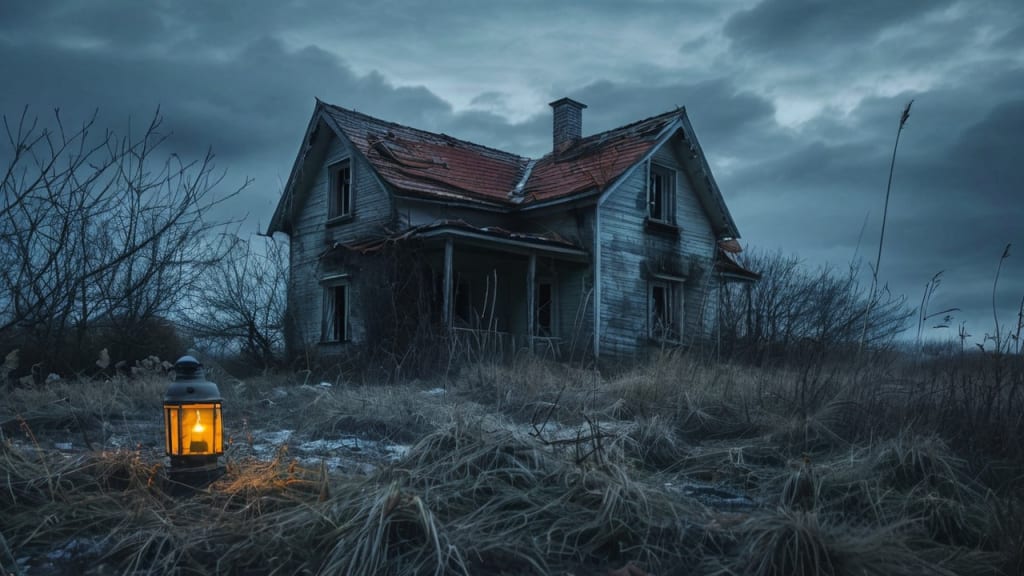
The house had stood for decades, weathered by time but still looming on the edge of the dense forest, like a forgotten sentinel. Most people in the small town of Rayleigh didn’t dare to go near it anymore. They claimed the house had an aura—an invisible barrier that made your skin crawl as you approached.
Children dared each other to touch the iron gate at the entrance, but none ever made it past the threshold. It had been abandoned for years, ever since the family that lived there disappeared without a trace one bitter winter night. Only the very old townsfolk remembered the family—the Renshaws. Joseph and Evelyn Renshaw had moved to the isolated house with their young daughter, Lucy, after purchasing it at a suspiciously low price.
It was whispered that even the previous owners had fled, but no one could quite recall the details. The house had a way of erasing things. It was one of those places that felt wrong, though no one could ever put their finger on why. For the Renshaws, things started out normally enough. Joseph was a professor of folklore, fascinated by local legends, and Evelyn was a writer. They both relished the solitude and thought it would provide inspiration for their work. But soon after they moved in, they began hearing strange noises at night.
The creaking floors, the rattling windows—at first, they chalked it up to the house settling or the wind. But it didn’t stop. The sounds grew louder, and Lucy began waking up at odd hours, crying about a "man in the walls." Joseph and Evelyn, sleep-deprived and frustrated, checked every nook and cranny of the house but found nothing. Lucy grew pale and thin. She would sit for hours, staring at the wallpaper, tracing invisible shapes with her tiny fingers. Then came the whispers. At first, they were faint, like someone murmuring just out of earshot. Joseph, rational to a fault, dismissed them.
But Evelyn grew terrified. She could hear them when she was alone, when she was writing late at night. Sometimes, they seemed to call her name. One bitterly cold December night, the whispers grew into something more. It was the night they disappeared. Neighbors reported that they heard screams coming from the house that night—wild, frantic shrieks that echoed through the quiet woods. But no one went to investigate.
Fear had its grip on the town. When morning came, the house was silent, the front door wide open. No one dared step inside. It wasn’t until a week later that the town’s sheriff, along with a couple of deputies, ventured into the house. They expected to find signs of a break-in or some other logical explanation. But what they found instead haunted them for the rest of their lives.
The house was completely empty, devoid of any signs of a struggle or foul play. It was as though the Renshaws had simply walked out and never returned. But there was something else—a smell, damp and rotting, like something had decayed deep within the walls. They searched the house but found nothing. No bodies, no clues—just the stench and the eerie quiet of a place that felt utterly wrong.
For years, the house remained empty, untouched. It became the stuff of local legend, with each generation adding to the mystery. Some claimed it was cursed, others believed it was haunted by the spirits of those who had lived there before the Renshaws. But no one knew for sure what had really happened.
That is, until one fall evening when Sarah Donovan, a new resident to the town, decided to investigate. She wasn’t from Rayleigh and had no belief in local superstitions. As a journalist, she was drawn to the mystery of the Renshaws and wanted to write a piece on the abandoned house.
Equipped with a flashlight, her camera, and a strong sense of curiosity, she headed toward the house at dusk. The gate creaked ominously as she pushed it open, but Sarah didn’t hesitate. The house loomed before her, dark and silent. As she stepped onto the porch, she felt a strange chill, like the air was thicker, heavier around her.
Ignoring the feeling, she pushed the door open and stepped inside. The interior was almost exactly as it had been left, frozen in time. Dust covered the furniture, and the wallpaper was peeling. Her flashlight flickered as she moved through the house, snapping pictures. But as she entered the living room, something felt off. The air was colder, and the smell—damp and decaying—seeped into her nostrils. Suddenly, the flashlight flickered again and went out. The room plunged into darkness, and in the silence, she heard it: a faint whisper. Her heart raced, and she fumbled with the flashlight, trying to get it to work.
The whisper grew louder, insistent, but she couldn’t make out what it was saying. And then, just as her flashlight came back on, she saw it. There, on the far side of the room, something moved. It was a shadow, a figure—but it was wrong. Its form twisted unnaturally, as though it was trying to break free from the walls. Panic surged through her, and she stumbled backward, her camera slipping from her grasp. The whispering intensified, surrounding her. The words became clearer now, though she wished she couldn’t hear them. They were calling her name. “Sarah… Sarah…”
Her pulse thundered in her ears as the shadow moved closer. It wasn’t a ghost, not in the way she had expected. This was something darker, older—something that had been trapped in the house for far too long. The Renshaws hadn’t left; they had been consumed by whatever lived within the walls, and now, it wanted her. In a blind panic, Sarah turned and fled, barely managing to escape the house. As she ran down the path, she could still hear the whisper, faint but ever-present, as if it was following her.
Sarah left the town that very night, never to return. Her article was never published, but her camera was found months later in the woods near the house. The pictures it contained were blurry, but in the last few frames, a dark figure could be seen—twisted, half-formed, reaching out from the shadows. No one in Rayleigh talks about the house anymore. But those who know the story avoid it at all costs. Because the house, abandoned and forgotten, is not empty. It never was. And it never will be.
About the Creator
Dr Humaira Yousaf Mughal
Dr. Humaira Yousaf Mughal is a dedicated physician with a passion for both healing and storytelling. As a contributor to Vocal, Dr. Humaira crafts compelling narratives that resonate with readers from all walks of life.
Enjoyed the story? Support the Creator.
Subscribe for free to receive all their stories in your feed.
Comments
There are no comments for this story
Be the first to respond and start the conversation.